Acides benzoïques
5475 produits trouvés pour "Acides benzoïques"
2-Hydroxy-4-methoxybenzoic acid
CAS :2-Hydroxy-4-methoxybenzoic acid (2HMB) is a natural product with tuberculostatic activity and is also used as a pharmaceutical drug. It is an enzyme inhibitor that binds to the diphenolase domain of mycobacterial cell wall hydrolases, such as lysyl oxidase and chitinase. 2HMB has been shown to be effective against cancer cells in vitro. The monosodium salt of 2HMB is more stable than the free acid form and can be used for the treatment of tuberculosis in India. 2HMB has also been shown to inhibit the growth of bacteria in human serum and tissue culture.Formule :C8H8O4Degré de pureté :Min. 95%Couleur et forme :PowderMasse moléculaire :168.15 g/mol3-Bromo-5-hydroxybenzoic acid
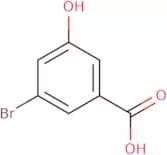
CAS :3-Bromo-5-hydroxybenzoic acid is a metabolite of 3,5-dihydroxybenzoic acid (DHB) in the metabolism of benzoic acid. It has been shown to be an antibacterial agent and has been used to treat metabolic disorders in hamsters. Symptoms of 3-bromo-5-hydroxybenzoic acid include dyslipidemia, which can lead to metabolic disorders such as diabetes mellitus and atherosclerosis. The compound may also have a role in tuberculosis and cancer due to its ability to induce apoptosis.
Formule :C7H5O3BrDegré de pureté :Min. 95%Couleur et forme :White PowderMasse moléculaire :217.02 g/mol2-Amino-4-methoxybenzoic acid
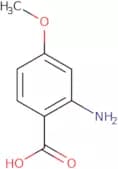
CAS :2-Amino-4-methoxybenzoic acid is a monophenolic compound that has been shown to have antioxidant properties. It is a redox potential with a pK of 7.8 and can be protonated at the phenolic hydroxyl group. 2-Amino-4-methoxybenzoic acid has been shown to inhibit the enzyme activities of histone proteins, which are enzymes that catalyze the formation of DNA from RNA. This compound also inhibits enzymes involved in amino acid synthesis such as anthranilate synthase and malic enzyme, as well as other enzymes such as phosphotransferase (PTS) and pyruvate kinase. 2-Amino-4-methoxybenzoic acid also causes inhibition of growth in phytophthora megasperma, an oomycete plant pathogen, by altering the redox potentials inside the cell membrane. The mechanism forFormule :C8H9NO3Degré de pureté :Min. 95%Couleur et forme :PowderMasse moléculaire :167.16 g/mol2,5-Dimethoxybenzoic acid
CAS :2,5-Dimethoxybenzoic acid (2,5-DMA) is a plant metabolite that belongs to the group of cinnamic acid derivatives. It can be found in plants and has been shown to have systemic effects. 2,5-DMA is involved in the cycloacylation of protocatechuic acid. This reaction is catalyzed by an enzyme called cyclooxygenase and requires molecular oxygen as a cofactor. 2,5-DMA also forms hydrogen bonds with methoxy groups and other molecules. The monoclonal antibodies against 2,5-DMA have been used for radiation therapy and are effective against cancer cells. Model studies show that 2,5-DMA can be converted into more potent metabolites by the action of cytochrome P450 enzymes or glutathione S-transferases.Formule :C9H10O4Degré de pureté :Min. 95%Couleur et forme :PowderMasse moléculaire :182.17 g/mol3,5-Dihydroxybenzoic acid
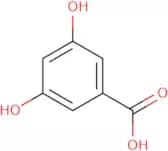
CAS :3,5-Dihydroxybenzoic acid is a phenolic compound that belongs to the class of aromatic compounds. It is an inhibitor of the enzyme 3-hydroxyphenylpyruvate dioxygenase and is used in the treatment of obesity. It has been shown to have a low potency for inhibiting this enzyme, although it does not inhibit other enzymes such as p-hydroxybenzoate hydroxylase. 3,5-Dihydroxybenzoic acid binds to human serum albumin through hydrogen bonding interactions and can inhibit the absorption of dietary phenols by binding to them. This compound also acts as a protocatechuic acid structural analog and has been shown to be hydrated in solution.Formule :C7H6O4Degré de pureté :Min. 95%Couleur et forme :White PowderMasse moléculaire :154.12 g/mol2-Chloro-3,5-dihydroxybenzoic acid
CAS :2-Chloro-3,5-dihydroxybenzoic acid (2C3HB) is a fine chemical that is used as a versatile building block in the synthesis of complex compounds. It is also used as a reagent for the production of pharmaceuticals and other chemicals. 2C3HB has been shown to be an important reaction component for the synthesis of drugs such as methotrexate and 6-fluoro-3-indoxyl-beta-D-galactopyranoside. This compound has a high quality and can be used as a building block in chemical reactions with other compounds.Formule :C7H5ClO4Degré de pureté :Min. 90%Couleur et forme :PowderMasse moléculaire :188.56 g/mol4-Methoxybenzoic acid hydrazide
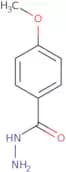
CAS :4-Methoxybenzoic acid hydrazide is a copper complex that binds to the DNA of bacteria, inhibiting the production of proteins. It has been shown to have antimicrobial activity against gram-positive and gram-negative bacteria. 4-Methoxybenzoic acid hydrazide has also been shown to inhibit colorectal carcinoma cells in vitro and in vivo. This compound inhibits the growth of cells by binding to them and disrupting hydrogen bonds. 4-Methoxybenzoic acid hydrazide causes cell death by inhibiting protein synthesis.Formule :C8H10N2O2Degré de pureté :Min. 95%Couleur et forme :White PowderMasse moléculaire :166.18 g/mol3,5-Dibromo-2-anisic acid
CAS :3,5-Dibromo-2-anisic acid is a short chain dodecyl amine with the chemical formula CH2Br2C6H4N. It is an active compound that has been shown to have nematicidal activity and also shows high activity against saprophytes. 3,5-Dibromo-2-anisic acid is synthesized by reacting chlorine with salicylaldehyde in the presence of a base. The compound is used in the synthesis of various other organic compounds such as amides and amines.Formule :C8H6Br2O3Degré de pureté :Min. 95%Couleur et forme :PowderMasse moléculaire :309.94 g/mol4-(N,N-Diethylamino)benzoic acid
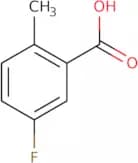
CAS :4-(N,N-Diethylamino)benzoic acid is a hydrogenated product of 4-hydroxybenzoic acid. It has been shown to be an effective chemopreventive agent against chemically induced cancer in rats. The analytical method for this compound is based on the fluorescence properties of the compound and its structural studies have been reported. This drug also has bioequivalence properties, which were shown by the spectrometry analyses of human serum samples. The dipole moment of 4-(N,N-diethylamino)benzoic acid is 1.8 D and it reacts with protocatechuic acid to form 4-hydroxybenzaldehyde and diethyl ether.Formule :C11H15NO2Degré de pureté :Min. 95%Couleur et forme :PowderMasse moléculaire :193.24 g/mol5-Fluoro-2-methylbenzoic acid
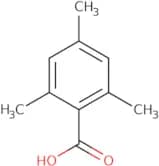
CAS :5-Fluoro-2-methylbenzoic acid is a synthetic compound that has antiviral potency against the influenza A virus. It is the active form of 5-fluoro-2-methylbenzoyl chloride, which is synthesized from a Grignard reagent and an asymmetric synthesis. 5-Fluoro-2-methylbenzoic acid has been shown to have anticancer properties in vitro, which may be due to its ability to inhibit cancer cell growth through interaction with chloride channels. This drug also inhibits the activity of dehydrogenases, which are enzymes that catalyze the oxidation of various substrates by reducing them.Formule :C8H7FO2Degré de pureté :Min. 95%Couleur et forme :White PowderMasse moléculaire :154.14 g/mol2,4,6-Trimethylbenzoic acid
CAS :2,4,6-Trimethylbenzoic acid is a molecule that belongs to the class of carboxylates. It has been shown to exhibit anticarcinogenic properties in patients with cervical cancer. 2,4,6-Trimethylbenzoic acid inhibits the growth of cervical cancer cells by blocking the activation of ferrocenecarboxylic acid (FCCA). This compound also blocks the activity of hydrogen bond and nitrogen atoms that are essential for cell division and development. 2,4,6-Trimethylbenzoic acid is used as an intermediate in the production of ferrocene derivatives. It can be used for acylation reactions with aromatic or aliphatic amines under acidic conditions.
Formule :C10H12O2Degré de pureté :Min. 95%Couleur et forme :PowderMasse moléculaire :164.2 g/mol2-Amino-4-methoxy-benzoic acid methyl ester
CAS :2-Amino-4-methoxy-benzoic acid methyl ester is a high quality, versatile building block for the synthesis of complex compounds. It is an intermediate in the synthesis of a number of biologically active compounds and has been used as a reagent for the determination of amino acids. 2-Amino-4-methoxy-benzoic acid methyl ester is soluble in water and polar organic solvents.Formule :C9H11NO3Degré de pureté :Min. 95%Couleur et forme :Off-White PowderMasse moléculaire :181.19 g/mol5-Amino-2-nitrobenzoic acid
CAS :5-Amino-2-nitrobenzoic acid is an organic compound that belongs to the class of versatile building block. It is a white solid that has been used as a research chemical, reagent, and specialty chemical for the synthesis of complex compounds and pharmaceuticals. 5-Amino-2-nitrobenzoic acid is also known as 2-amino-5-chlorobenzoic acid (ACBA). It is soluble in water, but insoluble in ethanol. The CAS number for this chemical is 13280-60-9.
Formule :C7H6N2O4Masse moléculaire :182.14 g/molRef: 3D-A-6802
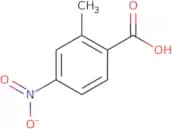
-Unit-ggÀ demander1kgÀ demander100gÀ demander250gÀ demander500gÀ demander2500gÀ demander2-Methyl-4-nitrobenzoic acid
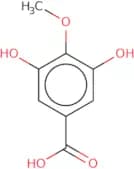
CAS :2-Methyl-4-nitrobenzoic acid is a synthetic drug substance. The crystalline structure of 2-methyl-4-nitrobenzoic acid is polymorphic and it can be obtained in two different forms: anhydrous form and monohydrate form. The reaction yield for this compound is low, which may be due to the presence of additives or deionized water. This drug substance has a high solubility in hydroxide solutions and methylbenzene. It reacts slowly with hydrochloric acid and sodium hydroxide solution to produce 2-methyl-4-nitrobenzoic acid hydrochloride and sodium benzoate, respectively. 2-Methyl-4-nitrobenzoic acid has low bioavailability due to its poor absorption from the gastrointestinal tract into the bloodstream.Formule :C8H7NO4Degré de pureté :Min. 95%Couleur et forme :PowderMasse moléculaire :181.15 g/mol3,5-Dihydroxy-4-methoxybenzoic acid
CAS :Inhibitor of redox-based NF-ΚB activationFormule :C8H8O5Degré de pureté :Min. 95%Couleur et forme :PowderMasse moléculaire :184.15 g/mol3-Formyl-4-hydroxybenzoic acid
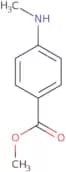
CAS :3-Formyl-4-hydroxybenzoic acid is a synthetic compound with anticancer activity. It is an azobenzene that has been shown to have photocatalytic activity. 3-Formyl-4-hydroxybenzoic acid has a carboxylate functional group and the ethyl ester functional group. The anticancer activity of this compound may be due to hydrogen bonding interactions, as well as its ability to cause DNA damage in cells by photolysis and its antiviral potency.Formule :C8H6O4Degré de pureté :90%Couleur et forme :White PowderMasse moléculaire :166.13 g/molMethyl 4-(N-methylamino)benzoate
CAS :Methyl 4-(N-methylamino)benzoate is a substance that inhibits the enzyme DPP-4, which is involved in blood glucose regulation. It has been shown to be effective against certain types of cancer and impurities that may be present in the drug. Methyl 4-(N-methylamino)benzoate is an acidic compound with molecular descriptors that include acidic and amines. This compound also has genotoxic impurities, such as benzofurans, which may affect its efficacy.Formule :C9H11NO2Degré de pureté :90%Couleur et forme :PowderMasse moléculaire :165.19 g/mol3,5-Dimethylbenzoic acid
CAS :3,5-Dimethylbenzoic acid is a carboxylic acid that is a member of the 3-carboxybenzenesulfonic acid family. The molecule is formed by the reaction of sodium carbonate with benzene in the presence of water. The compound has a redox potential that is close to zero, which makes it a reducing agent and an excellent hydrogen donor. The compound is soluble in water and has been shown to inhibit plant growth as well as promote plant growth by acting as a growth regulator. This molecule has also been shown to be fluorescent.Formule :C9H10O2Degré de pureté :Min. 95%Couleur et forme :PowderMasse moléculaire :150.17 g/molMethyl 4-chlorobenzoate
CAS :Methyl 4-chlorobenzoate is a synthetic chemical that belongs to the group of phenyl compounds. It is a solvent for organic solvents and has been shown to be toxic to humans. Methyl 4-chlorobenzoate is used in various industrial applications, such as in the production of pesticides, herbicides, and pharmaceuticals. Methyl 4-chlorobenzoate can also be used as an intermediate for the synthesis of other chemicals, such as chlorinated hydrocarbons. This chemical has been reported to cause environmental pollution and has been classified as a carcinogen by the International Agency for Research on Cancer (IARC).Formule :C8H7ClO2Degré de pureté :Min. 98.5%Couleur et forme :White PowderMasse moléculaire :170.59 g/mol3,4-Dihydroxy-5-methoxybenzoic acid
CAS :3,4-Dihydroxy-5-methoxybenzoic acid is a natural phenolic compound found in many plants. It has been shown to inhibit the growth of cancer cells and can be used as a chemopreventive agent for cancer treatment. 3,4-Dihydroxy-5-methoxybenzoic acid is metabolized by the liver into 3,4-dihydroxyphenylacetic acid (3,4-DHPA), which is excreted in urine and feces. The bioavailability of 3,4-Dihydroxy-5-methoxybenzoic acid is low due to its low solubility in water and high reactivity with proteins.Formule :C8H8O5Degré de pureté :Min. 95%Couleur et forme :PowderMasse moléculaire :184.15 g/mol