Acides benzoïques
5474 produits trouvés pour "Acides benzoïques"
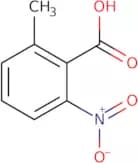
2-Methyl-6-nitrobenzoic acid
CAS :2-Methyl-6-nitrobenzoic acid is a yellow needle solid that is soluble in organic solvents. It is used as a reagent to prepare other chemicals and has been shown to react with sodium hydrogen sulfate, chloride, and sulfuric acid to form 2-methyl-6-nitrobenzenesulfonic acid. The mixture of 2-methyl-6-nitrobenzoic acid and sodium hydrogen sulfate reacts violently with chlorine gas or argon. This reaction solution can be evaporated by heating at atmospheric pressure or under vacuum, leaving 2-methyl-6-nitrobenzenesulfonic acid behind. 2MBA can also be purified by filtration or recrystallization from a suitable solvent such as chloroform or ether.
Formule :C8H7NO4Degré de pureté :Min. 95%Couleur et forme :Slightly Yellow PowderMasse moléculaire :181.15 g/mol5-Amino-2-methoxy-benzoic acid methyl ester
CAS :5-Amino-2-methoxy-benzoic acid methyl ester is a synthetic compound that has been shown to have potential as an antibacterial. It has been found to inhibit the growth of bacteria by binding to DNA and preventing transcription. The selectivity for bacterial cells is due to its ability to penetrate the cell membrane, which does not occur in mammalian cells. 5-Amino-2-methoxy-benzoic acid methyl ester is synthesized from 2-(4′-aminophenyl)acetic acid and methoxymethyl chloride in two steps, with a yield of 60%.
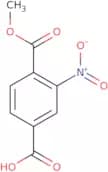
Formule :C9H11NO3Degré de pureté :Min. 95%Couleur et forme :Red PowderMasse moléculaire :181.19 g/mol3-Nitro-4-carbomethoxybenzoic acid
CAS :3-Nitro-4-carbomethoxybenzoic acid is a thiophene that has been found to be an inhibitor of protein tyrosine phosphatase 1B (PTP1B). PTP1B is a key enzyme involved in the regulation of insulin secretion and blood sugar levels. 3-Nitro-4-carbomethoxybenzoic acid has been shown to inhibit PTP1B by mimicking the natural substrate of this enzyme, phosphotyrosine, and thereby preventing its dephosphorylation. It has also been shown to have anti-inflammatory properties.
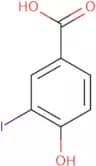
Formule :C9H7NO6Degré de pureté :Min. 97 Area-%Couleur et forme :PowderMasse moléculaire :225.16 g/mol4-Hydroxy-3-iodobenzoic acid
CAS :4-Hydroxy-3-iodobenzoic acid is a synthetic retinoid that is used in the synthesis of various other pharmaceutical compounds. It is also an inhibitor of bacterial growth, which may be due to its ability to bind to receptors on the bacterial cell surface. The antibiotic activity of 4-hydroxy-3-iodobenzoic acid has been demonstrated using an in vitro assay with Escherichia coli and Streptococcus pyogenes. 4-Hydroxy-3-iodobenzoic acid has also been shown to have antiestrogen properties when it competes with estradiol for receptor binding sites. This compound binds to the estrogen receptor and blocks its activity, inhibiting estrogen production by the ovaries or from other sources. Structural analysis of 4-hydroxy-3-iodobenzoic acid revealed that this compound has two functional groups: one group that interacts with nitrogen and another that binds to hydrogen or oxygen. These
Formule :C7H5IO3Degré de pureté :Min. 95%Couleur et forme :PowderMasse moléculaire :264.02 g/mol4-Chloro-3-hydroxybenzoic acid
CAS :4-Chloro-3-hydroxybenzoic acid (4-CHB) is a reactive compound that can be used for the detection of bacteria. 4-CHB reacts with peroxyl radicals in solution to form a chlorobenzoic acid derivative, which emits light when excited by radiation. 4-CHB is also capable of dehalogenating chlorobenzene, and can be used as a bioluminescent probe for the detection of bacteria. The reactions are efficient at low concentrations and are detectable with an ultraviolet or visible spectrophotometer.
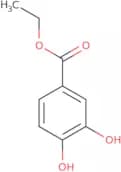
Formule :C7H5ClO3Degré de pureté :Min. 95%Couleur et forme :PowderMasse moléculaire :172.57 g/mol3,4-Dihydroxybenzoic acid ethyl ester
CAS :3,4-Dihydroxybenzoic acid ethyl ester (3,4-DHBA) is a phenolic compound that is used in the treatment of hepatic steatosis. 3,4-DHBA has been shown to be effective in inhibiting autophagy and may also be useful in the treatment of her2+ breast cancer. This drug has antioxidative properties and may also have a protective effect against myocardial infarct. 3,4-DHBA binds to iron ions and prevents their oxidation, thereby preventing oxidative stress. It has been shown to have low potency due to its short half-life in vivo. 3,4-DHBA can inhibit the mitochondrial membrane potential and lead to apoptosis of primary cells and tissue culture cells.
Formule :C9H10O4Degré de pureté :Min. 95%Couleur et forme :White PowderMasse moléculaire :182.17 g/mol4-Aminomethylbenzoic acid
CAS :4-Aminomethylbenzoic acid (4AMBA) is a metabolite that is formed from the amino acid methionine. It has been shown to inhibit the growth of prostate cancer cells in vitro and in vivo. 4-Aminomethylbenzoic acid inhibits the activity of polymerase chain reaction (PCR), which is an enzyme that catalyzes DNA replication. The hydroxyl group on 4-aminomethylbenzoic acid reacts with one of the phosphate groups on DNA, forming a covalent bond and inhibiting DNA synthesis. This inhibition occurs at the step called initiation, where DNA synthesis begins by binding of RNA polymerase to a specific sequence of DNA. In addition, 4-aminomethylbenzoic acid also inhibits the activity of x-ray diffraction data, which is an enzyme that catalyzes RNA transcription. Histological analysis shows that 4-aminomethylbenzoic acid causes congestive heart
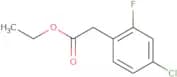
Formule :C8H9NO2Degré de pureté :Min. 98 Area-%Couleur et forme :White PowderMasse moléculaire :151.16 g/mol(4-Chloro-2-fluorophenyl)acetic acid ethyl ester
CAS :4-Chloro-2-fluorophenyl)acetic acid ethyl ester is a fine chemical that can be used as a scaffold for building more complex molecules, or it can be used as a versatile building block in the synthesis of research chemicals. It is also an intermediate in many reactions and can be used as a speciality chemical. 4-Chloro-2-fluorophenyl)acetic acid ethyl ester has been shown to have high quality and it is useful for research on complex compounds. It can also be used as a reagent in organic synthesis.
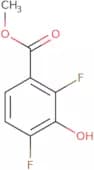
Formule :C10H10ClFO2Degré de pureté :Min. 95%Couleur et forme :SolidMasse moléculaire :216.64 g/mol2,4-Difluoro-3-hydroxybenzoic acid methyl ester
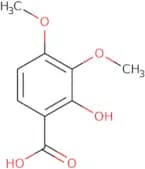
CAS :2,4-Difluoro-3-hydroxybenzoic acid methyl ester is a fine chemical that is used as a versatile building block for research chemicals and other complex compounds. It can be used as a reaction component in the synthesis of new chemical entities or as a reagent for organic chemistry reactions. 2,4-Difluoro-3-hydroxybenzoic acid methyl ester has CAS No. 194804-80-3 and is available in high quality.Formule :C8H6F2O3Degré de pureté :Min. 95%Couleur et forme :PowderMasse moléculaire :188.13 g/mol3,4-Dimethoxy-2-hydroxybenzoic acid
CAS :3,4-Dimethoxy-2-hydroxybenzoic acid (DMHA) is a potential drug candidate that has been shown to scavenge free radicals and protect against the damage caused by oxidative stress. It has also been found to have heartwood extract-modulating properties, inhibiting the growth of Madagascariensis, Angolensis, and Leukemia cells. DMHA has been shown to be effective in preventing lipid peroxidation and may have dietary benefits for prevention of chronic diseases such as cancer and diabetes. This compound is being investigated as a potential drug for administration by chemometric methods. DMHA was also found to be a potent inhibitor of cyclooxygenase 2 (COX-2), which could make it useful for treating inflammatory conditions.
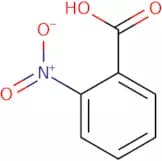
Formule :C9H10O5Degré de pureté :Min. 95%Couleur et forme :PowderMasse moléculaire :198.17 g/mol2-Nitrobenzoic acid - Technical
CAS :2-Nitrobenzoic acid is an organic compound that is used as a reagent in the preparation of aldehydes, esters, and amides. It has been shown to be a potent inhibitor of the MCL-1 protein. This protein is an important regulator of mitochondrial permeability transition pore (MPTP) opening and apoptosis induction. The inhibition of the MPTP by 2-nitrobenzoic acid may be due to its ability to react with nitric oxide (NO) to form peroxynitrite, which reacts with MPTP proteins in the mitochondria. The use of 2-nitrobenzoic acid has been found to be effective in treating infectious diseases such as HIV, as well as autoimmune diseases such as psoriasis.
Formule :C7H5NO4Degré de pureté :Min. 95%Couleur et forme :PowderMasse moléculaire :167.12 g/molRef: 3D-FN172456
Produit arrêté4-Amino-3-methoxybenzoic acid
CAS :4-Amino-3-methoxybenzoic acid is an inhibitor of the enzyme hydroxylase. It has been shown to inhibit cancer cell growth in nanomolar concentrations and may be a potential anti-cancer drug candidate. 4-Amino-3-methoxybenzoic acid inhibits the production of 3-methoxy-4-nitrobenzoic acid, which is an intermediate in the biosynthesis of cyclic peptides. This compound also has potent inhibitory activity against active enzymes involved in the biosynthesis of 3-methoxy-4-nitrobenzoic acid, such as hydroxylases, nitroreductases, and methyltransferases.
Formule :C8H9NO3Degré de pureté :Min. 95%Couleur et forme :PowderMasse moléculaire :167.16 g/molRef: 3D-FA29095
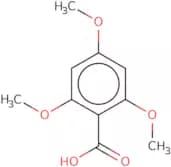
Produit arrêté2,4,6-Trimethoxybenzoic acid
CAS :2,4,6-Trimethoxybenzoic acid (TMB) is a monomer that belongs to the class of organic compounds known as phenols. It can undergo dehydrogenation reactions with nitroethane in the presence of trifluoroacetic acid and catalytic amounts of hydrogen gas. TMB has been shown to interact with an allyl group in other molecules. The reaction system was studied under different flow rates and was found to be best described by an isotherm equation.
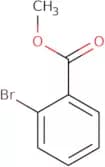
Formule :C10H12O5Degré de pureté :Min. 95%Couleur et forme :PowderMasse moléculaire :212.2 g/molMethyl 2-bromobenzoate
CAS :Methyl 2-bromobenzoate is a chemical compound that can be used as a light emitting material. It is also used as a component of organic electrochemical cells (OECs) for the conversion of solar energy to electricity and can be used in the treatment of hepatitis. The reaction product is generated from the reaction of the halide with benzoate and light, which leads to an emission spectrum in the visible region. Methyl 2-bromobenzoate has been shown to be an efficient catalyst for Friedel-Crafts reactions, and it's pharmacokinetic properties have been studied in rats.
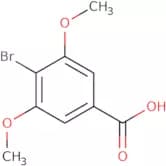
Methyl 2-bromobenzoate can also be used as a solid catalyst for the synthesis of bicyclic heterocycles.Formule :C8H7BrO2Degré de pureté :Min. 95%Couleur et forme :Colorless Clear LiquidMasse moléculaire :215.04 g/mol4-Bromo-3,5-dimethoxybenzoic acid
CAS :4-Bromo-3,5-dimethoxybenzoic acid is a synthetic molecule that has been shown to have catalytic properties. It was generated by the reaction of resorcinol and dimethoxybenzoic acid in the presence of copper(II) acetate. This compound has also been shown to be bioinspired by its similarity to natural products such as 3,5-dihydroxybenzoic acid. 4-Bromo-3,5-dimethoxybenzoic acid has been used for the synthesis of bioactive molecules with cyclic structures. These advances are important for sustainable development and may help in the discovery of new natural products.
Formule :C9H9BrO4Degré de pureté :Min. 95%Couleur et forme :PowderMasse moléculaire :261.07 g/mol5,6-Dichlorovanillic acid
CAS :5,6-Dichlorovanillic acid is a high quality, versatile molecule that can be used as a reagent in organic synthesis or as a building block for the synthesis of complex compounds. It has many useful properties, such as being a fine chemical and research chemicals. 5,6-Dichlorovanillic acid is also a speciality chemical with versatile uses in building blocks or reaction components.
Formule :C8H6Cl2O4Degré de pureté :Min. 95%Couleur et forme :PowderMasse moléculaire :237.04 g/molEthyl 3,5-dichloro-4-methoxybenzoate
CAS :Ethyl 3,5-dichloro-4-methoxybenzoate is an organic compound that has a variety of uses. It is an intermediate in the synthesis of various other compounds and as a reagent, it reacts with amines to form ureas. Ethyl 3,5-dichloro-4-methoxybenzoate can also be used as a complex building block for synthesizing other compounds. This chemical can be used as a speciality chemical or research chemical. As a versatile building block, ethyl 3,5-dichloro-4-methoxybenzoate can be used to make reaction components for synthesizing polymers or pharmaceuticals.
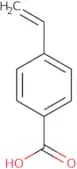
Formule :C10H10Cl2O3Degré de pureté :Min. 95%Couleur et forme :PowderMasse moléculaire :249.09 g/mol4-Vinylbenzoic acid
CAS :4-Vinylbenzoic acid is a water-insoluble polymer that has been shown to have bacteriostatic and fungistatic properties. 4-Vinylbenzoic acid inhibits bacterial growth by binding to the enzyme diphenolase, which is involved in the synthesis of cell wall precursors. This polymer also binds to cationic surfactants and is soluble in organic solvents such as ethanol and acetone. The mechanism of inhibition of fungal growth is not known, but it may be due to hydrogen bonding interactions with the cell membrane.
4-Vinylbenzoic acid has been shown to be effective against human serum, although it does not inhibit bacterial growth in this medium.Formule :C9H8O2Degré de pureté :Min. 95%Couleur et forme :White PowderMasse moléculaire :148.16 g/mol2-Amino-6-fluorobenzoic acid
CAS :Intermediate in the synthesis of idelalisib
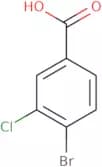
Formule :C7H6FNO2Degré de pureté :Min. 98 Area-%Couleur et forme :PowderMasse moléculaire :155.13 g/mol4-Bromo-3-chlorobenzoic acid
CAS :4-Bromo-3-chlorobenzoic acid is a molecule that belongs to the class of antimicrobial compounds and is used for the treatment of gram-negative pathogens. It inhibits the growth of these bacteria by blocking their ability to synthesize DNA, RNA, and proteins. 4-Bromo-3-chlorobenzoic acid has been shown to be effective against bacteria in mammalian cells and also has activity against multidrug resistant strains. This compound is biosynthesized in plant cells from carbon sources like glucose, and it can be found in plants like carrot tissue. The resistance of bacteria to this compound has been observed globally, with outbreaks occurring in Japan and India.
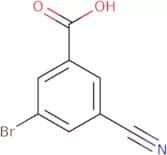
Formule :C7H4BrClO2Degré de pureté :Min. 95%Couleur et forme :White PowderMasse moléculaire :235.46 g/mol3-Bromo-5-cyanobenzoic acid
CAS :3-Bromo-5-cyanobenzoic acid is a fine chemical that is used as a reagent or intermediate in the production of other chemicals. 3-Bromo-5-cyanobenzoic acid can be used as an intermediate in the synthesis of pharmaceuticals, agrochemicals, and perfumes. This compound is also useful as a building block for making speciality chemicals and research chemicals. 3-Bromo-5-cyanobenzoic acid is versatile because it can be used in many different reactions with many different substrates to make many different products.
Formule :C8H4BrNO2Degré de pureté :Min. 95%Couleur et forme :PowderMasse moléculaire :226.03 g/mol4-(Acetylamino)-2-nitrobenzoic acid
CAS :4-(Acetylamino)-2-nitrobenzoic acid (AAANB) is a versatile building block that can be used in the synthesis of a wide range of organic and pharmaceutical compounds. AAANB is an intermediate in the preparation of 4-Amino-3-nitrophenol, which is an important research chemical. This compound is a useful scaffold for the synthesis of organic compounds with various biological activities. The CAS number for this product is 21573-29-5.
Formule :C9H8N2O5Degré de pureté :Min. 95%Couleur et forme :PowderMasse moléculaire :224.17 g/mol4-Methyl-3-nitrobenzoic acid
CAS :4-Methyl-3-nitrobenzoic acid is a fine chemical that is used as a building block in the synthesis of complex compounds. It is often used as a reagent or speciality chemical, and it has a CAS number of 96-98-0. 4-Methyl-3-nitrobenzoic acid can be react with other chemicals to form useful intermediates or scaffolds for larger molecules. This chemical is versatile and can be used in many different reactions.
Formule :C8H7NO4Degré de pureté :Min. 98.0 Area-%Masse moléculaire :181.15 g/mol3,5-Diamino-2,4,6-triiodobenzoic acid
CAS :3,5-Diamino-2,4,6-triiodobenzoic acid is a metabolite of hydrochloric acid and has been used in sample preparation for roentgenographic techniques. It is also used in the preparation of methylating agents for mass spectrometric analysis. It is hydrophilic with a methyl esterification that can be activated by amines. This chemical compound is found in human urine and has been shown to have an enhanced effect on tissues when combined with hydrochloric acid.
Formule :C7H5I3N2O2Degré de pureté :Min. 95%Couleur et forme :PowderMasse moléculaire :529.84 g/mol