Alcools benzyliques
Les alcools benzyliques sont des alcools aromatiques caractérisés par un anneau benzénique attaché à un groupe hydroxyméthyle (-CH2OH). Ces composés sont utilisés comme solvants, conservateurs et intermédiaires dans la synthèse de produits pharmaceutiques, de parfums et de résines. Les alcools benzyliques sont connus pour leurs propriétés antimicrobiennes et leur polyvalence dans diverses réactions chimiques. Chez CymitQuimica, nous offrons une large sélection d'alcools benzyliques de haute qualité pour soutenir vos recherches et applications industrielles.
1458 produits trouvés pour "Alcools benzyliques"
Trier par
Degré de pureté (%)
0
100
|
0
|
50
|
90
|
95
|
100
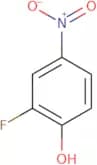
2-Fluoro-4-nitrophenol
CAS :<p>2-Fluoro-4-nitrophenol is an amide that has potent antitumor activity. It is a selective inhibitor of the protein kinase Raf (Akt), leading to inhibition of the growth of cancer cells in vitro. 2-Fluoro-4-nitrophenol also inhibits the proliferation of prostate cancer cells, which may be due to its ability to inhibit the production of growth factors and cytokines such as mcf-7 and nitrous oxide. The 2-fluoro-4-nitrophenol is cytotoxic because it inhibits DNA synthesis and prevents mitosis. The chemical structure consists of a nitro group (-NO2) on C6, a phenolic hydroxyl group (-OH) on C2, and a methylene group (-CH2-) on C3. This molecule binds covalently to proteins through its amino acid side chain at C6 and forms stable complexes with x-ray crystallography structures. It</p>Formule :C6H4FNO3Degré de pureté :Min. 95%Couleur et forme :PowderMasse moléculaire :157.1 g/mol4-Acetamidophenol
CAS :4-Acetamidophenol (4AP) is a natural compound that has been shown to inhibit nuclear DNA damage in vitro. It also has anti-inflammatory activity, which may be due to its ability to inhibit cyclooxygenase-1 and cyclooxygenase-2 enzymes. 4AP is synthesized by the condensation of acetaminophen with formaldehyde and sodium hydroxide. This drug binds to the signal peptide in the Toll-like receptor 2 (TLR2) protein, preventing TLR2 from activating inflammatory pathways. The matrix effect of 4AP is thought to play a role in its mechanism of action, as well as its biocompatibility with tissues. The analytical method used for this product is high performance liquid chromatography with ultraviolet detection at 280 nm.Formule :C8H9NO2Degré de pureté :Min. 95%Couleur et forme :PowderMasse moléculaire :151.16 g/mol3-Methoxyphenol - 98%
CAS :3-Methoxyphenol is a chemical that is used in the treatment of wastewater. It has been shown to have antibacterial and antiviral properties, as well as the ability to prevent bowel disease. 3-Methoxyphenol can be used to treat metal hydroxides by reacting with them and converting them into metal oxides. The reaction mechanism of 3-methoxyphenol has been best studied using coumarin derivatives, which are structurally similar to 3-methoxyphenol. The ester hydrochloride salt form of 3-methoxyphenol is a prodrug that is metabolized by cytochrome P450 enzymes in the liver via an esterase pathway. This prodrug may be especially useful for patients with bowel disease or low levels of cytochrome P450 enzymes, such as those with chronic kidney failure or AIDS. 3-Methoxyphenol has been shown to inhibit JakFormule :C7H8O2Degré de pureté :Min. 98 Area-%Couleur et forme :Clear LiquidMasse moléculaire :124.14 g/molPhenol
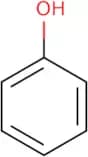
CAS :Phenol is an aromatic organic compound and belongs to the class of compounds known as phenols. Phenol consists of a benzene ring (a six-membered carbon ring with alternating single and double bonds) with a hydroxyl (-OH) group attached to one of the carbon atoms. The chemical structure can be represented as: Phenol is a white crystalline solid at room temperature and has a distinct, sweet, and medicinal odor. It was initially isolated from coal tar, but it can also be produced through various chemical processes. Phenol has numerous applications in industry. It is used in the production of plastics, resins, dyes, detergents, pharmaceuticals, and various chemical intermediates. It also has antiseptic properties and was historically used as a disinfectant and topical anesthetic. However, its use for these purposes has diminished due to its potential toxicity. It's important to note that phenol can be corrosive and toxic, and exposure should be handled with care. Various derivatives and substitutes have been developed for specific applications to mitigate some of the drawbacks associated with phenol itself.Formule :C6H6ODegré de pureté :Min. 98 Area-%Couleur et forme :PowderMasse moléculaire :94.11 g/mol1,2,4-Benzenetriol technical grade
CAS :1,2,4-Benzenetriol (BNT) is a reactive molecule that has been shown to have hydrogen bonding interactions with copper chloride. It has been proposed as an inhibitor of methyltransferase, which is involved in the synthesis of methionine. Studies have shown that BNT can also inhibit iron homeostasis and transfer reactions. The x-ray diffraction data for this compound shows that it forms a complex with the hydroxyl group. This complex is stabilized by hydrogen bonding interactions with the hydroxylic proton of the 1,2,4-benzenetriol molecule. BNT has been shown to be toxic to HL-60 cells and K562 cells at concentrations greater than 5 mM. It has also been found to be effective against chlorogenic acids and other compounds in energy metabolism studies at concentrations between 0.5 and 2 mM.Formule :C6H6O3Degré de pureté :Min. 95%Couleur et forme :PowderMasse moléculaire :126.11 g/mol3-Hydroxybenzyl alcohol
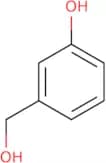
CAS :<p>3-Hydroxybenzyl alcohol is a fatty acid with a hydroxyl group. The clinical relevance of 3-hydroxybenzyl alcohol remains unclear. It has been used in acetate extract and ph optimum tests, as well as to study reaction solutions and nmr spectroscopic data. Hydrogen bonds have been observed between the molecule's hydroxyl group and the oxygen atoms in water molecules, which may explain its antifungal properties. 3-hydroxybenzyl alcohol also has an inhibitory effect on cyclic peptide synthesis, rotarod test performance, and analytical methods. It is a broad-spectrum antimicrobial that can be used against bacteria, fungi, protozoa and viruses. 3-hydroxybenzyl alcohol has an acidic character because it reacts with copper ions to form a copper complex.</p>Formule :C7H8O2Degré de pureté :Min. 95%Couleur et forme :White PowderMasse moléculaire :124.14 g/molDichlorophen BP
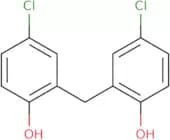
CAS :Anti-cestodal agent; tapeworm infection treatmentFormule :C13H10Cl2O2Degré de pureté :(Titration) 97 - 101%Couleur et forme :PowderMasse moléculaire :269.12 g/mol3-Ethoxyphenol
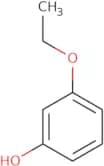
CAS :<p>3-Ethoxyphenol is an organic compound that has a phenolic hydroxyl group attached to the 3-position of an ethyl alcohol. The ethoxy groups on the molecule allow it to bind to receptors in the central nervous system, including the dopamine receptor and the d4 receptor. This binding process is thermodynamically and kinetically favorable, which leads to a high metabolic rate. 3-Ethoxyphenol has been shown to have strong antiviral properties, particularly against chromobacterium violaceum, and can be used as a specific ligand for metal surfaces. The coumarin derivatives of 3-ethoxyphenol have also been shown to inhibit the growth of propionate and covid-19 pandemic.</p>Formule :C8H10O2Degré de pureté :Min. 95%Couleur et forme :PowderMasse moléculaire :138.16 g/mol3-Chlorobisphenol A
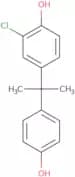
CAS :<p>3-Chlorobisphenol A is a hydroxy group containing compound that occurs naturally in plants. It is a byproduct of the production of polycarbonate plastics, and is also used as an intermediate in the manufacture of other chemicals. 3-Chlorobisphenol A can be found in wastewater, which has led to it being studied for use in wastewater treatment. 3-Chlorobisphenol A has been shown to have constitutive androstane receptor agonist activity, which may account for its toxicities. 3-Chlorobisphenol A has been shown to cause adverse effects on animal health, with high chloride concentrations leading to toxicity. These effects are likely due to its ability to inhibit the response pathway involving cytochrome P450 enzymes.</p>Formule :C15H15ClO2Degré de pureté :Min. 95%Couleur et forme :PowderMasse moléculaire :262.73 g/mol2-Methoxybenzyl alcohol
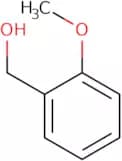
CAS :<p>2-Methoxybenzyl alcohol is a reactive compound that contains two methoxy (CH3O-) groups. It can be used for the synthesis of chiral molecules because it forms an asymmetric hydrogen bond. The reaction of 2-methoxybenzyl alcohol with oxygenated substances, such as formaldehyde and acetaldehyde, leads to oxidation products, including hydroxybenzaldehyde, which can be isolated and converted to benzalacetone. This product has been shown to have photocatalytic activity in the presence of ultraviolet light.</p>Formule :C8H10O2Degré de pureté :Min. 95%Couleur et forme :Colorless Clear LiquidMasse moléculaire :138.16 g/mol4-Allyl-2-methoxyphenol acetate
CAS :4-Allyl-2-methoxyphenol acetate is a natural compound that has been shown to have inhibitory properties against Candida glabrata. It also has a synergistic effect with benzoate and eugenol, which are compounds that are found in the essential oils of plants. 4-Allyl-2-methoxyphenol acetate is toxic to aquatic organisms at high concentrations. The water solubility of this compound is low and it has a vapor pressure of 0.0045 mm Hg at 25°C, indicating that it will not evaporate into the atmosphere very quickly.Formule :C12H14O3Degré de pureté :Min. 95%Couleur et forme :Colorless Clear LiquidMasse moléculaire :206.24 g/mol4-Chloro-2-methoxyphenol
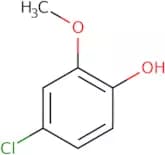
CAS :4-Chloro-2-methoxyphenol (4CMP) is a type of chemical compound that belongs to the aryl halide class. It is used in wastewater treatment as an inhibitor of bacterial growth. 4CMP inhibits bacterial growth by reacting with fatty acids at the surface of the bacteria, forming a coating that prevents bacterial attachment to solid surfaces and mineralization. This process has been shown to be effective in both batch and flow systems, with copper chloride being the best catalyst for this reaction. Kinetic studies have shown that 4CMP has an inhibitory effect on the reaction rate of activated sludge microorganisms, which can be used to optimize process conditions.Formule :C7H7ClO2Degré de pureté :Min. 95%Couleur et forme :Clear LiquidMasse moléculaire :158.58 g/mol3,4-Dinitrobenzyl alcohol
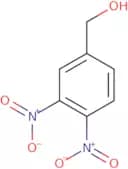
CAS :<p>3,4-Dinitrobenzyl alcohol is a synthetic chemical that is used as an intermediate for the synthesis of other chemicals. It is a dipole with a molecular weight of 188.2 g/mol and has two substituents. 3,4-Dinitrobenzyl alcohol is produced by the oxidation of 3,4-dichlorobenzyl alcohol with nitric acid and sulfuric acid. This process occurs in industrial settings to produce dyes, perfumes, and medicines. 3,4-Dinitrobenzyl alcohol is used as a starting material for the production of other compounds that are used in the textile industry or as insecticides.</p>Formule :C7H6N2O5Degré de pureté :Min. 95%Couleur et forme :Yellow PowderMasse moléculaire :198.13 g/mol2,4-Dimethylbenzyl alcohol
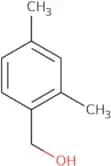
CAS :2,4-Dimethylbenzyl alcohol is a primary alcohol that is found in many natural products. It is a functional group that can be used as a chemical intermediate or an intermediate for the production of other compounds. 2,4-Dimethylbenzyl alcohol has been shown to have genotoxic activity and can cause DNA damage. This compound has been found in adipose tissue and functions by inhibiting the uptake of pyrethroid insecticides by adipose cells. This compound has also been shown to be oxidized into several different oxidation products that are all isomeric with each other, including 2,6-, 3,5-, and 4,6-dimethylbenzaldehyde. These oxidation products may be esterified with conjugates such as glucuronic acid or sulfate which may aid in its absorption through the gut wall into the bloodstream.Formule :C9H12ODegré de pureté :Min. 95%Couleur et forme :Colorless PowderMasse moléculaire :136.19 g/mol4-Ethylbenzyl alcohol
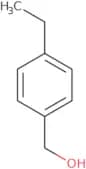
CAS :<p>4-Ethylbenzyl alcohol is a constituent of natural rubber and is produced as a by-product during the manufacture of styrene. It has been shown that 4-ethylbenzyl alcohol can inhibit phosphatidylethanolamine N-methyltransferase, an enzyme that catalyzes the synthesis of phosphatidylethanolamine from phosphatidylcholine, thereby inhibiting lipid biosynthesis in cells. This inhibition may be due to the presence of the hydroxy group on the benzene ring which may bind to the active site of the enzyme and prevent it from binding with its substrate. In addition, 4-ethylbenzyl alcohol may act as an organic solvent and react with other substances in cells to form cytotoxic products. 4-Ethylbenzyl alcohol has been shown to cause narcosis when used in high concentrations or over a long period.</p>Formule :C9H12ODegré de pureté :90%Couleur et forme :PowderMasse moléculaire :136.19 g/mol3-Formylbenzyl alcohol
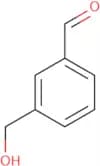
CAS :<p>3-Formylbenzyl alcohol is a fatty acid that has been shown to inhibit the growth of bacteria by binding to the hydroxyl group of the bacterial cell membrane. 3-Formylbenzyl alcohol's antimicrobial activity is due to its ability to inhibit the production of fatty acids in the cell membrane, preventing the formation of an outer layer that protects bacteria from attack. The antibacterial agent also inhibits protein synthesis and prevents DNA replication, resulting in cell death. 3-Formylbenzyl alcohol binds to bacteria through hydrogen bonding and has been shown to be effective against Staphylococcus aureus, Bacillus subtilis, Escherichia coli, and Pseudomonas aeruginosa. The mechanism for this action is not clear but may involve an intramolecular hydrogen bond or nucleophilic attack by one of its carbonyl groups on a nitrogen atom in the bacterial molecule.</p>Formule :C8H8O2Degré de pureté :Min. 95%Couleur et forme :Off-White PowderMasse moléculaire :136.15 g/molBisphenol F diglycidyl ether - mixture of isomers
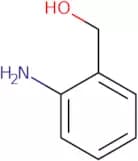
CAS :Component of polymer coatings in food cans; toxic contaminantFormule :C19H20O4Degré de pureté :Min. 88.0 Area-%Couleur et forme :Colorless Clear LiquidMasse moléculaire :312.36 g/mol2-Aminobenzyl alcohol
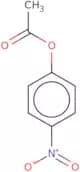
CAS :2-Aminobenzyl alcohol is a chaperone that binds to the polypeptide chain of proteins and prevents them from denaturation. It also has been shown to form hydrogen bonds with other molecules, such as chaperones, and to bind to copper ions. 2-Aminobenzyl alcohol can react with sodium carbonate in an alkaline solution to form 2-aminobenzaldehyde and sodium bicarbonate. The reaction mechanism is thought to involve the formation of a copper complex with x-ray diffraction data showing a new set of peaks at d = 1.81 Å corresponding to the Cu(II) ion coordinated by two amine groups on the benzyl alcohol ring. This compound also reacts with quinoline derivatives in the presence of hydrochloric acid or hydroxyl group in an aprotic solvent such as dimethylformamide (DMF) or acetonitrile (ACN) to produce mianserin hydroFormule :C7H9NODegré de pureté :Min. 97.5%Couleur et forme :Off-White PowderMasse moléculaire :123.15 g/molp-Nitrophenol acetate
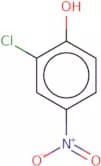
CAS :<p>Substrate for acetyl esterase</p>Formule :C8H7NO4Degré de pureté :Min. 97 Area-%Couleur et forme :PowderMasse moléculaire :181.15 g/mol2-Chloro-4-nitrophenol
CAS :<p>2-Chloro-4-nitrophenol (2CP) is a chemical that has been found to be an optical sensor for nitrite ion. It reacts with nitrite ion at a pH of 5 and changes its color from yellow or orange to red. 2CP is also an antimicrobial agent and has shown biological properties against bacteria, including the ability to inhibit bacterial growth and reduce the number of bacteria in human serum. The optimum concentration for the inhibition of bacterial growth was found to be 0.5 mg/mL, which is much lower than the concentration used in other studies. The genus, bacterial strain, and pH were all found to influence the activity of 2CP against bacteria. Process optimization trials have shown that 4-hydroxycinnamic acid can be used as an alternative substrate for 2CP's reaction with nitrite ion. Monoclonal antibodies were also developed that are specific for transfer reactions with nitrate ion and can be used as a detection system for nit</p>Formule :C6H4ClNO3Degré de pureté :Min. 95%Couleur et forme :PowderMasse moléculaire :173.55 g/mol