Alcools benzyliques
Les alcools benzyliques sont des alcools aromatiques caractérisés par un anneau benzénique attaché à un groupe hydroxyméthyle (-CH2OH). Ces composés sont utilisés comme solvants, conservateurs et intermédiaires dans la synthèse de produits pharmaceutiques, de parfums et de résines. Les alcools benzyliques sont connus pour leurs propriétés antimicrobiennes et leur polyvalence dans diverses réactions chimiques. Chez CymitQuimica, nous offrons une large sélection d'alcools benzyliques de haute qualité pour soutenir vos recherches et applications industrielles.
1458 produits trouvés pour "Alcools benzyliques"
Trier par
Degré de pureté (%)
0
100
|
0
|
50
|
90
|
95
|
100
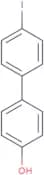
4-(4'-Iodophenyl)phenol
CAS :4-(4'-Iodophenyl)phenol is an analog of the natural substrate thymidine. It is a liquid crystalline compound that has been shown to inhibit the activity of virus thymidine kinase in vitro and in vivo. 4-(4'-Iodophenyl)phenol was also shown to have affinity for the active site of viral thymidine kinase, which may account for its effect on viral replication.Formule :C12H9IODegré de pureté :Min. 98 Area-%Couleur et forme :PowderMasse moléculaire :296.1 g/mol2-Aminobenzyl alcohol
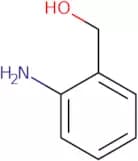
CAS :2-Aminobenzyl alcohol is a chaperone that binds to the polypeptide chain of proteins and prevents them from denaturation. It also has been shown to form hydrogen bonds with other molecules, such as chaperones, and to bind to copper ions. 2-Aminobenzyl alcohol can react with sodium carbonate in an alkaline solution to form 2-aminobenzaldehyde and sodium bicarbonate. The reaction mechanism is thought to involve the formation of a copper complex with x-ray diffraction data showing a new set of peaks at d = 1.81 Å corresponding to the Cu(II) ion coordinated by two amine groups on the benzyl alcohol ring. This compound also reacts with quinoline derivatives in the presence of hydrochloric acid or hydroxyl group in an aprotic solvent such as dimethylformamide (DMF) or acetonitrile (ACN) to produce mianserin hydroFormule :C7H9NODegré de pureté :Min. 97.5%Couleur et forme :Off-White PowderMasse moléculaire :123.15 g/mol4-Ethylbenzyl alcohol
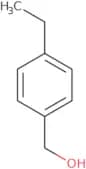
CAS :<p>4-Ethylbenzyl alcohol is a constituent of natural rubber and is produced as a by-product during the manufacture of styrene. It has been shown that 4-ethylbenzyl alcohol can inhibit phosphatidylethanolamine N-methyltransferase, an enzyme that catalyzes the synthesis of phosphatidylethanolamine from phosphatidylcholine, thereby inhibiting lipid biosynthesis in cells. This inhibition may be due to the presence of the hydroxy group on the benzene ring which may bind to the active site of the enzyme and prevent it from binding with its substrate. In addition, 4-ethylbenzyl alcohol may act as an organic solvent and react with other substances in cells to form cytotoxic products. 4-Ethylbenzyl alcohol has been shown to cause narcosis when used in high concentrations or over a long period.</p>Formule :C9H12ODegré de pureté :90%Couleur et forme :PowderMasse moléculaire :136.19 g/mol4-Hydroxybenzyl alcohol
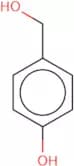
CAS :4-Hydroxybenzyl alcohol is a chemical compound that is found in the rhizoma gastrodiae. It has been shown to have angiogenic properties and may be used as an anti-angiogenic agent. 4-Hydroxybenzyl alcohol is also an inhibitor of matrix metalloproteinases, which are enzymes that degrade the extracellular matrix. This inhibition leads to apoptosis and neuronal death.Formule :C7H8O2Degré de pureté :Min. 80%Couleur et forme :PowderMasse moléculaire :124.14 g/mol2,3-Dichlorobenzyl alcohol
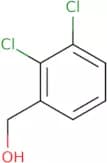
CAS :2,3-Dichlorobenzyl alcohol (2,3-DCBA) is a chlorinated aromatic compound that is used as an industrial solvent. It has significant effects on aerobic bacteria and fungi. 2,3-DCBA inhibits the enzyme lactaldehyde dehydrogenase by covalent binding to its zinc atom. This inhibition leads to the accumulation of lactaldehyde in cells, which can be toxic. 2,3-DCBA also inhibits the enzyme catalase and the synthesis of DNA in eukaryotic cells. In addition, it can catalyze the dioxygenation of naphthalene to form a number of polychlorinated derivatives. The rate of naphthalene formation is dependent on temperature and pressure conditions.Formule :C7H6Cl2ODegré de pureté :Min. 95%Couleur et forme :PowderMasse moléculaire :177.03 g/mol(2,6-Difluoro-3,5-dimethoxyphenyl)methanol
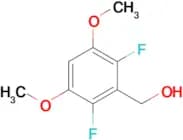
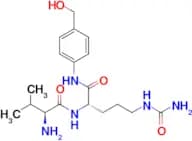
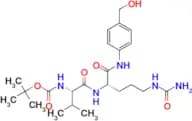
CAS :Formule :C9H10F2O3Degré de pureté :98%Masse moléculaire :204.173Val-Cit-PAB-OH
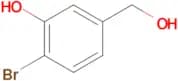
CAS :Formule :C18H29N5O4Degré de pureté :95%Couleur et forme :SolidMasse moléculaire :379.4612-Bromo-5-(hydroxymethyl)phenol
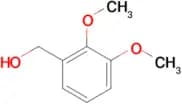
CAS :Formule :C7H7BrO2Degré de pureté :95%Couleur et forme :SolidMasse moléculaire :203.035(2,3-Dimethoxyphenyl)methanol
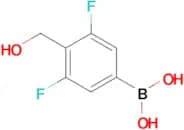
CAS :Formule :C9H12O3Degré de pureté :98%Couleur et forme :SolidMasse moléculaire :168.192(3,5-Difluoro-4-(hydroxymethyl)phenyl)boronic acid
CAS :Formule :C7H7BF2O3Degré de pureté :96%Masse moléculaire :187.94[2-FLUORO-5-(4,4,5,5-TETRAMETHYL-[1,3,2]DIOXABOROLAN-2-YL)-PHENYL]-METHANOL
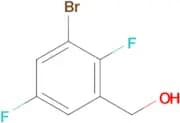
CAS :Degré de pureté :97%Masse moléculaire :252.0899963(3-Bromo-2,5-difluorophenyl)methanol
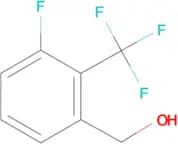
CAS :Formule :C7H5BrF2ODegré de pureté :98%Couleur et forme :No data available.Masse moléculaire :223.0173-Fluoro-2-(trifluoromethyl)benzyl alcohol
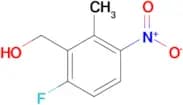
CAS :Formule :C8H6F4ODegré de pureté :98%Couleur et forme :SolidMasse moléculaire :194.129(6-Fluoro-2-methyl-3-nitrophenyl)methanol
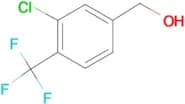
CAS :Formule :C8H8FNO3Degré de pureté :98%Masse moléculaire :185.1543-Chloro-4-(trifluoromethyl)benzyl alcohol
CAS :Formule :C8H6ClF3ODegré de pureté :98%Couleur et forme :SolidMasse moléculaire :210.58



![[2-FLUORO-5-(4,4,5,5-TETRAMETHYL-[1,3,2]DIOXABOROLAN-2-YL)-PHENYL]-METHANOL](/_next/image/?url=https%3A%2Fstatic.cymitquimica.com%2Fproducts%2F10%2Fthumb-webp%2FF796209.webp&w=3840&q=75)