Alcools benzyliques
Les alcools benzyliques sont des alcools aromatiques caractérisés par un anneau benzénique attaché à un groupe hydroxyméthyle (-CH2OH). Ces composés sont utilisés comme solvants, conservateurs et intermédiaires dans la synthèse de produits pharmaceutiques, de parfums et de résines. Les alcools benzyliques sont connus pour leurs propriétés antimicrobiennes et leur polyvalence dans diverses réactions chimiques. Chez CymitQuimica, nous offrons une large sélection d'alcools benzyliques de haute qualité pour soutenir vos recherches et applications industrielles.
1458 produits trouvés pour "Alcools benzyliques"
Trier par
Degré de pureté (%)
0
100
|
0
|
50
|
90
|
95
|
100
4-(4'-Iodophenyl)phenol
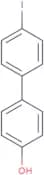
CAS :4-(4'-Iodophenyl)phenol is an analog of the natural substrate thymidine. It is a liquid crystalline compound that has been shown to inhibit the activity of virus thymidine kinase in vitro and in vivo. 4-(4'-Iodophenyl)phenol was also shown to have affinity for the active site of viral thymidine kinase, which may account for its effect on viral replication.Formule :C12H9IODegré de pureté :Min. 98 Area-%Couleur et forme :PowderMasse moléculaire :296.1 g/mol2,3-Difluoro-6-nitrophenol
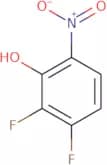
CAS :2,3-Difluoro-6-nitrophenol is a fluorinated phenolic compound that is used in biochemical research as a competitive inhibitor of bacterial growth. It is synthesized by the reaction of 2,3-difluorophenol with nitric acid. The chemical structure can be determined through infrared, NMR, and mass spectrometry techniques. 2,3-Difluoro-6-nitrophenol has been shown to inhibit bacterial growth by binding to the enzyme cytochrome c oxidase. This inhibition prevents electron transport from occurring, resulting in an accumulation of reactive oxygen species and cell death.Formule :C6H3F2NO3Degré de pureté :Min. 95%Couleur et forme :PowderMasse moléculaire :175.09 g/mol5-Fluoro-2-nitrophenol
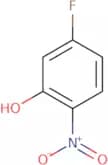
CAS :<p>5-Fluoro-2-nitrophenol is a synthetic compound that has been shown to inhibit the production of nitric oxide in cells. It is most active in inhibiting the release of nitric oxide from cells, but also inhibits its synthesis. 5-Fluoro-2-nitrophenol has been shown to inhibit the production of thromboxane A2, prostacyclin, and endothelin 1. This drug also binds to bacteria and prevents their growth by inhibiting protein synthesis. The binding of 5-fluoro-2-nitrophenol to bacterial DNA leads to inhibition of transcription and translation, preventing protein synthesis.<br>5-Fluoro-2-nitrophenol has been shown to be effective against Trichophyton mentagrophytes (a fungus) and may be useful for the treatment of onychomycosis (fungal infection).</p>Formule :C6H4FNO3Degré de pureté :Min. 95%Couleur et forme :Yellow PowderMasse moléculaire :157.1 g/mol2-Methoxybenzyl alcohol
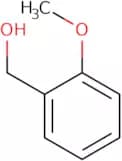
CAS :<p>2-Methoxybenzyl alcohol is a reactive compound that contains two methoxy (CH3O-) groups. It can be used for the synthesis of chiral molecules because it forms an asymmetric hydrogen bond. The reaction of 2-methoxybenzyl alcohol with oxygenated substances, such as formaldehyde and acetaldehyde, leads to oxidation products, including hydroxybenzaldehyde, which can be isolated and converted to benzalacetone. This product has been shown to have photocatalytic activity in the presence of ultraviolet light.</p>Formule :C8H10O2Degré de pureté :Min. 95%Couleur et forme :Colorless Clear LiquidMasse moléculaire :138.16 g/mol(2,3-Dimethoxyphenyl)methanol
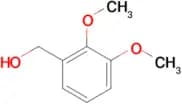
CAS :Formule :C9H12O3Degré de pureté :98%Couleur et forme :SolidMasse moléculaire :168.1922-Bromo-5-(hydroxymethyl)phenol
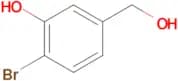
CAS :Formule :C7H7BrO2Degré de pureté :95%Couleur et forme :SolidMasse moléculaire :203.035(2,6-Difluoro-3,5-dimethoxyphenyl)methanol
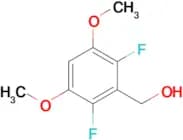
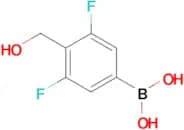
CAS :Formule :C9H10F2O3Degré de pureté :98%Masse moléculaire :204.173(3,5-Difluoro-4-(hydroxymethyl)phenyl)boronic acid
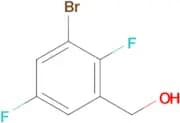
CAS :Formule :C7H7BF2O3Degré de pureté :96%Masse moléculaire :187.94(3-Bromo-2,5-difluorophenyl)methanol
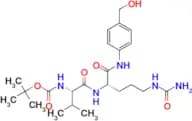
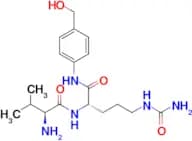
CAS :Formule :C7H5BrF2ODegré de pureté :98%Couleur et forme :No data available.Masse moléculaire :223.017Val-Cit-PAB-OH
CAS :Formule :C18H29N5O4Degré de pureté :95%Couleur et forme :SolidMasse moléculaire :379.461(2,5-Dibromophenyl)methanol
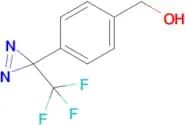
CAS :Formule :C7H6Br2ODegré de pureté :95%Couleur et forme :SolidMasse moléculaire :265.932(4-(3-(Trifluoromethyl)-3H-diazirin-3-yl)phenyl)methanol
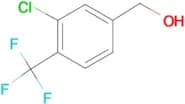
CAS :Degré de pureté :96%Masse moléculaire :216.16299443-Chloro-4-(trifluoromethyl)benzyl alcohol
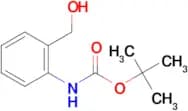
CAS :Formule :C8H6ClF3ODegré de pureté :98%Couleur et forme :SolidMasse moléculaire :210.58TERT-BUTYL (2-(HYDROXYMETHYL)PHENYL)CARBAMATE
CAS :Formule :C12H17NO3Degré de pureté :97%Couleur et forme :Liquid, ViscousMasse moléculaire :223.2723,5-Dibromobenzyl alcohol
CAS :Formule :C7H6Br2ODegré de pureté :95%Couleur et forme :SolidMasse moléculaire :265.932