Naphtalènes
Les naphtalènes sont des hydrocarbures aromatiques polycycliques constitués de deux anneaux benzéniques fusionnés. Ces composés sont utilisés dans la synthèse de colorants, de résines et de produits pharmaceutiques. Les naphtalènes sont appréciés pour leur stabilité chimique et leurs propriétés aromatiques. Chez CymitQuimica, nous offrons une large sélection de naphtalènes de haute qualité pour soutenir vos recherches et applications industrielles.
2427 produits trouvés pour "Naphtalènes"
Trier par
Degré de pureté (%)
0
100
|
0
|
50
|
90
|
95
|
100
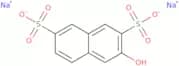
Disodium 2-naphthol-3,6-disulfonate
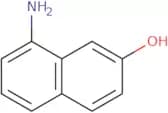
CAS :<p>Disodium 2-naphthol-3,6-disulfonate is a cationic surfactant that reacts with chloride ions to form a gel. It can be used as an inhibitor of corrosion and foaming in the oil industry. Disodium 2-naphthol-3,6-disulfonate has also been shown to have a linear response with fluorescence techniques when it interacts with metal ions. The kinetic data for this reaction is dependent on the concentration of chloride ions, which are generated by hydrochloric acid upon addition of water.</p>Formule :C10H6Na2O7S2Degré de pureté :Min. 97 Area-%Couleur et forme :PowderMasse moléculaire :348.26 g/mol8-Amino-2-naphthol
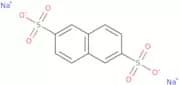
CAS :<p>8-Amino-2-naphthol (8AN) is a natural product that has been found to have anti-inflammatory, antioxidant, and antiviral properties in vitro. It has been shown to inhibit the production of protonated species of 8AN by adding a proton to the hydroxyl group on the naphthalene ring. This reaction occurs at an activation energy of 17.2 kJ/mol and is reversible, with a protonation equilibrium constant of 1.0 x 10 M. The intramolecular hydrogen transfer mechanism is shown in Figure 1 below:</p>Formule :C10H9NODegré de pureté :Min. 98 Area-%Couleur et forme :White PowderMasse moléculaire :159.18 g/mol2,6-Naphthalenedisulfonic acid disodium
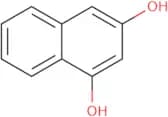
CAS :<p>2,6-Naphthalenedisulfonic acid disodium salt is a luminophore that is soluble in water. This compound has been found to have antibacterial activity against the bacteria Staphylococcus aureus and Escherichia coli. The 2,6-naphthalenedisulfonic acid disodium salt is not active against Gram-negative bacteria, such as Pseudomonas aeruginosa. It has been shown to be effective against Gram-positive bacteria by binding to the cell wall and inhibiting protein synthesis. The 2,6-naphthalenedisulfonic acid disodium salt may also be responsible for the antimicrobial activity of copper salts and other antibacterial agents.</p>Formule :C10H8O6S2•Na2Degré de pureté :Min. 95%Couleur et forme :PowderMasse moléculaire :334.28 g/mol1,3-Dihydroxynaphthalene
CAS :<p>1,3-Dihydroxynaphthalene is an organic compound that has been shown to inhibit HIV infection in vitro. The optimum concentration of 1,3-dihydroxynaphthalene for inhibition of HIV infection is 0.5% (w/v). This compound can be synthesized by the reaction of epoxy and a sulfonamide drug. In addition, 1,3-dihydroxynaphthalene has been shown to have anti-inflammatory properties and can be used as a potential treatment for metabolic disorders such as diabetes mellitus.</p>Formule :C10H8O2Degré de pureté :Min. 95%Couleur et forme :PowderMasse moléculaire :160.17 g/mol6-Methoxy-2-naphthol
CAS :<p>6-Methoxy-2-naphthol is a synthetic compound. It has been shown to be an effective antibacterial agent against Gram-positive bacteria when tested in vitro. 6-Methoxy-2-naphthol also inhibits methyltransferase activity and can be used in the treatment of cancer. The optical properties of 6-Methoxy-2-naphthol have been studied extensively, and it has been found to have strong absorption bands at 350 nm and 575 nm, making it a potential candidate for photodynamic therapy.</p>Formule :C11H10O2Degré de pureté :Min. 95%Couleur et forme :Brown PowderMasse moléculaire :174.2 g/mol2-Naphthalenemethanol
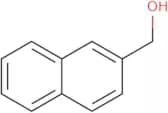
CAS :<p>2-Naphthalenemethanol is a chemical compound that belongs to the group of organic compounds. It is one of the simplest aromatic alcohols and has been used as a model for the study of other more complex molecules. 2-Naphthalenemethanol is synthesized by reacting sodium salts with borane-tetrahydrofuran complex in dry diethyl ether. The reaction mechanism involves the formation of an ester linkage between the two naphthalenes, which can then undergo hydrolysis to form an alcohol. 2-Naphthalenemethanol can be converted into its structural analog, naphthalene, via condensation reactions with formaldehyde or ethylene glycol. The chemical properties of 2-naphthalenemethanol have been studied using nuclear magnetic resonance spectroscopy (NMR) and x-ray crystallography, which revealed that it exists as a zwitterion consisting of two covalently</p>Formule :C11H10ODegré de pureté :Min. 98 Area-%Couleur et forme :PowderMasse moléculaire :158.2 g/mol6-(4,4,5,5-Tetramethyl-1,3,2-dioxaborolan-2-yl)naphthalen-2-ol
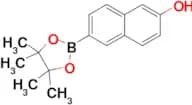
CAS :Formule :C16H19BO3Degré de pureté :95%Masse moléculaire :270.14N1,N1,N8,N8-Tetramethylnaphthalene-1,8-diamine
CAS :Formule :C14H18N2Degré de pureté :95%Couleur et forme :SolidMasse moléculaire :214.3122,3-Diaminonaphthalene
CAS :Formule :C10H10N2Degré de pureté :95%Couleur et forme :SolidMasse moléculaire :158.2042-(6-Methoxy-2-naphthyl)propionic acid
CAS :Formule :C14H14O3Degré de pureté :97%Couleur et forme :Solid, Very pale yellow to pale reddish yellow powderMasse moléculaire :230.263Methyl 4-bromo-1-naphthoate
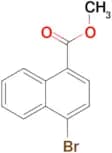
CAS :Formule :C12H9BrO2Degré de pureté :95%Couleur et forme :SolidMasse moléculaire :265.106Eriochrome black T indicator (C.I. 14645), 1% solid
CAS :Degré de pureté :INDCouleur et forme :SolidMasse moléculaire :461.38Naphthalene-1,4,5,8-tetracarboxylic acid, contains Monoanhydride
CAS :Formule :C14H8O8Degré de pureté :95%Couleur et forme :SolidMasse moléculaire :304.21