


Naphtalènes
2437 produits trouvés pour "Naphtalènes"
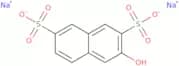
Disodium 2-naphthol-3,6-disulfonate
CAS :Disodium 2-naphthol-3,6-disulfonate is a cationic surfactant that reacts with chloride ions to form a gel. It can be used as an inhibitor of corrosion and foaming in the oil industry. Disodium 2-naphthol-3,6-disulfonate has also been shown to have a linear response with fluorescence techniques when it interacts with metal ions. The kinetic data for this reaction is dependent on the concentration of chloride ions, which are generated by hydrochloric acid upon addition of water.
Formule :C10H6Na2O7S2Degré de pureté :Min. 97 Area-%Couleur et forme :PowderMasse moléculaire :348.26 g/mol1-Naphthoic acid
CAS :1-Naphthoic acid is a phenolic antioxidant that is used in the treatment of inflammatory bowel disease. It has been shown to reduce the production of inflammatory cytokines and improve symptoms of bowel disease. 1-Naphthoic acid, as a fluorescence probe, can be used to detect and quantify hydroxycinnamic acids in biological fluids such as serum and urine. 1-Naphthoic acid also inhibits serine protease activity, which is involved in autoimmune diseases such as lupus erythematosus. It also inhibits the activity of hydrolytic enzymes that are associated with metabolic disorders such as diabetes mellitus. In addition, 1-naphthoic acid can act as an agonist at certain receptors including muscarinic receptors and α2A receptors. It has also been shown to increase levels of retinoic acid and inhibit the formation of hydrogen peroxide by bacteria like H. pylori due to its abilityFormule :C11H8O2Degré de pureté :Min. 95%Couleur et forme :Clear LiquidMasse moléculaire :172.18 g/mol2,6-Naphthalenedisulfonic acid disodium
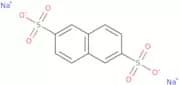
CAS :2,6-Naphthalenedisulfonic acid disodium salt is a luminophore that is soluble in water. This compound has been found to have antibacterial activity against the bacteria Staphylococcus aureus and Escherichia coli. The 2,6-naphthalenedisulfonic acid disodium salt is not active against Gram-negative bacteria, such as Pseudomonas aeruginosa. It has been shown to be effective against Gram-positive bacteria by binding to the cell wall and inhibiting protein synthesis. The 2,6-naphthalenedisulfonic acid disodium salt may also be responsible for the antimicrobial activity of copper salts and other antibacterial agents.Formule :C10H8O6S2•Na2Degré de pureté :Min. 95%Couleur et forme :PowderMasse moléculaire :334.28 g/mol8-Amino-2-naphthol
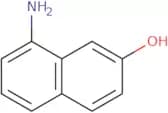
CAS :8-Amino-2-naphthol (8AN) is a natural product that has been found to have anti-inflammatory, antioxidant, and antiviral properties in vitro. It has been shown to inhibit the production of protonated species of 8AN by adding a proton to the hydroxyl group on the naphthalene ring. This reaction occurs at an activation energy of 17.2 kJ/mol and is reversible, with a protonation equilibrium constant of 1.0 x 10 M. The intramolecular hydrogen transfer mechanism is shown in Figure 1 below:Formule :C10H9NODegré de pureté :Min. 98 Area-%Couleur et forme :White PowderMasse moléculaire :159.18 g/mol2-Naphthalenemethanol
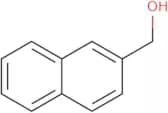
CAS :2-Naphthalenemethanol is a chemical compound that belongs to the group of organic compounds. It is one of the simplest aromatic alcohols and has been used as a model for the study of other more complex molecules. 2-Naphthalenemethanol is synthesized by reacting sodium salts with borane-tetrahydrofuran complex in dry diethyl ether. The reaction mechanism involves the formation of an ester linkage between the two naphthalenes, which can then undergo hydrolysis to form an alcohol. 2-Naphthalenemethanol can be converted into its structural analog, naphthalene, via condensation reactions with formaldehyde or ethylene glycol. The chemical properties of 2-naphthalenemethanol have been studied using nuclear magnetic resonance spectroscopy (NMR) and x-ray crystallography, which revealed that it exists as a zwitterion consisting of two covalently
Formule :C11H10ODegré de pureté :Min. 98 Area-%Couleur et forme :PowderMasse moléculaire :158.2 g/mol6-Methoxy-2-naphthol
CAS :6-Methoxy-2-naphthol is a synthetic compound. It has been shown to be an effective antibacterial agent against Gram-positive bacteria when tested in vitro. 6-Methoxy-2-naphthol also inhibits methyltransferase activity and can be used in the treatment of cancer. The optical properties of 6-Methoxy-2-naphthol have been studied extensively, and it has been found to have strong absorption bands at 350 nm and 575 nm, making it a potential candidate for photodynamic therapy.Formule :C11H10O2Degré de pureté :Min. 95%Couleur et forme :Brown PowderMasse moléculaire :174.2 g/mol1,6-Dimethoxynaphthalene
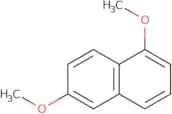
CAS :1,6-Dimethoxynaphthalene is a chiral molecule that can be used as a chemical intermediate in the synthesis of pharmaceuticals. 1,6-Dimethoxynaphthalene has been shown to react with dopamine to form β-unsaturated ketones. This reaction is catalyzed by thionyl chloride. The product of this reaction can be reacted with a chloride, naphthalene or sulfinyl chloride to form five-membered diprotonated products. 1,6-Dimethoxynaphthalene also reacts with hydrosulfite to form sulfinyl functional groups, which can then be used as additives in other chemical reactions.
Formule :C12H12O2Degré de pureté :Min. 98 Area-%Couleur et forme :Orange PowderMasse moléculaire :188.22 g/molPamoic acid
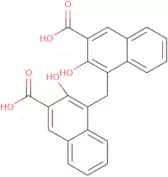
CAS :Pamoic acid is a natural compound that has been found to exhibit antimicrobial activity against a variety of microorganisms. Pamoic acid is also used in the treatment of infectious diseases, such as leprosy, tuberculosis, and AIDS. The biological properties of pamoic acid are due to its ability to bind with peptide hormones and act as a pharmacological agent. Pamoic acid is able to inhibit the synthesis of peptide hormones by binding to their receptors on the cell surface. This inhibition can lead to immunosuppression (e.g., autoimmune diseases) and mitochondrial membrane depolarization. Pamoic acid is also able to bind with benzalkonium chloride, which may account for some of its antimicrobial activity.
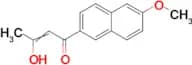
Pamoic acid is synthesized from pantothenic acid (vitamin B5) and caproic acid by means of an enzymatic process called transamination.Formule :C23H16O6Degré de pureté :Min. 95%Couleur et forme :Yellow PowderMasse moléculaire :388.37 g/mol3-hydroxy-1-(6-methoxynaphthalen-2-yl)but-2-en-1-one
CAS :Degré de pureté :98%Masse moléculaire :242.27400212-Ethoxy-1-naphthaleneboronic acid
CAS :Formule :C12H13BO3Degré de pureté :97%Couleur et forme :SolidMasse moléculaire :216.04(S)-3,3′-Bis(4-chlorophenyl)-[1,1′-binaphthalene]-2,2′-diol
CAS :Degré de pureté :98%Masse moléculaire :507.4100037N1,N1,N8,N8-Tetramethylnaphthalene-1,8-diamine
CAS :Formule :C14H18N2Degré de pureté :95%Couleur et forme :SolidMasse moléculaire :214.3122,3-Diaminonaphthalene
CAS :Formule :C10H10N2Degré de pureté :95%Couleur et forme :SolidMasse moléculaire :158.2042-(6-Methoxy-2-naphthyl)propionic acid
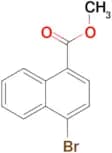
CAS :Formule :C14H14O3Degré de pureté :97%Couleur et forme :Solid, Very pale yellow to pale reddish yellow powderMasse moléculaire :230.263Methyl 4-bromo-1-naphthoate
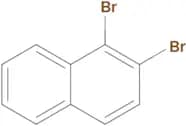
CAS :Formule :C12H9BrO2Degré de pureté :95%Couleur et forme :SolidMasse moléculaire :265.1061,2-Dibromonaphthalene
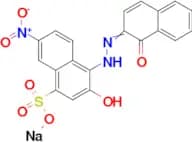
CAS :Degré de pureté :97%Couleur et forme :SolidMasse moléculaire :285.9660034Eriochrome black T indicator (C.I. 14645), 1% solid
CAS :Degré de pureté :INDCouleur et forme :SolidMasse moléculaire :461.38





![(S)-3,3′-Bis(4-chlorophenyl)-[1,1′-binaphthalene]-2,2′-diol](/_next/image/?url=https%3A%2Fstatic.cymitquimica.com%2Fproducts%2F10%2Fthumb-webp%2FF863996.webp&w=3840&q=75)



![[1,1′-Binaphthalene]-4,4′-dicarboxylic acid](/_next/image/?url=https%3A%2Fstatic.cymitquimica.com%2Fproducts%2F10%2Fthumb-webp%2FF619599.webp&w=3840&q=75)