Étalons pharmaceutiques
Les standards pharmaceutiques sont un ensemble complet de matériaux de référence essentiels pour garantir la sécurité, l'efficacité et la qualité des produits pharmaceutiques. Cette catégorie comprend des standards pour les ingrédients pharmaceutiques actifs (APIs), qui sont les composants principaux responsables des effets thérapeutiques. De plus, elle couvre les composés et métabolites pertinents pour les industries pharmaceutique et vétérinaire, fournissant des points de référence pour la mesure et l'analyse précises de ces substances. Les standards de contrôle des nitrosamines sont cruciaux pour détecter et atténuer les nitrosamines potentiellement nocives dans les formulations médicamenteuses. Les standards de toxicologie aident à évaluer la sécurité et les effets indésirables potentiels des composés pharmaceutiques. En outre, les standards pour les activateurs et les inhibiteurs enzymatiques sont essentiels pour la recherche et le développement, permettant des études précises des voies biochimiques et des mécanismes des médicaments. Ces standards pharmaceutiques sont des outils indispensables pour la conformité réglementaire, le contrôle de qualité et la recherche, garantissant que les produits pharmaceutiques répondent à des critères stricts de sécurité et d'efficacité.
Sous-catégories appartenant à la catégorie "Étalons pharmaceutiques"
- APIs pour la recherche et les impuretés(274.925 produits)
- Activateurs et inhibiteurs d'enzymes(2.827 produits)
- Nitrosamines(2.606 produits)
- Composés et métabolites pharmaceutiques et vétérinaires(2.874 produits)
- Toxicologie(13.652 produits)
7836 produits trouvés pour "Étalons pharmaceutiques"
Trier par
Degré de pureté (%)
0
100
|
0
|
50
|
90
|
95
|
100
7-Methoxy-4-(trifluoromethyl)coumarin
CAS :7-Methoxy-4-(trifluoromethyl)coumarin is a potent and selective aromatase inhibitor. It inhibits the activity of the enzyme, which converts testosterone to estradiol. The inhibition of this enzyme may be beneficial in the treatment of breast cancer. This compound has also been shown to inhibit the activity of P450 enzymes and coumarin derivatives, which are involved in drug metabolism and detoxification.Formule :C11H7F3O3Degré de pureté :Min. 95%Masse moléculaire :244.17 g/molBoc-L-methionine - Solid
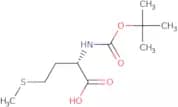
CAS :<p>Boc-L-methionine is a chemical compound that contains the amino acid methionine. It is used in solid-phase synthesis to produce cyclic peptides and proteins. Boc-L-methionine is activated by treatment with trifluoroacetic acid and then reacts with a protected amino acid to form the corresponding amide or ester, respectively. The activated carboxylic acid group of Boc-L-methionine reacts with an unprotected amino group of the amino acid to form an amide or ester linkage, respectively. The reaction products are cleaved from the resin support by hydrogen fluoride for purification.</p>Formule :C10H19NO4SDegré de pureté :Min. 95%Masse moléculaire :249.33 g/molCholesterol butyrate
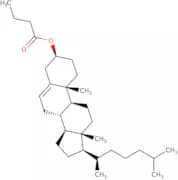
CAS :Produit contrôléCholesterol butyrate is a fatty acid that has been shown to have antimicrobial activity against Lactobacillus acidophilus. It is also used as a treatment for trigeminal neuralgia and bowel disease. Cholesterol butyrate has been shown to inhibit the growth of cancer cells in vitro by inducing apoptosis. This compound may be effective in the treatment of cancer due to its photostability and ability to bind with lipoproteins and other compounds, which leads to an increased concentration of cholesterol butyrate at the site of inflammation. Cholesterol butyrate has also been shown to be effective in preventing inflammatory bowel disease by inhibiting prostaglandin synthesis.Formule :C31H52O2Degré de pureté :Min. 95%Couleur et forme :PowderMasse moléculaire :456.74 g/molSodium 1-naphthalenesulfonate
CAS :<p>Sodium 1-naphthalenesulfonate is a zirconium oxide that is used to remove particles from water. It has been shown that the adsorption mechanism of this compound is based on its crystalline polymorphs. Sodium 1-naphthalenesulfonate has been used in the treatment of fatty acid and hydrochloric acid in urine samples, with sodium carbonate as a buffer. This compound also has film-forming properties, which are beneficial for wastewater treatment and can be used in the formation of polymer films. Sodium 1-naphthalenesulfonate also shows toxicity at high concentrations, but does not cause any toxic effects at low concentrations.</p>Formule :C10H7NaO3SDegré de pureté :Min. 95%Couleur et forme :White Off-White PowderMasse moléculaire :230.22 g/molNocistatin (bovine) trifluoroacetate salt
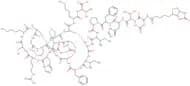
CAS :Please enquire for more information about Nocistatin (bovine) trifluoroacetate salt including the price, delivery time and more detailed product information at the technical inquiry form on this pageFormule :C82H135N21O32Degré de pureté :Min. 95%Masse moléculaire :1,927.07 g/mol3-Hydroxy-2-nitropyridine
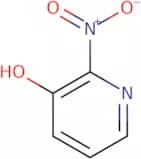
CAS :<p>3-Hydroxy-2-nitropyridine is a chemical compound that has been shown to be an inhibitor of nicotinic acetylcholine receptor. The compound has been found to have luminescence properties and can be used as a fluorescent probe in the study of molecular recognition processes. 3-Hydroxy-2-nitropyridine is also an effective antimicrobial agent and has been shown to have clinical potential for the treatment of neurodegenerative diseases such as Parkinson's disease, Alzheimer's disease, and Huntington's disease. It binds to the nicotinic acetylcholine receptor by forming hydrogen bonds with functional groups on the receptor surface. This binding prevents the agonist from binding and activating the ion channel that leads to depolarization of nerve cells. 3-Hydroxy-2-nitropyridine also reacts with chloride ions in order to form hydrochloric acid, which then inhibits microbial growth by altering their cell membrane permeability. The reaction yield is determined</p>Formule :C5H4N2O3Degré de pureté :Min. 95%Masse moléculaire :140.1 g/molp-Sulfophenylazochromotropic acid trisodium salt
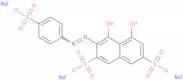
CAS :p-Sulfophenylazochromotropic acid trisodium salt is a chemical that can be used as a building block for the synthesis of various organic compounds. It is an intermediate for the synthesis of other chemicals and can be used as a research chemical in laboratories. This compound has been shown to be useful in the production of pharmaceuticals, agrochemicals, and dyes. CAS No. 23647-14-5.Formule :C16H9N2Na3O11S3Degré de pureté :Min. 95 Area-%Couleur et forme :Yellow PowderMasse moléculaire :570.42 g/molBiotinyl-Hepcidin-25 (human) trifluoroacetate salt
CAS :<p>Please enquire for more information about Biotinyl-Hepcidin-25 (human) trifluoroacetate salt including the price, delivery time and more detailed product information at the technical inquiry form on this page</p>Formule :C123H184N36O33S10Degré de pureté :Min. 95%Masse moléculaire :3,015.66 g/mol7-Hydroxynaphthalene-1-sulfonic acid
CAS :<p>7-Hydroxynaphthalene-1-sulfonic acid is a chemical compound with the formula HNSO. It is an organic compound and a proton acceptor. The conjugate base of 7-hydroxynaphthalene-1-sulfonic acid has a strong absorption band in the ultraviolet region. In DMF solution, the reaction of 7-hydroxynaphthalene-1-sulfonic acid with formamide, hydroxy, and nitrogen atoms produces a product that has been characterized by photoexcitation and kinetic studies. The proton transfer process from formamide to 7-hydroxynaphthalene-1-sulfonic acid was found to be exponential and followed first order kinetics. The protonation constant for this process was determined to be 8.4 x 10 M/equivalent. 7HNSO can also act as an electron acceptor in dimethylsulphoxide (DMSO) solution</p>Degré de pureté :Min. 95%Hymenistatin I Cyclo(-Pro-Pro-Tyr-Val-Pro-Leu-Ile-Ile)
CAS :Hymenistatin I is a cyclic peptide that is synthesized from the natural amino acid L-proline. It has been shown to inhibit tumor growth and is used in the treatment of bladder cancer. The synthesis of Hymenistatin I begins with the protection of proline as an N-tert-butyloxycarbonyl derivative, followed by a sequence of coupling reactions. This synthetic process involves the use of a linker, such as tetrazole or succinimidyl ester, for example. The final product can then be purified by HPLC analysis. Hymenistatin I inhibits calcineurin inhibitor, which are immunosuppressive agents that are used to treat lymphocytic leukemia and other autoimmune diseases.Formule :C47H72N8O9Degré de pureté :Min. 95%Masse moléculaire :893.12 g/molBiotinyl-(Gln1)-Gastrin I (human) Biotinyl-Gln-Gly-Pro-Trp-Leu-Glu-Glu-Glu-Glu-Glu-Ala-Tyr-Gly-Trp-Met-Asp-Phe-NH2
CAS :<p>Please enquire for more information about Biotinyl-(Gln1)-Gastrin I (human) Biotinyl-Gln-Gly-Pro-Trp-Leu-Glu-Glu-Glu-Glu-Glu-Ala-Tyr-Gly-Trp-Met-Asp-Phe-NH2 including the price, delivery time and more detailed product information at the technical inquiry form on this page</p>Formule :C107H141N23O33S2Degré de pureté :Min. 95%Masse moléculaire :2,341.53 g/molAcenaphthylene
CAS :Acenaphthylene is a hydroxylated aromatic compound with the chemical formula C10H8. Acenaphthylene is a natural compound that can be found in coal tar and petroleum. It is used as a solid catalyst for cationic polymerization and as a photochemical reagent in analytical chemistry. Acenaphthylene also has been shown to have antimicrobial properties against bacterial strains, including Escherichia coli and Staphylococcus aureus, with sublethal doses. This compound has been shown to be effective for wastewater treatment and for sample preparation for polymers, due to its insoluble nature. The mechanism of acenaphthylene's antimicrobial activity is not well understood. It may inhibit bacterial growth by inhibiting DNA synthesis or by forming an adduct with bacterial DNA that inhibits replication.Formule :C12H8Degré de pureté :Min. 95%Couleur et forme :Yellow SolidMasse moléculaire :152.19 g/molBiotinyl-LL-37 amide trifluoroacetate salt
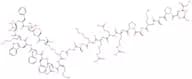
CAS :<p>Please enquire for more information about Biotinyl-LL-37 amide trifluoroacetate salt including the price, delivery time and more detailed product information at the technical inquiry form on this page</p>Formule :C215H355N63O54SDegré de pureté :Min. 95%Masse moléculaire :4,718.58 g/molSomatostatin-25
CAS :Somatostatin-25 H-Ser-Asn-Pro-Ala-Met-Ala-Pro-Arg-Glu-Arg-Lys-Ala-Gly-Cys-Lys-(disulfide bond) is a synthetic somatostatin analog that is conjugated to a linker that allows it to be administered intravenously. Somatostatin inhibits the release of growth hormone and insulin from the anterior pituitary gland, and also inhibits the release of other hormones such as glucagon and thyrotropin. Somatostatin has been shown to be effective in treating kidney disease, a condition characterized by increased levels of creatinine and blood urea nitrogen. This drug has been shown to be reversible with the removal of its linker. Somatostatin binds to receptors on pancreatic cells, inhibiting the secretion of digestive enzymes into the gastrointestinal tract. It also blocks insulin release from pancreatic beta cells, which mayFormule :C127H191N37O34S3Degré de pureté :Min. 95%Masse moléculaire :2,876.3 g/molBiotinyl-pTH (1-34) (human) trifluoroacetate salt
CAS :<p>Please enquire for more information about Biotinyl-pTH (1-34) (human) trifluoroacetate salt including the price, delivery time and more detailed product information at the technical inquiry form on this page</p>Formule :C191H305N57O53S3Degré de pureté :Min. 95%Masse moléculaire :4,344.02 g/mol3,5-Dibromobenzoic acid methyl ester
CAS :<p>3,5-Dibromobenzoic acid methyl ester is an organic compound that has isomers. It is a synthetic substance with the chemical formula CHBrO. This substance can be obtained by reacting benzoic acid with bromine in the presence of aluminium chloride. The nature of this substance is not known due to its multifold structure. 3,5-Dibromobenzoic acid methyl ester has been shown to absorb light and transfer it to another molecule. This molecule can then emit light of a different wavelength or energy level. The dipole moment of the substance interacts with other molecules in close proximity, leading to the transfer of electrons and photons from one molecule to another.</p>Formule :C8H6Br2O2Degré de pureté :Min. 95%Couleur et forme :PowderMasse moléculaire :293.94 g/molDL-Tyrosine ethyl ester hydrochloride
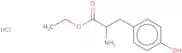
CAS :DL-Tyrosine ethyl ester hydrochloride is a reagent and reaction component that is used in the synthesis of many complex compounds. It is a high quality chemical that has been shown to be useful as a building block for the synthesis of complex compounds. DL-Tyrosine ethyl ester hydrochloride has CAS No. 5619-08-9, which makes it a versatile building block with wide applications in research. This compound can also be used as an intermediate or as a reagent in the synthesis of other chemicals. DL-Tyrosine ethyl ester hydrochloride can be used as a speciality chemical or as a research chemical due to its high quality and versatility.Formule :C11H16ClNO3Degré de pureté :Min. 95%Couleur et forme :White to off white solid.Masse moléculaire :245.7 g/mol5-Deazariboflavin
CAS :<p>5-Deazariboflavin is a proton carrier that is found in the mitochondrial cytochrome b. It has been shown to bind covalently to the protein, forming 5-deazariboflavin-protein adducts. These adducts are formed by reacting with amines and other amino acids present in the protein. In vitro studies have shown that 5-deazariboflavin inhibits Mycobacterium avium growth and acid production by binding to the enzyme pyruvate kinase, which is involved in glycolysis. 5-Deazariboflavin can also be used as an indicator of pH because it is reduced at low pH levels and oxidized at high pH levels. The second order rate constant for this reaction can be determined using kinetic data, such as absorbance or fluorescence properties.</p>Formule :C18H21N3O6Degré de pureté :Min. 95%Couleur et forme :Yellow PowderMasse moléculaire :375.38 g/molBiotinyl-MCH (salmon) trifluoroacetate salt
CAS :Please enquire for more information about Biotinyl-MCH (salmon) trifluoroacetate salt including the price, delivery time and more detailed product information at the technical inquiry form on this pageFormule :C99H153N29O26S5Degré de pureté :Min. 95%Masse moléculaire :2,325.78 g/molPmc-S-methylisothiourea
CAS :Pmc-S-methylisothiourea is a synthetic compound that is used as a cross-coupling agent in organic synthesis. It has been shown to be an efficient and selective catalyst for Suzuki reactions. Pmc-S-methylisothiourea can be used to synthesize isoforms of macrolides, which are compounds with a skeleton similar to penicillin. Pmc-S-methylisothiourea can also be modified by adding ligands, such as thyronine, which can bind to hormone receptors and regulate transcription.Formule :C16H24N2O3S2Degré de pureté :Min. 95%Couleur et forme :PowderMasse moléculaire :356.51 g/mol