


Étalons pharmaceutiques
Les standards pharmaceutiques sont un ensemble complet de matériaux de référence essentiels pour garantir la sécurité, l'efficacité et la qualité des produits pharmaceutiques. Cette catégorie comprend des standards pour les ingrédients pharmaceutiques actifs (APIs), qui sont les composants principaux responsables des effets thérapeutiques. De plus, elle couvre les composés et métabolites pertinents pour les industries pharmaceutique et vétérinaire, fournissant des points de référence pour la mesure et l'analyse précises de ces substances. Les standards de contrôle des nitrosamines sont cruciaux pour détecter et atténuer les nitrosamines potentiellement nocives dans les formulations médicamenteuses. Les standards de toxicologie aident à évaluer la sécurité et les effets indésirables potentiels des composés pharmaceutiques. En outre, les standards pour les activateurs et les inhibiteurs enzymatiques sont essentiels pour la recherche et le développement, permettant des études précises des voies biochimiques et des mécanismes des médicaments. Ces standards pharmaceutiques sont des outils indispensables pour la conformité réglementaire, le contrôle de qualité et la recherche, garantissant que les produits pharmaceutiques répondent à des critères stricts de sécurité et d'efficacité.
Sous-catégories appartenant à la catégorie "Étalons pharmaceutiques"
- APIs pour la recherche et les impuretés(274.923 produits)
- Activateurs et inhibiteurs d'enzymes(2.827 produits)
- Nitrosamines(2.606 produits)
- Composés et métabolites pharmaceutiques et vétérinaires(2.873 produits)
- Toxicologie(13.652 produits)
7836 produits trouvés pour "Étalons pharmaceutiques"
Trier par
Degré de pureté (%)
0
100
|
0
|
50
|
90
|
95
|
100
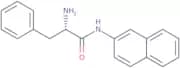
L-Phenylalanine b-naphthylamide
CAS :L-Phenylalanine b-naphthylamide is a phenylalanine derivative that can be used as an indicator for the detection of Clostridium, 2-naphthylamine, and other anaerobes. This compound is a chromogenic substrate that reacts with amino groups in amino acids and amides in peptides to form a variety of color products. The condensation of phenylalanine with 2-naphthylamine is catalyzed by enzymes found in clostridia. When L-phenylalanine b-naphthylamide is incubated with tissue from animals or humans, it produces a pink coloration that indicates the presence of clostridia. The aerobic conditions necessary for this reaction are also found in the environment and within the body.Formule :C19H18N2ODegré de pureté :Min. 95%Masse moléculaire :290.36 g/molN-(Aminocarbonyl)aspartic acid
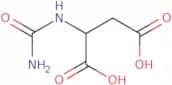
CAS :N-Aminocarbonyl-L-aspartic acid (NACD) is a molecule that is found in urine samples. It can be used as a biomarker to detect cancer, HIV infection, and many other diseases. The presence of NACD has been correlated with the development of acidosis, which is characterized by an increase in the pH of body fluids. The following are a few examples of how this product might be described on an eCommerce site: Rifapentine is an anti-tuberculosis drug that belongs to the class of rifamycins. It is the most active of the rifamycins for the treatment of tuberculosis. Rifapentine inhibits bacterial growth by binding to DNA-dependent RNA polymerase, thereby preventing transcription and replication. The high frequency of human activity has been shown using a patch-clamp technique on human erythrocytes. This active form is metabolized throughFormule :C5H8N2O5Degré de pureté :Min. 95%Couleur et forme :PowderMasse moléculaire :176.13 g/molCholesterol Ethyl Carbonate
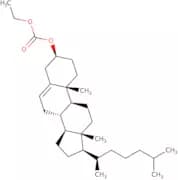
CAS :Produit contrôlé<p>Cholesterol Ethyl Carbonate is a crystalline solid with the formula C27H44O3. It has a particle size of less than 10 microns and an average particle diameter of 3.1 microns. Cholesterol ethyl carbonate is a form of cholesterol that can be administered to patients as an oral therapy for high cholesterol levels in the blood. This drug is dissolved in organic solvents and administered orally, usually as microcapsules. The treatment method reversibly inhibits the enzyme HMG-CoA reductase, which is responsible for producing cholesterol in the liver cells, thereby reducing blood cholesterol levels. Cholesterol ethyl carbonate has a high melting point and low efficiency when used as a drug due to its high molecular weight and lipophilicity.</p>Formule :C30H50O3Degré de pureté :Min. 95%Couleur et forme :PowderMasse moléculaire :458.72 g/mol2'-Acetylacteoside
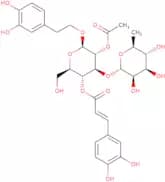
CAS :<p>2'-Acetylacteoside is a naturally occurring phenylethanoid glycoside, which is derived from various plant sources. It exhibits antioxidant properties by scavenging reactive oxygen species and inhibiting oxidative stress. This mode of action supports cellular health by protecting cells from oxidative damage and maintaining redox balance.</p>Degré de pureté :Min. 95%(3a,5b,12a)-3,12-Dihydroxy-7-oxocholan-24-oic acid methyl ester
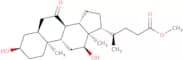
CAS :Produit contrôlé(3a,5b,12a)-3,12-Dihydroxy-7-oxocholan-24-oic acid methyl ester is an organic compound that belongs to the family of bile acids. It is synthesized in the liver by a series of reactions involving the conversion of cholesterol. The synthesis of this compound has been studied by x-ray analysis on single crystals and by various electron diffraction methods. This study revealed that the molecule is electron deficient and binds well to chloroform. (3a,5b,12a)-3,12-Dihydroxy-7-oxocholan-24-oic acid methyl ester has also been shown to have a constant molecular weight with a molecular formula of C37H64O4.Formule :C25H40O5Degré de pureté :Min. 95%Masse moléculaire :420.58 g/molN-(1,2,3,4-Tetrahydro-7-methoxy-1-oxo-2-naphthalenyl)propanamide
CAS :Produit contrôléPlease enquire for more information about N-(1,2,3,4-Tetrahydro-7-methoxy-1-oxo-2-naphthalenyl)propanamide including the price, delivery time and more detailed product information at the technical inquiry form on this pageFormule :C14H17NO3Degré de pureté :Min. 95%Masse moléculaire :247.29 g/molVitamin B12 c-lactone
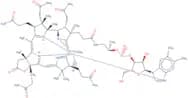
CAS :<p>Please enquire for more information about Vitamin B12 c-lactone including the price, delivery time and more detailed product information at the technical inquiry form on this page</p>Formule :C63H85CoN13O15PDegré de pureté :Area-% Min. 95 Area-%Masse moléculaire :1,354.33 g/mol2-Chloro-N-1-naphthylacetamide
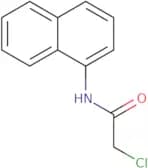
CAS :<p>2-Chloro-N-1-naphthylacetamide is a synthetic organic compound that belongs to the class of sulfur compounds. It is used in the synthesis of other compounds and has been shown to be a potent inhibitor of hydroxylapatite and sulfate hydrolysis. The reaction mechanism for this compound’s inhibition of sulfate hydrolysis is not known, but it may be due to its ability to act as an electron donor or acceptor. 2-Chloro-N-1-naphthylacetamide also has carcinogenic properties, with some studies suggesting that it can cause liver cancer in rodents.</p>Formule :C12H10ClNODegré de pureté :Min. 95%Masse moléculaire :219.67 g/molD-Aspartic acid b tert-butyl ester
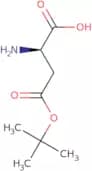
CAS :<p>D-Aspartic acid b tert-butyl ester (DATB) is an antimicrobial agent that has been shown to inhibit the growth of drug-resistant bacteria. DATB has been shown to be active against both gram-positive and gram-negative bacteria, with a selectivity for those with a peptidoglycan cell wall. DATB inhibits the synthesis of amide and peptide bonds and has been shown to have a wide range of uses in the production of antibiotics, such as carbamates and natural products.</p>Formule :C8H15NO4Degré de pureté :Min. 95%Couleur et forme :PowderMasse moléculaire :189.21 g/mol1-Testosteronetetrahydropyran
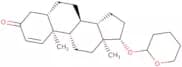
CAS :Produit contrôlé<p>Please enquire for more information about 1-Testosteronetetrahydropyran including the price, delivery time and more detailed product information at the technical inquiry form on this page</p>Formule :C24H36O3Degré de pureté :Min. 95%Masse moléculaire :372.54 g/mol1-(2-Hydroxyethyl)-3,3-dimethylindolino-6'-nitrobenzopyrylospiran
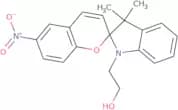
CAS :<p>Please enquire for more information about 1-(2-Hydroxyethyl)-3,3-dimethylindolino-6'-nitrobenzopyrylospiran including the price, delivery time and more detailed product information at the technical inquiry form on this page</p>Degré de pureté :Min. 95%Erythrosin B
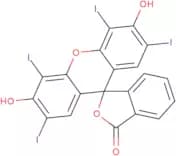
CAS :Erythrosin B is a fluorescent dye that is used in biological research. It has been shown to have cytotoxic effects on human leukemia cells (HL-60) and cytotoxic effects on human lymphocytes. The toxicities of this compound are dependent on the concentration and the duration of exposure, as well as the type of biological sample. Erythrosin B can be used to detect DNA damage in cells by using an analytical method called matrix effect synchronous fluorescence. This dye appears to be genotoxic in vitro and in vivo, but its long-term toxicity is unknown. Erythrosin B has antimicrobial properties against gram-positive bacteria and fungi, but it does not have any activity against Gram negative bacteria or viruses.Formule :C20H8I4O5Degré de pureté :Min. 95%Couleur et forme :PowderMasse moléculaire :835.89 g/mol1,3-Dimethylthiourea
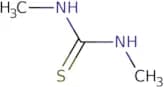
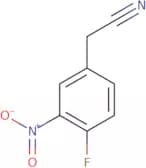
CAS :1,3-Dimethylthiourea (DMU) is a chemical compound that has been shown to have antioxidant properties. DMU is an inhibitor of the enzyme aconitase, which catalyzes the second step in the Krebs cycle and is involved in energy metabolism. DMU inhibits the activity of other enzymes such as xanthine oxidase and nitric oxide synthase, which are responsible for the production of reactive oxygen species (ROS). DMU also shows pro-apoptotic properties by inducing activation of a pro-apoptotic protein called p53. DMU has been shown to be an effective treatment for eye disorders such as glaucoma and retinal degeneration when used together with low doses of corticosteroids. It has also been shown to protect against myocardial infarction and provide cardioprotection following reperfusion injury.Formule :C3H8N2SDegré de pureté :Min. 95%Masse moléculaire :104.18 g/mol(4-Fluoro-3-Nitrophenyl)Acetonitrile
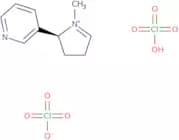
CAS :<p>4-Fluoro-3-nitrophenylacetonitrile is a monomer that can be synthesised from the reaction of carbamic acid and diphenyl ether. It is chiral, stereoselective and nucleophilic. 4-Fluoro-3-nitrophenylacetonitrile can also be synthesised by reacting fluoroacetamide with sodium cyanide in water, forming the corresponding amide, which reacts with acetonitrile to form the nitro compound. The anti-cancer properties of 4-fluoro-3 nitrophenylacetonitrile have been studied in vitro and in vivo. This substance has been shown to inhibit growth of cancer cells and induce apoptosis. In addition, this substance has been used as a synthetic strategy for dihydroisoquinolines, which are important for their anti-cancer properties.</p>Formule :C8H5FN2O2Degré de pureté :Min. 95%Masse moléculaire :180.14 g/molS-(-)-Nicotine-δ1’-(5’)-iminium diperchlorate salt
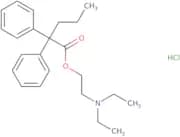
CAS :<p>Please enquire for more information about S-(-)-Nicotine-delta1’-(5’)-iminium diperchlorate salt including the price, delivery time and more detailed product information at the technical inquiry form on this page</p>Formule :C10H14Cl2N2O8Degré de pureté :Min. 95%Masse moléculaire :361.13 g/molN,N-Diethylaminoethyl 2,2-diphenylvalerate hydrochloride
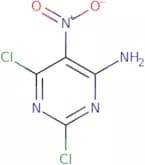
CAS :Produit contrôléN,N-Diethylaminoethyl 2,2-diphenylvalerate hydrochloride is a depressant drug that inhibits the growth of bacteria by inhibiting fatty acid synthesis. It has been shown to inhibit group P2 enzymes that are involved in the production of fatty acids. In this way, it inhibits the formation and release of ATP, which is essential for bacterial growth. N,N-Diethylaminoethyl 2,2-diphenylvalerate hydrochloride also has inhibitory properties against bacteria that cause infectious diseases. This drug is effective against Hl-60 cells and can be used as a diagnostic tool for detection sensitivity and detection time.Formule :C23H32ClNO2Degré de pureté :Min. 95%Masse moléculaire :389.96 g/mol2,6-Dichloro-5-nitropyrimidin-4-amine
CAS :<p>2,6-Dichloro-5-nitropyrimidin-4-amine is a chlorinating agent that reacts with aliphatic and aromatic amines to form substituted pyrimidines. The substitution pattern of the product depends on the regioselectivity of the reaction. 2,6-Dichloro-5-nitropyrimidin-4-amine is one of the few chlorinating agents that react with propylamine. Substitution at position 2 of the purine ring has been found to be more selective than substitution at position 6. The 2,6-dichloropyrimidine can also be used as a nitro group source in chemical synthesis or as an intermediate in production of other compounds.</p>Formule :C4H2Cl2N4O2Degré de pureté :Min. 95%Couleur et forme :SolidMasse moléculaire :208.99 g/mol2-(2-Aminoethyl)-3',6'-bis(diethylaMino)spiro[isoindoline-1,9'-xanthen]-3-one
CAS :Please enquire for more information about 2-(2-Aminoethyl)-3',6'-bis(diethylaMino)spiro[isoindoline-1,9'-xanthen]-3-one including the price, delivery time and more detailed product information at the technical inquiry form on this pageDegré de pureté :Min. 95%Cholesterol Hydrocinnamate
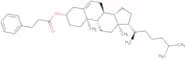
CAS :Produit contrôléCholesterol hydrocinnamate is a non-polar, microcapsule-encapsulated solid that has been shown to be reversibly endothermic. The transition from the solid phase to the liquid phase occurs at approximately 20°C and is accompanied by a change in color from red to yellow. The coating on the surface of the microcapsules are composed of polymers with optical properties such as high refractive index, low absorption, and low scattering. These properties are used to alter light transmission and reflection in order to evaluate the particle size distribution. Cholesterol hydrocinnamate can be prepared by thermal treatment of cholesterol cinnamate with cinnamaldehyde in solvents such as ethanol or acetone. This method produces particles that are not only non-polar but also soluble in nonpolar solvents such as hexane or heptane.Degré de pureté :Min. 95%(11b,16a)-16,17-[Butylidenebis(oxy)]-11-hydroxy-3,20-dioxopregna-1,4-dien-21-al
CAS :Produit contrôléPlease enquire for more information about (11b,16a)-16,17-[Butylidenebis(oxy)]-11-hydroxy-3,20-dioxopregna-1,4-dien-21-al including the price, delivery time and more detailed product information at the technical inquiry form on this pageFormule :C25H34O6Degré de pureté :Min. 95%Couleur et forme :PowderMasse moléculaire :430.53 g/mol


![2-(2-Aminoethyl)-3',6'-bis(diethylaMino)spiro[isoindoline-1,9'-xanthen]-3-one](/_next/image/?url=https%3A%2Fstatic.cymitquimica.com%2Fproducts%2F3D%2Fthumb-webp%2FFA39948.webp&w=3840&q=75)
![(11b,16a)-16,17-[Butylidenebis(oxy)]-11-hydroxy-3,20-dioxopregna-1,4-dien-21-al](/_next/image/?url=https%3A%2Fstatic.cymitquimica.com%2Fproducts%2F3D%2Fthumb-webp%2FFB146157.webp&w=3840&q=75)