Étalons pharmaceutiques
Les standards pharmaceutiques sont un ensemble complet de matériaux de référence essentiels pour garantir la sécurité, l'efficacité et la qualité des produits pharmaceutiques. Cette catégorie comprend des standards pour les ingrédients pharmaceutiques actifs (APIs), qui sont les composants principaux responsables des effets thérapeutiques. De plus, elle couvre les composés et métabolites pertinents pour les industries pharmaceutique et vétérinaire, fournissant des points de référence pour la mesure et l'analyse précises de ces substances. Les standards de contrôle des nitrosamines sont cruciaux pour détecter et atténuer les nitrosamines potentiellement nocives dans les formulations médicamenteuses. Les standards de toxicologie aident à évaluer la sécurité et les effets indésirables potentiels des composés pharmaceutiques. En outre, les standards pour les activateurs et les inhibiteurs enzymatiques sont essentiels pour la recherche et le développement, permettant des études précises des voies biochimiques et des mécanismes des médicaments. Ces standards pharmaceutiques sont des outils indispensables pour la conformité réglementaire, le contrôle de qualité et la recherche, garantissant que les produits pharmaceutiques répondent à des critères stricts de sécurité et d'efficacité.
Sous-catégories appartenant à la catégorie "Étalons pharmaceutiques"
- APIs pour la recherche et les impuretés(274.920 produits)
- Activateurs et inhibiteurs d'enzymes(2.827 produits)
- Nitrosamines(2.606 produits)
- Composés et métabolites pharmaceutiques et vétérinaires(2.871 produits)
- Toxicologie(13.652 produits)
7836 produits trouvés pour "Étalons pharmaceutiques"
Trier par
Degré de pureté (%)
0
100
|
0
|
50
|
90
|
95
|
100
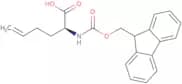
(S)-N-Fmoc-2-(3'-butenyl)glycine
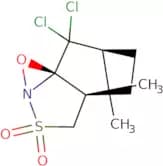
CAS :<p>Please enquire for more information about (S)-N-Fmoc-2-(3'-butenyl)glycine including the price, delivery time and more detailed product information at the technical inquiry form on this page</p>Formule :C21H21NO4Degré de pureté :Min. 95%Couleur et forme :White PowderMasse moléculaire :351.4 g/mol(+)-(8,8-Dichlorocamphorylsulfonyl)oxaziridine
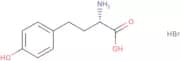
CAS :<p>Please enquire for more information about (+)-(8,8-Dichlorocamphorylsulfonyl)oxaziridine including the price, delivery time and more detailed product information at the technical inquiry form on this page</p>Formule :C10H13Cl2NO3SDegré de pureté :Min. 95%Masse moléculaire :298.19 g/molHomo-L-tyrosine hydrobromide
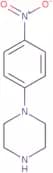
CAS :<p>Homo-L-tyrosine hydrobromide (HLTB) is a prodrug that is converted to L-3,4-dihydroxyphenylalanine (L-dopa) in vivo. It is used as an immunomodulator by stimulating the immune system and reducing inflammation. HLTB has been shown to have anti-inflammatory effects on the production of cytokines and chemokines, which are important for tumor growth and metastasis. HLTB is also known to inhibit tyrosine kinase, which plays a role in the development of some cancers.</p>Formule :C10H14BrNO3Degré de pureté :Min. 95%Masse moléculaire :276.13 g/mol1-(4-Nitrophenyl)piperazine
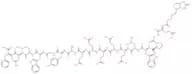
CAS :<p>1-(4-Nitrophenyl)piperazine is a nitro compound with a molecular weight of 147.2. It is soluble in DMSO and ethanol, but not in water. 1-(4-Nitrophenyl)piperazine has the ability to absorb ultraviolet radiation (UV) and it can be used as a UV-absorbing agent in plastics. 1-(4-Nitrophenyl)piperazine can also be used as an intermediate for the synthesis of triazole antifungal agents. The molecule has been shown to have high values at magnetic resonance spectroscopy (NMR). The crystal structure of 1-(4-nitrophenyl)piperazine was determined by x-ray diffraction data and molecular modeling techniques. This molecule's melting point was determined by titration calorimetry, which showed that its melting point is around 195 degrees Celsius.br> 1-(4-Nitrophenyl)piper</p>Formule :C10H13N3O2Degré de pureté :Min. 95%Masse moléculaire :207.23 g/molBiotinyl-(Glu1)-Gastrin I (human) Biotinyl-Glu-Gly-Pro-Trp-Leu-Glu-Glu-Glu-Glu-Glu-Ala-Tyr-Gly-Trp-Met-Asp-Phe-NH2
CAS :<p>Please enquire for more information about Biotinyl-(Glu1)-Gastrin I (human) Biotinyl-Glu-Gly-Pro-Trp-Leu-Glu-Glu-Glu-Glu-Glu-Ala-Tyr-Gly-Trp-Met-Asp-Phe-NH2 including the price, delivery time and more detailed product information at the technical inquiry form on this page</p>Formule :C107H140N22O34S2Degré de pureté :Min. 95%Masse moléculaire :2,342.52 g/mol5,8-Dihydroxy-1,4-naphthoquinone
CAS :<p>5,8-Dihydroxy-1,4-naphthoquinone is a natural compound that is found in the bark of "Nothofagus" species. It has been shown to inhibit the transcriptional activity of NF-κB and AP-1 through its ability to bind to the response element in these promoters. 5,8-Dihydroxy-1,4-naphthoquinone has been shown to be cytotoxic against HL60 cells in vitro. This cytotoxicity may be due to its ability to cause an increase in cytosolic Ca2+ levels by inhibiting the mitochondrial ATPase enzyme. 5,8-Dihydroxy-1,4-naphthoquinone has also been shown to induce apoptosis in fetal bovine retinal cells and neuronal death in rat cortical neurons. It is thought that this drug may have anticancer properties because it triggers DNA damage and inhibits cell proliferation.</p>Formule :C10H6O4Degré de pureté :Min 85%Masse moléculaire :190.15 g/molGLP-1 (7-36)-Lys(biotinyl) amide (human, bovine, guinea pig, mouse, rat) trifluoroacetate
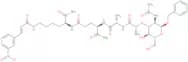
CAS :<p>Please enquire for more information about GLP-1 (7-36)-Lys(biotinyl) amide (human, bovine, guinea pig, mouse, rat) trifluoroacetate including the price, delivery time and more detailed product information at the technical inquiry form on this page</p>Formule :C165H252N44O48S•(C2HF3O2)xDegré de pureté :Min. 95%Masse moléculaire :3,652.1 g/molAc-α-benzyl-muramyl-Ala-D-Glu(Lys(trans-(3-nitrocinnamoyl))-NH2)-NH2
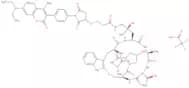
CAS :Please enquire for more information about Ac-alpha-benzyl-muramyl-Ala-D-Glu(Lys(trans-(3-nitrocinnamoyl))-NH2)-NH2 including the price, delivery time and more detailed product information at the technical inquiry form on this pageFormule :C41H56N8O14Degré de pureté :Min. 95%Masse moléculaire :884.93 g/molCoumarin-Phalloidin
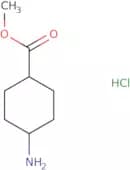
CAS :<p>Fluorescently labeled phalloidin</p>Formule :C62H75N11O15S2Degré de pureté :Min. 95%Masse moléculaire :1,278.46 g/molcis-4-Aminocyclohexanecarboxylic acid methyl ester hcl
CAS :cis-4-Aminocyclohexanecarboxylic acid methyl ester hcl is a chemical compound that is used in research and industry. It is an efficient isomer of 4-aminocyclohexanecarboxylic acid methyl ester hydrochloride. cis-4-Aminocyclohexanecarboxylic acid methyl ester hcl has been used as a model for the study of glimepiride, an insulin secretagogue, and has been shown to be active against Toxoplasma gondii.Formule :C8H15NO2·HClDegré de pureté :Min. 95%Couleur et forme :SolidMasse moléculaire :193.67 g/molD-Aspartic acid
CAS :D-Aspartic acid is a basic protein that binds to glutamate. It has been shown to be effective in the prevention and treatment of bone cancer in mice. D-Aspartic acid also has an inhibitory effect on the production of estradiol benzoate, which is an enzyme responsible for bone resorption. D-Aspartic acid may also be used as a dietary supplement for bowel disease and bowel motility. D-Aspartic acid has been shown to have receptor activity in humans and to have physiological effects on the locomotor activity of rats. The complex enzyme d-aspartate oxidase can be inhibited by d-aspartic acid.Formule :C4H7NO4Degré de pureté :Min. 95%Couleur et forme :White PowderMasse moléculaire :133.1 g/molSodium dibutylnaphthalenesulphonate
CAS :<p>Sodium dibutylnaphthalenesulphonate is a stabilizer that reacts with fatty acids, dialkyl phosphates, and growth regulators to form insoluble particles. It has been found to be particularly effective in the treatment of plant diseases caused by fungi. Sodium dibutylnaphthalenesulphonate has been shown to stabilize active substances and bioactive substances, such as organic acids and oxime derivatives. These compounds are used in a variety of applications, such as pharmaceuticals, pesticides, herbicides, food additives, and cosmetics.</p>Formule :C18H24O3S•NaDegré de pureté :60 To 65%Couleur et forme :PowderMasse moléculaire :343.43 g/mol2,6-Dimethylaniline hydrochloride
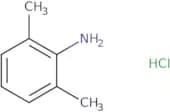
CAS :<p>Ropivacaine Related Compound A is a chemical compound that has not been fully characterized. It is an inhibitor of the enzyme P-hydroxybenzoic acid, which is involved in the synthesis of tyrosine and phenylalanine. Ropivacaine Related Compound A has shown to be potent inducers of the enzyme polymerase chain reaction (PCR) when combined with other chemicals such as potassium peroxydisulfate. The optimum concentration for this chemical compound to inhibit PCR reactions is 50 mM. Ropivacaine Related Compound A may have carcinogenic potential due to its ability to form p-hydroxybenzoic acid and other carcinogenic compounds. This chemical compound has been found to be a good candidate for wastewater treatment due to its low potency and high solubility in water.</p>Formule :C8H12ClNDegré de pureté :Min. 95%Couleur et forme :PowderMasse moléculaire :157.64 g/molAllatotropin
CAS :<p>Allatotropin is a diagnostic agent that belongs to the class of antimicrobial peptides. It has been shown to have strong activity against Gram-positive and Gram-negative bacteria. Allatotropin inhibits the growth of bacteria by binding to the external membrane, disrupting its integrity. Allatotropin also has been shown to increase gamma-aminobutyric acid levels in brain tissue and galleria mellonella larvae when injected subcutaneously. This may be due to its ability to activate GABA receptors. Allatotropin can be synthesized in vitro by combining β-amino acids with fatty acids and terminal residues, such as lysine, arginine, and glutamine, under conditions that mimic those found in living cells. This synthetic process yields a mixture of allatotropins with varying chain lengths and amino acid sequences.</p>Formule :C65H103N19O17S2Degré de pureté :Min. 95%Masse moléculaire :1,486.76 g/molTetrabromophenyl-porphyrin
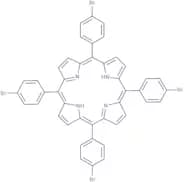
CAS :<p>Tetrabromophenyl-porphyrin (TBP) is a synthetic molecule that interacts with aldehydes in the presence of light. This interaction results in the formation of a phenyl radical and an excited state, which leads to the production of carbon dioxide and water. TBP is used as a catalyst for these reactions because it is more stable than other molecules that are typically used. The catalytic effect of TBP can be studied by means of spectroscopies and microscopy techniques. The crystal x-ray diffraction technique was used to analyze the molecular structure of TBP by determining the distances between atoms in its molecules. It was discovered that TBP has two phenyl groups and four bromine atoms per porphyrin ring. Diffraction techniques were also used to study how light interacts with TBP molecules, showing that they have strong optical properties when adsorbed on surfaces.</p>Formule :C44H26N4Br4Degré de pureté :Min. 95%Masse moléculaire :930.32 g/mol3'-Methylacetophenone
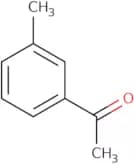
CAS :<p>3'-Methylacetophenone is an organic compound that belongs to the class of phenols. It has a number of reactions with other chemicals, including hydrogen chloride. The reaction between 3'-methylacetophenone and hydrogen chloride is an example of a nucleophilic substitution reaction. The rate of this reaction increases as the temperature rises, but slows down when the concentration of chloride ions increases. Kinetic studies have shown that the activation energy for this process is 12 kcal/mol, which is in agreement with previous results obtained from analytical methods and preparative experiments.</p>Formule :C9H10ODegré de pureté :Min. 95%Masse moléculaire :134.18 g/mold-Tocopherol
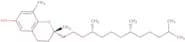
CAS :<p>d-Tocopherol is a natural antioxidant that belongs to the group of fatty acid esters. It is an important component of human diet and can be found in vegetables, nuts, and grains. d-Tocopherol is a potent inhibitor of cell proliferation, which has been shown using MDA-MB 231 breast cancer cells. This compound also has anti-inflammatory properties, as it inhibits the production of inflammatory cytokines such as IL-6 and TNF-α. d-Tocopherol also has a protective effect against environmental pollution, including heavy metals and polycyclic aromatic hydrocarbons (PAHs). This antioxidant prevents lipid peroxidation and reduces the number of reactive oxygen species (ROS) in cells exposed to these pollutants.</p>Formule :C27H46O2Degré de pureté :Min. 95%Couleur et forme :Yellow PowderMasse moléculaire :402.65 g/molN-Stearoyl phytosphingosine
CAS :<p>N-Stearoyl phytosphingosine is a molecule with an ester linkage that is used in the study of physiological function. It has been shown to mimic the effect of tebuconazole, a chemical fungicide, on mitochondrial membrane potential and ATP levels. This compound can be synthesized from fatty acids and hydroxyl groups. The molecule has also been shown to have skin nourishing properties when applied topically to skin cells in vivo.</p>Formule :C36H73NO4Degré de pureté :Min. 95%Couleur et forme :White To Off-White SolidMasse moléculaire :583.97 g/molAcetyl-(D-Lys2, Sar 3)-Melanotropin-Potentiating Factor acetate salt
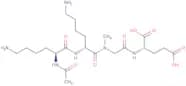
CAS :Acetyl-(D-Lys2, Sar 3)-Melanotropin-Potentiating Factor acetate salt Ac-Lys-D-Lys-Sar-Glu-OH acetate salt is synthesized from a tetrapeptide. It has been shown to be neurotrophic and to stimulate the uptake of dopamine. Acetyl-(D-Lys2, Sar 3)-Melanotropin-Potentiating Factor acetate salt Ac-Lys-D-Lys-Sar-Glu-OH acetate salt has also been shown to be an analog of the growth factor nerve growth factor (NGF) and have similar effects on muscle tissue.Formule :C22H40N6O8Degré de pureté :Min. 95%Masse moléculaire :516.59 g/mol5'-Fluoro-2'-hydroxyacetophenone
CAS :<p>5'-Fluoro-2'-hydroxyacetophenone is a synthetic compound that has been shown to inhibit the growth of human pathogens. It is an antimicrobial agent that can be used as an alternative to antibiotics for the treatment of bacterial infections. 5'-Fluoro-2'-hydroxyacetophenone was synthesized by means of an asymmetric synthesis from 5-fluoro-2-methoxybenzaldehyde, which had been obtained through a chemical study. The functional group that this compound belongs to is amide and it has acidic, sulphonate, and vibrational properties. Hydrochloric acid can demethylate this compound to produce 2-hydroxyacetophenone, which can be converted into 2-methylpropionaldehyde by methylation.</p>Formule :C8H7FO2Degré de pureté :Min. 95%Masse moléculaire :154.14 g/mol