Étalons pharmaceutiques
Les standards pharmaceutiques sont un ensemble complet de matériaux de référence essentiels pour garantir la sécurité, l'efficacité et la qualité des produits pharmaceutiques. Cette catégorie comprend des standards pour les ingrédients pharmaceutiques actifs (APIs), qui sont les composants principaux responsables des effets thérapeutiques. De plus, elle couvre les composés et métabolites pertinents pour les industries pharmaceutique et vétérinaire, fournissant des points de référence pour la mesure et l'analyse précises de ces substances. Les standards de contrôle des nitrosamines sont cruciaux pour détecter et atténuer les nitrosamines potentiellement nocives dans les formulations médicamenteuses. Les standards de toxicologie aident à évaluer la sécurité et les effets indésirables potentiels des composés pharmaceutiques. En outre, les standards pour les activateurs et les inhibiteurs enzymatiques sont essentiels pour la recherche et le développement, permettant des études précises des voies biochimiques et des mécanismes des médicaments. Ces standards pharmaceutiques sont des outils indispensables pour la conformité réglementaire, le contrôle de qualité et la recherche, garantissant que les produits pharmaceutiques répondent à des critères stricts de sécurité et d'efficacité.
Sous-catégories appartenant à la catégorie "Étalons pharmaceutiques"
- APIs pour la recherche et les impuretés(274.920 produits)
- Activateurs et inhibiteurs d'enzymes(2.827 produits)
- Nitrosamines(2.606 produits)
- Composés et métabolites pharmaceutiques et vétérinaires(2.871 produits)
- Toxicologie(13.652 produits)
7836 produits trouvés pour "Étalons pharmaceutiques"
Trier par
Degré de pureté (%)
0
100
|
0
|
50
|
90
|
95
|
100
4-Chloro-3-nitrophenacylbromide
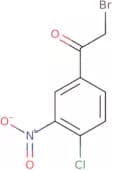
CAS :<p>4-Chloro-3-nitrophenacylbromide is a synthetic compound that has been shown to be effective against cancer cells in vitro. In the presence of light, this substance emits a bright green fluorescence, which is useful for imaging. The synthesis of 4-Chloro-3-nitrophenacylbromide can be achieved by solid phase methods and chemosynthesis. Spirocyclic amines are used as building blocks for the synthesis of this product. This process leads to functionalization strategies with high levels of chirality and drug development.</p>Formule :C8H5BrClNO3Degré de pureté :Min. 95%Couleur et forme :PowderMasse moléculaire :278.49 g/mol4-(2',4'-Dimethoxyphenyl-Fmoc-aminomethyl)-phenoxymethyl-polystyrene resin (200-400 mesh)
Please enquire for more information about 4-(2',4'-Dimethoxyphenyl-Fmoc-aminomethyl)-phenoxymethyl-polystyrene resin (200-400 mesh) including the price, delivery time and more detailed product information at the technical inquiry form on this pageDegré de pureté :Min. 95%Isovaleryl-Val-Val-Sta-OEt
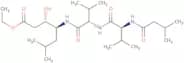
CAS :<p>Isovaleryl-Val-Val-Sta-OEt is a peptide hormone and active inhibitor of the enzyme pepsin. This drug has been shown to have proteolytic activity in vitro, with a pepsin rate constant of 0.0015 min−1. It also inhibits the protease activity of trypsin, chymotrypsin, and elastase at a similar rate. Isovaleryl-Val-Val-Sta-OEt has been shown to be an active inhibitor of polymerase chain reaction (PCR) and reverse transcriptase activities. This drug is not absorbed through skin and can be used as a nonimmunogenic reagent for biochemical studies on water permeability and signal peptide sequences in biological samples.</p>Formule :C25H47N3O6Degré de pureté :Min. 95%Masse moléculaire :485.66 g/mol(Asp371)-Tyrosinase (369-377) (human) trifluoroacetate salt
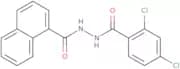
CAS :Trifluoroacetate saltFormule :C42H66N10O16S2Degré de pureté :Min. 95%Masse moléculaire :1,031.16 g/mol1-(2,4-Dichlorobenzoyl)-2-(1-naphthoyl)hydrazine
CAS :Please enquire for more information about 1-(2,4-Dichlorobenzoyl)-2-(1-naphthoyl)hydrazine including the price, delivery time and more detailed product information at the technical inquiry form on this pageFormule :C18H12Cl2N2O2Degré de pureté :Min. 95%Masse moléculaire :359.21 g/molTricresyl phosphate (mixture of isomers)
CAS :Tricresyl phosphate is a mixture of three isomers that are used as corrosion inhibitors. It has been shown to inhibit the activity of a number of enzymes, including those that metabolize xenobiotics, such as p-hydroxybenzoic acid esterase and phospholipase A2. Tricresyl phosphate also decreases the mitochondrial membrane potential and induces mitochondrial dysfunction in neurons. Tricresyl phosphate is used in wastewater treatment to prevent corrosion, due to its high resistance to water vapor. It also acts as an inhibitor for metal hydroxides, zirconium oxide, or copper chloride at temperatures below 100°C. This compound has been shown to have synergistic effects with other materials, such as copper chloride and trichloroethylene (TCE).Formule :C21H21O4PDegré de pureté :Min. 95%Couleur et forme :Colorless Clear LiquidMasse moléculaire :368.36 g/mol3,5-Dibromobenzoic acid methyl ester
CAS :<p>3,5-Dibromobenzoic acid methyl ester is an organic compound that has isomers. It is a synthetic substance with the chemical formula CHBrO. This substance can be obtained by reacting benzoic acid with bromine in the presence of aluminium chloride. The nature of this substance is not known due to its multifold structure. 3,5-Dibromobenzoic acid methyl ester has been shown to absorb light and transfer it to another molecule. This molecule can then emit light of a different wavelength or energy level. The dipole moment of the substance interacts with other molecules in close proximity, leading to the transfer of electrons and photons from one molecule to another.</p>Formule :C8H6Br2O2Degré de pureté :Min. 95%Couleur et forme :PowderMasse moléculaire :293.94 g/mol2,6-Bis(hydroxymethyl)naphthalene
CAS :2,6-Bis(hydroxymethyl)naphthalene is a chromophore that can be used in the production of biodiesel. It is an organic compound with two hydroxyl groups and two methyl substituents. The molecule has a planar structure, which results in optical properties that make it suitable for use as a fluorescent dye. 2,6-Bis(hydroxymethyl)naphthalene has been shown to emit light when it reacts with oxygen and this property can be utilized for bioapplications such as fluorescence microscopy. 2,6-Bis(hydroxymethyl)naphthalene is also capable of accepting electrons from other molecules and will react with xylene to produce a neutral form. This property makes it useful for oxidation reactions and the functional group can be used in the production of dyes or other compounds.Formule :C12H12O2Degré de pureté :Min. 95%Masse moléculaire :188.22 g/molBiotinyl-pTH (1-34) (human) trifluoroacetate salt
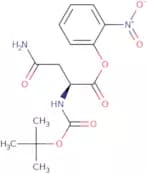
CAS :<p>Please enquire for more information about Biotinyl-pTH (1-34) (human) trifluoroacetate salt including the price, delivery time and more detailed product information at the technical inquiry form on this page</p>Formule :C191H305N57O53S3Degré de pureté :Min. 95%Masse moléculaire :4,344.02 g/molBoc-Asn-o-nitrophenyl ester
CAS :<p>Please enquire for more information about Boc-Asn-o-nitrophenyl ester including the price, delivery time and more detailed product information at the technical inquiry form on this page</p>Formule :C15H19N3O7Degré de pureté :Min. 95%Masse moléculaire :353.33 g/mol(alphaR)-alpha-[[[2-(4-Nitrophenyl)ethyl]amino]methyl]benzenemethanol hydrochloride
CAS :<p>Intermediate in the synthesis of mirabegron</p>Formule :C16H18N2O3·HClDegré de pureté :Min. 95%Masse moléculaire :322.79 g/mol5-Acenaphthenecarboxylic acid
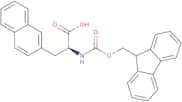
CAS :5-Acenaphthenecarboxylic acid is a xylene derivative that has been characterized as an organometallic compound. The cyclopentane ring is the central feature of this molecule and it can be used in the synthesis of other organic compounds. 5-Acenaphthenecarboxylic acid is toxic to humans and animals and has been shown to induce liver tumors in rats. It also has been shown to inhibit the growth of some bacteria, including Mycobacterium tuberculosis, which causes tuberculosis. 5-Acenaphthenecarboxylic acid inhibits protein synthesis by binding to ribosomes and interfering with the biosynthesis of proteins. This binding prevents formation of a complex with the enzyme cell wall synthesis that is required for cell wall biosynthesis, inhibiting protein synthesis and cell division.Formule :C13H10O2Degré de pureté :Min. 95%Couleur et forme :PowderMasse moléculaire :198.22 g/molFmoc-3-(2-naphthyl)-L-alanine
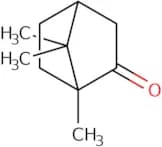
CAS :<p>Fmoc-3-(2-naphthyl)-L-alanine is a supramolecular compound that functions as an inhibitor of prostate cancer cells. It inhibits the uptake of metal chelates by prostate cancer cells and stabilizes them, which may lead to a diagnostic and therapeutic agent for prostate cancer. Fmoc-3-(2-naphthyl)-L-alanine has also been shown to inhibit the growth of human serum prostate cancer cells in vitro and in vivo models. This molecule is a bifunctional compound that can be used as both an antigen and a surrogate for cytosolic prostate specific antigen (PSA) levels. Fmoc-3-(2-naphthyl)-L-alanine has been shown to bind to the PSA protein, which is normally found on the surface of prostate epithelial cells. This binding prevents it from being released into the blood circulation, where it would otherwise be measured by a PSA test</p>Formule :C28H23NO4Degré de pureté :Min. 95%Couleur et forme :PowderMasse moléculaire :437.49 g/molCamphor
CAS :<p>Camphor is a natural compound that has been shown to be an effective antimicrobial agent. Camphor has been shown to inhibit the growth of bacteria by binding to the bacterial membrane, inhibiting electron transport and leading to a decrease in mitochondrial membrane potential. Camphor also inhibits the growth of cancer cells in experimental models. Camphor can be used as an antimicrobial in wastewater treatment and as an insect repellent for skin protection. Camphor is also used in x-ray crystallography to determine structures of proteins and other organic molecules with high electron density such as benzalkonium chloride.</p>Formule :C10H16ODegré de pureté :Min. 95%Couleur et forme :Colorless Clear LiquidMasse moléculaire :152.23 g/molL-m-Tyrosine
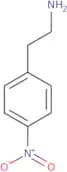
CAS :L-m-Tyrosine is a nonessential amino acid that is synthesized from phenylalanine. It has been shown to have antioxidant properties and protects against oxidative injury by scavenging reactive oxygen species such as hydrogen fluoride. L-m-Tyrosine has also been shown to modulate dopamine levels in the brain and may be used in the treatment of Parkinson's disease. The biological effects of L-m-Tyrosine are mediated through the transcriptional regulation of genes encoding proteins involved in dopamine β-hydroxylase and hydrogen fluoride detoxification. L-m-Tyrosine is also an experimental model for studying drug resistance in bacteria, including methicillin resistant Staphylococcus aureus (MRSA).Formule :C9H11NO3Degré de pureté :Min. 98 Area-%Couleur et forme :PowderMasse moléculaire :181.19 g/mol4-Nitrophenethylamine
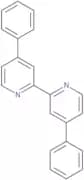
CAS :Produit contrôlé4-Nitrophenethylamine is a synthetic chemical that is used as an antigen to raise antibodies. It is used in the detection of chemical substances that are associated with the production of histamine and acetylcholine. This chemical has been shown to inhibit the reaction between nitro and acylation, which can lead to the formation of carcinogenic nitrosamines. 4-Nitrophenethylamine also has an inhibitory effect on oxidases and amines, which are enzymes found in cells. This chemical binds to amide groups in proteins and inhibits their activity.Formule :C8H10N2O2Degré de pureté :Min. 95%Couleur et forme :LiquidMasse moléculaire :166.18 g/mol4,4'-Diphenyl-2,2'-bipyridine
CAS :4,4'-Diphenyl-2,2'-bipyridine is a ligand that can be used to produce more efficient magnesium peroxide catalysts. The efficiency of the catalyst was found to increase with increasing concentrations of the ligand. 4,4'-Diphenyl-2,2'-bipyridine has been shown to bind strongly to chloride ions and may have potential applications in animal health as a supplement. This compound is also useful in electrochemical data studies because it has a relatively high oxidation potential and electrochemical stability. It can also be used for photophysical studies due to its strong fluorescence. 4,4'-Diphenyl-2,2'-bipyridine can be synthesized by reacting carbon tetrachloride with an animal or vegetable oil or fat.Formule :C22H16N2Degré de pureté :Min. 95 Area-%Couleur et forme :PowderMasse moléculaire :308.38 g/molLinustatin
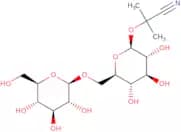
CAS :<p>Please enquire for more information about Linustatin including the price, delivery time and more detailed product information at the technical inquiry form on this page</p>Formule :C16H27NO11Degré de pureté :Min. 95 Area-%Masse moléculaire :409.39 g/molOctreotide trifluoroacetate salt (Dimer, Antiparallel) (
Please enquire for more information about Octreotide trifluoroacetate salt (Dimer, Antiparallel) ( including the price, delivery time and more detailed product information at the technical inquiry form on this pageFormule :C98H132N20O20S4Degré de pureté :Min. 95%Masse moléculaire :2,038.48 g/mol2,2'-Azanediylbis(propan-1-ol)
CAS :Please enquire for more information about 2,2'-Azanediylbis(propan-1-ol) including the price, delivery time and more detailed product information at the technical inquiry form on this pageFormule :C6H15NO2Degré de pureté :Min. 95%Masse moléculaire :133.19 g/mol




![(alphaR)-alpha-[[[2-(4-Nitrophenyl)ethyl]amino]methyl]benzenemethanol hydrochloride](/_next/image/?url=https%3A%2Fstatic.cymitquimica.com%2Fproducts%2F3D%2Fthumb-webp%2FFN156825.webp&w=3840&q=75)