Étalons pharmaceutiques
Sous-catégories appartenant à la catégorie "Étalons pharmaceutiques"
- APIs pour la recherche et les impuretés(277.447 produits)
- Activateurs et inhibiteurs d'enzymes(2.829 produits)
- Nitrosamines(2.668 produits)
- Composés et métabolites pharmaceutiques et vétérinaires(2.891 produits)
- Toxicologie(13.339 produits)
8162 produits trouvés pour "Étalons pharmaceutiques"
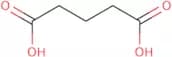
Glutaric acid
CAS :Glutaric acid is a dinucleotide phosphate that exists in two forms: the alpha form, which has a high phase transition temperature and is insoluble in water; and the beta form, which has a low phase transition temperature and is soluble in water. Glutaric acid can be used as an analytical reagent to identify the type of nucleotides present in samples. It can also be used as an experimental solvent for other compounds that are not soluble in water. The toxicity of glutaric acid has been studied extensively and found to be low. This compound does not appear to have any adverse effects on human health or animals at doses up to 1g/kg body weight. Glutaric acid has been shown to have anti-infectious properties by inhibiting the growth of bacteria, fungi, and viruses. The effectiveness of glutaric acid against infectious diseases appears to depend on its ability to block protein synthesis by inhibiting enzymes such as glutathione reductase
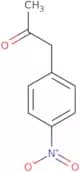
Formule :C5H8O4Degré de pureté :Min. 99 Area-%Couleur et forme :White PowderMasse moléculaire :132.11 g/mol(4-Nitrophenyl)acetone
CAS :4-Nitrophenylacetone is a hypoglycemic agent that is used for the treatment of diabetes mellitus. It has been shown to be effective in vivo and in vitro studies at low concentrations. The mechanism of action is not well understood, but it may have effects on insulin sensitivity and the release of insulin from pancreatic beta cells, as well as an effect on the liver. 4-Nitrophenylacetone has been shown to have organocatalytic properties that allow it to catalyze acylation reactions with acetanilides or amides. This reaction produces iminium ion intermediates that can be hydrolyzed by water to form a variety of products, including carboxylic acids, amides, and nitriles.
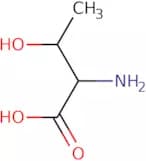
Formule :C9H9NO3Degré de pureté :Min. 95%Couleur et forme :PowderMasse moléculaire :179.17 g/molDL-Threonine
CAS :DL-Threonine (or 2-amino-3-hydroxybutanoic acid), is an essential, non-protein amino acid naturally occurring in the human body and it is involved in many biological processes. DL-threonine takes part in the conversion of glycogen into the glucose pathway, supports muscle tissue maintenance and growth, and plays a key role in regulating levels of other amino acids. In addition, DL-threonine helps to provide protection against heat, reduce tiredness and lowers blood pressure. It is an important source of energy for the liver and has been shown to be effective in stimulating liver function, as well as, to have a protective effect against various diseases, including hepatitis and cirrhosis. The liver uses DL-Threonine to produce other amino acids and helping in protein synthesis, such as insulin. The human body can produce DL-threonine from serine by threonine synthase, but not enough to meet the body's needs and thus it must be obtained from food sources or supplements. DL-Threonine can be found in many foods including meat, eggs, soybeans, and dairy products. It can chelate metal cations to improve the absorption of minerals from supplements, which is used in fertilizers for agriculture.
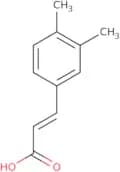
Formule :C4H9NO3Degré de pureté :Min 98%Couleur et forme :PowderMasse moléculaire :119.12 g/mol3,4-Dimethylcinnamic acid
CAS :3,4-Dimethylcinnamic acid is a plant-derived compound that has been shown to have anti-inflammatory properties. It inhibits the production of prostaglandins by inhibiting cyclooxygenase activity and reducing the production of pro-inflammatory eicosanoids. 3,4-Dimethylcinnamic acid also blocks the synthesis of leukotrienes and thromboxanes, which are involved in inflammation as well as allergic reactions and asthma. 3,4-Dimethylcinnamic acid is used to treat skin conditions such as psoriasis, eczema, or dermatitis. This compound can be obtained from plants like Dracaena fragrans (also known as Madagascar dragon tree) or ethnomedicine sources such as the African shrub Anthranilic acid. 3,4-Dimethylcinnamic acid can be synthesized by cross coupling with alkyl halides, ultraviolet irradiation of anthranils with uv
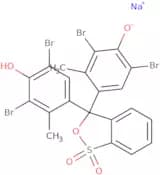
Formule :C11H12O2Degré de pureté :Min. 95%Couleur et forme :White Off-White PowderMasse moléculaire :176.21 g/molBromocresol green, sodium salt
CAS :Bromocresol green is a dye that is used in biological assays to measure the kinetics of fluorescence. It is a type of tryptophan-releasing compound that releases a yellowish-green light when it absorbs light at wavelengths between 350 and 450 nm. Bromocresol green has been quantified by measuring the intensity of the fluorescence emission as a function of time. This can be done visually or using an instrument called a fluorometer, which detects changes in light intensity over time. Bromocresol green can be used to detect the presence of amino acid residues in proteins through protonation reactions with their tryptophan residues and subsequent quenching with acetonitrile. The bromocresol green dye is also used in lithographic printing, where it serves as an acceptor for electrons from an arene (aromatic hydrocarbon). This process generates energy for lithography and also provides contrast between regions with different electron densities.
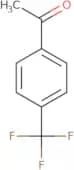
Formule :C21H14Br4O5SNaCouleur et forme :PowderMasse moléculaire :721 g/mol4'-(Trifluoromethyl)acetophenone
CAS :4'-(Trifluoromethyl)acetophenone is a phosphatase inhibitor that has been shown to have inhibitory activity against chemokines. Chemokines are a type of cytokine that are secreted by immune cells and play an important role in inflammation. 4'-(Trifluoromethyl)acetophenone has also been shown to have an effect on the cell membrane permeability of amines and 2-aminobenzyl alcohol, which are substrates for the enzyme. 4'-(Trifluoromethyl)acetophenone reacts with imidazole derivatives, such as trifluoride, forming hydrogen bonds between the two molecules. Kinetic studies have demonstrated that this reaction is reversible in solution at room temperature.
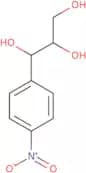
Formule :C9H7F3ODegré de pureté :Min. 95%Couleur et forme :PowderMasse moléculaire :188.15 g/mol1-(4-Nitrophenyl)glycerol
CAS :1-(4-Nitrophenyl)glycerol has been shown to inhibit the growth of Gram-positive bacteria, including Streptococcus faecalis, and Gram-negative bacteria, including Pseudomonas aeruginosa. It is also used as a sample preparation for antimicrobial resistance testing.
Formule :C9H11NO5Degré de pureté :Min. 97 Area-%Couleur et forme :Off-White PowderMasse moléculaire :213.19 g/molRef: 3D-FN07274
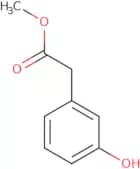
Produit arrêté(3-Hydroxyphenyl)acetic acid methyl ester
CAS :(3-Hydroxyphenyl)acetic acid methyl ester is an allosteric inhibitor of the serotonin transporter (SERT), which is a target enzyme for many drugs. It has inhibitory activity against 5-HT1A receptors, and other targets that have not yet been elucidated. This compound has been shown to react with coumarin derivatives to form reaction products. The molecular modelling of this drug shows that its uptake is inhibited by the presence of acids, such as hydrochloric acid, in the environment. The rate of reaction between (3-hydroxyphenyl)acetic acid methyl ester and serotonin has been determined experimentally using kinetic data. Molecular modeling predicts that this compound will bind tightly to the SERT protein via hydrogen bonding interactions with amino acids in the binding site.
Formule :C9H10O3Degré de pureté :Min. 95%Couleur et forme :Colorless PowderMasse moléculaire :166.17 g/molAcetyl-L-tyrosine amide
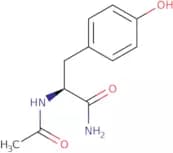
CAS :Acetyl-L-tyrosine amide is an analog of L-tyrosine that is used as an active substance in the field of uv absorption. Acetyl-L-tyrosine amide reacts with sodium hydroxide to form a soluble salt, which has been shown to have binding constants that are comparable to those of human serum. This compound also has fluorescence properties and can be used for the determination of neutral pH. The reaction products formed between acetyl-L-tyrosine amide and sodium hydroxide are hydrolyzed by acids and yield a molecule with rotameric properties. These rotameric properties can be modeled using a protein model without affecting the stability or function of the protein.
Formule :C11H14N2O3Degré de pureté :Min. 95%Couleur et forme :PowderMasse moléculaire :222.24 g/mol5-Methyl-2-nitrophenol
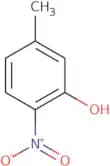
CAS :5-Methyl-2-nitrophenol is a phytotoxic chemical that is used as a synthetic intermediate in organic chemistry. It has been shown to have a high bioconcentration factor and can be found in wastewater. The major use of 5-methyl-2-nitrophenol is the synthesis of 2,4,6-trinitrophenylhydrazine (TNP) which is used as an analytical reagent for the determination of nitrates. The reaction mechanism of 5-methyl-2-nitrophenol involves intramolecular hydrogen transfer from the methylene group to the nitro group and subsequent elimination of HCl. This reaction product can be found by using analytical methods such as gas chromatography, mass spectrometry, or nuclear magnetic resonance spectroscopy. Functional groups on the reactant include phenols and nitro groups with the following endpoints: hydrochloric acid (HCl), kinetic method, and vapor pressure
Formule :C7H7NO3Degré de pureté :Min. 95%Couleur et forme :PowderMasse moléculaire :153.14 g/mol2'-Hydroxy-2,4,4',6'-tetramethoxychalcone
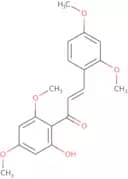
CAS :2'-Hydroxy-2,4,4',6'-tetramethoxychalcone (HTMC) is a bioactive substance that has been shown to have anticancer properties. HTMC has been shown to have allopathic effects in a statistically significant manner and has been used in traditional herbal medicine for centuries. The mechanisms of action are not well understood but may be due to its ability to inhibit the activity of arjunic acid and flavonoids. HTMC is found in plants such as tropical trees and herbs from India, including Acacia catechu and Tinospora cordifolia. It also has pharmacological properties, which may be due to its derivates that are isolated from these plants. HTMC shows no adverse effects on humans when taken orally at doses up to 1 g/day for 28 days.
Formule :C19H20O6Degré de pureté :Min. 95%Couleur et forme :PowderMasse moléculaire :344.36 g/mol3-Nitrophthalic acid
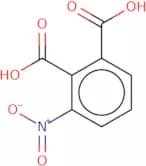
CAS :3-Nitrophthalic acid is an organic compound that has been used in biological studies. It has been shown to bind to DNA and RNA, which may be due to hydrogen bonding interactions with the nitrogen atoms. 3-Nitrophthalic acid is synthesized by reacting sodium carbonate with trifluoroacetic acid, resulting in a carboxylate group. This compound has photochemical properties and can be used as a photosensitizer for the treatment of certain forms of cancer. 3-Nitrophthalic acid reacts with oxygen and generates singlet oxygen, which results in cellular damage.
Formule :C8H5NO6Degré de pureté :Min. 95%Couleur et forme :PowderMasse moléculaire :211.13 g/mol2,4-Dinitrophenetole
CAS :2,4-Dinitrophenetole is a nucleophilic compound that reacts with the hydrogen bond of an acid. It is a thermodynamic and kinetic acid which reacts with bile acids in the second order. The rate enhancement of 2,4-dinitrophenetole is due to its uncoupling effect on hepg2 cells. This chemical has been shown to react faster with picric acid than with nitric acid solutions.
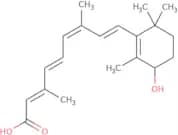
Formule :C8H8N2O5Degré de pureté :Min. 95%Couleur et forme :PowderMasse moléculaire :212.16 g/molrac 4-Hydroxy-9-cis-retinoic acid
CAS :9-cis-Retinoic acid is a retinoid that is found in the human body. It can be extracted from the cells of animals or plants and purified by using an organic solvent, such as hexane. 9-cis-Retinoic acid can also be synthesized by using a validated hplc method. Analysts use this compound to measure conjugate acids, hydroxy acids, and other compounds related to endogenous metabolism. It is often used as a buffering agent for specific applications.
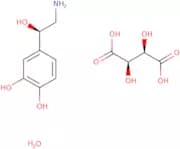
Formule :C20H28O3Degré de pureté :Min. 95%Masse moléculaire :316.43 g/molL-Noradrenaline bitartrate monohydrate
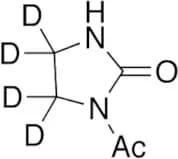
CAS :L-Noradrenaline is the major precursor of norepinephrine, a neurotransmitter that regulates blood pressure and heart rate. L-Noradrenaline bitartrate monohydrate is a potent vasopressor drug that has been shown to increase blood pressure. The effects in animals are biphasic, with an initial pressor phase followed by a second phase with vasodilator effects. L-Noradrenaline bitartrate monohydrate has been shown to stimulate transcription of proteins, such as model protein and dopamine receptor D1 (D1R). This stimulation has been shown to be mediated through the activation of protein kinase C (PKC) and Ca2+/calmodulin-dependent protein kinase II (CaMKII). It has also been shown to have antioxidant effects in the presence of hydroxyl radicals. L-Noradrenaline bitartrate monohydrate can cause symptoms such as nausea, vomiting, and diarrhea in humans at high doses.Formule :C12H19NO10Degré de pureté :Min. 98 Area-%Couleur et forme :PowderMasse moléculaire :337.28 g/molN-Acetylethylene Urea-d4
CAS :Produit contrôléApplications N-Acetylethylene Urea-d4 (cas# 1189701-94-7) is a compound useful in organic synthesis.
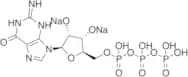
Formule :C5H4H4N2O2Couleur et forme :NeatMasse moléculaire :132.15Guanosine-5'-triphosphate Disodium Salt (~85%)
CAS :Produit contrôléApplications Guanosine-5'-triphosphate disodium salt (CAS# 56001-37-7) is a nucleotide used in the preparation of photoreactive GTP affinity probes, and in inhibitors of eukaryotic initiation factor eIF-4E.
References George Cisar, E. A.; J. Am. Chem. Soc., 135, 4676 (2013); Ghosh, P.; et al.: Bioorg. Med. Chem. Lett., 16, 750 (2006).Formule :C10H14N5O14P3Na2Degré de pureté :~85%Couleur et forme :NeatMasse moléculaire :567.14Ethyl Dichlorophosphate
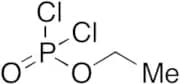
CAS :Produit contrôléFormule :C2H5Cl2O2PCouleur et forme :White to Off-White SolidMasse moléculaire :162.942-Ethoxy-4-methoxycinnamic acid
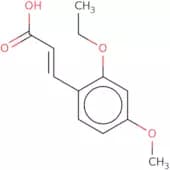
CAS :2-Ethoxy-4-methoxycinnamic acid is a synthetic chemical with the CAS number 1372859-34-1. It is a versatile building block that can be used for the synthesis of many complex compounds. 2-Ethoxy-4-methoxycinnamic acid is one of a number of scaffolds that are useful for creating fine chemicals and research chemicals. This compound is also an intermediate in many reactions and can be used as a reagent to produce other substances.
Formule :C12H14O4Degré de pureté :Min. 95%Masse moléculaire :222.24 g/mol3,5-Dimethoxy-4-methylbenzoic acid methyl ester
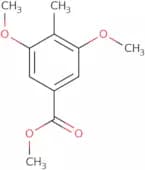
CAS :3,5-Dimethoxy-4-methylbenzoic acid methyl ester (DMMBME) is a synthetic compound that is used as an immunogen to generate antibodies against fungal proteins. DMMBME is specifically used to identify the presence of bryoria and australian fungi in plants. The chemical structure of DMMBME can be oxidized by depsidones, which leads to the production of reactive oxygen species that are believed to be responsible for the oxidative coupling of target proteins. This reaction can be catalyzed by a number of enzymes such as nidulin, which is found in plant roots.
Formule :C11H14O4Degré de pureté :Min. 95%Couleur et forme :PowderMasse moléculaire :210.23 g/mol