Étalons pharmaceutiques
Sous-catégories appartenant à la catégorie "Étalons pharmaceutiques"
- APIs pour la recherche et les impuretés(277.367 produits)
- Activateurs et inhibiteurs d'enzymes(2.829 produits)
- Nitrosamines(2.663 produits)
- Composés et métabolites pharmaceutiques et vétérinaires(2.891 produits)
- Toxicologie(13.353 produits)
8146 produits trouvés pour "Étalons pharmaceutiques"
Triethylborane (1.0 M in THF)
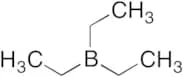
CAS :Produit contrôléApplications Triethylborane reacted with 8-hydroxyquinoline to synthesize three 8--hydroxyquinolato (q) boron compounds B(C2H5)2q (1), BPh2q (2), and B(2-naph)2q (3).
References Wu, Q., et al.: Chem. Mater., 12, 79 (2000).Formule :C6H15BCouleur et forme :Single SolutionMasse moléculaire :97.99(-)-γ-Cadinene
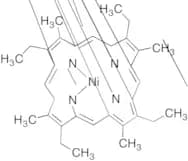
CAS :Produit contrôléFormule :C15H24Couleur et forme :ColourlessMasse moléculaire :204.351Etioporphyrin I Nickel
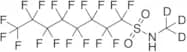
CAS :Produit contrôléFormule :C32H36N4NiCouleur et forme :NeatMasse moléculaire :535.348N-Methylperfluorooctanesulfonamide-d3 (50μg/mL in Methanol)
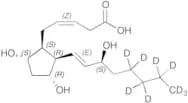
CAS :Produit contrôléFormule :C9HD3F17NO2SCouleur et forme :Single SolutionMasse moléculaire :516.192,3-Dinor iPF2α-III-d9
CAS :Produit contrôléFormule :C18D9H21O5Couleur et forme :NeatMasse moléculaire :335.483α-Ketobutyric Acid-d2 Sodium
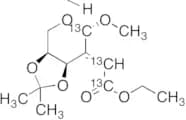
CAS :Produit contrôléFormule :C4D2H3O3·NaCouleur et forme :NeatMasse moléculaire :126.083Methyl (2E)-2-Deoxy-2-(2-ethoxy-2-oxoethylidene)-3,4-O-isopropylidene-β-L-erythro-pentopyranoside-13C3
Produit contrôléFormule :C3C10H20O6Couleur et forme :NeatMasse moléculaire :275.272p-Cresol-(methyl-13C)
CAS :Produit contrôléApplications The formation of p-Cresol-(methyl-13C) via phenol methylation at higher temperature from the deactivation of basic catalyst.
Not a dangerous good if item is equal to or less than 1g/ml and there is less than 100g/ml in the package
References Borodina, I. B., et al.: Russ. J. Phys. Chem., 80, 892-898 (2006)Formule :CC6H8OCouleur et forme :NeatMasse moléculaire :109.13Proflavine hemisulfate
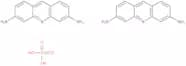
CAS :Proflavine hemisulfate is an antibiotic that inhibits bacterial growth by binding to DNA and inhibiting DNA synthesis. It binds to the dinucleotide phosphate of the bacterial ribosome and changes the shape of the nucleotide, preventing attachment of amino acids to form proteins. Proflavine hemisulfate also has a strong affinity for nuclear dna and is bound to it in a form that inhibits replication. The free form of proflavine is converted into enzyme form by phosphorylation, which inhibits protein synthesis and cell division. Proflavine hemisulfate has been shown to inhibit multidrug efflux pumps in bacteria, leading to increased susceptibility of bacteria to antibiotics. In addition, proflavine hemisulfate possesses inhibitory properties against transfer reactions in cells. The method used for measuring proflavine hemisulfate activity is electrochemical impedance spectroscopy (EIS) on cell nuclei suspensions in a model system.
Formule :C13H11N3•(H2SO4)0•(H2O)xDegré de pureté :Min. 95%Couleur et forme :PowderMasse moléculaire :258.29 g/mol3,5,3',5' -Tetraiodo thyromandelic acid
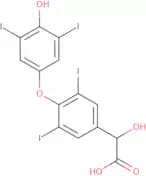
CAS :Please enquire for more information about 3,5,3',5' -Tetraiodo thyromandelic acid including the price, delivery time and more detailed product information at the technical inquiry form on this page
Formule :C14H8I4O5Degré de pureté :Min. 95%Couleur et forme :PowderMasse moléculaire :763.83 g/mol2'-Acetylacteoside
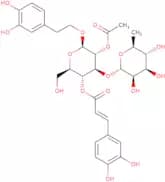
CAS :2'-Acetylacteoside is a naturally occurring phenylethanoid glycoside, which is derived from various plant sources. It exhibits antioxidant properties by scavenging reactive oxygen species and inhibiting oxidative stress. This mode of action supports cellular health by protecting cells from oxidative damage and maintaining redox balance.
Degré de pureté :Min. 95%(+)-B-Chlorodiisopinocampheylborane - 60-65% in Hexane
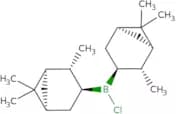
CAS :(+)-B-Chlorodiisopinocampheylborane is a chiral organoboron reagent that can be used for the enantioselective synthesis of amines. It is prepared from the reaction of chlorodiphenyl borane with (+)-diaminobenzene in hexane. The product can be purified by column chromatography or recrystallization. (+)-B-Chlorodiisopinocampheylborane can also be used in the synthesis of other compounds, such as pyrroles and pantolactones. It is an excellent catalyst for the dehydration of primary amines to give unsymmetrical ketones. This reagent has been shown to be effective in asymmetric hydrogenation reactions, such as the reduction of chiral secondary alcohols, and is also capable of catalyzing aldol reactions.Formule :C20H34BClDegré de pureté :Min. 95%Couleur et forme :Clear LiquidMasse moléculaire :320.75 g/molRef: 3D-FC59961
Produit arrêté1a,25-Dihydroxy vitamin D2
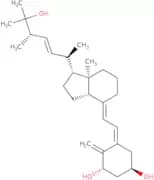
CAS :1a,25-Dihydroxy vitamin D2 is a compound that exhibits various characteristics and applications. It is known for its bioavailability and water-soluble properties, making it easily absorbed by the body. This compound has been extensively studied in the field of research chemicals. One of the notable features of 1a,25-Dihydroxy vitamin D2 is its potential therapeutic effects on ganglioside GM2-related disorders. It has been shown to interact with GM2 activator proteins and fatty acids, which are involved in the metabolism of GM2 gangliosides. This interaction may have implications for the treatment of certain neurological conditions. Additionally, 1a,25-Dihydroxy vitamin D2 has been investigated for its role in modulating immune responses and inflammatory processes. Studies have suggested that this compound can inhibit the production of pro-inflammatory substances like prostaglandins, offering potential anti-inflammatory benefits. Moreover, 1a,25-Dihydroxy vitamin D
Formule :C28H44O3Degré de pureté :Min. 95%Couleur et forme :White PowderMasse moléculaire :428.65 g/mol(NZ)-4-chloro-N-[1-[2-(4-nitrophenyl)ethyl]piperidin-2-ylidene]benzenesulfonamide
CAS :Produit contrôléPlease enquire for more information about (NZ)-4-chloro-N-[1-[2-(4-nitrophenyl)ethyl]piperidin-2-ylidene]benzenesulfonamide including the price, delivery time and more detailed product information at the technical inquiry form on this page
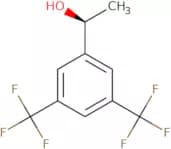
Formule :C19H20ClN3O4SDegré de pureté :Min. 95%Masse moléculaire :421.9 g/mol(S)-3',5'-Bis(trifluoromethyl)-1-phenethanol
CAS :(S)-3',5'-Bis(trifluoromethyl)-1-phenethanol is a choline derivative that is used in the treatment of liver cancer. It has been shown to increase the permeability of cell membranes and to suppress the growth of tumor cells by inhibiting protein synthesis. (S)-3',5'-Bis(trifluoromethyl)-1-phenethanol can be used as a surfactant and a hydrophobic solvent for optimization of reaction parameters. This chemical also has been shown to be active against Gram-positive bacteria such as Staphylococcus aureus and Enterococcus faecalis, but not against Gram-negative bacteria such as Escherichia coli or Pseudomonas aeruginosa. The mechanism of this effect is mediated by chloride ions that act as bioreductive agents on cellular membranes, leading to increased permeability and cell death.
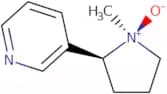
Formule :C10H8F6ODegré de pureté :Min. 95%Masse moléculaire :258.16 g/mol(1'S,2'S)-Nicotine 1'-oxide
CAS :Nicotine 1'-oxide is a metabolite of nicotine which is a naturally occurring alkaloid. Nicotine 1'-oxide is produced by the oxidation of nicotine and can be found in tobacco smoke, as well as in the urine of humans. Nicotine 1'-oxide has been shown to have enzyme inhibiting properties, and has been shown to decrease insulin-stimulated glucose transport rate in human liver cells. This product also has potential use as a stabilizer for pharmaceuticals or other organic substances, and can inhibit demethylation reactions that may lead to carcinogenesis. Nicotine 1'-oxide may also play a role in the transport of chemicals across membranes.
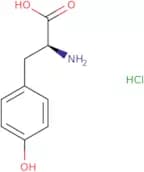
Formule :C10H14N2ODegré de pureté :Min. 95%Couleur et forme :PowderMasse moléculaire :178.23 g/molL-Tyrosine hydrochloride
CAS :L-Tyrosine hydrochloride is a pharmaceutical preparation that has been used clinically in the treatment of infectious diseases, cancer, and autoimmune diseases. Tyrosine is an amino acid with a hydroxyl group on its side chain. Tyrosine can be synthesized from phenylalanine by hydroxylation of the phenolic group and decarboxylation of the carboxylic acid group. It is also a precursor to catecholamines and other important biological molecules. L-Tyrosine hydrochloride is used as an intermediate in the production of monoclonal antibodies for use in cancer research. In addition, it has been shown to be an effective inhibitor of virus replication when combined with ester hydrochloride, which prevents the release of progeny virus particles from infected cells.
Formule :C9H11NO3·HClDegré de pureté :Min. 95%Masse moléculaire :217.65 g/molChloro[2-(di-tert-butylphosphino)-2',4',6'-triisopropyl-1,1'-biphenyl][2-(2-aminoethyl)phenyl)]palladium(II)
CAS :Produit contrôléChloro[2-(di-tert-butylphosphino)-2',4',6'-triisopropyl-1,1'-biphenyl][2-(2-aminoethyl)phenyl)]palladium(II) is a molecule that inhibits the adenosine receptor in autoimmune diseases and cancer. It also has an inhibitory effect on the membrane transport of glucose, glucosan, and aziridine. This drug can be used to treat inflammatory diseases such as diabetes, asthma, and inflammatory bowel disease. The geometric isomers of this molecule are not identical in shape or size and can have different effects on the body.
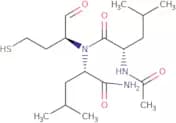
Formule :C37H55ClNPPdDegré de pureté :Min. 95%Masse moléculaire :686.69 g/molN-Acetyl-L-leucyl-L-leucyl-L-methioninal
CAS :Inhibitor of cathepsinFormule :C19H35N3O4SDegré de pureté :Min. 95%Masse moléculaire :401.57 g/mol2,4,4’-Trichlorobiphenyl
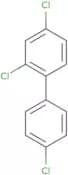
CAS :Produit contrôlé2,4,4’-Trichlorobiphenyl is a polychlorinated biphenyl congener. It has been shown to have an adverse effect on the central nervous system, causing neurotoxicity. 2,4,4’-Trichlorobiphenyl has been used as a model system for the study of the effects of environmental toxins on mitochondrial membrane potential and lipid peroxidation. 2,4,4’-Trichlorobiphenyl binds to fatty acids in mitochondria and inhibits fatty acid β-oxidation. The inhibition of fatty acid oxidation leads to increased levels of protocatechuic acid in the serum and liver tissue. 2,4,4’-Trichlorobiphenyl has also been found to be toxic to aquatic organisms such as fish and shrimp at low concentrations.
Formule :C12H7Cl3Degré de pureté :Min. 95%Masse moléculaire :257.54 g/mol





![(NZ)-4-chloro-N-[1-[2-(4-nitrophenyl)ethyl]piperidin-2-ylidene]benzenesulfonamide](/_next/image/?url=https%3A%2Fstatic.cymitquimica.com%2Fproducts%2F3D%2Fthumb-webp%2FFN154024.webp&w=3840&q=75)
![Chloro[2-(di-tert-butylphosphino)-2',4',6'-triisopropyl-1,1'-biphenyl][2-(2-aminoethyl)phenyl)]pal…](/_next/image/?url=https%3A%2Fstatic.cymitquimica.com%2Fproducts%2F3D%2Fthumb-webp%2FFC156938.webp&w=3840&q=75)