Étalons pharmaceutiques
Sous-catégories appartenant à la catégorie "Étalons pharmaceutiques"
- APIs pour la recherche et les impuretés(275.169 produits)
- Activateurs et inhibiteurs d'enzymes(2.827 produits)
- Nitrosamines(2.606 produits)
- Composés et métabolites pharmaceutiques et vétérinaires(2.891 produits)
- Toxicologie(13.643 produits)
7842 produits trouvés pour "Étalons pharmaceutiques"
2,6-Dibromo-3-nitropyridine
CAS :2,6-Dibromo-3-nitropyridine is a chemical compound that has been shown to inhibit serine protease activity. The compound was shown to be an inhibitor of the enzyme trypsin, and showed some activity against a number of other proteases. 2,6-Dibromo-3-nitropyridine has also been shown to inhibit nucleophilic alkylation of DNA bases by 2,6-dichloroquinoxaline. 2,6-Dibromo-3-nitropyridine is a targeted inhibitor that binds to the active site of the enzyme and prevents the formation of an enzyme-substrate complex. This inhibition leads to a decrease in the production of proteins essential for cell division.Formule :C5H2Br2N2O2Degré de pureté :Min. 95%Masse moléculaire :281.89 g/mol2-Bromo-4-nitrophenol
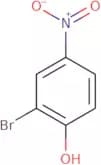
CAS :2-Bromo-4-nitrophenol is a byproduct of the reaction between hydrogen peroxide and sodium bromate. It can be detected in the presence of hydrochloric acid, which reacts with 2-bromo-4-nitrophenol to form an orange color that can be detected spectrophotometrically. 2-Bromo-4-nitrophenol has been shown to inhibit the growth of various strains of bacteria, including Escherichia coli, Bacillus subtilis, and Pseudomonas aeruginosa. This compound binds to flavin adenine dinucleotide (FAD) as well as other nucleophilic cofactors such as thioredoxin reductase. The binding affinity is increased when carbon sources are present. This property makes it a useful inhibitor for catalytic reduction reactions in biotechnology and synthetic chemistry applications.br>br> 2B4NP is a byFormule :C6H4BrNO3Degré de pureté :Min. 95%Couleur et forme :PowderMasse moléculaire :218 g/molVitamin B12 e-Monocarboxylic Acid
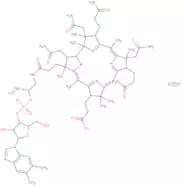
CAS :Produit contrôléPlease enquire for more information about Vitamin B12 e-Monocarboxylic Acid including the price, delivery time and more detailed product information at the technical inquiry form on this pageFormule :C63H87CoN13O15PDegré de pureté :Area-% Min. 95 Area-%Couleur et forme :PowderMasse moléculaire :1,356.35 g/molMethyl-1-naphthalenemethylamine
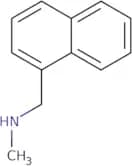
CAS :Methyl-1-naphthalenemethylamine is a synthetic drug that is used as an anti-fungal agent. It is used to treat dermatophytosis and onychomycosis caused by Trichophyton mentagrophytes. Methyl-1-naphthalenemethylamine has been shown to have a clinical response in patients with the skin condition tinea pedis. This drug inhibits the growth of fungi by inhibiting cell membrane synthesis, which leads to cell death. Methyl-1-naphthalenemethylamine has been shown to be effective against Trichophyton mentagrophytes in plasma samples from patients with tinea pedis who were treated with this drug. The effectiveness of this drug may be due to its ability to inhibit the synthesis of polysaccharides, proteins, and lipids in the fungal cell membrane, or its ability to inhibit protein synthesis by binding with ribosFormule :C12H13NDegré de pureté :Min. 95%Couleur et forme :Clear LiquidMasse moléculaire :171.24 g/molNoratropine
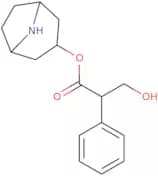
CAS :Noratropine is a drug that belongs to the group of anticholinergic drugs. It is used as a pharmaceutical preparation for the treatment of urinary incontinence and other conditions that are caused by overactivity of the bladder muscles. Noratropine has been shown to have a significant effect on symptoms such as increased urination, urgency, frequency, and nocturia. In addition, it reduces the amount of urine produced at night and during the day. Noratropine can be found in pueraria lobata (Kudzu) and angelicae dahuricae (Angelica). These plants contain natural compounds with anticholinergic properties. Noratropine can also be synthesized from benzalkonium chloride and n-oxide. The synthesis involves two steps: first, benzalkonium chloride reacts with an alcohol to form an acid which then reacts with n-oxide to produce noratropine. This compound can also be obtained from tissueFormule :C16H21NO3Degré de pureté :Min. 95%Masse moléculaire :275.34 g/mol3,4'-Dihexyl-2,2'-bithiophene
CAS :Please enquire for more information about 3,4'-Dihexyl-2,2'-bithiophene including the price, delivery time and more detailed product information at the technical inquiry form on this page
Degré de pureté :Min. 95%3,4-Dinitrophenol
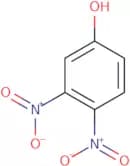
CAS :Produit contrôlé3,4-Dinitrophenol is a yellow solid that is chemically synthesized from 2,4-dinitrobenzene and morpholine. 3,4-Dinitrophenol is a high energy compound with an activation energy of about 28 kcal/mol. The endpoints for the reaction are oligosaccharides and the acceptor is an ionisation mass. This molecule has a pyrazole ring and can be classified as belonging to group P2 on the periodic table of elements. 3,4-Dinitrophenol has been found to have biological functions in organic solvents such as acetone or benzene.
Formule :C6H4N2O5Degré de pureté :Min. 95%Couleur et forme :PowderMasse moléculaire :184.11 g/mol3-O-Methyl norbuprenorphine
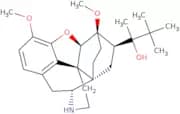
CAS :Produit contrôléPlease enquire for more information about 3-O-Methyl norbuprenorphine including the price, delivery time and more detailed product information at the technical inquiry form on this pageFormule :C26H37NO4Degré de pureté :Min. 95%Masse moléculaire :427.58 g/molAmoxicillin dimer tri-sodium salt (penicilloic acid form) - mixture of diastereomers
Please enquire for more information about Amoxicillin dimer tri-sodium salt (penicilloic acid form) - mixture of diastereomers including the price, delivery time and more detailed product information at the technical inquiry form on this pageFormule :C32H27N6Na3O11S2Degré de pureté :Min. 95%Masse moléculaire :804.69 g/mol(-)-3-Methoxy butorphanol
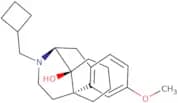
CAS :Produit contrôléPlease enquire for more information about (-)-3-Methoxy butorphanol including the price, delivery time and more detailed product information at the technical inquiry form on this pageFormule :C22H31NO2Degré de pureté :Min. 95%Masse moléculaire :341.49 g/mol[3-(1-Naphthyl)propyl]amine
CAS :3-(1-Naphthyl)propyl]amine is an organic compound that is a colorless solid with a melting point of -118°C. It is soluble in water, methanol, and acetone. 3-(1-Naphthyl)propyl]amine forms acid when heated with concentrated hydrochloric acid. The reaction produces hydrogen chloride gas and benzoic acid as a byproduct. 3-(1-Naphthyl)propyl]amine also reacts with pyridine to produce carbamic acid and ammonia gas as a byproduct. This can be rationalized systematically by the loss of the amine group from the nitrogen atom of the amine molecule. Carbamic acid has two acidic protons on it which are stabilized by the carbonyl group on the other side of the molecule. 3-(1-Naphthyl)propyl]amine can also react with anions such as carbonate ions to form carbamate salts,Formule :C13H15NDegré de pureté :Min. 95%Couleur et forme :Clear LiquidMasse moléculaire :185.26 g/molAcetyl-D-methionine
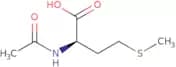
CAS :Acetyl-D-methionine is a type strain that belongs to the class of amino acids. It is necessary for protein synthesis and can be found in dietary concentrations. Acetyl-D-methionine has been shown to have enzyme activities, such as malonic acid formation and racemase activity, which are dependent on the bacterial strain. Acetyl-D-methionine has been demonstrated to be able to form a chelate with copper ions, which may contribute to its antimicrobial properties. Acetyl-D-methionine has been shown to inhibit the growth of Stenotrophomonas maltophilia in vitro and in vivo. Acetyl-D-methionine also inhibits the growth of Sprague Dawley rats infected with S. maltophilia when administered intravenously or orally.Formule :C7H13NO3SDegré de pureté :Min. 95%Masse moléculaire :191.25 g/molCefalexin monohydrate impurity F
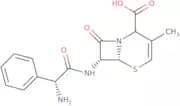
CAS :Please enquire for more information about Cefalexin monohydrate impurity F including the price, delivery time and more detailed product information at the technical inquiry form on this pageFormule :C16H17N3O4S·2H2ODegré de pureté :Min. 95%Masse moléculaire :383.42 g/mol1-Nitronaphthalene
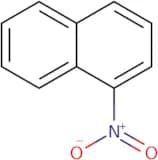
CAS :1-Nitronaphthalene is a nitrobenzene derivative that has been used as an intermediate in the synthesis of pharmaceuticals, dyes, and other organic compounds. 1-Nitronaphthalene is classified as a hazardous substance due to its carcinogenicity and toxicity. In particular, it can cause irritation and burns on skin contact and may be fatal if swallowed. The toxicity profile of 1-nitronaphthalene has been studied in rats, mice, guinea pigs, rabbits, hamsters, and dogs. It was found to have moderate acute oral toxicity in rats but no significant acute toxicity in mice or dogs. 1-Nitronaphthalene also had little effect on p450 activity or enzyme activities in rats.
Formule :C10H7NO2Degré de pureté :Min. 95%Couleur et forme :Yellow Clear LiquidMasse moléculaire :173.17 g/mol(3b,9b,10a)-3-Hydroxy-pregna-5,7-dien-20-one
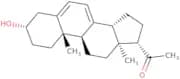
CAS :Produit contrôléPlease enquire for more information about (3b,9b,10a)-3-Hydroxy-pregna-5,7-dien-20-one including the price, delivery time and more detailed product information at the technical inquiry form on this page
Formule :C21H30O2Degré de pureté :Min. 95%Masse moléculaire :314.46 g/molProfenofos
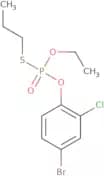
CAS :Profenofos is a water-soluble organophosphate that can be used as a pesticide. It has been shown to have synergic effects with other pesticides, such as malathion and carbaryl. Profenofos has been studied for its toxicological properties in vitro and in vivo. These studies have shown that the lowest dose at which there are adverse effects on biochemical properties is 0.1 mg/kg of body weight. The mode of action of profenofos includes inhibition of esterases, glutathione reductase, and cytochrome P450 enzymes. This enzyme inhibition leads to an accumulation of acetylcholine in the synaptic cleft, which causes muscle paralysis and death from respiratory failure. Profenofos also affects cardiac function by blocking potassium channels, leading to heart rate changes and arrhythmias. Profenofos can be identified using chromatographic analysis or electrochemical impedance spectroscopy (EIS). EIS is
Formule :C11H15BrClO3PSDegré de pureté :Min. 95%Couleur et forme :Clear LiquidMasse moléculaire :373.63 g/molL-Tyrosine 4-nitroanilide
CAS :Please enquire for more information about L-Tyrosine 4-nitroanilide including the price, delivery time and more detailed product information at the technical inquiry form on this pageFormule :C15H15N3O4Degré de pureté :Min. 95%Masse moléculaire :301.3 g/molgamma-Butyrobetaine hydrochloride
CAS :Gamma-butyrobetaine hydrochloride (GBB) is a metabolite of gamma-butyrobetaine, which is found in the human body. GBB is synthesized from lysine and methionine through an enzymatic pathway that starts with the conversion of lysine to homocysteine. GBB is then converted to gamma-butyrobetaine by methylating the hydroxyl group on its terminal carbon. GBB can be found in urine samples as well as in carnitine and fatty acid metabolism. It has been shown to have an inhibitory effect on creatine kinase and can be used to diagnose metabolic disorders such as carnitine deficiency or prognosis following a heart attack.Formule :C7H16ClNO2Degré de pureté :Min. 95%Couleur et forme :PowderMasse moléculaire :181.66 g/molBenzoyl ecgonine isopropyl ester
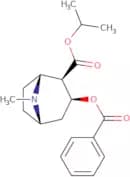
CAS :Produit contrôléBenzoyl ecgonine isopropyl ester is an analytical toxicology procedure that is used to identify the presence of cocaine in biological samples. The sample preparation involves homogenizing the sample, extracting it with solvents, and evaporating the solvent. Benzoyl ecgonine isopropyl ester is then incubated at room temperature for 15 minutes before adding a solution of hydrochloric acid and potassium dichromate. A color change from yellow to orange indicates the presence of cocaine. This test can be performed on either whole blood or plasma samples and can also be used to detect other drugs such as amphetamines, barbiturates, benzodiazepines, and opiates.Formule :C19H25NO4Degré de pureté :Min. 95%Masse moléculaire :331.41 g/molIlexsaponin B1
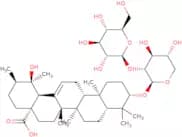
CAS :Ilexsaponin B1 is a saponin, which is a bioactive compound derived from the genus Ilex, commonly found in certain holly plants. This compound is structurally characterized by its glycosidic bonds, which consist of a sugar moiety linked to a triterpenoid or steroid aglycone, contributing to its amphiphilic nature. The source of Ilexsaponin B1 is typically extracted from the leaves or roots of Ilex species through a series of solvent extraction and chromatographic techniques.
Degré de pureté :Min. 95%




![[3-(1-Naphthyl)propyl]amine](/_next/image/?url=https%3A%2Fstatic.cymitquimica.com%2Fproducts%2F3D%2Fthumb-webp%2FFN134365.webp&w=3840&q=75)