Étalons pharmaceutiques
Les standards pharmaceutiques sont un ensemble complet de matériaux de référence essentiels pour garantir la sécurité, l'efficacité et la qualité des produits pharmaceutiques. Cette catégorie comprend des standards pour les ingrédients pharmaceutiques actifs (APIs), qui sont les composants principaux responsables des effets thérapeutiques. De plus, elle couvre les composés et métabolites pertinents pour les industries pharmaceutique et vétérinaire, fournissant des points de référence pour la mesure et l'analyse précises de ces substances. Les standards de contrôle des nitrosamines sont cruciaux pour détecter et atténuer les nitrosamines potentiellement nocives dans les formulations médicamenteuses. Les standards de toxicologie aident à évaluer la sécurité et les effets indésirables potentiels des composés pharmaceutiques. En outre, les standards pour les activateurs et les inhibiteurs enzymatiques sont essentiels pour la recherche et le développement, permettant des études précises des voies biochimiques et des mécanismes des médicaments. Ces standards pharmaceutiques sont des outils indispensables pour la conformité réglementaire, le contrôle de qualité et la recherche, garantissant que les produits pharmaceutiques répondent à des critères stricts de sécurité et d'efficacité.
Sous-catégories appartenant à la catégorie "Étalons pharmaceutiques"
- APIs pour la recherche et les impuretés(274.782 produits)
- Activateurs et inhibiteurs d'enzymes(2.827 produits)
- Nitrosamines(2.606 produits)
- Composés et métabolites pharmaceutiques et vétérinaires(2.849 produits)
- Toxicologie(13.652 produits)
7836 produits trouvés pour "Étalons pharmaceutiques"
Trier par
Degré de pureté (%)
0
100
|
0
|
50
|
90
|
95
|
100
trans,cis-2,6-Nonadienal
CAS :Trans,cis-2,6-Nonadienal is a fatty acid derivative with an unsaturated 2,6-nonadiene structure. It is an inhibitor of the enzyme fatty acid synthase, which catalyzes the formation of long-chain polyunsaturated fatty acids. Trans,cis-2,6-Nonadienal has been shown to inhibit v79 cells and ester compounds that are used in analytical methods for measuring fatty acids. It is also able to inhibit lysine residues and it can be used as a reactive antioxidant system in mammalian cells. Trans,cis-2,6-Nonadienal has shown a profile of activities that includes inhibition at multiple endpoints involving noncompetitive inhibition as well as antioxidant activity.Formule :C9H14ODegré de pureté :Min. 95%Couleur et forme :Clear LiquidMasse moléculaire :138.21 g/molTriglycerol monolaurate
CAS :<p>Triglycerol monolaurate (GLA) is a fatty acid that can be synthesized by reacting glycerol with lauric acid. It has been shown to have antimicrobial properties, inhibiting the growth of fungi such as flavus and staphylococcus. GLA also inhibits the production of lipase and protease, enzymes that are required for the digestion of dietary fats. GLA has been used in infant formulas to inhibit the growth of bacteria, such as p. aeruginosa, which may cause infantile diarrhea. Triglycerol monolaurate is also used as dietary supplement to treat eczema due to its inhibitory effect on inflammatory cytokines such as tumor necrosis factor-α (TNF-α).</p>Formule :C21H42O8Degré de pureté :Min. 95%Masse moléculaire :422.55 g/mol2-(2-Naphthyloxy)propanoic acid
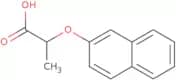
CAS :<p>2-(2-Naphthyloxy)propanoic acid is a naphthalene derivative that is found in the plant species Carthamus tinctorius. It has been shown to have potent antagonist activity against the NMDA receptor, as well as antinociceptive and analgesic properties in vivo. 2-(2-Naphthyloxy)propanoic acid also shows potent anti-inflammatory and cardioprotective effects in vitro and in vivo. 2-(2-Naphthyloxy)propanoic acid can be used for the treatment of bone cancer, congestive heart failure, diabetic neuropathy, or other disorders of the peripheral nervous system.</p>Formule :C13H12O3Degré de pureté :Min. 95%Masse moléculaire :216.23 g/mol3'-[2- Cyanoethyl N, N- bis(1- methylethyl) phosphoramidite]-5'- O- [bis(4- methoxyphenyl) phenylmethyl] - 2'- O- methyl- N- [2- [4- (1- methylethyl) phenoxy] acetyl] -guanosine
CAS :<p>Please enquire for more information about 3'-[2- Cyanoethyl N, N- bis(1- methylethyl) phosphoramidite]-5'- O- [bis(4- methoxyphenyl) phenylmethyl] - 2'- O- methyl- N- [2- [4- (1- methylethyl) phenoxy] acetyl] -guanosine including the price, delivery time and more detailed product information at the technical inquiry form on this page</p>Formule :C52H62N7O10PDegré de pureté :Min. 95%Masse moléculaire :976.06 g/mol4'-Demethyl homoharringtonine
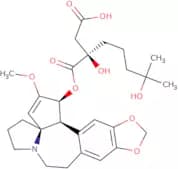
CAS :<p>Homoharringtonine is a natural drug that has been used for the treatment of cancer and other diseases. It is an antitumor agent that inhibits cell growth by affecting DNA synthesis, RNA synthesis, protein synthesis, and the activity of enzymes. Homoharringtonine also has antineoplastic effects and can be used to treat leukemia. Homoharringtonine binds to DNA in a ring-opening reaction with yields of up to 20%. This compound can be synthesized from phenylalanine and substituted with a trisubstituted benzene ring. It also catalyzes the conversion of an enamine into an iminium ion, which reacts with a second molecule of enamine to form a keto-enamine.</p>Formule :C28H37NO9Degré de pureté :Min. 95%Masse moléculaire :531.59 g/molL-Isoleucine β-naphthylamide
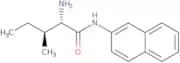
CAS :<p>L-Isoleucine beta-naphthylamide is an amide derivative of L-isoleucine and 2-naphthylamine, which are carboxylic acid derivatives. The condensation of these two substances leads to the formation of a new compound with a carboxy group and an amino group.</p>Formule :C16H20N2ODegré de pureté :Min. 95%Masse moléculaire :256.34 g/mol1,1-Diethylurea
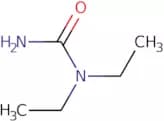
CAS :<p>1,1-Diethylurea is a 5-nitrosalicylic acid amide derivative. It is used as a reagent to synthesize other chemicals, such as 3,5-dinitrosalicylic acid and N-acetyl-2,6-diaminopurine. The reaction intermediates of this compound are chloride and liquid chromatograph with azides and quinoline derivatives. The molecular modeling and reaction products of 1,1-diethylurea are organic solution and pharmaceutical preparations. Fatty acids can be used to manufacture this product.</p>Formule :C5H12N2ODegré de pureté :Min. 95%Masse moléculaire :116.16 g/mol4-Methyl-3-nitrophenyl isocyanate
CAS :<p>4-Methyl-3-nitrophenyl isocyanate (4MPN) is a chiral diisocyanate that can be used as an activated diisocyanate. 4MPN is prepared by the carbonylation of 3-nitrobenzaldehyde and xylene with hydrogen chloride in the presence of a catalyst. Impurities, such as chlorides or sulfurs, can be detected using surface methodology techniques. The feedstock for this compound is usually xylene, which has a high boiling point. This product contains reactive functional groups that can be used to modify surfaces and create polyurethane products.</p>Formule :C8H6N2O3Degré de pureté :Min. 95%Couleur et forme :PowderMasse moléculaire :178.14 g/molDesmethylene paroxetine hydrochloride salt
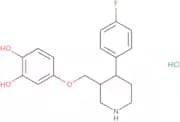
CAS :<p>Please enquire for more information about Desmethylene paroxetine hydrochloride salt including the price, delivery time and more detailed product information at the technical inquiry form on this page</p>Formule :C18H21ClFNO3Degré de pureté :Min. 95%Masse moléculaire :353.82 g/molTerflavin B
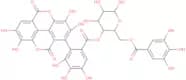
CAS :Produit contrôlé<p>Terflavin B is a natural product that has been shown to have autophagy-inducing properties. Terflavin B induces autophagy by increasing the metabolic rate and inhibiting the synthesis of proteins. This product has been shown to increase the cancer cell's sensitivity to chemotherapy, which may be due to its ability to induce reactive oxygen species. In addition, terflavin B can protect against drug interactions by inhibiting the activity of cytochrome P450 enzymes. It also inhibits the growth of resistant microorganisms such as chronic kidney and bladder infections. Terflavin B contains tannins and ellagitannins, which have antimicrobial activities that are effective against bacteria, yeast, and fungi.</p>Formule :C34H24O22Degré de pureté :Min 90%Couleur et forme :PowderMasse moléculaire :784.54 g/mol(+/-)-Perillaldehyde
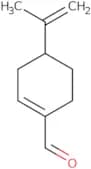
CAS :<p>Perillaldehyde is a natural compound that has been used in food and medicine for centuries. It is an antimicrobial agent with dextran sulfate, which is a sugar polymer that inhibits the growth of fungi and bacteria. Perillaldehyde also has been shown to inhibit the energy metabolism of microorganisms by decreasing ATP production. Perillaldehyde has also been shown to have genotoxic activity, as it can cause DNA strand breaks. This compound also causes oxidative stress in cells by reducing mitochondrial membrane potential and inducing reactive oxygen species (ROS). Perillaldehyde has acute toxicities, as it causes electrochemical impedance spectroscopy changes that indicate cell death.</p>Formule :C10H14ODegré de pureté :Min. 95%Couleur et forme :PowderMasse moléculaire :150.22 g/molCamphorquinone
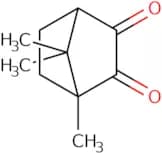
CAS :<p>Camphorquinone is an inorganic acid that is a component of the topical anaesthetic hydrochloride, which is used for the treatment of pain. Camphorquinone has a hydroxyl group, which can be replaced with other groups to produce different compounds. It has been shown to have a kinetic data for the polymerase chain reaction and to inhibit the activity of 4-dimethylaminobenzoic acid. Camphorquinone has also been shown to be effective against dental plaque and rat liver microsomes. The clinical relevance of camphorquinone has not yet been determined, but it may have an effect on hydrochloric acid production by zirconium oxide light emission.</p>Formule :C10H14O2Degré de pureté :Min. 95%Couleur et forme :PowderMasse moléculaire :166.22 g/mol1,7-Dimethylnaphthalene
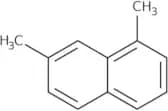
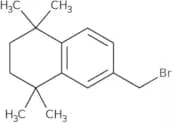
CAS :<p>1,7-Dimethylnaphthalene is a molecule that can be found in various aromatic hydrocarbons. It has been shown to have an inhibitory effect on the growth of cancer cells. 1,7-Dimethylnaphthalene is also used as a biological treatment in industrial chemicals. It is known to increase the rate of fatty acid biosynthesis and inhibits the production of certain enzymes that are involved in cancer development.</p>Formule :C12H12Degré de pureté :Min. 95%Masse moléculaire :156.22 g/mol6-(Bromomethyl)-1,1,4,4-tetramethyl-1,2,3,4-tetrahydronaphthalene
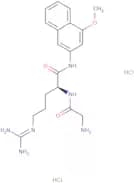
CAS :<p>Please enquire for more information about 6-(Bromomethyl)-1,1,4,4-tetramethyl-1,2,3,4-tetrahydronaphthalene including the price, delivery time and more detailed product information at the technical inquiry form on this page</p>Formule :C15H21BrDegré de pureté :Min. 80 Area-%Couleur et forme :Clear LiquidMasse moléculaire :281.23 g/molGly-arg-4-methoxy-β-naphthylamide dihydrochloride
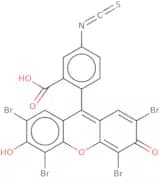
CAS :Please enquire for more information about Gly-arg-4-methoxy-beta-naphthylamide dihydrochloride including the price, delivery time and more detailed product information at the technical inquiry form on this pageFormule :C19H26N6O3·2ClHDegré de pureté :Min. 95%Masse moléculaire :459.37 g/molEosine-5-isothiocyanate
CAS :<p>Eosine-5-isothiocyanate is a fluorescent probe that has affinity for the interstitium of the kidney. This compound inhibits the transport of organic compounds across the renal tubular epithelium, and it is used as a marker for renal function. Eosine-5-isothiocyanate binds to molybdate with high affinity and can be used to measure its concentration in blood plasma. The inhibitory potency of eosine-5-isothiocyanate on carboxylates was tested by perfusing phenolphthalein through a rat's kidneys. Phenoxy dicarboxylates were found to be more potent inhibitors than phenoxy monocarboxylates, but not as potent as eosine-5-isothiocyanate itself. The spectrum of eosine-5-isothiocyanate is in the visible range, so this compound can be detected using</p>Formule :C21H7Br4NO5SDegré de pureté :85% MinCouleur et forme :PowderMasse moléculaire :704.97 g/mol6-Hydroxy doxazosin
CAS :<p>Please enquire for more information about 6-Hydroxy doxazosin including the price, delivery time and more detailed product information at the technical inquiry form on this page</p>Formule :C22H23N5O5Degré de pureté :Min. 95%Masse moléculaire :437.45 g/mol1-Vinylnaphthalene, stab. with 4-tert-butylcatechol
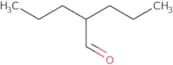
CAS :1-Vinylnaphthalene is a monomer that has been shown to polymerize through cationic polymerization. It is reported to have high resistance, as well as fluorescence properties. The magnetic resonance spectroscopy of 1-vinylnaphthalene showed the presence of a hydroxyl group and a fatty acid side chain. The kinetic data for 1-vinylnaphthalene shows an increase in the dry weight with increasing concentration, which can be attributed to the hydroxyl group and the fatty acid side chain. Patterning experiments have also been conducted on 1-vinylnaphthalene films using hydrogen fluoride, showing that it can be used for patterning purposes.Formule :C12H10Degré de pureté :Min. 95%Couleur et forme :Clear Colourless To Yellow LiquidMasse moléculaire :154.21 g/mol2-Propyl valeraldehyde
CAS :<p>2-Propyl valeraldehyde is a solvent that is used in pharmaceutical preparations and has been shown to inhibit the activity of aldehyde dehydrogenase, an enzyme that catalyzes the oxidation of alcohols and aldehydes. 2-Propyl valeraldehyde also inhibits the formation of carboxylic acids by competitive inhibition with metal ions such as zinc. The deuterium isotope effect has been used to show that 2-propyl valeraldehyde is metabolized by deuterium exchange. Mass spectrometric detection has shown that this compound contains a carbonyl group (C=O). This compound can be used as an intermediate in organic synthesis reactions, but it also has convulsant effects.</p>Formule :C8H16ODegré de pureté :Min. 95%Masse moléculaire :128.21 g/molOxychelidonine
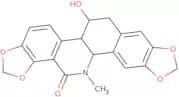
CAS :<p>Oxychelidonine is a chemical compound that is extracted from the leaves of the Oxycoccus vernus plant. Studies have shown that oxychelidonine has significant cytotoxicity against various cancer cells, including those of the breast, prostate, and colon. It is believed to induce apoptotic cell death by inhibiting DNA synthesis and by blocking protein synthesis in cancer cells. Oxychelidonine also inhibits bacterial growth. The extract shows significant cytotoxicity against gram-negative bacteria such as Escherichia coli and Salmonella typhimurium. It has been shown to inhibit the growth of Aspergillus fumigatus, which is a fungus that causes aspergillosis, a type of lung infection. Oxychelidonine can be used in moxibustion treatments for certain conditions such as bronchitis or asthma. Moxibustion involves burning an herb called mugwort (Artemisia vulgaris) on or</p>Formule :C20H17NO6Degré de pureté :Min. 95%Couleur et forme :PowderMasse moléculaire :367.35 g/mol


![3'-[2- Cyanoethyl N, N- bis(1- methylethyl) phosphoramidite]-5'- O- [bis(4- methoxyphenyl) phenylm…](/_next/image/?url=https%3A%2Fstatic.cymitquimica.com%2Fproducts%2F3D%2Fthumb-webp%2FFC165570.webp&w=3840&q=75)