


Étalons pharmaceutiques
Sous-catégories appartenant à la catégorie "Étalons pharmaceutiques"
- APIs pour la recherche et les impuretés(277.537 produits)
- Activateurs et inhibiteurs d'enzymes(2.827 produits)
- Nitrosamines(2.677 produits)
- Composés et métabolites pharmaceutiques et vétérinaires(2.891 produits)
- Toxicologie(13.294 produits)
8194 produits trouvés pour "Étalons pharmaceutiques"
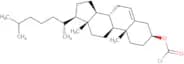
Cholesterol chloroformate
CAS :Produit contrôléCholesterol chloroformate is a cholesterol derivative that has been shown to have good solubility in water. It is a white crystalline solid that is insoluble in ether, benzene, and chlorinated hydrocarbons. The compound has been used as a phase-transition temperature indicator and has been shown to be more resistant to degradation by enzymes than steric interactions. Cholesterol chloroformate is also an intermediate for the synthesis of other compounds such as cholesteryl sulfate and dextran sulfate. This compound binds to the Toll-like receptor 4 (TLR4) on cells, triggering an inflammatory response and activating the immune system. Cholesterol chloroformate can be used to study tumor cell growth by inhibiting mitosis in mouse tumors with subcutaneous injections of this agent.
Formule :C28H45ClO2Degré de pureté :Min. 95%Masse moléculaire :449.11 g/molDiazolidinyl urea
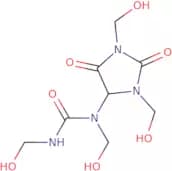
CAS :Diazolidinyl urea is a preservative used in cosmetics and pharmaceuticals. It is an antimicrobial agent that causes cell lysis by inhibiting the respiratory synthesis of bacteria. Diazolidinyl urea has been shown to be effective against Gram-positive and Gram-negative bacteria, yeast, and mold. The analytical method for diazolidinyl urea is well established, with detection limits of 0.1 ppm. Diazolidinyl urea is stable under normal conditions, but can be degraded by heat or pH changes. This preservative also inhibits microbial growth by reducing the availability of p-hydroxybenzoic acid (pHBA) and formaldehyde as substrates for bacterial metabolism. Diazolidinyl urea also prevents the formation of biofilms on wet surfaces and exhibits some anti-inflammatory effects.
Formule :C8H14N4O7Couleur et forme :PowderMasse moléculaire :278.22 g/mol2-Cyanocinnamic acid
CAS :2-Cyanocinnamic acid is a fatty acid that has been shown to inhibit the synthesis of proteins. It binds to cytochrome c oxidase, inhibiting mitochondrial respiration and electron transport, leading to decreased ATP production. 2-Cyanocinnamic acid is not easily transported out of mitochondria, which leads to its accumulation in the mitochondrial matrix. This accumulation causes synergistic inhibition with glutamate, leading to a decrease in ATP production and an increase in intracellular levels of reactive oxygen species (ROS). The use of 2-cyanoacrylic acid as a mitochondrial transport inhibitor has been proposed for the treatment of obesity and diabetes.
2-Cyanocinnamic acid also inhibits fatty acid uptake by binding to the protein translocase at the outer membrane of cells. This binding prevents monomers from entering the cell, where they are broken down by beta oxidation and converted into acetyl-CoA, which can be used for energy production or stored as triglycerFormule :C10H7NO2Degré de pureté :Min. 95%Masse moléculaire :173.17 g/molHomogentisic acid gamma-lactone
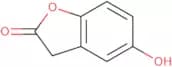
CAS :Homogentisic acid gamma-lactone is a synthetic compound that is an inhibitor of the enzyme cytochrome P450. It binds to cytochrome P450 in a competitive manner and inhibits the oxidation of other molecules, such as steroids and fatty acids. Homogentisic acid gamma-lactone has been shown to have an inhibitory effect on the growth of Pseudomonas aeruginosa in vitro. This compound is able to suppress the formation of reactive oxygen species by inhibiting the activity of cytochrome P450. Homogentisic acid gamma-lactone also possesses antifungal properties that may be due to its ability to inhibit the synthesis of ergosterol, which is an important component for fungal cell membranes.
Formule :C8H6O3Degré de pureté :Min. 98 Area-%Couleur et forme :PowderMasse moléculaire :150.13 g/molRef: 3D-FH23845
Produit arrêtéMethyl 4-chlorocinnamate
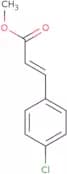
CAS :Methyl 4-chlorocinnamate is an aryl chloride that is synthesized by the reaction of methoxyethyl chloride with cinnamic acid derivatives. It has bacteriostatic activity against a variety of bacteria species, including staphylococcus and candida glabrata. Methyl 4-chlorocinnamate reacts with amine groups in proteins to form amides, which are strong inhibitors of protein synthesis. This compound also inhibits the growth of Candida glabrata by inhibiting phosphonates, which are essential for cell division.
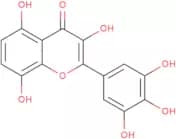
Formule :C10H9ClO2Degré de pureté :Min. 95%Masse moléculaire :196.63 g/mol3,3',4',5,5',8-Hexahydroxyflavone
CAS :3,3',4',5,5',8-Hexahydroxyflavone is a naturally occurring flavonoid, which is a type of polyphenolic compound. It is derived from various plant sources, including fruits, vegetables, and certain medicinal herbs. The compound is characterized by its chemical structure, which includes multiple hydroxyl groups, contributing to its biological activity.
The mode of action of 3,3',4',5,5',8-Hexahydroxyflavone involves its interaction with various cellular pathways and enzymes. Primarily, it is known for its antioxidant properties, where it scavenges free radicals and reactive oxygen species, thereby reducing oxidative stress. Additionally, it may exhibit anti-inflammatory effects by modulating signaling pathways involved in inflammation.
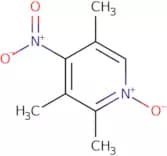
In terms of uses and applications, 3,3',4',5,5',8-Hexahydroxyflavone is primarily explored in scientific research focusing on its potential health benefits. Studies investigate its role in disease prevention, particularly conditions associated with oxidative stress and inflammation, such as cardiovascular diseases and neurodegenerative disorders. While it holds promise in these areas, further research is necessary to fully understand its mechanisms and therapeutic potential.Formule :C15H10O8Degré de pureté :Min. 95%Masse moléculaire :318.24 g/mol2,3,5-Trimethyl-4-nitropyridine 1-oxide
CAS :The reaction of 2,3,5-trimethyl-4-nitropyridine 1-oxide with hydrogen peroxide is an example of a peroxide reaction. The HOOH molecule is a nucleophilic and attacks the CNO group. This leads to the formation of a new bond between the oxygen and carbon atoms in the molecule. The oxygen atom then becomes an oxidizing agent, which can react with other molecules in order to form more products. In this reaction, hydrogen peroxide is used as an oxidizing agent to produce chlorine gas, water vapor, and nitric oxide gas. The reaction can be summarized as follows: 2CNO + 3HOOH → 4CO + 2O + 3N2O + 3HO2
Formule :C8H10N2O3Degré de pureté :Min. 95%Couleur et forme :PowderMasse moléculaire :182.18 g/mol3, 3'- Dihydroxy- [1, 1'- biphenyl] - 4, 4'- dicarboxylic acid
CAS :3, 3'-Dihydroxy- [1, 1'-biphenyl] - 4, 4'-dicarboxylic acid (3,3'DHBA) is a versatile building block that can be used in the synthesis of various organic compounds. It is a necessary reagent for the production of high quality research chemicals and speciality chemicals. 3, 3'-Dihydroxy- [1, 1'-biphenyl] - 4, 4'-dicarboxylic acid has been reported to be useful as an intermediate in the synthesis of complex compounds with diverse applications. This compound has also been used as a reaction component for organic reactions. CAS No.: 861533-46-2.
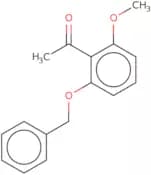
Formule :C14H10O6Degré de pureté :Min. 95%Couleur et forme :solid.Masse moléculaire :274.23 g/mol2-Benzyloxy-6-methoxyacetophenone
CAS :2-Benzyloxy-6-methoxyacetophenone is a high quality and versatile chemical that can be used as a reagent or building block in organic synthesis. It is an important intermediate in the synthesis of fine chemicals, pharmaceuticals, and other complex compounds. 2-Benzyloxy-6-methoxyacetophenone has been shown to be useful as a scaffold for the synthesis of novel complex molecules, such as speciality chemicals. The compound also has potential applications in research and development of new drugs.
Formule :C16H16O3Degré de pureté :Min. 95%Couleur et forme :PowderMasse moléculaire :256.3 g/mol5,6,7,8-Tetrahydro-[1,8]naphthyridine-2-carboxylic acid
CAS :5,6,7,8-Tetrahydro-[1,8]naphthyridine-2-carboxylic acid is a chemical compound with CAS No. 885278-22-8. It is a high quality reagent that can be used as a building block for the synthesis of complex compounds. 5,6,7,8-Tetrahydro-[1,8]naphthyridine-2-carboxylic acid can also be used as a reaction component in chemical synthesis and as an intermediate in the production of various fine chemicals and speciality chemicals.
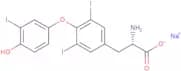
Formule :C9H10N2O2Degré de pureté :Min. 98 Area-%Couleur et forme :PowderMasse moléculaire :178.19 g/mol3,3',5-Triiodo-L-thyronine sodium salt
CAS :Synthetic thyroid hormone (T3) analog; promotes adipogenic differentiation
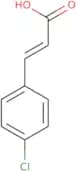
Formule :C15H11I3NNaO4Degré de pureté :Min. 95 Area-%Couleur et forme :Slightly Yellow PowderMasse moléculaire :672.96 g/mol4-Chlorocinnamic acid
CAS :4-Chlorocinnamic acid is a malonic acid derivative and one of the cinnamic acid derivatives that has been shown to inhibit many chemical reactions. It inhibits the production of tyrosinase, which is an enzyme that catalyzes the conversion of tyrosinase to 4-hydroxycinnamic acid. 4-Chlorocinnamic acid also inhibits the growth of Candida glabrata in vitro. The effect on candida is due to its ability to inhibit the production of hydroxyl group and aromatic hydrocarbon, both of which are required for candida's survival. 4-Chlorocinnamic acid binds with aryl halide and neutral ph, preventing it from reacting with other substances.
Formule :C9H7ClO2Degré de pureté :Min. 95%Couleur et forme :PowderMasse moléculaire :182.6 g/molRef: 3D-FC37374
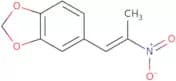
Produit arrêté1-(3,4-Methylenedioxyphenyl) 2-nitropropene
CAS :1-(3,4-Methylenedioxyphenyl) 2-nitropropene (1-MPNP) is a phosphatase inhibitor that is active against gram-negative bacteria by inhibiting enterotoxins and chlamydia. 1-MPNP inhibits the activity of tyrosine phosphatases, which are enzymes that play a major role in bacterial virulence. 1-MPNP competitively inhibits the activity of tyrosine phosphatases and prevents them from catalyzing the hydrolysis of polyphosphate substrates. This inhibition leads to an accumulation of polyphosphates in the bacterial cell membrane, which disrupts its permeability and leads to cell death.
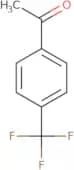
Formule :C10H9NO4Degré de pureté :Min. 97.5 Area-%Couleur et forme :Yellow PowderMasse moléculaire :207.18 g/mol4'-(Trifluoromethyl)acetophenone
CAS :4'-(Trifluoromethyl)acetophenone is a phosphatase inhibitor that has been shown to have inhibitory activity against chemokines. Chemokines are a type of cytokine that are secreted by immune cells and play an important role in inflammation. 4'-(Trifluoromethyl)acetophenone has also been shown to have an effect on the cell membrane permeability of amines and 2-aminobenzyl alcohol, which are substrates for the enzyme. 4'-(Trifluoromethyl)acetophenone reacts with imidazole derivatives, such as trifluoride, forming hydrogen bonds between the two molecules. Kinetic studies have demonstrated that this reaction is reversible in solution at room temperature.
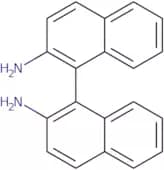
Formule :C9H7F3ODegré de pureté :Min. 95%Couleur et forme :PowderMasse moléculaire :188.15 g/mol(R)-(+)-2,2'-Diamino-1,1'-binaphthalene
CAS :(R)-(+)-2,2'-Diamino-1,1'-binaphthalene is a diammonium salt that is synthesized from fatty acids. This molecule is used in the detection of cancer cells in tissue samples. (R)-(+)-2,2'-Diamino-1,1'-binaphthalene has been shown to be an effective agent against cancer cells and can be used as a diagnostic tool for tissues with cancer cells. The mechanism of action of (R)-(+)-2,2'-Diamino-1,1'-binaphthalene is not yet clear; however it may involve intramolecular hydrogen transfer reactions or coordination chemistry.
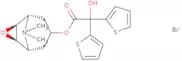
Formule :C20H16N2Degré de pureté :Min. 98 Area-%Couleur et forme :White PowderMasse moléculaire :284.35 g/molTiotropium bromide
CAS :Muscarinic antagonist; bronchodilator
Formule :C19H22BrNO4S2Degré de pureté :Min. 95%Couleur et forme :PowderMasse moléculaire :472.42 g/molEthyl Dichlorophosphate
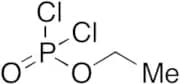
CAS :Produit contrôléFormule :C2H5Cl2O2PCouleur et forme :White to Off-White SolidMasse moléculaire :162.94N-Acetylethylene Urea-d4
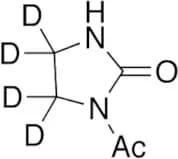
CAS :Produit contrôléApplications N-Acetylethylene Urea-d4 (cas# 1189701-94-7) is a compound useful in organic synthesis.
Formule :C5H4H4N2O2Couleur et forme :NeatMasse moléculaire :132.15Guanosine-5'-triphosphate Disodium Salt (~85%)
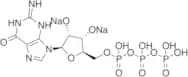
CAS :Produit contrôléApplications Guanosine-5'-triphosphate disodium salt (CAS# 56001-37-7) is a nucleotide used in the preparation of photoreactive GTP affinity probes, and in inhibitors of eukaryotic initiation factor eIF-4E.
References George Cisar, E. A.; J. Am. Chem. Soc., 135, 4676 (2013); Ghosh, P.; et al.: Bioorg. Med. Chem. Lett., 16, 750 (2006).Formule :C10H14N5O14P3Na2Degré de pureté :~85%Couleur et forme :NeatMasse moléculaire :567.14Sulfosuccinimidyl 3-[[2-(biotinamido)ethyl] dithio]propionate sodium salt
CAS :Sulfosuccinimidyl 3-[[2-(biotinamido)ethyl] dithio]propionate sodium salt (BSP) is a biotin-avidin binding molecule that forms a covalent linkage with the antigen and antibody. It is used in immunoassays to detect specific antigens or antibodies in biological samples. BSP is manufactured by reacting carbodiimide hydrochloride with sulfosuccinic acid. The product can be used for a variety of immunoassays such as enzyme-linked immunosorbent assays, real-time polymerase chain reaction, and immunohistochemistry. The sensitivity of this product has been shown to be greater than those of other detection methods such as Western blotting.Formule :C19H27N4NaO9S4Degré de pureté :Min. 95%Couleur et forme :White Off-White PowderMasse moléculaire :606.69 g/molRef: 3D-FS27965
Produit arrêté


![3, 3'- Dihydroxy- [1, 1'- biphenyl] - 4, 4'- dicarboxylic acid](/_next/image/?url=https%3A%2Fstatic.cymitquimica.com%2Fproducts%2F3D%2Fthumb-webp%2FFD164941.webp&w=3840&q=75)
![5,6,7,8-Tetrahydro-[1,8]naphthyridine-2-carboxylic acid](/_next/image/?url=https%3A%2Fstatic.cymitquimica.com%2Fproducts%2F3D%2Fthumb-webp%2FFT56542.webp&w=3840&q=75)

![Sulfosuccinimidyl 3-[[2-(biotinamido)ethyl] dithio]propionate sodium salt](/_next/image/?url=https%3A%2Fstatic.cymitquimica.com%2Fproducts%2F3D%2Fthumb-webp%2FFS27965.webp&w=3840&q=75)