Glycosciences
Sous-catégories appartenant à la catégorie "Glycosciences"
- Aminosucres(108 produits)
- Anticorps Glyco-Related(284 produits)
- Glycolipides(46 produits)
- Glycosaminoglycanes (GAGs)(55 produits)
- Glycosides(422 produits)
- Monosaccharides(6.674 produits)
- Oligosaccharides(4.042 produits)
- Polysaccharides(517 produits)
11404 produits trouvés pour "Glycosciences"
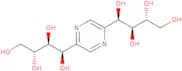
Fructosazine
CAS :Fructosazine is a natural compound that is found in the bark of the fructus quinquefoliae tree. It has been shown to have antimicrobial properties when it reacts with hydrochloric acid. Fructosazine inhibits the growth of bacteria by reacting with their cell walls and interfering with their metabolism. Fructosazine may also have physiological effects, such as reducing blood pressure and body weight gain, which are not fully understood. The reaction mechanism for fructosazine is not yet known, but it may be due to its reactive nature. More research needs to be done on this compound before we can understand its full potential.
Formule :C12H20N2O8Degré de pureté :Min. 96 Area-%Couleur et forme :PowderMasse moléculaire :320.3 g/mol3,5-Dideoxy-3,5-imino-1,2-O-isopropylidene-N-butyl-6-O-tert.butyldimethylsilyl-b-L-galactofuranose
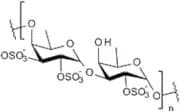
3,5-Dideoxy-3,5-imino-1,2-O-isopropylidene-N-butyl-6-O-tert.butyldimethylsilyl-b-L-galactofuranose is a synthetic sugar that can be used as an intermediate for the synthesis of glycosides. This compound has been fluorinated with trifluoromethanesulfonic acid to increase its stability and resistance to hydrolysis. The carbonyl group of the 3,5 position has been converted into an isopropylidene group by reacting with tert.butyldimethylsilyl chloride (TBSCl) in order to increase the reactivity of this functional group. This sugar can be modified at any position on its carbohydrate chain in order to produce desired products. It can also be methylated or acetylated at any position on the carbohydrate chain using reagents such asDegré de pureté :Min. 95%Fucoidan, fucus vesiculosus
CAS :A fucan sulphate found in brown marine algae (Phaeophyta-typically fucus vesiculosus (illustrated), Ascophyllum nodosum, Alaria and Macrocystis pyrifyra and has been shown to have anticoagulant activity. The main constituents are α-1,4 and α-1,2 linked L-fucose sulphates although galactose also occurs and there are many variations of the basic structure found in different species of Phaeophyta. The image was kindly provided by Prof Mike Guiry from Cork who runs ‘The Seaweed Site’.Degré de pureté :Min. 95%Couleur et forme :White Powder2,3,4-Tri-O-acetyl-6-deoxy-6,6-difluoro-a-D-mannopyranosyl-1-bis[2-(acetylthio)ethyl]phosphate
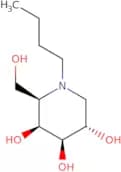
CAS :Fucosylation inhibitorFormule :C20H29F2O13PS2Masse moléculaire :610.54 g/molN-Butyldeoxygalactonojirimycin
CAS :Competitive inhibitor of glucosylceramidase (GlcCer), which catalyses the first step in glycosphingolipid (GSL) synthesis. This compound is a promising candidate for substrate reduction therapy in Sandhoff disease, where it decreases the rate of GSL biosynthesis and counterbalances the impaired rate of ganglioside catabolism.
Formule :C10H21NO4Degré de pureté :Min. 95%Couleur et forme :PowderMasse moléculaire :219.28 g/mol2,3-O-Isopropylidene)- L- ribonic acid γ-lactone
2,3-O-Isopropylidene)- L- ribonic acid gamma-lactone is a carbohydrate that has been modified with fluorination. This product can be used in the synthesis of oligosaccharides and monosaccharides. The custom synthesis of this product is available on request. This product has been shown to be high purity and methylated. It has also been glycosylated and click modified.Degré de pureté :Min. 95%Heparin disaccharide I-A trisodium salt
CAS :Heparin disaccharide I-A trisodium salt is an oligosaccharide that is a synthetic and modified form of heparin. It is used as a pharmaceutical agent to prevent coagulation, and in the treatment of thrombosis, deep vein thrombosis, pulmonary embolism, and other cardiovascular diseases. This product has been custom synthesized for the modification of sugar structures, fluorination, methylation, sugar modification and click chemistry.Formule :C14H21NO17S2·3NaDegré de pureté :Min. 95 Area-%Couleur et forme :White Off-White PowderMasse moléculaire :608.41 g/mol4-O-(β-D-Galactopyranosyl)-D-galactopyranose
CAS :Used as enzyme substrates, analytical standards and for in vitro diagnosticsFormule :C12H22O11Degré de pureté :Min. 95%Couleur et forme :White Off-White PowderMasse moléculaire :342.29 g/mol1-D-3-Deoxy-myo-inositol
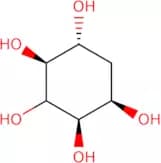
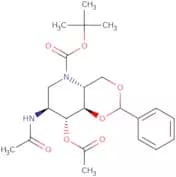
CAS :Myoinositol is a cyclitol and a member of the group of hexahydroxycyclohexanes. It is found in many plants and animals, especially in brain tissue, and plays an important role as a component of cell membranes. Myoinositol has been shown to inhibit cellular glycosidases, which are enzymes that break down complex sugars. In addition, myoinositol has been shown to have anti-cancer properties. Myoinositol is used as an analytical reagent in phase chromatography to separate molecules based on their hydrophobicities. 1-D-3-Deoxy-myo-inositol also has corrosion inhibition properties and can be used as a pesticide or agrochemical.Formule :C6H12O5Degré de pureté :Min. 95 Area-%Couleur et forme :White PowderMasse moléculaire :164.16 g/mol2-Acetamido-3-O-acetyl-4,6-benzylidene-N-Boc-1,2,5-trideoxy-1,5-imino-D-glucitol
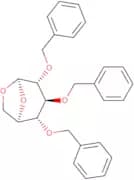
CAS :2-Acetamido-3-O-acetyl-4,6-benzylidene-N-Boc-1,2,5-trideoxy-1,5-imino-D-glucitol is a carbohydrate that is synthesized by a click modification of 4,6 benzylidene N Boc glucitol. The synthesis of this compound was accomplished by the use of a two step process to convert the starting material into 2 acetamido 3 O acetyl 4,6 benzylidene 1,2 5 trideoxy 1 5 imino D glucitol. The first step involved the conversion of 4 6 benzylidene 1 2 5 trideoxy 1 5 imino D glucitol to 2 acetamido 3 O acetyl 4 6 benzylidene 1 2 5 trideoxy 1 5 imino D glucitol. In the second step, this compound was converted to 2 acetamido 3 O acetylFormule :C22H30N2O7Degré de pureté :Min. 95%Masse moléculaire :434.48 g/mol1,6-Anhydro-2,3,4-tri-O-benzyl-b-D-glucopyranose
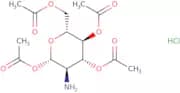
CAS :1,6-Anhydro-2,3,4-tri-O-benzyl-b-D-glucopyranose is a polymer that can be synthesized by copolymerizing the monomer with other reagents. The acetal linkage between the two glucose units allows for a cyclic structure, and this compound is soluble in water and methanol. 1,6-Anhydro-2,3,4-tri-O-benzyl-b-D-glucopyranose has been used to synthesize a variety of polymers such as polyacetals and polyesters.Formule :C27H28O5Degré de pureté :Min. 95%Couleur et forme :White PowderMasse moléculaire :432.51 g/mol1,3,4,6-Tetra-O-acetyl-b-D-glucosamine HCl
CAS :1,3,4,6-Tetra-O-acetyl-b-D-glucosamine HCl is a compound that can be used in the production of bacterial cellulose. It is a white powder with a molecular weight of 536.2. 1,3,4,6-Tetra-O-acetyl-b-D-glucosamine HCl has been shown to be effective in the cultivation of microorganisms such as bacteria and fungi. This product is also an additive for deionized water and deionized sucrose solutions. Tetraacetylated glucosamine hydrochloride is used to produce bacterial cellulose through the action of cellulase enzymes on sucrose solutions containing NaOH. In addition, this product has been shown to inhibit the proliferation of fibroblasts and epithelial cells when cultured in vitro.Formule :C14H21NO9·HClDegré de pureté :Min. 95.0 Area-%Couleur et forme :PowderMasse moléculaire :383.78 g/mol2,4,7,8-Tetra-O-acetyl-9-azido-9-deoxy-N-acetylneuraminic acid methyl ester
CAS :2,4,7,8-Tetra-O-acetyl-9-azido-9-deoxy-N-acetylneuraminic acid methyl ester is a high purity synthetic compound that has been modified for use in Click chemistry. It is a monosaccharide with an acetyl group on the 2' position and an azido group on the 9' position of the sugar. This compound is used in fluoroination reactions to modify sugars and oligosaccharides. It can also be used in glycosylation reactions to attach monosaccharides and saccharides to proteins or other molecules.Formule :C20H28N4O12Degré de pureté :One SpotCouleur et forme :White PowderMasse moléculaire :516.46 g/molD-Panose
CAS :Used to determine composition and sequence of glucan-containing mixed linkages
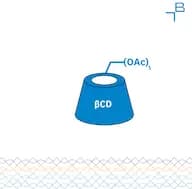
Formule :C18H32O16Degré de pureté :(%) Min. 95%Couleur et forme :White PowderMasse moléculaire :504.44 g/molMonoacetyl-b-cyclodextrin
This beta-cyclodextrin (β-CD) derivative is a functionalized cyclic oligosaccharide composed of seven glucose units, characterized by a hydrophilic exterior and a lipophilic cavity (bigger than α-CD and smaller than γ-CDs), which allows it to encapsulate various guest molecules. This structural feature facilitates its use in multiple applications, including pharmaceuticals, food enhancement, and cosmetics. In the pharmaceutical industry, it enhances the solubility and stability of poorly water-soluble drugs, improving their bioavailability and efficacy while also masking unpleasant tastes. The food sector utilizes it as a stabilizer for flavors, colors, and nutrients, extending shelf life by protecting sensitive ingredients from degradation. In cosmetics, it serves as a complexing agent for fragrances and active components, ensuring their stability and controlled release. Its use expands to many other fields, including nanotechnology for drug delivery systems, environmental remediation for extracting organic pollutants, textiles for slow-release fragrances, and analytical chemistry for chiral separation.
Degré de pureté :(%) Min. 95%Couleur et forme :PowderCarboxymethyl-dextran sodium salt - Average MW 10,000 - 20,000Da
CAS :Sodium carboxymethyl dextran is a white, odourless and tasteless powder, which is freely soluble in water or electrolyte solutions. Applications that have been described for carboxymethyl dextran include carriers of paramagnetic contrast agents, preparation of conjugates of pharmacologically active compounds and carboxymethyl dextrans in biosensors. A number of other uses in cosmetics, agriculture, foods, paints and textiles have been the subject of patent applications.Couleur et forme :White PowderD-Mannose-6-phosphate sodium
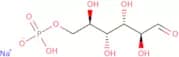
CAS :D-Mannose-6-phosphate sodium salt (DMSP) is a phosphorylated sugar that is produced by the enzyme expressed in the yeast, Saccharomyces cerevisiae. DMSP has been shown to be involved in the synthesis of phosphatidylcholine and other lipids. Its solubilization and adsorption properties have been studied using dibutyryl camp, which is a lipid found in milk fat. The amino acid analysis of DMSP revealed that it contains both D-mannose residues and 6-phosphate groups. The 6-phosphate group is found only on one side of the molecule, which may contribute to its asymmetry.Formule :C6H12NaO9PDegré de pureté :Min. 98 Area-%Couleur et forme :White PowderMasse moléculaire :282.12 g/mol3,6-Dideoxy-3,6-imino-4,5-O-isopropylidene-D-mannitol
3,6-Dideoxy-3,6-imino-4,5-O-isopropylidene-D-mannitol is a complex carbohydrate that is a sugar. It is an oligosaccharide and has CAS No. 123725-27-8. 3,6-Dideoxy-3,6-imino-4,5-O-isopropylidene D mannitol is a saccharide and it can be modified with methylation or glycosylation. 3,6-Dideoxy D mannitol can be fluorinated in the presence of elemental fluorine to produce 3,6 difluoro 2,5 dihydroxyhexanoic acid. 3,6 Dideoxy D mannitol is synthesized from 2 acetylacetone and tetrachloroethanol as starting materials.Degré de pureté :Min. 95%5-Deoxy-5-fluoro-1,2-O-isopropylidene-D-iduronic acid-3,6 lactone
5-Deoxy-5-fluoro-1,2-O-isopropylidene-D-iduronic acid is a custom synthesis of oligosaccharide. It is a glycosylation that has been modified with fluorination, methylation, and click modification. This complex carbohydrate has an CAS number. The molecular weight of this polysaccharide is not determined. 5D5FIA3L is a saccharide sugar that has the ability to form glycosidic bonds with other saccharides and proteins in the body. This property makes it an important component in the human diet as well as in biochemistry and structural biology research.Degré de pureté :Min. 95%Man-5 N-Glycan
CAS :Man-5 N-glycan is a glycan that is synthesized by the enzyme mannosyltransferase. This glycan contains five mannose residues, one galactose residue, and one N-acetylglucosamine residue. The Man-5 N-glycan is found in eukaryotes, which are organisms whose cells have nuclei and membrane bound organelles. It is often found on the surface of cells or in secretions such as mucus or saliva. Man-5 N-Glycans are involved in cell signaling and may play a role in bladder cancer development. They are also used to generate monoclonal antibodies for diagnostic purposes.
Formule :C46H78N2O36Degré de pureté :Min. 90.00%Couleur et forme :PowderMasse moléculaire :1,235.1 g/mol

![2,3,4-Tri-O-acetyl-6-deoxy-6,6-difluoro-a-D-mannopyranosyl-1-bis[2-(acetylthio)ethyl]phosphate](/_next/image/?url=https%3A%2Fstatic.cymitquimica.com%2Fproducts%2F3D%2Fthumb-webp%2FMT96598.webp&w=3840&q=75)