Glycosciences
Sous-catégories appartenant à la catégorie "Glycosciences"
- Aminosucres(108 produits)
- Anticorps Glyco-Related(284 produits)
- Glycolipides(46 produits)
- Glycosaminoglycanes (GAGs)(55 produits)
- Glycosides(422 produits)
- Monosaccharides(6.674 produits)
- Oligosaccharides(4.042 produits)
- Polysaccharides(517 produits)
11404 produits trouvés pour "Glycosciences"
N-Benzyl-3,5-dideoxy-3,5-imino-1,2-O-isopropylidene-a-D-gluco(b-L-ido)furanose
N-Benzyl-3,5-dideoxy-3,5-imino-1,2-O-isopropylidene-a-D-gluco(b-L-ido)furanose is a methylated saccharide that is used in the synthesis of complex carbohydrates. This synthetic compound is classified as a sugar and can be modified with a variety of chemical reactions. The carbonyl group on the C6 position can be fluorinated to produce N-(2,4,6'-trifluoroacetyl)-benzyl--3,5-dideoxy--3,5--imino--1,2--O--isopropylidene--a-(D)--gluco(b)--L--ido)furanose. This compound has CAS Number 58424–52–0 and is available for custom synthesis.Degré de pureté :Min. 95%3-Azido-3-deoxy-5, 6- O- isopropylidene- D- gulonic acid g- lactone
CAS :3-Azido-3-deoxy-5, 6-O-isopropylidene-Dgulonic acid g-lactone is a fluorinated monosaccharide. It is synthesized by the reaction between 3,4,6,7 tetra fluorobenzaldehyde and 5,6 O isopropylidene Dgulonic acid. It can be used for glycosylation reactions in order to produce oligosaccharides. The modification of this product can be achieved through methylation and sugar modification techniques. This product has CAS No. 244057-17-8 and is highly pure with a purity of 99%.Formule :C9H13N3O5Degré de pureté :Min. 95%Masse moléculaire :243.22 g/molGD2-Ganglioside
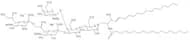
CAS :GD2 (shown as sodium salt) has a core trisaccharide structure (GalNAc-b-1,4-Gal-b-1,4-Glc) with its two sialic acids linked b-2,3/b-2,8 to the inner galactose residue and ceramide linked to position 1 on the reducing terminal glucose residue. GD2 ganglioside is expressed at a low concentration in the central nervous system, nerves, skin melanocytes and stem cells in healthy adults. On the other hand, GD2 is overexpressed in a number of tumors, including: neuroblastoma, melanoma, small cell lung carcinoma and brain tumors. Recently, it has been found in low concentrations on breast cancer stem cells (CSC) that possess: self-renewal properties (division without disrupting the undifferentiated state), and tumor-initiating capabilities. It has been suggested that GD2 ganglioside may be developed as an effective target antigen for CSC immunotherapy (Fleurence, 2017).Formule :C78H138N4O34·xNaDegré de pureté :Min. 95 Area-%Couleur et forme :PowderMasse moléculaire :1,675.94 g/molGanglioside GM1
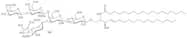
CAS :Ganglioside GM1 has a core tetrasaccharide structure (Galβ1,3GalNAcβ1,4Galβ1,4Glc) with sialic acid linked α2,3 to the inner galactose residue, ceramide linked β to position 1 on the reducing terminal glucose residue (Ledeen, 2009), and is abundant in all mammalian brains, where it covers 10%-20% of the total ganglioside mixture. Ganglioside GM1 is found in epithelial membranes and is a key element for the detection of bacterial toxicity and viral infection. It is the intestinal receptor for cholera toxin, the B-subunits of heat-labile toxin (LTB) from E.coli, for rotavirus, and simian virus 40. GM1 functions as a neurotrophic and neuroprotective compound and has been used therapeutically for diabetic and peripheral neuropathies. It also has the ability to bind amyloid-β proteins and is involved in Alzheimer’s pathogenesis (Chiricozzi, 2020).Formule :C73H131N3O31·xNaDegré de pureté :Min. 95 Area-%Couleur et forme :White PowderMasse moléculaire :1,546.82 g/mol1-O-Methyl-β-D-xylopyranoside
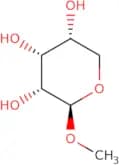
CAS :1-O-Methyl-beta-D-xylopyranoside is a glycoside that consists of a glucose molecule linked to the hydroxyl group of p-hydroxybenzoic acid through an alpha glycosidic bond. It is found in many plants, such as in the leaves of the common bay tree (Laurus nobilis) and in the bark of the cinnamon tree (Cinnamomum verum). 1-O-Methyl-beta-D-xylopyranoside is used as a sweetener and flavoring agent. It is also used in some pharmaceutical drugs, including antiulcer agents and antidiarrheal agents. This compound has been shown to have an effective dose of 5 mg/kg when given orally to humans.Formule :C6H12O5Degré de pureté :Min. 98.0 Area-%Masse moléculaire :164.16 g/molMethyl 3,4-di-O-benzyl-2-deoxy-a-D-glucopyranoside
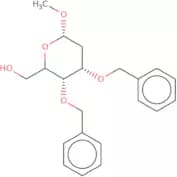
Methyl 3,4-di-O-benzyl-2-deoxy-a-D-glucopyranoside (MBG) is a synthetic compound that is modified at the C3 position with a benzyl group. MBG is an oligosaccharide and polysaccharide that has been shown to have potential as a drug for the treatment of cancer. It has been shown to inhibit tumor growth in animals and human cells by inhibiting DNA synthesis and protein synthesis. Additionally, it can be used for the prevention of postoperative adhesions by inhibiting collagen formation.Formule :C21H26O5Degré de pureté :Min. 95%Masse moléculaire :358.43 g/mol2,3,4,6-Tetra-O-benzyl-D-glucopyranose
CAS :2,3,4,6-Tetra-O-benzyl-D-glucopyranose is a selectively protected intermediate, where the anomeric 1-O-hydroxyl group is free. This hemiacetal has been used successfully as an intermediate for glucosylation couplings, where it was converted into 2,3,4,6-tetra-O-benzyl-D-glucopyranose trichloroacetimidate using trichloroacetonitrile in the presence of a base such as potassium carbonate and DBU. Importantly, this imidate donor with no neighbouring participating groups is commonly used for the selective formation of α-glucosides. 2,3,4,6-tetra-O-benzyl-D-glucopyranose can also be oxidized to the lactone, or reduced to give the open chain form. Additionally, 2,3,4,6-tetra-O-benzyl-D-glucopyranose can be used for the preparation of glucono-1,5-lactone hydrazine, which was used, in-turn, to form a glucosylidene-spirocyclopropane.
Formule :C34H36O6Degré de pureté :Min. 98.0 Area-%Masse moléculaire :540.66 g/molRef: 3D-T-1900
-Unit-ggÀ demander1kgÀ demander50gÀ demander250gÀ demander500gÀ demander2500gÀ demanderLacto-N-neotetraose
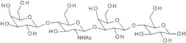
CAS :Lacto-N-neotetraose (LNnT) is a neutral and abundant human milk oligosaccharide (HMO), composed of four sugar molecules. It supports the infant's gut microbiota development and provides protection against infectious diseases. LNnT like many other HMOs offers great interest for the studies of baby milk formula.Formule :C26H45NO21Degré de pureté :Min. 95%Couleur et forme :White PowderMasse moléculaire :707.63 g/mol2,3-Di-O-benzoyl-a-cyclodextrin
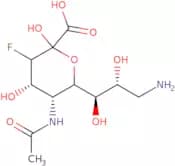
CAS :Alpha-cyclodextrin (α-CD) derivative with a hydrophilic exterior and lipophilic cavity (smaller than β-CDs and γ-CDs) to allocate certain guest molecules. This structural characteristic enables applications in molecular encapsulation, solubility enhancement, and stabilization across multiple industries. In pharmaceuticals, it serves as a drug delivery vehicle, enhancing the bioavailability and stability of active ingredients. The food industry utilizes it as a stabilizer for flavors, colors, and nutrients, as well as a functional ingredient for its effects on lipid metabolism. In cosmetics, it acts as a complex agent for fragrances and active components. Its applications extend to analytical chemistry for chiral separation and to materials science for developing smart materials and nanosystems.Formule :C120H108O42Degré de pureté :Min. 95%Masse moléculaire :2,222.12 g/mol5-Acetamido-9-amino-3,5,9-trideoxy-3-fluoro-D-erythro-L-manno-2-nonulosonic acid
5-Acetamido-9-amino-3,5,9-trideoxy-3-fluoro-D-erythro-L-manno-2-nonulosonic acid is a synthetic compound that is modified with saccharides and fluorine. This chemical is used in the synthesis of glycosylations and oligosaccharides. It has a CAS number of 65911-04-6.Formule :C11H19FN2O8Degré de pureté :Min. 95%Couleur et forme :White PowderMasse moléculaire :326.28 g/molCalcium-D-galactonate hydrate
CAS :Calcium-D-galactonate hydrate is a reagent that is used in organic synthesis as a complex compound. It can also be used as an intermediate for the synthesis of calcium-D-galactonate, which is a useful scaffold for the construction of bioactive molecules. Calcium-D-galactonate hydrate has been shown to have many uses in the pharmaceutical and fine chemical industries. This compound is also an important reactant in research, due to its versatility and usefulness in organic synthesis.
Formule :C12H22CaO14·5H2ODegré de pureté :Min. 98%Couleur et forme :White PowderMasse moléculaire :520.45 g/molMurNAc-6-phosphate-GlcNAc
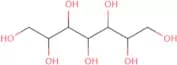
MurNAc-6-phosphate-GlcNAc is a complex carbohydrate that is composed of a glycosylation, methylation, and fluorination. It is an important component in polysaccharides and oligosaccharides. This compound has been modified with Click chemistry to form a reactive site for incorporation of a variety of molecules such as fluorophores, biotin, or other small molecules. This compound can be synthesized using custom synthesis methods and has CAS number 106579-01-4. MurNAc-6-phosphate-GlcNAc is available in high purity and can be custom synthesized to specific needs.Degré de pureté :Min. 95%meso-D-glycero-D-gulo-heptitol
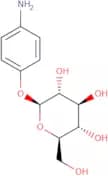
CAS :Meso-D-glycero-D-gulo-heptitol is an enzyme inhibitor that is used in food composition. It has a redox potential of +0.5 V and can be used to inhibit the growth of metal hydroxides through chelation. This compound was found to have skin cell protective effects, as well as an ability to inhibit protein synthesis. Meso-D-glycero-D-gulo-heptitol is also a natural compound with physiological function, such as the prevention of dmannnoheptulose from being converted into D-mannitol. The hydrochloric acid or alcohol residue on this compound does not cause any adverse effects on human cells because it does not affect their redox potentials.Formule :C7H16O7Degré de pureté :Min. 95%Masse moléculaire :212.2 g/mol4-Aminophenyl b-D-glucopyranoside
CAS :4-Aminophenyl b-D-glucopyranoside is a membrane transport inhibitor that prevents the uptake of glucose by inhibiting the enzyme hexose transporter. It is used in biological treatment and has been shown to be effective against glutamicum. 4-Aminophenyl b-D-glucopyranoside can also be used in assays to identify bacteria based on their surface antigens. This compound was isolated from corynebacterium glutamicum and its metabolic pathway has been elucidated. 4-Aminophenyl b-D-glucopyranoside has also been shown to inhibit enzymatic activity, which may be due to inhibition of the enzyme dihydroorotate dehydrogenase.Formule :C12H17NO6Degré de pureté :Min. 95%Couleur et forme :White PowderMasse moléculaire :271.27 g/molCellobiitol
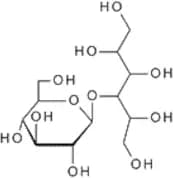
CAS :Cellobiitol is produced by the borohydride reduction of cellobiose. Few publications discuss the chemistry of cellobiitol but applications in the food and pharmaceutical industries have been published.Formule :C12H24O11Degré de pureté :Min. 95%Couleur et forme :PowderMasse moléculaire :344.31 g/mol4-Methylphenyl 2,3,4-tri-O-benzyl-β-L-thiofucopyranoside
4-Methylphenyl 2,3,4-tri-O-benzyl-b-L-thiofucopyranoside is a custom synthesis of an oligosaccharide. It is a complex carbohydrate with CAS No. that belongs to the class of saccharide and sugar. Polysaccharides are made up of several monosaccharides linked together by glycosidic bonds, which are formed by the action of enzymes called glycosyltransferases or glycosidases. Glycosylation is the process in which a sugar molecule (usually glucose) is added to another molecule by means of a glycosidic bond. Carbohydrates are one type of macromolecule and they are important sources of energy in living things. They also play important roles in cell walls and as structural components in plants and animals. The chemical modification carried out on this compound is methylation, which refers to the addition of one or more methylFormule :C34H36O4SDegré de pureté :Min. 95%Masse moléculaire :540.71 g/molGlycyl-chitobiose
Glycyl-chitobiose is an oligosaccharide that can be synthesized from glycerol and chitobiose. This product is often used as a building block for the synthesis of complex carbohydrate molecules. The purity of Glycyl-chitobiose is greater than 98% and it has been modified with fluorine, methyl, and click chemistry. The CAS number for this product is 627-14-1.Formule :C18H32N4O11Degré de pureté :Min. 95%Masse moléculaire :480.47 g/molD-Mannose - F (from birch)
CAS :Abundant and critical component of natural glycans and glycoproteinsFormule :C6H12O6Degré de pureté :Min. 98 Area-%Couleur et forme :White PowderMasse moléculaire :180.16 g/molL-Ribose
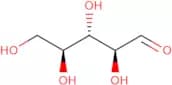
CAS :Constituent of RNA; important resource for RNA- and DNA-related syntheses
Formule :C5H10O5Degré de pureté :Min. 98 Area-%Couleur et forme :White PowderMasse moléculaire :150.13 g/molEthyl 2,3-O-isopropylidene-a-L-thiorhamnopyranoside
CAS :Ethyl 2,3-O-isopropylidene-a-L-thiorhamnopyranoside (Ip) is a glycosylation inhibitor that inhibits the formation of an alpha-(1,2)-link between glucose and mannose in the glycosylation of the pentasaccharide. The maximum tolerated dosages of Ip have been determined in HL-60 cells. Trichloroacetimidate is used as a substitute for Ip in these experiments because it can be dissolved in water and has a high therapeutic index. Convergent synthesis of Ip was achieved by reacting pentasaccharides with trichloroacetimidate to produce pentasaccharides with substituted mannose residues at position two and three.Formule :C11H20O4SDegré de pureté :Min. 95%Masse moléculaire :248.34 g/mol