Glycosciences
La glycosciences est l'étude des glucides et de leurs dérivés, ainsi que des interactions et des fonctions biologiques auxquelles ils participent. Ce domaine de recherche est crucial pour comprendre une grande variété de processus biologiques, y compris la reconnaissance cellulaire, la signalisation, la réponse immunitaire et le développement des maladies. La glycosciences a des applications importantes en biotechnologie, en médecine et dans le développement de nouveaux médicaments et thérapies. Chez CymitQuimica, nous proposons une large sélection de produits de haute qualité et pureté pour la recherche en glycosciences. Notre catalogue comprend des monosaccharides, des oligosaccharides, des polysaccharides, des glyconjugués et des réactifs spécifiques, conçus pour soutenir les chercheurs dans leurs études sur la structure, la fonction et les applications des glucides dans les systèmes biologiques. Ces ressources sont destinées à faciliter les découvertes scientifiques et les applications pratiques dans divers domaines des biosciences et de la médecine.
Sous-catégories appartenant à la catégorie "Glycosciences"
- Aminosucres(108 produits)
- Anticorps Glyco-Related(282 produits)
- Glycolipides(46 produits)
- Glycosaminoglycanes (GAGs)(55 produits)
- Glycosides(419 produits)
- Monosaccharides(6.624 produits)
- Oligosaccharides(3.682 produits)
- Polysaccharides(503 produits)
11046 produits trouvés pour "Glycosciences"
Trier par
Degré de pureté (%)
0
100
|
0
|
50
|
90
|
95
|
100
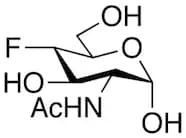
2-Acetamido-2,4-dideoxy-4-fluoro-α-D-glucopyranose
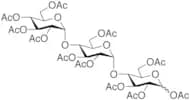
CAS :Produit contrôléFormule :C8H14FNO5Couleur et forme :NeatMasse moléculaire :223.20D-Maltotriose Peracetate
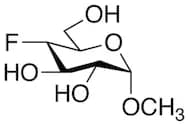
CAS :Produit contrôlé<p>Applications Protected Maltotriose.<br>References Brayer, G., et al.: Biochem., 39, 4778 (2000),<br></p>Formule :C40H54O27Couleur et forme :NeatMasse moléculaire :966.84Methyl 4-Deoxy-4-fluoro-a-D-glucose
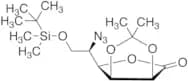
CAS :Produit contrôlé<p>Applications Methyl 4-Deoxy-4-fluoro-α-D-glucose (cas# 56926-53-5) is a compound useful in organic synthesis.<br></p>Formule :C7H13FO5Couleur et forme :NeatMasse moléculaire :196.175-Azido-6-(tert-butyldimethylsilyl)-2,3-O-isopropylidene L-Gulono-1,4-lactone
CAS :Produit contrôlé<p>Applications 5-Azido-6-(tert-butyldimethylsilyl)-2,3-O-isopropylidene L-Gulono-1,4-lactone (cas# 118464-49-6) is a compound useful in organic synthesis.<br></p>Formule :C15H27N3O5SiCouleur et forme :NeatMasse moléculaire :357.48Sialyl Lewis X
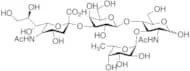
CAS :Produit contrôlé<p>Applications Antigen which binds to endothelial adhesion molecule, E-selectin.<br>References Fukushima, K., et al.: Cancer Research, 44, 5279 (1984), Zein, N., et al.: Science, 240, 1198 (1988), Phillips, M.L., et al.: Science, 250, 1130 (1990), Walz, G., et al.: P.N.A.S. U.S.A., 88, 6224 (1991), Walker, S., et al.: P.N.A.S. U.S.A., 89, 4608 (1992)<br></p>Formule :C31H52N2O23Couleur et forme :Off White SolidMasse moléculaire :820.74Benzyl 2-Acetamido-3,4,6-tri-O-benzyl-2-deoxy-a-D-glucopyranoside
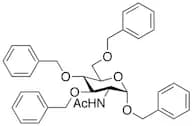
CAS :Produit contrôléFormule :C36H39NO6Couleur et forme :NeatMasse moléculaire :581.70DNS-SGN
<p>DNS-SGN is a synthetic, high purity, methylated, glycosylated, complex carbohydrate. This product is custom synthesized and has been fluorinated with a click modification. DNS-SGN is CAS Number: 598-02-3.</p>Formule :C100H155N9O66SDegré de pureté :Min. 95%Masse moléculaire :2,571.39 g/molBenzyl b-D-galactopyranoside
CAS :<p>Benzyl b-D-galactopyranoside is a synthetic compound that can be used in the synthesis of complex carbohydrates. This compound has been modified with fluorination, methylation and click chemistry. The monosaccharide benzyl b-D-galactopyranoside is an important building block for the glycosylation of saccharides and polysaccharides. This compound can also be used as a fluorescent probe for complementary DNA hybridization in microarrays.</p>Degré de pureté :Min. 95%4-O-Acetyl-3,6-di-O-tert-butyldimethylsilyl-D-galactal
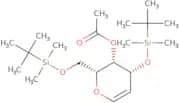
CAS :4-O-Acetyl-3,6-di-O-tert-butyldimethylsilyl-D-galactal is a high purity, custom synthesis sugar. This compound has been modified with Click chemistry and fluorination. The modification has been shown to have glycosylation and methylation. This product is synthesized from a complex carbohydrate.Degré de pureté :Min. 95%Sialyllacto-N-fucopentaose V-APD-HSA
<p>Sialyllacto-N-fucopentaose V-APD-HSA is a methylated, fluorinated, click modified oligosaccharide. It is an Oligosaccharide and Polysaccharide. It also has a saccharide, Carbohydrate, and Monosaccharide. This product is Custom synthesized with High purity and Modification.</p>Degré de pureté :Min. 95%Ethyl 2-amino-b-D-glucuronide
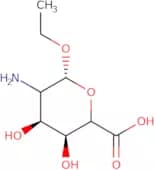
Ethyl 2-amino-b-D-glucuronide is a Carbohydrate, Modification, saccharide, Oligosaccharide, sugar. The CAS number for this compound is 6058-91-9. This product can be synthesized in the lab using Custom synthesis and High purity. Ethyl 2-amino-b-D-glucuronide is a Synthetic and Monosaccharide. This product has Click modification and Methylation. Ethyl 2-amino-b-D-glucuronide is also Glycosylated.Formule :C8H15NO6Degré de pureté :Min. 95%Masse moléculaire :221.21 g/molMaltobionic acid dicyclohexylammonium salt
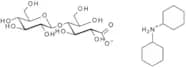
CAS :Produit contrôléAn antioxidant used in food and feeds, produced from starch, using enzymesFormule :C24H45NO12Degré de pureté :Min. 95%Masse moléculaire :539.61 g/molSialylglycan
<p>Sialylglycan is a glycan that is found on the surface of cells and is important in cell-cell interactions. It is involved in the binding of influenza virus to its receptor, and sialylglycan has been shown to be bifunctional, meaning it can act as both an antigen and an antibody. Sialylglycan oligosaccharides are found in muscle tissue, which is where influenza viruses are most likely to attach. The molecule's fluorimetric properties have also been used to study outbreaks of avian influenza. <br>Sialylglycan has been used for gene analysis by attaching fluorescent tags to the molecule that can be detected using fluorescence microscopy techniques. In vivo assays have also been performed with sialylglycan as a model antigen.</p>Formule :C76H125N5O57Degré de pureté :Min. 95%Couleur et forme :PowderMasse moléculaire :2,020.81 g/molPyridoxal galactoside
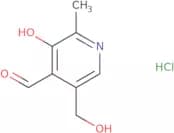
CAS :<p>Pyridoxal galactoside is a synthetic carbohydrate that is glycosylated and methylated. It is soluble in water and sparingly soluble in ethanol and acetone. Pyridoxal galactoside has a CAS number of 644-88-2. The chemical formula for pyridoxal galactoside is C6H7NO3, with a molecular weight of 171.12 g/mol. This product can be custom synthesized to meet customer specifications.</p>Formule :C14H19O8NDegré de pureté :Min. 95%Couleur et forme :Pale brown solid.Masse moléculaire :329.31 g/mol1,2,3-Tri-O-benzyl-4-O-benzoyl-b-D-galactopyranoside
CAS :1,2,3-Tri-O-benzyl-4-O-benzoyl-b-D-galactopyranoside is a custom synthesis of an oligosaccharide (sugar) that can be modified with fluorination, glycosylation, and methylation. The CAS number for this compound is 313352-43-1. This product has a molecular weight of 685.96 g/mol and the chemical formula C36H51NO13. It is a white solid at room temperature. 1,2,3-Tri-O-benzyl-4-O-benzoyl--b -D--galactopyranoside is also known as an Oligosaccharide (sugar). It has a molecular weight of 685.96 g/mol and the chemical formula C36H51NO13. It is a white solid at room temperature.Formule :C34H34O7Degré de pureté :Min. 95%Masse moléculaire :554.63 g/mol4-Methoxyphenyl 3-O-allyl-4,6-O-benzylidene-2-O-(4-methylbenzoyl)-b-D-galactopyranoside
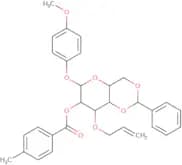
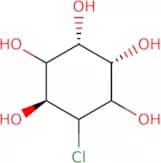
<p>4-Methoxyphenyl 3-O-allyl-4,6-O-benzylidene-2-O-(4-methylbenzoyl)-b-D-galactopyranoside is a custom synthesis of saccharide, CAS No. 90423-62-9. This compound has been modified by fluorination and methylation. It has also been shown to be useful for click modification, oligosaccharides, saccharides, and polysaccharides.</p>Formule :C31H32O8Degré de pureté :Min. 95%Masse moléculaire :532.58 g/mol1-Chloro-1-deoxy-scyllo-inositol
1-Chloro-1-deoxy-scyllo-inositol is a molecule that can be transported by the transporter symporter. It has been shown to interact with hydrophobic interactions, and this interaction is stereospecific. This molecule is also a ligand which interacts with other molecules through hydrophobic interactions. Furthermore, it has been shown in microscopy studies to have a transporters morphology.Formule :C6H11ClO5Degré de pureté :Min. 95%Masse moléculaire :198.6 g/molN-Acetyl-D-galactopyranosylthiosemicarbazide
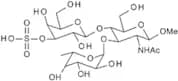
N-Acetyl-D-galactopyranosylthiosemicarbazide is a glycosylation reagent that is used in the synthesis of saccharides, oligosaccharides, and polysaccharides. N-Acetyl-D-galactopyranosylthiosemicarbazide is synthesized by reacting acetamidoacetonitrile with D-galactose and sodium thiosulfate. The reaction product can be easily purified by crystallization or recrystallization. N-Acetyl-D-galactopyranosylthiosemicarbazide has been shown to be a high purity compound, as it does not contain any residual solvents or impurities. The CAS number for this compound is 58437-66-7.Degré de pureté :Min. 95%3'-Sulfated Lewis X methyl glycoside
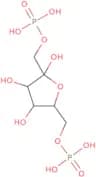
CAS :<p>3'-Sulfated Lewis X methyl glycoside is a synthetic, fluorinated oligosaccharide that can be used as a sugar or as an intermediate in the synthesis of complex carbohydrates. It is available for custom synthesis and modification to meet your specific needs. 3'-Sulfated Lewis X methyl glycoside is a monosaccharide that has been modified with a click reaction to attach sulfate groups. This modification allows for easier saccharide recognition and binding in the body. The CAS number for 3'-sulfated Lewis X methyl glycoside is 386264-50-2.</p>Formule :C21H37NO18SDegré de pureté :Min. 95%Masse moléculaire :623.58 g/molD-Fructose-13C6-1,6-diphosphate sodium salt
CAS :D-Fructose-13C6-1,6-diphosphate sodium salt is a reactive compound used as a model in studies of metabolic disorders. It has been shown to have an inhibitory effect on the enzymes that catalyze the conversion of D-fructose 1,6 diphosphate to D-fructose 6 phosphate in the cytosol. The compound is also useful for determining the binding of calcium ions to proteins and for measuring the activity of carbon source enzymes.Formule :C6H10Na4O12P2·xH2ODegré de pureté :Min. 95%Couleur et forme :PowderMasse moléculaire :434 g/mol