Glycosciences
La glycosciences est l'étude des glucides et de leurs dérivés, ainsi que des interactions et des fonctions biologiques auxquelles ils participent. Ce domaine de recherche est crucial pour comprendre une grande variété de processus biologiques, y compris la reconnaissance cellulaire, la signalisation, la réponse immunitaire et le développement des maladies. La glycosciences a des applications importantes en biotechnologie, en médecine et dans le développement de nouveaux médicaments et thérapies. Chez CymitQuimica, nous proposons une large sélection de produits de haute qualité et pureté pour la recherche en glycosciences. Notre catalogue comprend des monosaccharides, des oligosaccharides, des polysaccharides, des glyconjugués et des réactifs spécifiques, conçus pour soutenir les chercheurs dans leurs études sur la structure, la fonction et les applications des glucides dans les systèmes biologiques. Ces ressources sont destinées à faciliter les découvertes scientifiques et les applications pratiques dans divers domaines des biosciences et de la médecine.
Sous-catégories appartenant à la catégorie "Glycosciences"
- Aminosucres(108 produits)
- Anticorps Glyco-Related(282 produits)
- Glycolipides(46 produits)
- Glycosaminoglycanes (GAGs)(55 produits)
- Glycosides(419 produits)
- Monosaccharides(6.624 produits)
- Oligosaccharides(3.682 produits)
- Polysaccharides(503 produits)
11046 produits trouvés pour "Glycosciences"
Trier par
Degré de pureté (%)
0
100
|
0
|
50
|
90
|
95
|
100
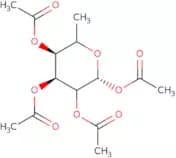
1,2,3,4-Tetra-O-acetyl-b-L-rhamopyranose
CAS :<p>1,2,3,4-Tetra-O-acetyl-b-L-rhamopyranose is a fluorinated monosaccharide that is synthetically produced. It can be used in the synthesis of oligosaccharides and complex carbohydrates. 1,2,3,4-Tetra-O-acetyl-b-L-rhamopyranose is an important chemical intermediate for glycosylation reactions. This product has been modified with methyl groups and click chemistry to produce a reactive site for subsequent glycosylation reactions. 1,2,3,4 Tetra -O -acetyl -b -L -rhamopyranose has been shown to be stable to heat and acid conditions as well as high purity.</p>Formule :C14H20O9Degré de pureté :Min. 95%Masse moléculaire :332.3 g/mol2-Azido-3,4,6-tri-O-benzyl-2-deoxy-D-glucopyranose
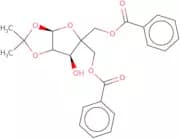
<p>Silver trifluoromethanesulfonate is an ionic silver reagent that is used to modify polysaccharides. It has been shown that the triethylamine can be substituted with other strong bases, such as potassium t-butoxide. This reagent reacts with chlorides to produce 2-azido-3,4,6-tri-O-benzyl-2-deoxy-D-glucopyranose. The modification of this compound is important for the study of glycosylation reactions and for understanding the structure of polysaccharides.</p>Degré de pureté :Min. 95%5-O-Benzoyl-4-benzoyloxymethyl-1,2-O-isopropylidene-a-D-xylofuranose
<p>5-O-Benzoyl-4-benzoyloxymethyl-1,2-O-isopropylidene-a-D-xylofuranose is a synthetic monosaccharide that has been modified by fluorination and glycosylation. The chemical formula is C14H10F6O8. It can be custom synthesized to order, and it is available in high purity.</p>Formule :C23H24O8Degré de pureté :Min. 95%Masse moléculaire :428.44 g/molD-Mannose- 4- 13C
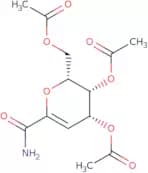
CAS :<p>D-Mannose is a sugar that is found in many plants and animals. It can be extracted from natural sources or synthesized with the use of Click modification, fluorination, glycosylation, and methylation. D-Mannose has been shown to inhibit bacterial adhesion and prevent the formation of biofilms. In addition, it has been shown to have anti-inflammatory activities. D-Mannose is a complex carbohydrate that is composed of saccharides joined together in chains and rings.</p>Degré de pureté :Min. 95%Masse moléculaire :181.15 g/mol4,5,7-Tri-O-acetyl-2,6-anhydro-3-deoxy-D-lyxo-hept-2-enonamide
CAS :<p>4,5,7-Tri-O-acetyl-2,6-anhydro-3-deoxy-D-lyxo-hept-2-enonamide is a carbohydrate that belongs to the group of oligosaccharides. It is a synthetic compound that has been modified with fluorination and methylation. This compound has been synthesized with high purity and custom synthesis. The modification process includes glycosylation and click chemistry.</p>Formule :C13H17NO8Degré de pureté :Min. 95%Masse moléculaire :315.28 g/molMethyl 3,4-O-isopropylidene-a-D-galactopyranoside
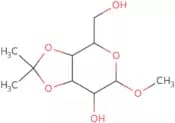
CAS :<p>Methyl 3,4-O-isopropylidene-a-D-galactopyranoside is a white crystalline powder that is soluble in water. This product is used in the synthesis of complex carbohydrate and glycosylation. It has CAS No. 40269-01-0 and can be custom synthesized to meet your requirements. The purity of this product is over 99%.</p>Formule :C10H18O6Degré de pureté :Min. 95%Masse moléculaire :234.25 g/molMethyl 2,3,6-tri-O-acetyl-a-D-glucopyranoside
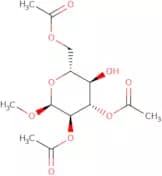
CAS :<p>Methyl 2,3,6-tri-O-acetyl-a-D-glucopyranoside is a fluorinated monosaccharide that can be used in the synthesis of oligosaccharides, polysaccharides and complex carbohydrates. This product is custom synthesized for customers with specific needs. The modification of Methyl 2,3,6-tri-O-acetyl-a-D-glucopyranoside can also be done to provide desired properties. The purity of this product is high and suitable for various applications.</p>Formule :C13H20O9Degré de pureté :Min. 95%Masse moléculaire :320.29 g/molNicotinic acid acyl-b-D-glucuronide
CAS :<p>Nicotinic acid acyl-b-D-glucuronide is a carbohydrate that is synthesized by the condensation of nicotinic acid with b-D-glucuronic acid. It can be modified by fluorination, methylation, glycosylation, or click modification. The CAS Number for this product is 24719-73-1 and it has a purity of >98%. It has been custom synthesized at our lab and it is available in high purity.</p>Formule :C12H13NO8Degré de pureté :Min. 95%Masse moléculaire :299.23 g/molD-Fuculose
CAS :<p>D-Fuculose is a sugar that is used as a sweetener. It is produced by microbial fermentation of l-arabinose, which is an intermediate in the pentose phosphate pathway. D-Fuculose can be synthesized from glucose and fucose using enzymes such as sucrose isomerase or mutarotase. The conversion of glucose to D-fuculose proceeds at temperatures between 50 and 70 degrees Celsius, with optimal activity occurring at 60 degrees Celsius. D-Fuculose has been shown to have high catalytic activity and stability under acidic conditions, making it ideal for use as a food additive in acidic drinks or foods. It also has the highest sweetness intensity of all sugars tested to date.</p>Formule :C6H12O5Degré de pureté :Min. 95%Masse moléculaire :164.16 g/mol4-Nitrophenyl 3-O-benzoyl-4,6-cyclohexylidene-b-D-mannopyranoside
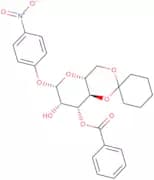
CAS :<p>4-Nitrophenyl 3-O-benzoyl-4,6-cyclohexylidene-b-D-mannopyranoside is a Custom synthesis. It is an Oligosaccharide that consists of a Polysaccharide with Modification. The CAS No. 102717-17-9 is Methylation and Glycosylation and Carbohydrate. Click modification and saccharide are sugar and High purity. Fluorination is Synthetic.</p>Formule :C25H27NO9Degré de pureté :Min. 95%Masse moléculaire :485.48 g/molCellulose - Particle Size approx 50 um
CAS :<p>Cellulose is a linear polysaccharide of β 1-4 linked glucose residues. The polysaccharide chains are bundled as microfibrils in cell walls and provide the essential structural components within growing plants. Each microfibril exhibits a high degree of three-dimensional internal bonding resulting in a crystalline structure that is insoluble in water, resistant to reagents and very strong.</p>Degré de pureté :Min. 95%Couleur et forme :PowderD-Desosamine
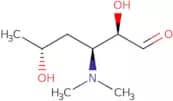
CAS :<p>D-Desosamine is a chemical compound that has been isolated from human serum. It is an enzyme inhibitor that inhibits the activity of enzymes such as phosphatases, kinases, and proteases. D-Desosamine also has a matrix effect, which can be used to modify the properties of polymer matrices in order to improve their biocompatibility and mechanical properties. The molecular docking analysis indicated that desosamine can bind to bacterial serine/threonine protein kinase Streptococcus pyogenes phage T4 (SpyPK) and inhibit its activity. This inhibition may be due to the transfer reactions caused by desosamine binding to the enzyme's active site and blocking it. Structural analysis showed that D-desosamine forms hydrogen bonds with amino acids in SpyPK's active site, forming a covalent bond with cysteine residue Cys240. D-Desosamine has been shown to have anti-bacterial properties against</p>Degré de pureté :Min. 95%Pyrocatechol monoglucoside
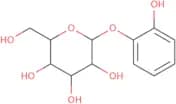
CAS :<p>Pyrocatechol monoglucoside is a phenolic compound that is found in many plants. It has an anti-thrombotic effect, inhibits bacterial growth, and has anticarcinogenic effects. Pyrocatechol monoglucoside is also hepatoprotective and can be used as a natural food preservative. It has a bitter taste and can be found in leuconostoc mesenteroides and mesenteroides strains of bacteria.</p>Degré de pureté :Min. 95%Glycerone phosphate
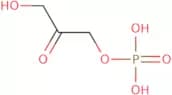
CAS :Glycerone phosphate is a cytosolic calcium (Ca2+) substrate molecule that is used to measure the activity of phospholipase A2, an enzyme that catalyzes the hydrolysis of membrane lipids. Glycerone phosphate has been shown to inhibit neuronal death and may be useful in treating neurodegenerative diseases such as Alzheimer's disease. Glycerone phosphate has also been shown to bind to monoclonal antibodies, which are proteins that bind specifically to antigens on the surface of cancer cells, thereby preventing them from binding to their corresponding receptors on healthy cells. This may limit the spread of tumor growth and increase their sensitivity to platinum-based chemotherapy.Formule :C3H7O6PDegré de pureté :Min. 95%Masse moléculaire :170.06 g/molD-Glucose hydrazon
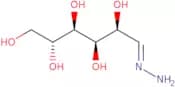
CAS :<p>D-Glucose hydrazon is a custom synthesis of complex carbohydrate. It is made by the reaction of Methylation, Click modification, and Fluorination with saccharide and sugar. The product is a white crystalline solid that is soluble in water.</p>Degré de pureté :Min. 95%Methyl 2-deoxy-a-D-ribofuranoside
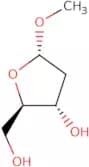
CAS :<p>Methyl 2-deoxy-a-D-ribofuranoside is an atypical nucleoside, which is a component of the thiourea cofactors. It can be synthesized from chloroacetic acid and hydantoin, which are used as starting materials for the production of this compound. The methyl group in this compound is obtained from the methylation of glucose. Methyl 2-deoxy-a-D-ribofuranoside can be identified by its chromatographic properties, such as dimethylformamide (DMF) and chloride. It also contains anomeric substituents that are necessary for nucleosidation reactions. This nucleoside has been shown to have antiinflammatory activity against carrageenan in mice and rats.</p>Formule :C6H12O4Degré de pureté :Min. 95%Masse moléculaire :148.16 g/mol1,4-b-D-Cellopentaitol
CAS :<p>1,4-B-D-Cellopentaitol is a high purity and custom synthesis sugar. It can be modified with fluorination, glycosylation, methylation, or modification. It has CAS No. 61473-65-2 and is an oligosaccharide with a saccharide backbone consisting of 1,4-linked D-glucopyranosyl units joined by alpha-(1,4) linkages and containing one or more monosaccharides (e.g., glucose) or disaccharides (e.g., cellobiose). The carbohydrate may be in the form of a complex carbohydrate.</p>Formule :C30H54O26Degré de pureté :Min. 95%Masse moléculaire :830.73 g/molP1-Antigen
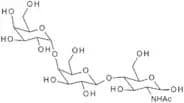
CAS :<p>The P1-antigen is a blood group antigen that is encoded by the gene. It is synthesized as a precursor protein of approximately 150 amino acids that undergoes proteolytic processing to generate two peptides, A and B, which are attached to the cell surface. The P1-antigen has been shown to be involved in transcriptional regulation and antimicrobial activity. It has also been shown to be present in metastatic colorectal cancer cells and its expression can be induced by trypsin treatment. The P1-antigen is also one of the most frequently studied proteins for its role in immune responses against bacteria, viruses, and parasites. This protein has been found to have response elements for several transcription factors including NF-κB, AP-1, NFAT, SP-1, and STAT3. The basic structure of this protein contains a diode region with two negatively charged regions that are critical for its function.</p>Formule :C20H35NO16Degré de pureté :Min. 95%Couleur et forme :White Off-White PowderMasse moléculaire :545.49 g/molSinapaldehyde glucoside
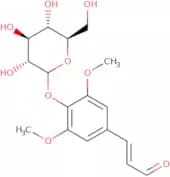
CAS :<p>Sinapaldehyde glucoside is a phenolic compound found in the leaves of Sinapis alba. This compound has been shown to have antiviral and antibacterial properties. It has been shown to inhibit staphylococcal growth, with the most effective concentration being 0.5-2% w/v. The chemical structure of sinapaldehyde glucoside is similar to that of pomolic acid, which was also found to have anti-staphylococcal effects. Syringaresinol, a constituent of S. alba, may be responsible for the anti-staphylococcal activity due to its ability to inhibit bacterial protein synthesis. Sinapaldehyde glucoside can also be extracted from S. alba using ethanol or water as solvents and is soluble in both water and alcohols. Sinapaldehyde glucoside can also be extracted from eleutherococcus (Eleutherococcus senticosus) using</p>Degré de pureté :Min. 95%Ethyl 2,3,4,6-tetra-O-(4-methoxybenzyl)-b-D-thiogalactopyranoside S-oxide
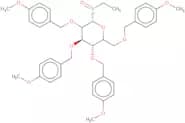
<p>Ethyl 2,3,4,6-tetra-O-(4-methoxybenzyl)-b-D-thiogalactopyranoside S-oxide is a custom synthesis product. It is an oligosaccharide with a saccharide structure that has been modified to include fluorine atoms. This modification makes the molecule more stable and resistant to degradation by enzymes. Ethyl 2,3,4,6-tetra-O-(4-methoxybenzyl)-b-D-thiogalactopyranoside S-oxide is a complex carbohydrate that can be used as an ingredient in food products or as a pharmaceutical agent for the treatment of cancer and other diseases.</p>Formule :C40H48O10SDegré de pureté :Min. 95%Masse moléculaire :720.87 g/mol