Glycosciences
La glycosciences est l'étude des glucides et de leurs dérivés, ainsi que des interactions et des fonctions biologiques auxquelles ils participent. Ce domaine de recherche est crucial pour comprendre une grande variété de processus biologiques, y compris la reconnaissance cellulaire, la signalisation, la réponse immunitaire et le développement des maladies. La glycosciences a des applications importantes en biotechnologie, en médecine et dans le développement de nouveaux médicaments et thérapies. Chez CymitQuimica, nous proposons une large sélection de produits de haute qualité et pureté pour la recherche en glycosciences. Notre catalogue comprend des monosaccharides, des oligosaccharides, des polysaccharides, des glyconjugués et des réactifs spécifiques, conçus pour soutenir les chercheurs dans leurs études sur la structure, la fonction et les applications des glucides dans les systèmes biologiques. Ces ressources sont destinées à faciliter les découvertes scientifiques et les applications pratiques dans divers domaines des biosciences et de la médecine.
Sous-catégories appartenant à la catégorie "Glycosciences"
- Aminosucres(108 produits)
- Anticorps Glyco-Related(282 produits)
- Glycolipides(46 produits)
- Glycosaminoglycanes (GAGs)(55 produits)
- Glycosides(419 produits)
- Monosaccharides(6.622 produits)
- Oligosaccharides(3.682 produits)
- Polysaccharides(503 produits)
11041 produits trouvés pour "Glycosciences"
Trier par
Degré de pureté (%)
0
100
|
0
|
50
|
90
|
95
|
100
D-Allose-1,2,3,4,5,6-13C6
CAS :<p>D-Allose is a sugar that is modified with a fluorine atom at position 6. This modification can be used to trace the origin of D-allose in complex carbohydrates such as glycogen and glycosylated proteins. The addition of a 13C6 atom allows for the identification of this sugar through mass spectrometry and nuclear magnetic resonance (NMR) analysis.</p>Formule :C6H12O6Degré de pureté :Min. 95%Couleur et forme :White PowderMasse moléculaire :186.06 g/mol2-O-Benzoyl-4,6-O-benzylidene-a-D-glucopyranoside
<p>2-O-Benzoyl-4,6-O-benzylidene-a-D-glucopyranoside is a synthetic carbohydrate with a structure that is similar to that of glucose. It has been shown to have anti-inflammatory properties in animal models and can be used for the treatment of inflammatory bowel disease and Crohn's disease. This compound has also been shown to inhibit the growth of bacteria such as Streptococcus pyogenes, Staphylococcus aureus, and Escherichia coli. 2-O-Benzoyl-4,6-O-benzylidene--aD glucopyranoside is soluble in water and has high purity with an average of 98%.</p>Formule :C20H20O7Degré de pureté :Min. 95%Masse moléculaire :372.37 g/molA1F Glycan, 2-AB labelled
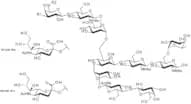
<p>2-AB labelled A1F Glycan is a complex carbohydrate. It is custom synthesized and high purity. The CAS number for this compound is 12863-00-8.</p>Degré de pureté :Min. 95%p-Coumaroyl-b-D-glucose
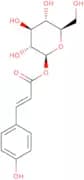
CAS :<p>P-Coumaroyl-b-D-glucose is a flavanone that belongs to the class of flavonoids. It is an intermediate in the synthesis of many other flavonoids, such as apigenin, labiatae, and rhamnetin. P-Coumaroyl-b-D-glucose has been shown to downregulate the expression of genes encoding proteins involved in the biosynthesis of proanthocyanidins and anthocyanins. This compound also induces apoptosis by binding to the mitochondria membrane and increasing reactive oxygen species production. P-Coumaroyl-b-D-glucose can be used as a marker for phenylpropanoid metabolism in plants.</p>Formule :C15H18O8Degré de pureté :Min. 95%Couleur et forme :White PowderMasse moléculaire :326.3 g/molMethyl 2-acetamido-4-O-(2-acetamido-3,4,6-tri-O-acetyl-2-deoxy-b-D-glucopyranosyl)-2-deoxy-b-D-glucopyranoside
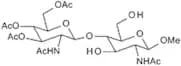
CAS :<p>Methyl 2-acetamido-4-O-(2-acetamido-3,4,6-tri-O-acetyl-2-deoxy-b-D-glucopyranosyl)-2-deoxy-b-D-glucopyranoside is a custom synthesis that is fluorinated and methylated to create an acetal. The monosaccharide is a custom synthesis that has been modified with click chemistry. This oligosaccharide is found in glycosylation reactions and can be used for the synthesis of polysaccharides. Methyl 2 acetamido 4 O-(2 acetamido 3,4,6 tri O acetyl 2 deoxy b D glucopyranosyl) 2 deoxy b D glucopyranoside has CAS Number 97242 82 5.</p>Formule :C23H36N2O14Degré de pureté :Min. 95%Masse moléculaire :564.54 g/mol4-Methylphenyl 2,3,4,6-tetra-O-benzyl-b-D-thiogalactopyranoside
CAS :<p>4-Methylphenyl 2,3,4,6-tetra-O-benzyl-b-D-thiogalactopyranoside is a synthetic saccharide set up to be an oligo-saccharide building block.</p>Formule :C41H42O5SDegré de pureté :Min. 95%Masse moléculaire :646.84 g/mol1,2,3,4-Tri-O-acetyl-b-D-glucuronide benzyl ester
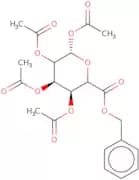
CAS :<p>1,2,3,4-Tri-O-acetyl-b-D-glucuronide benzyl ester is a synthetic compound that belongs to the group of high purity custom synthesis. It has been shown to be a useful reagent for glycosylation and methylation reactions. This product is also used in the synthesis of oligosaccharides and monosaccharides. 1,2,3,4-Tri-O-acetyl-b-D-glucuronide benzyl ester can also be used as a sugar or complex carbohydrate in biological studies.</p>Formule :C21H24O11Degré de pureté :Min. 95%Masse moléculaire :452.41 g/mol1,2,3,4,6-Penta-O-acetyl-1-thio-β-D-galactopyranose
CAS :<p>1,2,3,4,6-Penta-O-acetyl-1-thio-beta-D-galactopyranose is a nucleoside that is a derivative of glucopyranose. It is an aprotic molecule and can be used as an aprotic solvent. 1,2,3,4,6-Penta-O-acetyl-1-thio-beta-D-galactopyranose has been shown to inhibit viral growth in vitro by interfering with the synthesis of DNA and RNA. The compound inhibits the growth of herpes simplex virus type 1 (HSV) and vaccinia virus (VACV) but not influenza A virus (IAV). This drug also has antiplasmodial activity against the erythrocytic stages of Plasmodium falciparum.</p>Formule :C16H22O10SDegré de pureté :Min. 95%Masse moléculaire :406.41 g/mol2-Acetamido-3,4,6-tri-O-acetyl-1-O-(N-Cbz-6-aminohexyl)-2-deoxy-b-D-galactopyranose
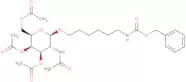
CAS :<p>2-Acetamido-3,4,6-tri-O-acetyl-1-O-(N-Cbz-6-aminohexyl)-2-deoxy-b-D-galactopyranose is a glycosylation agent that is used in the preparation of complex carbohydrates. It is also a methylation agent, fluorinated saccharide and an oligosaccharide. This compound can be custom synthesized for your specific needs. It is a white to off white powder and has a purity of 99%. The CAS number for this product is 159173 -77 -0.</p>Formule :C28H40N2O11Degré de pureté :Min. 95%Masse moléculaire :580.62 g/molL-Glucuronic acid sodium salt
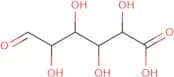
CAS :<p>L-Glucuronic acid sodium salt is a natural product that is used as an excipient and additive in pharmaceuticals. L-Glucuronic acid sodium salt is the sodium salt of L-glucuronic acid, which is a natural compound found in plants, animals and humans. It is used as a protective agent for drugs because it can be easily metabolized by the liver and has low toxicity. L-Glucuronic acid sodium salt inhibits the uptake of radioactive isotopes into cells, which may be due to its ability to bind to cytosolic proteins. The binding of L-glucuronic acid sodium salt to these proteins blocks the binding sites for radioactive isotopes on these proteins. This inhibition leads to reduced uptake of radioactive isotopes by cells.</p>Formule :C6H9NaO7Degré de pureté :Min. 95%Masse moléculaire :216.12 g/molb-Maltosyl azide
CAS :<p>b-Maltosyl azide is a glycosylation reagent that is used in the synthesis of complex carbohydrates, saccharides, and oligosaccharides. It has been shown to be an efficient methylation agent for alcohols and phenols, as well as a good fluorinating agent for alcohols. b-Maltosyl azide can be used to modify sugars with Click chemistry and polysaccharides with fluorination. This compound is also commonly used for custom synthesis of saccharides, oligosaccharides, and monosaccharides.</p>Formule :C12H21N3O10Degré de pureté :Min. 95%Masse moléculaire :367.3 g/molGM1-Ganglioside labelled by biotin
<p>GM1-biotin ganglioside (sodium salt) has a core tetrasaccharide structure (Galβ1,3GalNAcβ1,4Galβ1,4Glc) with sialic acid linked α2,3 to the inner galactose residue, ceramide linked β to position 1 on the reducing terminal glucose residue, and biotin to position 5 on sialic acid (Ledeen, 2009). GM1 ganglioside is abundant in all mammalian brains where it covers 10%-20% of the total ganglioside mixture. It is found in epithelial membranes and is a key element for bacterial toxicity and viral infection as it is the intestinal receptor for the cholera toxin, the B-subunits of heat-labile toxin, rotavirus, and simian virus 40. GM1 ganglioside functions as a neurotrophic and neuroprotective compound, and has been used therapeutically for diabetic and peripheral neuropathies. GM1 ganglioside also has the ability to bind amyloid-β proteins and is involved in Alzheimerâs pathogenesis (Chiricozzi, 2020).</p>Formule :C71H122N6O33SDegré de pureté :Min. 95%Masse moléculaire :1,619.82 g/molPhenyl 3,6-di-O-benzyl-2-deoxy-2-phthalimido-b-D-thioglucopyranoside
CAS :<p>Phenyl 3,6-di-O-benzyl-2-deoxy-2-phthalimido-b-D-thioglucopyranoside is an oligosaccharide that has been modified by the introduction of a benzyl group at one of the hydroxyl groups. The synthesis of this compound was achieved through a custom synthesis. Phenyl 3,6-di-O-benzyl-2-deoxy -2 -phthalimido -b -D -thioglucopyranoside is produced as a high purity monosaccharide, and can be used as a substitute for glucose in glycosylation reactions. This product also has CAS No. 159734-70 0, which makes it easier to order from suppliers.</p>Degré de pureté :Min. 95%4-O-[3-O-(2-Acetamido-2-deoxy-a-D-galactopyranosyl)-b-D-galactopyranosyl]-D-glucose
CAS :<p>4-O-[3-O-(2-Acetamido-2-deoxy-a-D-galactopyranosyl)-b-D-galactopyranosyl]-D-glucose is a saccharide that is modified with a methyl group at the C4 position. It can be used for the synthesis of other saccharides, oligosaccharides and polysaccharides. The molecular weight of this compound is 564.47 g/mol and its chemical formula is C44H62O30Glu. This product has CAS No. 96623-71-1 and can be purchased from custom synthesis companies with high purity and good quality.</p>Formule :C20H35NO16Degré de pureté :Min. 95%Couleur et forme :PowderMasse moléculaire :545.5 g/mol3-Deoxy-3-fluoro-D-glucitol
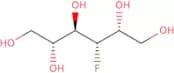
CAS :<p>3-Deoxy-3-fluoro-D-glucitol is a glucose analog that is used as a marker for glycogen in tissue extracts. 3-Deoxy-3-fluoro-D-glucitol has been shown to be the most sensitive molecular marker for muscle glycogen concentrations, although it does not react with all types of muscle. It can also be used as a marker for glycogen content in extracts of tissue or cells because it reacts with locusta migratoria fat body. In addition, 3-deoxy-3-fluoro-D-glucitol can be used as a nuclear magnetic resonance (NMR) probe to study the structure of trehalose and fructose. The compound has been shown to bind to locusta migratoria fat body and can be used as an NMR probe to study the structure of trehalose and fructose.</p>Formule :C6H13FO5Degré de pureté :Min. 95%Masse moléculaire :184.16 g/molN,N-Dimethyl-D-glucosamine
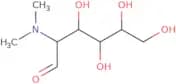
CAS :<p>N,N-Dimethyl-D-glucosamine is a natural amino sugar that yields pyrazoles, triazoles, and formaldehyde. It can be prepared by the reaction of acetyl chloride with potassium hydroxide in hydrochloric acid. The synthesis of N,N-Dimethyl-D-glucosamine has been optimized on a Raney nickel catalyst to produce high yields of the desired product. This product is a broad spectrum antibiotic that has been shown to inhibit bacterial growth through inhibition of protein synthesis. The salt form of N,N-Dimethyl-D-glucosamine is sodium salt.</p>Formule :C8H17NO5Degré de pureté :Min. 95%Masse moléculaire :207.22 g/molAllyl 2,3-di-O-benzyl-a-D-glucopyranoside
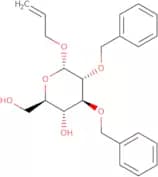
CAS :<p>Allyl 2,3-di-O-benzyl-a-D-glucopyranoside is a plant growth regulator that stimulates callus formation. It belongs to the group of auxins and has been shown to promote callus growth in Arabidopsis thaliana cultivars, such as glaberrima and kinetin. This compound has also been shown to stimulate the formation of calli from coconut explants.</p>Formule :C23H28O6Degré de pureté :Min. 95%Masse moléculaire :400.46 g/molTri-b-GalNAc-gly-C6-DBCO
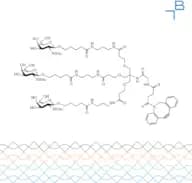
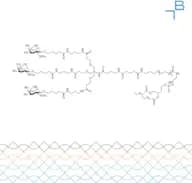
<p>Tri-b-GalNAc-Gly-C6-DBCO is used for targeted siRNA therapies for liver diseases. This synthetic molecule boasts three terminal beta-N-acetylgalactosamine (GalNAc) sugars (tri-antennary GalNAc) enabling high-affinity binding to the asialoglycoprotein receptor (ASGPR) on hepatocyte surfaces. This specific recognition promotes efficient cellular uptake of these cluster conjugates via ASGPR-mediated endocytosis. Crucially, the presence of a C6 spacer and a dibenzoeylcyclooctynone (DBCO) group allows for the attachment of siRNA molecules through bioorthogonal click chemistry. This versatile approach facilitates the development of targeted siRNA conjugates that can be delivered specifically to hepatocytes for RNA interference (RNAi) applications in the liver.</p>Formule :C84H130N12O30Degré de pureté :Min. 95%Masse moléculaire :1,787.99 g/molTri-b-GalNAc-PEG2000-DSPE
CAS :<p>Tri-b-GalNAc-PEG2000 is a multivalent ligand containing three GalNAc moieties linked to a polyethylene glycol (PEG) spacer designed to selectively bind to the asialoglycoprotein receptor (ASGPR) expressed on hepatocytes. It can be used to create targeted drug delivery vehicles, such as liposomes or lipid nanoparticles, that specifically deliver therapeutic agents to the liver. The multivalent GalNAc ligands have high affinity for ASGPR, allowing for enhanced accumulation of drugs in the target organ while minimizing exposure to non-target tissues. The compound is typically conjugated to a phospholipid, such as 1,2-distearoyl-sn-glycero-3-phosphoethanolamine (DSPE), to create DSPE-PEG2000-triGalNAc. This lipid-based construct can be readily incorporated into liposomes or lipid nanoparticles during formulation, enabling the development of targeted drug delivery systems.</p>Formule :(C2H4O)nC97H180N9O38PH3NDegré de pureté :Min. 95%N-Acetyl-D-galactopyranosylthiosemicarbazide
<p>N-Acetyl-D-galactopyranosylthiosemicarbazide is a glycosylation reagent that is used in the synthesis of saccharides, oligosaccharides, and polysaccharides. N-Acetyl-D-galactopyranosylthiosemicarbazide is synthesized by reacting acetamidoacetonitrile with D-galactose and sodium thiosulfate. The reaction product can be easily purified by crystallization or recrystallization. N-Acetyl-D-galactopyranosylthiosemicarbazide has been shown to be a high purity compound, as it does not contain any residual solvents or impurities. The CAS number for this compound is 58437-66-7.</p>Degré de pureté :Min. 95%





![4-O-[3-O-(2-Acetamido-2-deoxy-a-D-galactopyranosyl)-b-D-galactopyranosyl]-D-glucose](/_next/image/?url=https%3A%2Fstatic.cymitquimica.com%2Fproducts%2F3D%2Fthumb-webp%2FOA10409.webp&w=3840&q=75)