Glycosciences
La glycosciences est l'étude des glucides et de leurs dérivés, ainsi que des interactions et des fonctions biologiques auxquelles ils participent. Ce domaine de recherche est crucial pour comprendre une grande variété de processus biologiques, y compris la reconnaissance cellulaire, la signalisation, la réponse immunitaire et le développement des maladies. La glycosciences a des applications importantes en biotechnologie, en médecine et dans le développement de nouveaux médicaments et thérapies. Chez CymitQuimica, nous proposons une large sélection de produits de haute qualité et pureté pour la recherche en glycosciences. Notre catalogue comprend des monosaccharides, des oligosaccharides, des polysaccharides, des glyconjugués et des réactifs spécifiques, conçus pour soutenir les chercheurs dans leurs études sur la structure, la fonction et les applications des glucides dans les systèmes biologiques. Ces ressources sont destinées à faciliter les découvertes scientifiques et les applications pratiques dans divers domaines des biosciences et de la médecine.
Sous-catégories appartenant à la catégorie "Glycosciences"
- Aminosucres(108 produits)
- Anticorps Glyco-Related(282 produits)
- Glycolipides(46 produits)
- Glycosaminoglycanes (GAGs)(55 produits)
- Glycosides(419 produits)
- Monosaccharides(6.622 produits)
- Oligosaccharides(3.682 produits)
- Polysaccharides(503 produits)
11042 produits trouvés pour "Glycosciences"
Trier par
Degré de pureté (%)
0
100
|
0
|
50
|
90
|
95
|
100
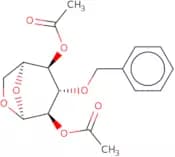
2,4-Di-O-acetyl-1,6-anhydro-3-O-benzyl-b-L-idopyranose
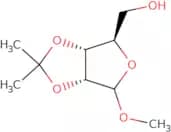
CAS :<p>2,4-Di-O-acetyl-1,6-anhydro-3-O-benzyl-b-L-idopyranose is a synthetic carbohydrate that has been modified with a click reaction. The compound can be used as a building block for the synthesis of complex carbohydrates and oligosaccharides. It is also used in the production of high purity monosaccharides and glycosylates. 2,4-Di-O-acetyl-1,6-anhydro-3-O-benzylidopyranose is soluble in water and exhibits a melting point of ~170°C. It has an n D 25 value of 1.5381 at 20°C.</p>Formule :C17H20O7Degré de pureté :Min. 95%Masse moléculaire :336.34 g/molMethyl 2,3-O-isopropylidene-D-ribofuranoside
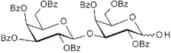
CAS :<p>Methyl 2,3-O-isopropylidene-D-ribofuranoside is a nucleophile that reacts with amines to form a tetroxide intermediate. It has been shown to react with the cellular components of vesicular stomatitis virus and to have an interaction with malonic acid. This compound also reacts with osmium tetroxide in the presence of phosphite to produce a chloride ion and an osmate ester. Methyl 2,3-O-isopropylidene-D-ribofuranoside can be recycled by quaternization with sodium periodate, which yields methyl 3,5-dimethoxybenzoate.</p>Formule :C9H16O5Degré de pureté :Min. 95%Couleur et forme :Colorless PowderMasse moléculaire :204.2 g/mol2,3,6,2',3',4',6'-Hepta-O-benzoyl-D-lactose
CAS :<p>2,3,6,2',3',4',6'-Hepta-O-benzoyl-D-lactose is a custom synthesis that can be modified in a variety of ways. It has a high degree of fluorination and methylation to provide protection against degradation by enzymes. The monosaccharide units are synthesized and then assembled into oligosaccharides with glycosylations. Modifications can include glycosylation at any position on the molecule as well as the addition of complex carbohydrates.<br>2,3,6,2',3',4',6'-Hepta-O-benzoyl-D-lactose is an example of a polysaccharide consisting of glucose units with other hexoses such as galactose or mannose.</p>Formule :C61H50O18Degré de pureté :Min. 95%Masse moléculaire :1,071.04 g/molb-L-Fucopyranosyl nitromethane
<p>b-L-Fucopyranosyl nitromethane is a synthetic carbohydrate that has been modified by fluorination and methylation. It can be used as a building block for the synthesis of complex carbohydrates including saccharides, oligosaccharides, and monosaccharides.</p>Formule :C7H13NO6Degré de pureté :Min. 95%Masse moléculaire :207.2 g/molBenzyl 3'-sulfo-b-D-lactoside sodium salt
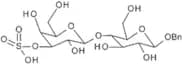
CAS :<p>Synthetic building block for oligosaccharide synthesis</p>Formule :C19H28O14S·xNaDegré de pureté :Min. 95%Couleur et forme :PowderMasse moléculaire :512.48 g/mol4-Azido-2,3-di-O-benzoyl-4-deoxy-6-O-trityl-a-D-glucopyranoside
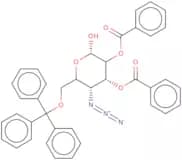
<p>4-Azido-2,3-di-O-benzoyl-4-deoxy-6-O-trityl-a-D-glucopyranoside is a synthetic glycosylation reagent that can be used for the synthesis of oligosaccharides. It is a fluorinated sugar that can be custom synthesized to order. 4A2B4D6OATG is a high purity product with CAS No. 62990-51-1 and has been modified using click chemistry to incorporate azide functional groups.</p>Formule :C39H33N3O7Degré de pureté :Min. 95%Masse moléculaire :655.7 g/mol2-(Benzyloxycarbonylamino)-2-deoxy-D-galactose
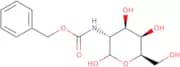
CAS :<p>2-(Benzyloxycarbonylamino)-2-deoxy-D-galactose is a synthetic, fluorinated carbohydrate. It is a monosaccharide with the chemical formula C6H11NO5 and is soluble in water. The glycosylation of 2-(benzyloxycarbonylamino)-2-deoxy-D-galactose has been shown to be more stable than that of other sugars, such as glucose or maltose. This modification can be accomplished by a click reaction. 2-(Benzyloxycarbonylamino)-2-deoxy-D-galactose can be used to modify proteins, such as antibodies and enzymes, by glycosylating amino acid residues on the protein surface.</p>Formule :C14H19NO7Degré de pureté :Min. 95%Masse moléculaire :313.3 g/molMethyl 4-chloro-4-deoxy-a-D-glucopyranoside
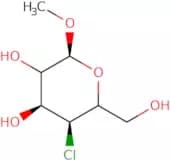
<p>Methyl 4-chloro-4-deoxy-a-D-glucopyranoside is a custom synthesis of an oligosaccharide with a sugar. It is synthesized by the reaction between methyl 4-chloro-4-deoxybenzoate and sodium cyanoborohydride in methanol. The product can be used to modify complex carbohydrates, such as glycosylation, which is the process of adding sugars to proteins or polysaccharides. Methyl 4-chloro-4-deoxyglucopyranoside has a high purity level of 99% and a CAS number of 3126991.</p>Formule :C7H13ClO5Degré de pureté :Min. 95%Masse moléculaire :212.63 g/molMoexipril acyl-b-D-glucuronide
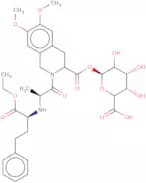
<p>Moexipril acyl-b-D-glucuronide is a complex carbohydrate that contains a saccharide and an oligosaccharide. It is synthesized by reacting moexipril with bromoacetic acid in the presence of sodium cyanoborohydride, followed by hydrolysis with potassium hydroxide to form the methyl ester. Moexipril acyl-b-D-glucuronide has CAS number 93890-82-2 and is available for custom synthesis. It has a high purity (99%) and can be methylated or glycosylated. The synthesis of this compound includes click modification.</p>Formule :C33H42N2O13Degré de pureté :Min. 95%Masse moléculaire :674.69 g/molSulfamethoxazole b-D-glucuronide
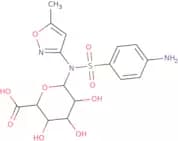
CAS :<p>Sulfamethoxazole b-D-glucuronide is a microbial conjugate that is used to treat bacterial infections. It binds to microbial cell surfaces through covalent bonds, which prevents the synthesis of proteins and DNA, leading to cell death. Sulfamethoxazole b-D-glucuronide has been shown to be activated by the enzyme acetyltransferase in bacteria and may be used as an indicator for the presence of sulfonamide resistance. This antibiotic also has a high affinity for thyroxine and analytes such as acetaminophen and sulfate.</p>Formule :C16H19N3O9SDegré de pureté :Min. 95%Masse moléculaire :429.41 g/mol4-C-Acetoxymethyl-1,2-di-O-acetyl-3,5-di-O-benzyl-a-D-ribofuranose
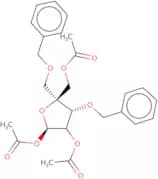
<p>4-C-Acetoxymethyl-1,2-di-O-acetyl-3,5-di-O-benzyl-a-D-ribofuranose is a custom synthesis that belongs to the class of complex carbohydrates. It is an oligosaccharide with a CAS number. This product is a modification of saccharides and has been methylated and glycosylated. This product has been fluorinated using the click chemistry reaction, which has made it more stable. 4CAMDBF is high purity and synthetic.</p>Formule :C26H30O9Degré de pureté :Min. 95%Couleur et forme :Colourless syrup.Masse moléculaire :486.51 g/mol1,5-Anhydro-α-D-glucofuranose
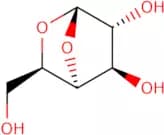
CAS :<p>1,5-Anhydro-a-D-glucofuranose is a sugar that is synthesized through the glycosylation of an aldehyde with a glycone. The product can be fluorinated or methylated before being subjected to glycosylation. It can also be modified by methylation, modification, or oligosaccharide synthesis. 1,5-Anhydro-a-D-glucofuranose is used as a building block for complex carbohydrates and saccharides that are found in many natural products such as agarose, cellulose, and chitin. This product has CAS number 24516-44-7.</p>Formule :C6H10O5Degré de pureté :Min. 95%Masse moléculaire :162.14 g/molAnhydro-4-azido-5,6,8-tri-O-benzyl-1,2,4-trideoxy-D-glycero-D-gulo-oct-1-ynitol
CAS :<p>Anhydro-4-azido-5,6,8-tri-O-benzyl-1,2,4-trideoxy -D-glycero-D-gulo-oct 1 -ynitol is a methylated saccharide. It is a fluorinated sugar that can be used as an intermediate in the synthesis of oligosaccharides and polysaccharides. This compound has been modified by click chemistry to allow for the incorporation of azide groups at the 3′ position of the sugar moiety. The modification allows for the synthesis of complex carbohydrates with high purity and high yield. The product is a white powder that is soluble in water.</p>Formule :C29H29N3O4Degré de pureté :Min. 95%Couleur et forme :Colourless syrupMasse moléculaire :483.56 g/molPhenyl 2,3-di-O-benzyl-b-D-thioglucopyranoside
CAS :<p>Phenyl 2,3-di-O-benzyl-b-D-thioglucopyranoside is a Glycosylation product that belongs to the category of complex carbohydrates. Phenyl 2,3-di-O-benzyl-b-D-thioglucopyranoside is an Methylation product that can be Click modified with Polysaccharides and Fluorinated with saccharides. This product has been shown to have Modification capabilities in sugar and Oligosaccharides. Phenyl 2,3-di-O-benzyl-b-D-thioglucopyranoside is a Synthetic product that can be Custom synthesized for High purity.</p>Formule :C33H34O5SDegré de pureté :Min. 95%Masse moléculaire :542.69 g/mol2,3,4-Tri-O-acetyl-a-D-glucuronic acid methyl ester
CAS :<p>2,3,4-Tri-O-acetyl-a-D-glucuronic acid methyl ester is a hydroxylated glucuronic acid that is found in the structural skeleton of many organisms. It has been shown to have isosteric properties and it can be used as a transport agent for xenobiotics. 2,3,4-Tri-O-acetyl-a-D-glucuronic acid methyl ester is metabolized by alcohols and hydrolysis to form adducts with nitrosoamines. These adducts are excreted from the body through urine.</p>Formule :C13H18O10Degré de pureté :Min. 95%Couleur et forme :White PowderMasse moléculaire :334.28 g/molAllyl 2,3-di-O-benzyl-a-D-glucopyranoside
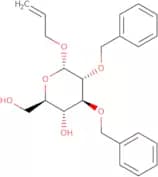
CAS :<p>Allyl 2,3-di-O-benzyl-a-D-glucopyranoside is a plant growth regulator that stimulates callus formation. It belongs to the group of auxins and has been shown to promote callus growth in Arabidopsis thaliana cultivars, such as glaberrima and kinetin. This compound has also been shown to stimulate the formation of calli from coconut explants.</p>Formule :C23H28O6Degré de pureté :Min. 95%Masse moléculaire :400.46 g/mol2,6-Anhydro-1-deoxy-1-nitro-3,4,5-tri-O-acetyl-D-gulitol
CAS :<p>2,6-Anhydro-1-deoxy-1-nitro-3,4,5-tri-O-acetyl-D-gulitol is a custom synthesized sugar that is manufactured by Click modification with the fluorination and glycosylation of the 2,6 anhydro sugar. The CAS No. 20204-84-6 belongs to the category of high purity and is a synthetic carbohydrate. This complex carbohydrate can be modified for its methylation and oligosaccharide content.</p>Degré de pureté :Min. 95%9-cis-Retinoyl b-D-glucuronide
CAS :Produit contrôlé<p>9-cis-Retinoyl b-D-glucuronide is a complex carbohydrate that is synthesized by modification of an existing saccharide. It is synthesized through the use of click chemistry, which utilizes a copper catalyst to add fluorine and methyl groups to the sugar. The sugar is then glycosylated and carbamylated in order to produce the desired product. 9-cis-Retinoyl b-D-glucuronide has been shown to have high purity, as well as fluorescence properties when it is modified with fluorine groups.</p>Formule :C26H36O8Degré de pureté :Min. 95%Masse moléculaire :476.56 g/molRaloxifene 6-D-glucuronide D4
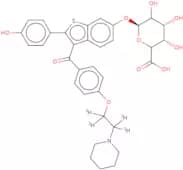
CAS :Produit contrôlé<p>Raloxifene 6-D-glucuronide D4 is a complex carbohydrate with a unique sugar modification. It is a custom synthesis that has been fluorinated, monosaccharide, and polysaccharide. It can be glycosylated and methylated as well. The desired purity level is high.</p>Formule :C34H31NO10SD4Degré de pureté :Min. 95%Masse moléculaire :653.73 g/molGlycerone phosphate lithium salt
CAS :<p>Glycerone phosphate lithium salt is a reactive molecule that serves as an intermediate in the synthesis of rapamycin, a complex of glycerone phosphate and rapamycin. Glycerone phosphate lithium salt is used to detect the presence of glutamate dehydrogenase and to purify monoclonal antibodies. Glycerone phosphate lithium salt has been shown to react with platinum-based chemotherapy, which may be due to its ability to bind to active sites on cancer cells. This molecule also has been shown to reduce high cholesterol levels in mice and inhibit skin cancer tumor growth. Glycerone phosphate lithium salt's physiological effects have not been fully determined, but it may have some anticancer activity.</p>Formule :C3H7O6P·xLiDegré de pureté :Min. 95%Masse moléculaire :170.06 g/mol