Glycosciences
La glycosciences est l'étude des glucides et de leurs dérivés, ainsi que des interactions et des fonctions biologiques auxquelles ils participent. Ce domaine de recherche est crucial pour comprendre une grande variété de processus biologiques, y compris la reconnaissance cellulaire, la signalisation, la réponse immunitaire et le développement des maladies. La glycosciences a des applications importantes en biotechnologie, en médecine et dans le développement de nouveaux médicaments et thérapies. Chez CymitQuimica, nous proposons une large sélection de produits de haute qualité et pureté pour la recherche en glycosciences. Notre catalogue comprend des monosaccharides, des oligosaccharides, des polysaccharides, des glyconjugués et des réactifs spécifiques, conçus pour soutenir les chercheurs dans leurs études sur la structure, la fonction et les applications des glucides dans les systèmes biologiques. Ces ressources sont destinées à faciliter les découvertes scientifiques et les applications pratiques dans divers domaines des biosciences et de la médecine.
Sous-catégories appartenant à la catégorie "Glycosciences"
- Aminosucres(108 produits)
- Anticorps Glyco-Related(282 produits)
- Glycolipides(46 produits)
- Glycosaminoglycanes (GAGs)(55 produits)
- Glycosides(419 produits)
- Monosaccharides(6.622 produits)
- Oligosaccharides(3.682 produits)
- Polysaccharides(503 produits)
11042 produits trouvés pour "Glycosciences"
Trier par
Degré de pureté (%)
0
100
|
0
|
50
|
90
|
95
|
100
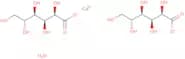
D-Gluconic acid calcium salt monohydrate
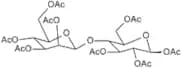
CAS :<p>D-Gluconic acid calcium salt monohydrate (DGC) is a metabolite of the digestion of glucose. It is a calcium salt that is usually formed in the gut due to the neutralization of acids by sodium bicarbonate. DGC has been shown to be effective for treatment of bowel diseases such as ulcerative colitis, but has not been tested for other conditions. DGC has been shown to have antioxidant properties, which may be responsible for its therapeutic effects in treating bowel disease. The structural analysis of DGC show that it can form stable complexes with many drugs and therefore may interfere with their absorption and distribution into tissue cells. It also can increase the risk of drug interactions because it inhibits P-glycoprotein, an efflux pump protein that pumps drugs out of cells. DGC also may cause metabolic disorders due to its ability to inhibit enzymes involved in glycolysis and gluconeogenesis, including pyruvate kinase, phosphofructokin</p>Formule :C12H22CaO14·H2ODegré de pureté :Min. 95%Masse moléculaire :448.39 g/mol1,2,3,6-Tetra-O-acetyl-4-O-(2,3,4,6-tetra-O-acetyl-b-D-mannopyranosyl)-D-glucopyranose
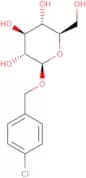
CAS :<p>1,2,3,6-Tetra-O-acetyl-4-O-(2,3,4,6-tetra-O-acetyl-b-D-mannopyranosyl)-D-glucopyranose is a synthetic sugar that has been modified by the methylation of the hydroxyl groups at C1 and C6 with acetaldehyde. This sugar is used in glycosylation reactions to modify proteins and other biomolecules. The product is a white crystalline solid that has a CAS number of 132341-46-9. It can be custom synthesized for research purposes or as a high purity material for commercial use.</p>Formule :C28H38O19Degré de pureté :Min. 95%Masse moléculaire :678.59 g/mol(4-Chlorophenyl)methyl-β-D-glucopyranoside
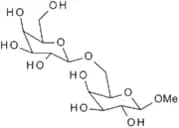
CAS :4-Chlorophenyl)methyl-beta-D-glucopyranoside is a modified saccharide that is used as a synthetic building block in the synthesis of complex carbohydrates. It is also possible to use 4-chlorophenyl)methyl-beta-D-glucopyranoside as an intermediate in the synthesis of oligosaccharides. The compound has been shown to be stable under acidic conditions, making it useful for the modification of polysaccharides.Formule :C13H17ClO6Degré de pureté :Min. 95%Masse moléculaire :304.72 g/molMethyl 6-O-(b-D-galactopyranosyl)-b-D-galactopyranoside
<p>Methyl 6-O-(b-D-galactopyranosyl)-b-D-galactopyranoside is a white crystalline solid that belongs to the category of carbohydrates. It is a synthetic carbohydrate with a molecular weight of 496.06 and a CAS number of 3489-94-3. This product has been custom synthesized for research purposes, and can be purchased in high purity (>98%) from various suppliers. It is an oligosaccharide that contains a single sugar unit, which is galactose. This product has been modified with fluorination and methylation to prevent hydrolysis by esterases and glucuronidases, respectively. It also has glycosylation sites on the terminal glucose residues that allow for further modification with other carbohydrates or proteins. The methyl 6-O-(b-D-galactopyranosyl)-b-D-galactopyranoside can be used as an affinity ligand</p>Formule :C13H24O11Degré de pureté :Min. 95%Masse moléculaire :356.32 g/molN-Acetylmuramic acid methyl ester
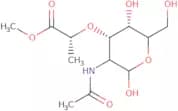
CAS :<p>N-Acetylmuramic acid methyl ester is a methylated form of saccharides that are used in the synthesis of polysaccharides. It is synthesized by the addition of methanol to N-acetylmuramic acid, and can be used as a raw material for glycosylation reactions. This compound has been shown to have high purity and can be custom synthesized. The fluorination of this compound has been reported to improve its reactivity and stability.</p>Formule :C12H21NO8Degré de pureté :Min. 95%Masse moléculaire :307.3 g/molMethyl b1-4-D-xylobioside
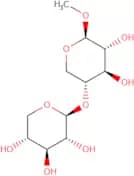
CAS :<p>Methyl b1-4-D-xylobioside is a bioreactor that binds to the carbohydrate binding domain of the enzyme. It has been shown to be reactive with galactose and other glycosides, and is used as a substrate for electrophotographic analysis. This product also has immobilized properties, which make it suitable for use in an acceptor column in order to purify oligosaccharides or gene products with similar sequences. Methyl b1-4-D-xylobioside is used as a selective inhibitor of tuberculosis by binding to the enzyme mycobactin synthase, which is involved in the biosynthesis of mycolic acids.</p>Formule :C11H20O9Degré de pureté :Min. 95%Masse moléculaire :296.27 g/molUDP-a-D-Xylose disodium
CAS :<p>UDP-a-D-Xylose disodium is a fluorinated synthetic monosaccharide that has been synthesized to produce an oligosaccharide. It is a complex carbohydrate with glycosylation and polysaccharide modifications, which can be modified by methylation or click chemistry. This product is usually used as a custom synthesis for research purposes.</p>Degré de pureté :Min. 95%2-Naphthylmethyl 2-acetamido-2-deoxy-b-D-glucopyranoside
CAS :<p>2-Naphthylmethyl 2-acetamido-2-deoxy-b-D-glucopyranoside is a synthetic, fluorinated monosaccharide. It is a custom synthesis that can be glycosylated and methylated to produce polysaccharides. It has been shown to inhibit cancer cell growth in vitro and in vivo by inhibiting protein synthesis.</p>Formule :C19H23NO6Degré de pureté :Min. 95%Masse moléculaire :361.39 g/molSucralose-d6
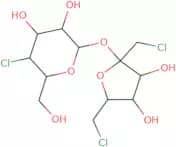
CAS :<p>Sucralose is a non-nutritive artificial sweetener that has no calories and is used in place of sugar. It is made from sucrose by substituting three hydrogen-oxygen groups with three chlorine atoms. The deuterium isotope, D6, was used to prepare this compound for analysis because it only emits positrons that can be detected using a PET scanner. Sucralose-d6 was shown to have high resistance to degradation due to its strong bond between the carbon and oxygen atoms in the molecule. This property makes it more stable than other sugars and carbohydrates which are subject to hydrolysis by enzymes in wastewater treatment plants. Deionized water can be used as a sample preparation solvent for sucralose-d6 because it does not contain any ions that may react with this compound.</p>Formule :C12H19Cl3O8Degré de pureté :Min. 95%Masse moléculaire :403.7 g/mol4'-Hydroxytrazodone b-D-glucuronide
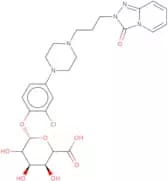
CAS :<p>4'-Hydroxytrazodone b-D-glucuronide is a modification of the drug 4'-hydroxytrazodone, which is used to treat hypertension and depression. The modification prevents the degradation of 4'-hydroxytrazodone by glucuronyl transferase enzymes in the liver, prolonging its half-life. It is synthesized from the glycogen or starch of plants such as corn, wheat, or potatoes. This compound can also be found in natural sources such as honey and fruit juices.</p>Formule :C25H30ClN5O8Degré de pureté :Min. 95%Masse moléculaire :564 g/molFluphenazine b-D-glucuronide
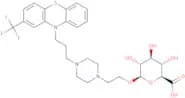
CAS :Produit contrôlé<p>Fluphenazine is a phenothiazine antipsychotic agent that is metabolized by the liver to form fluphenazine b-D-glucuronide. This compound has been shown to have high yield and an electron affinity. Fluphenazine b-D-glucuronide is a primary alcohol with a phenolic hydroxyl group. It can be synthesized using immobilized enzyme, which is an electron donor, and an aliphatic substrate such as methanol. The reaction product is incubated for six hours before it undergoes glucuronidation.</p>Formule :C28H34F3N3O7SDegré de pureté :Min. 95%Masse moléculaire :613.65 g/mol2-Amino-2-deoxy-D-xylose
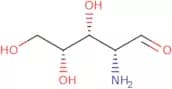
CAS :<p>2-Amino-2-deoxy-D-xylose is a metal chelator that can be used in the treatment of infections caused by bacteria. It has been shown to have synergistic effects with metaperiodate, a compound that inhibits bacterial growth by blocking the synthesis of folic acid. 2-Amino-2-deoxy-D-xylose also chelates and removes heavy metals such as mercury and lead from the bloodstream and other tissues. In addition, this drug is an efficient method for producing amino function pyrimidine nucleosides, which are precursors to DNA and RNA synthesis. The metal chelate ring is formed through dehydration of a furanose molecule with a chloride ion. This leads to an advanced carbohydrate product that contains chlorine.</p>Degré de pureté :Min. 95%Blood group B trisacchharide-APE-HSA
<p>Blood group B trisacchharide-APE-HSA is a synthetic carbohydrate that inhibits the synthesis of complex carbohydrates. The methylation of saccharides and polysaccharides can be accomplished by the addition of an amine to the 3′ hydroxyl group. In this reaction, the sugar is attached to a protein carrier (e.g., human serum albumin) via an amide bond, which prevents its degradation by proteases in the body. The modification of saccharides and polysaccharides is also accomplished through click chemistry, which is based on copper catalysis. This process involves attaching two functional groups through a copper-mediated reaction, forming a new carbon-carbon bond. Modification of saccharides and oligosaccharides can be accomplished using either chemical or enzymatic methods. Sugar modification can be achieved using high purity enzymes that have been custom synthesized for specific purposes (e.g., glycosylation). Carbohydrate modification can</p>Degré de pureté :Min. 95%4,5,6-Tri-O-benzyl-3-benzyloxymethyl-octa-1,7-dien-3-ol
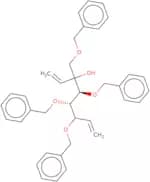
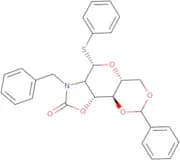
<p>4,5,6-Tri-O-benzyl-3-benzyloxymethyl-octa-1,7-dien-3-ol is an oligosaccharide that is synthesized by the modification of a simple sugar with two benzyloxymethyl groups. It can be used as a carbohydrate in pharmaceuticals and other applications.</p>Formule :C37H40O5Degré de pureté :Min. 95%Masse moléculaire :564.71 g/molPhenyl N-Benzyl-2-amino-4,6-O-benzylidene-2-N,3-O-carbonyl-2-deoxy-1-thio-b-D-glucopyranoside
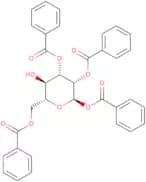
CAS :<p>Phenyl N-Benzyl-2-amino-4,6-O-benzylidene-2-N,3-O-carbonyl-2-deoxy-1-thio-b -D -glucopyranoside is a custom synthesis of a complex carbohydrate with an Oligosaccharide and Polysaccharide. It has been modified in the saccharide moiety by Methylation and Glycosylation. Phenyl N -Benzyl -2 amino 4,6 O benzylidene 2 N 3 O carbonyl 2 deoxy 1 thio b D glucopyranoside has CAS No. 910805 49 1 and is fluorinated at the phenolic hydroxyl group. The sugar is synthesized with a high purity, fluorination and synthetic modification.</p>Formule :C27H25NO5SDegré de pureté :Min. 95%Masse moléculaire :475.56 g/mol1,2,3,6-Tetra-O-benzoyl-a-D-mannopyranose
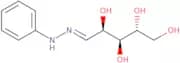
CAS :<p>1,2,3,6-Tetra-O-benzoyl-a-D-mannopyranose is a modification of the sugar mannose. It is an oligosaccharide that contains four mannoses and one D-mannopyranose. This product is custom synthesized to order and can be modified with fluorination or saccharide methylation. It is available in high purity and can be used as a monosaccharide or polysaccharide.</p>Formule :C34H28O10Degré de pureté :Min. 95%Masse moléculaire :596.58 g/molD-Arabinose phenylhydrazone
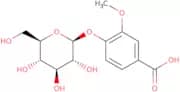
CAS :<p>D-Arabinose phenylhydrazone is a synthetic compound that is used in the study of stereoisomers. It has a D-arabinose and a phenylhydrazine group, which are connected through an amide linkage. D-Arabinose phenylhydrazone is structurally similar to the natural ligand for phosphatase, bovine serum albumin (BSA). This similarity allows it to be used as a substrate for BSA, and also as a ligand for phosphatase enzymes. The acidic functional groups on this molecule allow it to react with tissues and tissue samples that contain carboxylic acid groups. This makes it useful in the study of human urine and tissue samples from other mammals.</p>Formule :C11H16N2O4Degré de pureté :Min. 95%Masse moléculaire :240.26 g/molVanillic acid 4-β-D-glucoside
CAS :Vanillic acid 4-beta-D-glucoside is a Custom synthesis that is used as an Oligosaccharide. It is Polysaccharide and Modification of the natural product vanillin. Vanillic acid 4-beta-D-glucoside has CAS No. 32142-31-7, Methylation, Glycosylation, Carbohydrate, Click modification, saccharide, sugar, High purity and Fluorination. It is also Synthetic.Formule :C14H18O9Degré de pureté :Min. 95%Masse moléculaire :330.29 g/mol6-O-Triisopropylsilyl-D-glucal
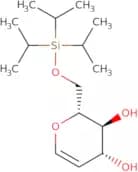
CAS :<p>6-O-Triisopropylsilyl-D-glucal is a silyl ether that can be used as a protecting group for benzyl alcohol. It is an efficient, large-scale synthesis of the benzyl alcohol and d-glucuronolactone. 6-O-Triisopropylsilyl-D-glucal accelerates the reaction by removing water as a byproduct of the reaction, simplifying the synthesis to just two steps. This product is also useful for synthesizing other products with similar structures.</p>Formule :C15H30O4SiDegré de pureté :Min. 95%Masse moléculaire :302.48 g/mol4-O-Benzyl-D-glucal
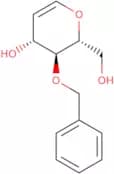
CAS :<p>4-O-Benzyl-D-glucal is an organic solvent and a reactive intermediate, which has been used as a reagent for allylic oxidation. It reacts with halogens, such as chlorine or bromine, to form the corresponding halohydrin or halonium salt in high yield. 4-O-Benzyl-D-glucal is soluble in acetonitrile, benzene, and other solvents and can be used as a solvent for organic synthesis. The compound also reacts with oxygen to form solvents such as acetone or acetic acid.<br>END></p>Formule :C13H16O4Degré de pureté :Min. 95%Masse moléculaire :236.26 g/mol