Glycosciences
La glycosciences est l'étude des glucides et de leurs dérivés, ainsi que des interactions et des fonctions biologiques auxquelles ils participent. Ce domaine de recherche est crucial pour comprendre une grande variété de processus biologiques, y compris la reconnaissance cellulaire, la signalisation, la réponse immunitaire et le développement des maladies. La glycosciences a des applications importantes en biotechnologie, en médecine et dans le développement de nouveaux médicaments et thérapies. Chez CymitQuimica, nous proposons une large sélection de produits de haute qualité et pureté pour la recherche en glycosciences. Notre catalogue comprend des monosaccharides, des oligosaccharides, des polysaccharides, des glyconjugués et des réactifs spécifiques, conçus pour soutenir les chercheurs dans leurs études sur la structure, la fonction et les applications des glucides dans les systèmes biologiques. Ces ressources sont destinées à faciliter les découvertes scientifiques et les applications pratiques dans divers domaines des biosciences et de la médecine.
Sous-catégories appartenant à la catégorie "Glycosciences"
- Aminosucres(108 produits)
- Anticorps Glyco-Related(282 produits)
- Glycolipides(46 produits)
- Glycosaminoglycanes (GAGs)(55 produits)
- Glycosides(419 produits)
- Monosaccharides(6.624 produits)
- Oligosaccharides(3.682 produits)
- Polysaccharides(503 produits)
11046 produits trouvés pour "Glycosciences"
Trier par
Degré de pureté (%)
0
100
|
0
|
50
|
90
|
95
|
100
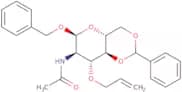
Benzyl 2-acetamido-3-O-allyl-4,6-O-benzylidene-2-deoxy-a-D-glucopyranoside
CAS :<p>This is a custom synthesis of a complex carbohydrate. The compound is an oligosaccharide, polysaccharide, or modification of saccharides. It is composed of one or more sugars and has undergone methylation, glycosylation, and/or carbamylation. This product can be used for the production of pharmaceuticals, cosmetics, and other chemical products. It has a CAS No. 60920-72-1 and can be purchased in high purity with fluoroination as a synthetic modification on the sugar moiety.</p>Formule :C25H29NO6Degré de pureté :Min. 95%Masse moléculaire :439.5 g/molDecyl a-L-rhamnopyranoside
<p>Decyl a-L-rhamnopyranoside is a compound that is used as an anti-inflammatory drug. It is an antioxidant and has been shown to inhibit the production of prostaglandins in inflammatory cells. Decyl a-L-rhamnopyranoside also inhibits the production of leukotrienes, which are involved in inflammation. It has been shown to have a radical scavenging effect and may have potential for use as a medicament. Decyl a-L-rhamnopyranoside has been shown to be effective in the treatment of inflammatory disorders such as lupus erythematosus, rheumatoid arthritis, and ulcerative colitis. The mechanism of action for this drug is not fully understood, but it may involve inhibition of enzymes such as cyclooxygenase or lipoxygenase that are responsible for the production of prostaglandins or leukotrienes.</p>Formule :C16H32O5Degré de pureté :Min. 95%Couleur et forme :PowderMasse moléculaire :304.42 g/molOctyl 2-acetamido-2-deoxy-b-D-galactopyranoside
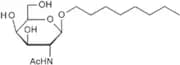
CAS :<p>Octyl 2-acetamido-2-deoxy-b-D-galactopyranoside is a synthetic sugar with a high purity. It is a custom synthesis, which can be fluorinated, monosaccharide, or oligosaccharide. Octyl 2-acetamido-2-deoxy-b-D-galactopyranoside has an Oligosaccharide and Polysaccharide structure that can be modified with methylation and Click modification. This product is CAS No. 383417-49-0 and has an Glycosylation, Carbohydrate structure.</p>Formule :C16H31NO6Degré de pureté :Min. 95%Masse moléculaire :333.42 g/molHyaluronate rhodamine - Molecular Weight - 500kDa
<p>Hyaluronate is a naturally occurring glycosaminoglycan (GAG) found in the extracellular matrix of animal tissues. It is a linear polymer composed of alternating units of N-acetylglucosamine and glucuronic acid. The molecular weight of hyaluronate ranges from 10,000 Da to 1,000,000 Da. Hyaluronate has been modified by fluorination, methylation, and click modification reactions. These modifications affect the physical properties of hyaluronate, including its reactivity with other molecules. Click modification reactions are often used to link two different molecules together. This may include linking an oligosaccharide or saccharide to the hydroxyl groups on the glucuronic acid residues in hyaluronate.</p>Degré de pureté :Min. 95%2-Dodecylhexadecyl-D-xylopyranoside
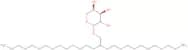
CAS :<p>2-Dodecylhexadecyl-D-xylopyranoside is a synthetic sugar with a 2,6-dideoxy configuration. It is a modified sugar that can be fluorinated and glycosylated. This product has been synthesized using click chemistry, which means it has been prepared by the reaction of an azide and an alkyne in a one-pot process. This sugar has CAS No. 446264-03-5 and Methylation, Modification, Oligosaccharide, Monosaccharide, saccharide, Carbohydrate as its properties.</p>Formule :C33H66O5Degré de pureté :Min. 95%Couleur et forme :Colourless solid.Masse moléculaire :542.87 g/molMycaminose
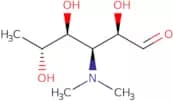
CAS :<p>Mycaminose is a bacterial strain that produces the natural compound mycaminose. Mycaminose has been shown to inhibit the growth of wild-type strains of bacteria, such as nitro and sephadex g-100, which can cause infectious diseases. Mycaminose has also been shown to have some biochemical properties similar to those of tilmicosin, with additional nitrogen atoms and hydroxyl groups. The production of this compound may be due to the activation of monoclonal antibodies by inorganic acid.</p>Formule :C8H17NO4Degré de pureté :Min. 95%Masse moléculaire :191.22 g/mol(3aR,3bS,6aR,7aR)-2,2-Dimethyltetrahydrofuro[2',3':4,5]furo[2,3-d][1,3]dioxol-5(3aH)-one
CAS :<p>(3aR,3bS,6aR,7aR)-2,2-Dimethyltetrahydrofuro[2',3':4,5]furo[2,3-d][1,3]dioxol-5(3aH)-one (Covid-19) is a small molecule that binds to RNA and inhibits the polymerase chain reaction. Covid-19 is used in diagnosis of cancer and autoimmune diseases. Covid-19 has been shown to bind to the acidic residues of RNA and inhibit its binding to the ribosome. This drug also binds to calcium ions and may be useful for treatment of thrombotic thrombocytopenic purpura.</p>Formule :C9H12O5Degré de pureté :Min. 95%Masse moléculaire :200.19 g/mol1-Bromo-2,3,4-tri-O-benzoyl-a-D-glucuronide methyl ester
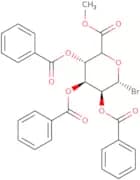
CAS :<p>1-Bromo-2,3,4-tri-O-benzoyl-a-D-glucuronide methyl ester is a custom synthesis. It is a high purity product with a custom synthesis. The CAS No. for this compound is 103674-69-7. This product undergoes Click modification and has high purity. The sugar in this compound is an oligosaccharide with glycosylation.</p>Formule :C28H23BrO9Degré de pureté :Min. 95%Masse moléculaire :583.39 g/mol2-Deoxy-3,4:5,6-di-O-isopropylidene-D-arabino-hexose propane-1,3-diyl dithioacetal
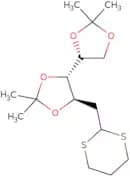
CAS :<p>The antibiotic 2-deoxy-3,4:5,6-di-O-isopropylidene-D-arabino-hexose propane-1,3-diyl dithioacetal is a shikimate analog that inhibits the shikimate pathway. It prevents the synthesis of aromatic compounds and other nitrogenous substances by inhibiting the enzyme chorismate synthase. Chorismate synthase catalyzes the conversion of 3,4:5,6-di-O-isopropylidene D-arabino hexose to chorismic acid which is then converted to shikimic acid. The antibiotic binds covalently to an active site cysteine residue on the enzyme and inhibits its activity. This inhibition blocks the production of aromatic amino acids and other nitrogenous substances required for protein synthesis in bacteria.</p>Formule :C15H26O4S2Degré de pureté :Min. 95%Masse moléculaire :334.5 g/mol1,2,3,4-Tetra-O-benzoyl-D-glucuronide methyl ester
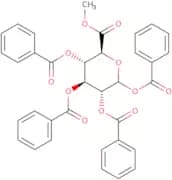
CAS :<p>1,2,3,4-Tetra-O-benzoyl-D-glucuronide methyl ester is an Oligosaccharide that is synthesized by the glycosylation of benzoyl chloride with a sugar. The reaction is catalyzed by base and proceeds in a two step process. The first step is the addition of the sugar to the benzoyl chloride followed by a second addition to form the 1,2,3,4-tetra-O-benzoyl-D-glucuronide methyl ester. The product can be obtained in high purity and custom synthesis can be provided on request. This product can be modified according to your specifications.</p>Formule :C35H28O11Degré de pureté :Min. 95%Masse moléculaire :624.59 g/molHyaluronate dodecasaccharide
CAS :<p>Hyaluronate dodecasaccharide is a complex carbohydrate that belongs to the group of oligosaccharides. It is made up of hyaluronic acid, which is a polysaccharide, and a series of sugar molecules. Hyaluronate dodecasaccharide has been modified in order to increase the stability and water solubility. This product can be used as a coating material for pharmaceuticals or as an additive for cosmetics.</p>Formule :C84H128N6O67Degré de pureté :Min. 95%Masse moléculaire :2,293.9 g/molDiosmetin-3',7-diglucuronide
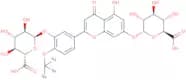
CAS :Produit contrôlé<p>Diosmetin-3',7-diglucuronide is a synthetic compound that can be used as a methyl donor in the synthesis of oligosaccharides and polysaccharides. It has been modified with fluorination to increase its stability and efficiency. This product is highly pure, with an excellent quality.</p>Formule :C28H28O18Degré de pureté :Min. 95 Area-%Couleur et forme :PowderMasse moléculaire :652.51 g/molUlvan - Ulva armoricana-winter-light
CAS :<p>Ulvans are structural polysaccharides present in the cell walls of green algae such as Ulva armoricana, Ulva rotondata, Ulva rigida, Ulva lacterca and Ulva pertusa. They are highly sulphated and contain rhamnose 3-sulphate, xylose, xylose 2-sulphate, glucuronic acid and iduronic acid residues. Ulvan has several potentially valuable functionalities such as gel formation for agricultural and food applications and possible anticoagulant, antioxidant, antihyperlipidemic and antitumoral activities for pharmaceutical applications.<br>The image was kindly provided by Prof Mike Guiry from Cork who runs ‘The Seaweed Site’.</p>Degré de pureté :Min. 95%Pinoresinol diglucopyranoside
CAS :<p>Pinoresinol diglucopyranoside is a natural compound found in Chinese herb. It has been shown to have an anti-atherosclerotic effect, which may be due to the inhibition of nuclear factor kappa-light-chain-enhancer (NF-κB) and matrix metalloproteinase (MMP)-9. Pinoresinol diglucopyranoside also inhibits collagenase activity in vitro and reduces inflammation in vivo. The molecular mechanism of this compound may involve the toll-like receptor 4 (TLR4) pathway, which is responsible for immune responses to bacterial products. Pinoresinol diglucopyranoside has been shown to inhibit the transcription and polymerization of DNA by binding to DNA gyrase and topoisomerase IV, respectively.</p>Formule :C32H42O16Degré de pureté :Min. 96.0 Area-%Masse moléculaire :682.67 g/molRef: 3D-Q-100734
1gÀ demander5gÀ demander250mgÀ demander500mgÀ demander2500mgÀ demander-Unit-ggÀ demander1,6:3,4-Bis-[O-(2,3-dimethoxybutane-2,3-diyl)]-2-O-trifluoromethanesulphonyl-5-O-benzolyl-myo-inositol
CAS :<p>1,6:3,4-Bis-[O-(2,3-dimethoxybutane-2,3-diyl)]-2-O-trifluoromethanesulphonyl-5-O-benzolyl-myo-inositol is a Glycosylation product with CAS No. 1068089-34-8. It is a synthetic oligosaccharide that contains an Oligosaccharide sugar and a Polysaccharide saccharide. The product has been Fluorinated and Custom synthesized for Methylation. Click modification has been performed on the complex carbohydrate to produce the desired Modification in High purity.</p>Formule :C26H35F3O13SDegré de pureté :Min. 95%Masse moléculaire :644.61 g/molMan-a-2-Man-a-3-Man-b-4-GlcNAc
<p>Man-a-2-Man-a-3-Man-b-4-GlcNAc is a custom synthesis of an oligosaccharide that belongs to the group of polysaccharides. It has a CAS number and can be modified with methylation, glycosylation, and click modification. This product is a sugar that can be used in pharmaceuticals and other applications. It is fluorinated, which makes it resistant to degradation by bacteria. Man-a-2-Man-a-3-Man-b-4-GlcNAc has high purity and is a synthetic carbohydrate.</p>Degré de pureté :Min. 95%D-Arabinose diethyldithioacetal
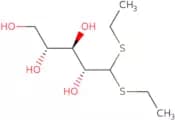
CAS :<p>D-Arabinose diethyldithioacetal is a nitro compound that is used as an anticoagulant. It has a high degree of water solubility and can be administered intravenously. D-Arabinose diethyldithioacetal is formed from d-arabinose and diethyl dithiocarbamate by reaction with boron trifluoride etherate in the presence of hydrochloric acid. This produces the nitro group, which can then react with a hydroxymethyl group to form the final product. The reaction proceeds through two steps: first, the hydroxy methyl group converts to a trifluoroacetic acid derivative, followed by addition of nitric acid to produce the desired product. The final product contains two benzyl groups and two functional groups, which are responsible for its anticoagulant properties.</p>Formule :C9H20O4S2Degré de pureté :Min. 95%Couleur et forme :Off-white solid.Masse moléculaire :256.38 g/molMethyl 2,3,4-tri-O-benzyl-6-O-trityl-a-D-glucopyranoside
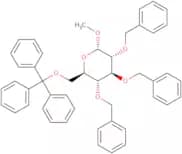
CAS :<p>Methyl 2,3,4-tri-O-benzyl-6-O-trityl-a-D-glucopyranoside is a modification of the sugar molecule. This modification process is completed by reacting the sugar with a derivative of benzyl alcohol. The result is an increase in the number of functional groups on the sugar molecule and a change in its physical properties. Methyl 2,3,4-tri-O-benzyl-6-O-trityl-a -D glucopyranoside has been used in the synthesis of oligosaccharides and polysaccharides.<br>Methyl 2,3,4 -tri -O -benzyl -6 -O -trityl--a D glucopyranoside is an organic compound that belongs to the class of carbohydrates. It is a white powder that contains water solubility and has a melting point of about 145°C. Methyl</p>Formule :C47H46O6Degré de pureté :Min. 95%Masse moléculaire :706.89 g/molSinapic acid acyl-beta-D-glucoside
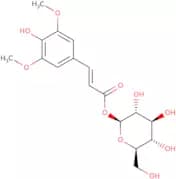
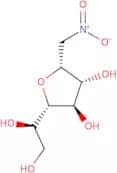
CAS :<p>a functionalised glucoside</p>Formule :C17H22O10Degré de pureté :Min. 95%Masse moléculaire :386.35 g/mola-D-Galactofuranosyl nitromethane
CAS :<p>a-D-Galactofuranosyl nitromethane is a sugar with a galactose (galactosyl) and a nitro group. It is used as a starting material for the synthesis of other glycosides, such as the synthesis of 3-indoxyl-6-fluoro β-D-galactopyranoside. This compound is also used for the synthesis of saccharides with fluorinated or methylated groups.<br>a-D-Galactofuranosyl nitromethane has CAS number 81812-46-6 and can be synthesized from 2,4,5,7 trichloroacetophenone and 1,2,3,4 benzene tetracarboxylic acid in the presence of sodium ethoxide.</p>Formule :C7H14NO7Degré de pureté :Min. 95%Masse moléculaire :224.19 g/mol


![(3aR,3bS,6aR,7aR)-2,2-Dimethyltetrahydrofuro[2',3':4,5]furo[2,3-d][1,3]dioxol-5(3aH)-one](/_next/image/?url=https%3A%2Fstatic.cymitquimica.com%2Fproducts%2F3D%2Fthumb-webp%2FMD45371.webp&w=3840&q=75)


![1,6:3,4-Bis-[O-(2,3-dimethoxybutane-2,3-diyl)]-2-O-trifluoromethanesulphonyl-5-O-benzolyl-myo-inos…](/_next/image/?url=https%3A%2Fstatic.cymitquimica.com%2Fproducts%2F3D%2Fthumb-webp%2FMB16636.webp&w=3840&q=75)