


Glycosciences
La glycosciences est l'étude des glucides et de leurs dérivés, ainsi que des interactions et des fonctions biologiques auxquelles ils participent. Ce domaine de recherche est crucial pour comprendre une grande variété de processus biologiques, y compris la reconnaissance cellulaire, la signalisation, la réponse immunitaire et le développement des maladies. La glycosciences a des applications importantes en biotechnologie, en médecine et dans le développement de nouveaux médicaments et thérapies. Chez CymitQuimica, nous proposons une large sélection de produits de haute qualité et pureté pour la recherche en glycosciences. Notre catalogue comprend des monosaccharides, des oligosaccharides, des polysaccharides, des glyconjugués et des réactifs spécifiques, conçus pour soutenir les chercheurs dans leurs études sur la structure, la fonction et les applications des glucides dans les systèmes biologiques. Ces ressources sont destinées à faciliter les découvertes scientifiques et les applications pratiques dans divers domaines des biosciences et de la médecine.
Sous-catégories appartenant à la catégorie "Glycosciences"
- Aminosucres(108 produits)
- Anticorps Glyco-Related(282 produits)
- Glycolipides(46 produits)
- Glycosaminoglycanes (GAGs)(55 produits)
- Glycosides(419 produits)
- Monosaccharides(6.624 produits)
- Oligosaccharides(3.682 produits)
- Polysaccharides(503 produits)
11046 produits trouvés pour "Glycosciences"
Trier par
Degré de pureté (%)
0
100
|
0
|
50
|
90
|
95
|
100
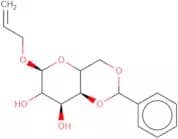
Allyl 4,6-O-benzylidene-a-D-glucopyranoside
CAS :<p>Allyl 4,6-O-benzylidene-a-D-glucopyranoside is a custom synthesis of an oligosaccharide. It is a complex carbohydrate that belongs to the group of saccharides. This product is methylated and glycosylated, and contains a hexose sugar (glucose) at its reducing end. Allyl 4,6-O-benzylidene-a-D-glucopyranoside has been fluorinated with hydrogen fluoride gas in order to increase its purity. This product is synthesized by click chemistry and has CAS number 65987-12-4.</p>Formule :C16H20O6Degré de pureté :Min. 95%Masse moléculaire :308.33 g/mola-D-Galactose-PAA-biotin
<p>a-D-Galactose-PAA-biotin is a carbohydrate compound that has been modified by the addition of a PAA group and biotin. This compound can be synthesized with high purity and is available for custom synthesis. It is an oligosaccharide, a sugar, and a saccharide. The CAS number for this compound is 97320-93-4.</p>Degré de pureté :Min. 95%Couleur et forme :SolidPalbociclib N-glucuronide
<p>Palbociclib N-glucuronide is a synthetic, modified sugar that is used in the synthesis of carbohydrates. It has a molecular weight of 542.34 and was originally synthesized by glycosylation and methylation of palbociclib. The chemical formula for Palbociclib N-glucuronide is C10H18N4O5•C6H7O6•2HCOOH.</p>Formule :C30H37N7O8Degré de pureté :Min. 95%Masse moléculaire :623.66 g/molDecasaccharide dp10
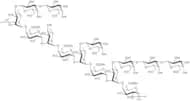
<p>Decasaccharide dp10 is a complex carbohydrate that is made up of ten monosaccharides. It is a synthetic oligosaccharide that has been fluorinated and glycosylated. The decasaccharide has been synthesized using click chemistry and methylation, before being purified to produce a high-purity product. Decasaccharide dp10 can be used in the modification of complex carbohydrates, as well as for the synthesis of glycans with customized structures.</p>Formule :C60H155N25O95S15Degré de pureté :Min. 95%Masse moléculaire :3,227.97 g/molHyaluronate dodecasaccharide
CAS :<p>Hyaluronate dodecasaccharide is a complex carbohydrate that belongs to the group of oligosaccharides. It is made up of hyaluronic acid, which is a polysaccharide, and a series of sugar molecules. Hyaluronate dodecasaccharide has been modified in order to increase the stability and water solubility. This product can be used as a coating material for pharmaceuticals or as an additive for cosmetics.</p>Formule :C84H128N6O67Degré de pureté :Min. 95%Masse moléculaire :2,293.9 g/molD-Xylose-BSA
<p>D-Xylose-BSA is an anaesthetic agent that is used to treat depression and postoperative pain. It is a natural compound that has been found in the blood cells of humans and animals. D-Xylose-BSA interacts with endogenous receptors for biotinylated D-xylose on granulocytes, which leads to activation of these cells and consequent release of inflammatory mediators. The ability of D-xylose-BSA to bind to microbial surfaces may be due to its chemical structure, which consists of a glycosilated hydrophilic part and a lipid part. D-Xylose-BSA also binds to polymorphonuclear leukocytes, postoperative erythrocytes, and replanted skin grafts.</p>Degré de pureté :Min. 95%Rhamnogalacturonan - from potato
CAS :<p>Pectin is a highly complex polysaccharide matrix that is found in the primary walls of dicotyledenous and monocotyledenous plants and gymnosperms, including potato. A key fragment of this complex is rhamnogalacturonan I, containing a backbone of the repeating disaccharide [-4)-α-D-GalpA-(1,2)-α-L-Rhap-(1,]. Several applications for RG1 have been described including drug targeting to the colon via the oral administration route for local treatment of e.g. inflammatory bowel disease and colon cancer. This has several advantages such as needle-free administration and low infection risk. In the gastro-intestinal tract RG-I is only degraded by the action of the colonic microflora. High purity rhamnogalacturonan I is also used in research, biochemical enzyme assays and in vitro diagnostic analysis.</p>Degré de pureté :Min. 95%[UL-13C18]Maltotriose hydrate
<p>Maltotriose hydrate is a synthetic glycosylation product that is synthesized by the fluorination of maltotriose. Maltotriose hydrate is a sugar with a 3-D structure that is similar to maltodextrin, but with one less glucose residue. Maltotriose hydrate can be used in the synthesis of oligosaccharides and polysaccharides and has been shown to have high purity. Maltotriose hydrate can be modified by a variety of reactions, such as methylation, monosaccharide modification, or click chemistry. It has an CAS number and can be custom synthesized for clients' needs.</p>Formule :C18H32O16·xH2ODegré de pureté :Min. 95%Couleur et forme :White SolidMasse moléculaire :522.3 g/molUlvan - Ulva armoricana-winter-light
CAS :<p>Ulvans are structural polysaccharides present in the cell walls of green algae such as Ulva armoricana, Ulva rotondata, Ulva rigida, Ulva lacterca and Ulva pertusa. They are highly sulphated and contain rhamnose 3-sulphate, xylose, xylose 2-sulphate, glucuronic acid and iduronic acid residues. Ulvan has several potentially valuable functionalities such as gel formation for agricultural and food applications and possible anticoagulant, antioxidant, antihyperlipidemic and antitumoral activities for pharmaceutical applications.<br>The image was kindly provided by Prof Mike Guiry from Cork who runs ‘The Seaweed Site’.</p>Degré de pureté :Min. 95%GNA2 N-Glycan
<p>GNA2 N-glycan is a custom-synthesized modified oligosaccharide that is a complex carbohydrate. It is a high purity, methylated and glycosylated polysaccharide sugar with fluorination. GNA2 N-glycan has CAS No. 1295-70-1 and is monosaccharide. It has a molecular weight of 266.</p>Degré de pureté :Min. 95%Monosialyl, difucosyllacto-N-neohexaose
<p>Monosialyl, difucosyllacto-N-neohexaose is a high purity, custom synthesis sugar that can be modified with fluorination and glycosylation. It has CAS No. and has the following properties: oligosaccharide, monosaccharide, saccharide, complex carbohydrate. Monosialyl, difucosyllacto-N-neohexaose is a synthetic carbohydrate that is used in click modification and methylation. This product can also be used for glycosylation and modification.</p>Formule :C63H105N3O47Degré de pureté :Min. 95%Masse moléculaire :1,656.5 g/molHuman urine oligosaccharides
<p>This mixture contains some of the neutral and sialylated oligosaccharides found in human urine.</p>Degré de pureté :Min. 95%CMP-Pseudaminic acid
<p>CMP-Pseudaminic acid is a chemical compound that belongs to the group of thuringiensis. It is biosynthesized by the action of enzymes, which catalyze the conversion of sialic acid to CMP-pseudaminic acid. This process is carried out in two steps. The first step involves a reaction between sialic acid and ATP and the second step entails an enzymatic reaction between CMP-pseudaminic acid and UDP-glucose. X-ray crystal structures have been obtained for both steps of this process, with the second step being more complex than the first. Chemical diversity has been observed in pseudaminics, with some being glycosylated while others are not. Analysis with spectrometry has shown that pseudaminics are highly o-glycosylated at their hydroxy groups and have high levels of carbon atoms as well as hydroxyl groups. Structural analysis has revealed that pseudaminics</p>Formule :C22H32N5O15PDegré de pureté :Min. 95%Masse moléculaire :637.49 g/molSialyl-dimeric Lex-nona-APD-HSA
<p>Sialyl-dimeric Lex-nona-APD-HSA is a monosaccharide that belongs to the group of complex carbohydrates. It is a custom synthesis product, which has been synthesized by the methylation and glycosylation of a high purity oligosaccharide. The structural formula for this product is C14H30FNO6S2. This product is highly purified and has been fluorinated at one hydroxyl group. Sialyl-dimeric Lex-nona-APD-HSA has CAS No. 569078-29-4 and molecular weight of 432.5 g/mol.br><br>br><br>This product can be used as a synthetic sugar in various applications such as food, pharmaceuticals, cosmetics, and agrochemicals industries.br><br>br><br>The following are some properties of this compound: <br>1) Nonvolatile solids content: 98%</p>Degré de pureté :Min. 95%Glycyl-lacto-N-tetraose
<p>Glycyl-lacto-N-tetraose is an oligosaccharide that is modified with lactose. The structure of this carbohydrate is a glycosyl linkage between two glucose residues, plus a galactose residue at the non-reducing end of the chain. This sugar has been custom synthesized and purified to be free of other carbohydrates or contaminants. Glycyl-lacto-N-tetraose has a CAS number of 55719-02-1 and can be used in many applications including as a pharmaceutical ingredient, food additive, or cosmetic ingredient.</p>Formule :C28H49N3O21Degré de pureté :Min. 95%Masse moléculaire :763.7 g/mol2-Deoxy-2-fluoro-D-[1-13C]glucose
CAS :<p>2-Deoxy-2-fluoro-D-[1-13C]glucose is a pharmacopoeia that is used in the diagnosis of thyroid gland, myocardial ischemia and malignant tumors. It is also used for the study of glucose metabolism in the thyroid gland, cerebral cortex and myocardium. 2-Deoxy-2-fluoro-D-[1-13C]glucose binds to pyranose sugars and has been shown to be an effective agent in the treatment of malignant tumors. This drug has also been shown to inhibit glucose metabolism in the thyroid gland, cerebral cortex and myocardium.</p>Formule :C6H11FO5Degré de pureté :Min. 95%Masse moléculaire :183.14 g/molD-Arabinose diethyldithioacetal
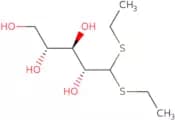
CAS :<p>D-Arabinose diethyldithioacetal is a nitro compound that is used as an anticoagulant. It has a high degree of water solubility and can be administered intravenously. D-Arabinose diethyldithioacetal is formed from d-arabinose and diethyl dithiocarbamate by reaction with boron trifluoride etherate in the presence of hydrochloric acid. This produces the nitro group, which can then react with a hydroxymethyl group to form the final product. The reaction proceeds through two steps: first, the hydroxy methyl group converts to a trifluoroacetic acid derivative, followed by addition of nitric acid to produce the desired product. The final product contains two benzyl groups and two functional groups, which are responsible for its anticoagulant properties.</p>Formule :C9H20O4S2Degré de pureté :Min. 95%Couleur et forme :Off-white solid.Masse moléculaire :256.38 g/mol3,4,6-Tri-O-acetyl-2-azido-2-deoxy-D-galactose - non-animal origin
CAS :<p>3,4,6-Tri-O-acetyl-2-azido-2-deoxy-D-galactose (TADA) is a non-animal origin sugar that can be custom synthesized to meet your needs. TADA is modified with fluorination, glycosylation, and methylation to increase its stability and improve its properties. It also has an acetate group at the 3 position of the glucose molecule for easy conjugation with proteins. TADA is used in glycosylations to produce oligosaccharides and monosaccharides.</p>Formule :C12H17N3O8Degré de pureté :Min. 98 Area-%Masse moléculaire :331.28 g/mol(2S, 4S, 4'R) [4,4'-bi-1,3-dioxolane]-2-methanol-2,2'-dimethyl
CAS :<p>2,4-Dioxolane is a synthetic compound with the molecular formula (2S, 4S, 4'R) [4,4'-bi-1,3-dioxolane]-2-methanol-2,2'-dimethyl. It was first synthesized in 1963 by C. L. Hedrick and coworkers at Eli Lilly and Company as a potential drug for the treatment of schizophrenia. The chemical structure of 2,4-dioxolane consists of two oxetanes linked together with an ether bond. In this molecule both hydroxyl groups are on the same side of the carbon chain.</p>Formule :C9H16O5Degré de pureté :Min. 95%Masse moléculaire :204.22 g/molMethyl b-D-glucopyranoside hemihydrate
CAS :<p>Methyl b-D-glucopyranoside hemihydrate is a white crystalline solid that is soluble in water. It is a synthetic product, which can be custom synthesized and modified to suit the needs of customers. Methyl b-D-glucopyranoside hemihydrate is used for the synthesis of glycosidic substances and as a raw material for saccharide derivatives. This compound has been shown to have high purity, and is often used in the production of oligosaccharides and monosaccharides.</p>Formule :C7H14O6H2ODegré de pureté :Min. 95%Couleur et forme :White to off-white solid.Masse moléculaire :203.19 g/mol


![[UL-13C18]Maltotriose hydrate](/_next/image/?url=https%3A%2Fstatic.cymitquimica.com%2Fproducts%2F3D%2Fthumb-webp%2FOM45239.webp&w=3840&q=75)

![2-Deoxy-2-fluoro-D-[1-13C]glucose](/_next/image/?url=https%3A%2Fstatic.cymitquimica.com%2Fproducts%2F3D%2Fthumb-webp%2FMD45025.webp&w=3840&q=75)

![(2S, 4S, 4'R) [4,4'-bi-1,3-dioxolane]-2-methanol-2,2'-dimethyl](/_next/image/?url=https%3A%2Fstatic.cymitquimica.com%2Fproducts%2F3D%2Fthumb-webp%2FMM44925.webp&w=3840&q=75)
