Glycosciences
La glycosciences est l'étude des glucides et de leurs dérivés, ainsi que des interactions et des fonctions biologiques auxquelles ils participent. Ce domaine de recherche est crucial pour comprendre une grande variété de processus biologiques, y compris la reconnaissance cellulaire, la signalisation, la réponse immunitaire et le développement des maladies. La glycosciences a des applications importantes en biotechnologie, en médecine et dans le développement de nouveaux médicaments et thérapies. Chez CymitQuimica, nous proposons une large sélection de produits de haute qualité et pureté pour la recherche en glycosciences. Notre catalogue comprend des monosaccharides, des oligosaccharides, des polysaccharides, des glyconjugués et des réactifs spécifiques, conçus pour soutenir les chercheurs dans leurs études sur la structure, la fonction et les applications des glucides dans les systèmes biologiques. Ces ressources sont destinées à faciliter les découvertes scientifiques et les applications pratiques dans divers domaines des biosciences et de la médecine.
Sous-catégories appartenant à la catégorie "Glycosciences"
- Aminosucres(108 produits)
- Anticorps Glyco-Related(282 produits)
- Glycolipides(46 produits)
- Glycosaminoglycanes (GAGs)(55 produits)
- Glycosides(419 produits)
- Monosaccharides(6.622 produits)
- Oligosaccharides(3.682 produits)
- Polysaccharides(503 produits)
11041 produits trouvés pour "Glycosciences"
Trier par
Degré de pureté (%)
0
100
|
0
|
50
|
90
|
95
|
100
Galacturonan DP3/DP4 sodium salt
<p>A mixture of sodium trigalacturonate & tetragalacturonate (α-1,4 sodium galacturonotriose + α-1,4 sodium galacturonotetraose) is derived from pectin or pectic acid, by enzymatic or partial acid hydrolysis (Combo, 2012). It is used inâ¯galacturonic acidâ¯metabolism research as a substrate to identify, differentiate, and characterize endo- and exopolygalacturonase(s), and gluconase(s) (Jayani, 2005). The addition of very short fragments of homogalacturonan, tri-galacturonate, and tetra-galacturonate oligosaccharides, restore development in dark-grown, de-etiolated seedling mutants, suggesting that they are unable to generate de-methylesterified pectin fragments. A model of spatiotemporally separated photoreceptive and signal-responsive cell types has been proposed, that contains overlapping subsets of the regulatory network of light-dependent seedling development (Sinclair, 2017).</p>Degré de pureté :Min. 95%Couleur et forme :Powder1,2,3-Tri-O-Acetyl-5-deoxy-D-ribose
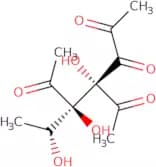
CAS :<p>1,2,3-Tri-O-acetyl-5-deoxy-D-ribose is an efficient and environmentally benign method for the synthesis of acyclic acetals. The condensation process involves the use of a chloroformate to introduce the carbonyl group into a hydroxyl group on the sugar. This reaction can be carried out in an organic solvent or water as well. The reaction rate is fast due to a high nucleophilicity of the chloride ion. The product can then be converted into an amide by reacting it with ammonia in a basic medium. This reaction results in a high yield and is useful for recycling acetonitrile that would otherwise be released into the environment.</p>Formule :C11H16O7Degré de pureté :Min. 95%Masse moléculaire :260.24 g/molEthyl 2,3,4-tri-O-benzyl-b-D-thioglucopyranoside
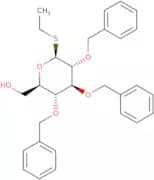
CAS :<p>Ethyl 2,3,4-tri-O-benzyl-b-D-thioglucopyranoside is a sugar that has been modified with three benzyl groups at the 3-, 4-, and 5-positions. It is used as a building block for oligosaccharides and polysaccharides. This compound can be synthesized using a click reaction between an acetylated benzaldehyde derivative and a protected thiogalactose. Ethyl 2,3,4-tri-O-benzyl-b-D-thioglucopyranoside is also known by its CAS number 126461-54-9 and has a molecular weight of 360.</p>Formule :C29H34O5SDegré de pureté :Min. 95%Masse moléculaire :494.64 g/mol2,3,4-Tri-O-acetyl-β-D-xylopyranosyl azide
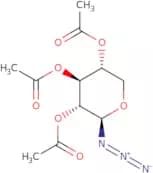
CAS :<p>2,3,4-Tri-O-acetyl-b-D-xylopyranosyl azide is a compound that has a linear range of 10 to 500 μM. It has been shown to inhibit the growth of bacteria such as C. perfringens and S. aureus. This compound inhibits the production of toxins in these bacteria by binding to the ribosomes and inhibiting protein synthesis. In addition, this compound has been shown to have high activity at salinity levels up to 15% NaCl and diffraction data was obtained from 2,3,4-tri-O-acetyl-b-D-xylopyranosyl azide crystals using XRD in order to quantify its molecular structure.</p>Formule :C11H15N3O7Degré de pureté :Min. 98 Area-%Couleur et forme :PowderMasse moléculaire :301.25 g/mol1,4:3,6-Dianhydro-2,5-di-O-ethyl-D-glucitol
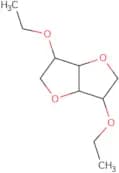
CAS :<p>1,4:3,6-Dianhydro-2,5-di-O-ethyl-D-glucitol (1,4:3,6-DDG) is a synthetic monosaccharide that has been modified with fluorination. It is a complex carbohydrate that can be used in the synthesis of glycosylations and polysaccharides. The chemical modification of 1,4:3,6-DDG with fluorination results in its increased stability under acidic conditions. This product is custom synthesized to meet the requirements of our clients.</p>Degré de pureté :Min. 95%Ethyl 3-O-allyl-2-O-benzyl-4,6-O-benzylidene-b-D-thiogalactopyranoside
<p>Ethyl 3-O-allyl-2-O-benzyl-4,6-O-benzylidene-b-D-thiogalactopyranoside is a custom synthesized product that is used for the modification of saccharides. It is a white crystalline powder with a melting point of about 180°C. The CAS number for this product is [1]. Ethyl 3-O-allyl-2-O-benzyl-4,6 - O -benzylidene - b - D - thiogalactopyranoside reacts with glycosyl halides to form glycosides and methyl iodide to form methyl glycosides. This product also can be used in click chemistry reactions.<br>Methylation of the sugar moiety can be performed on this product too. It has high purity and fluorescence properties that may be useful in fluorescent labeling experiments.</p>Degré de pureté :Min. 95%Didesmethylsibutamine D-glucuronide
<p>Didesmethylsibutamine D-glucuronide is a custom synthesis, complex carbohydrate, Oligosaccharide, CAS No. that is modified with saccharide and Methylation. It is synthesized with Carbohydrate and sugar to produce a high purity product. It also has the following modifications: Fluorination, Synthetic.</p>Degré de pureté :Min. 95%Hydroxy pioglitazone (M-IV) b-D-glucuronide
CAS :<p>Hydroxy pioglitazone (M-IV) b-D-glucuronide is a synthetic sugar that can be modified to produce a variety of derivatives. It is also known as M-IV, which stands for methylated IV, and has the following chemical structure:</p>Formule :C25H28N2O10SDegré de pureté :Min. 95%Masse moléculaire :548.56 g/mol4,7,8,9-Tetra-O-acetyl-N-acetyl-2-deoxy-2-fluoro-b-D-neuraminic acid allyl ester
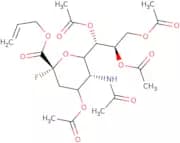
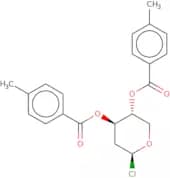
CAS :<p>4,7,8,9-Tetra-O-acetyl-N-acetyl-2-deoxy-2-fluoro-b-D-neuraminic acid allyl ester is a custom synthesized chemical that has been modified with fluorination and methylation. This product is an oligosaccharide, saccharide, and polysaccharide. The product also has a high purity.</p>Formule :C22H30FNO12Degré de pureté :Min. 95%Masse moléculaire :519.47 g/mol1-Chloro-2-deoxy-3,4-di-O-toluoyl-D-ribopyranose
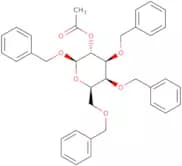
CAS :<p>1-Chloro-2-deoxy-3,4-di-O-toluoyl-D-ribopyranose is a custom synthesis of a complex carbohydrate. It is an Oligosaccharide and Polysaccharide that has been modified using methylation and glycosylation. The saccharide has also been fluorinated and the synthetic product is highly pure with CAS No. 516511-18-5. 1-Chloro-2,3,4,-diO-(1'-chloroethylidene) -D-[alpha] -ribopyranose is a sugar that can be used in many different applications including pharmaceuticals, agrochemicals, and biotechnology.</p>Formule :C21H21ClO5Degré de pureté :Min. 95%Couleur et forme :White to off-white solid.Masse moléculaire :388.84 g/mol2-O-Acetyl-1,3,4,6-tetra-O-benzyl-b-D-galactopyranoside
CAS :<p>2-O-Acetyl-1,3,4,6-tetra-O-benzyl-b-D-galactopyranoside is a custom synthesis that belongs to the class of complex carbohydrates. This compound contains a saccharide with a sugar group and is fluorinated at the 2 position. It has been modified by methylation on the C2 position and has an acetyl group on the C3 position.</p>Formule :C36H38O7Degré de pureté :Min. 95%Masse moléculaire :582.68 g/mol3-O-(2-Acetamido-2-deoxy-D-glucopyranosyl)-1,2-di-O-benzyl-4,6-O-benzylidene-D-mannopyranoside
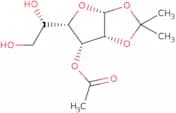
<p>3-O-(2-Acetamido-2-deoxy-D-glucopyranosyl)-1,2-di-O-benzyl-4,6-O-benzylidene-D-mannopyranoside is a synthetic sugar that is used in the synthesis of glycosylations. It has been fluorinated and methylated to increase its stability and reactivity. It is also synthetically derived from a saccharide and modified for use in Click chemistry. 3-O-(2-Acetamido-2-deoxy--D--glucopyranosyl)-1,2--di--O--benzyl--4,6--O--benzylidene--D--mannopyranoside is soluble in water and ethanol. This product has CAS No. 5118876–78–3 and can be custom synthesized by us.</p>Formule :C35H41NO11Degré de pureté :Min. 95%Masse moléculaire :651.72 g/mol3-O-Acetyl-1,2-O-isopropylidene-a-D-galactofuranose
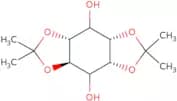
CAS :<p>3-O-Acetyl-1,2-O-isopropylidene-a-D-galactofuranose is a modification of the carbohydrate structure galactofuranose. It has been custom synthesized and is available in high purity with a monosaccharide content of >99%. 3-O-Acetyl-1,2-O-isopropylidene-a-D-galactofuranose can be methylated or glycosylated and is used as a building block for the synthesis of complex carbohydrates. 3-O-Acetyl-1,2,3,4,6,7,8,-octahydrobenzo[b]naphtho[2,1b][1]benzopyran (CAS No. 109680) is also known as 3-(acetamido)-1,2:3',4'-diisopropyl</p>Formule :C11H18O7Degré de pureté :Min. 95%Masse moléculaire :262.26 g/mol1,2:4,5-Di-O-isopropylidene-D,L-myo-inositol
CAS :<p>1,2:4,5-Di-O-isopropylidene-D,L-myo-inositol is a custom synthesized product that has been modified to contain a fluorine atom. It is an oligosaccharide and polysaccharide. This product is used as a synthetic precursor to other products such as saccharides, carbohydrates and monosaccharides.</p>Formule :C12H20O6Degré de pureté :Min. 95%Masse moléculaire :260.28 g/molDi-a-D-galactosyl-mannopentaose
<p>Di-a-D-galactosyl-mannopentaose is a mannopentaose derivative that has been modified with a methyl group at the C2 position and fluorinated at the C6 position. This compound can be used as an intermediate in the production of oligosaccharides and polysaccharides, which are complex carbohydrates that contain many sugar molecules. The product is of high purity, with no detectable impurities. It was synthesized using a custom synthesis approach, which allows for modification of the chemical structure to produce desired properties. This product is stable when stored at room temperature and does not require refrigeration. It does not contain any organic solvents or volatile compounds and is free from endotoxins or heavy metals.</p>Degré de pureté :Min. 95%Masse moléculaire :1,153 g/molN-(2-Deoxy-D-glucopyranosyl)-S-nitroso-N-acetyl-D,L-pencillamine
CAS :<p>N-(2-Deoxy-D-glucopyranosyl)-S-nitroso-N-acetyl-D,L-pencillamine is a custom synthesis of an Oligosaccharide. It is an unmodified saccharide with a CAS No. 188849-82-3. The chemical formula for this compound is C12H14N2O9 and its molecular weight is 368.24 g/mol. This compound has been synthesized using the Click modification, methylation, and fluorination techniques. N-(2-Deoxy-D-glucopyranosyl)-S-nitroso-N acetyl D,L pencillamine has a purity level of 95% or greater. This product has not been glycosylated or carbamoylated and does not contain any sugar moieties.</p>Formule :C13H23N3O8SDegré de pureté :Min. 95%Masse moléculaire :381.4 g/moltrans-Zeatin-o-glucuronide
CAS :<p>Trans-Zeatin-o-glucuronide is a synthetic cytokinin derivative, which is derived from zeatin, a naturally occurring plant hormone. Zeatin originates from a variety of plant tissues but is predominantly found in corn, where it plays a crucial role in plant growth and development. As a cytokinin, trans-Zeatin-o-glucuronide acts by influencing cell division, differentiation, and apical dominance in plants. Its glucuronide form is a metabolite, which allows researchers to study the storage and transport of cytokinins within plant cells.</p>Formule :C16H21N5O7Degré de pureté :Min. 95%Masse moléculaire :395.37 g/mol2,3,5,6-Tetra-O-acetyl-D-gulonic acid -1,4-lactone
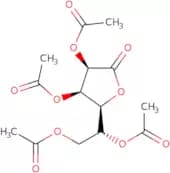
CAS :<p>2,3,5,6-Tetra-O-acetyl-D-gulonic acid -1,4-lactone is a synthetic sugar that is used in the synthesis of high purity oligosaccharides and polysaccharides. This product has been modified with fluorine and methyl groups. The reactions were performed under click chemistry conditions to produce this compound. This product is available for custom synthesis and fluoroamination.</p>Formule :C14H18O10Degré de pureté :Min. 95%Couleur et forme :White To Off-White SolidMasse moléculaire :346.29 g/mol3-O-(2,3,4,6-Tetra-O-benzyl-a-D-glucopyranosyl)-1,2,4,6-tetra-O-acetyl-b-D-glucopyranose
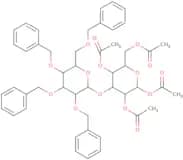
CAS :<p>3-O-(2,3,4,6-Tetra-O-benzyl-a-D-glucopyranosyl)-1,2,4,6-tetra-O-acetyl-b-D-glucopyranose is an oligosaccharide that has been modified with a click modification. This compound is a complex carbohydrate and it is synthesized from a monosaccharide. 3-O-(2,3,4,6-Tetra-O-benzyl-a-D--glucopyranosyl)-1,2,4,6-- tetra--O--acetyl--b--D--glucopyranose is used in methylation reactions.</p>Formule :C48H54O15Degré de pureté :Min. 95%Masse moléculaire :870.93 g/molBenzyl N-acetyl-4,6-O-benzylidene-a-isomuramic acid
CAS :<p>Benzyl N-acetyl-4,6-O-benzylidene-a-isomuramic acid is a high purity custom synthesis. It is a sugar that has been modified by click chemistry, fluorination, glycosylation, and methylation. The modification of this compound includes the addition of an acetamide group to the hydroxyl group on carbon 2 and a benzylidene acetal at carbon 4. This compound has been synthesized to be used as a monosaccharide or an oligosaccharide in complex carbohydrates.</p>Formule :C25H29NO8Degré de pureté :Min. 95%Masse moléculaire :471.5 g/mol