Glycosciences
La glycosciences est l'étude des glucides et de leurs dérivés, ainsi que des interactions et des fonctions biologiques auxquelles ils participent. Ce domaine de recherche est crucial pour comprendre une grande variété de processus biologiques, y compris la reconnaissance cellulaire, la signalisation, la réponse immunitaire et le développement des maladies. La glycosciences a des applications importantes en biotechnologie, en médecine et dans le développement de nouveaux médicaments et thérapies. Chez CymitQuimica, nous proposons une large sélection de produits de haute qualité et pureté pour la recherche en glycosciences. Notre catalogue comprend des monosaccharides, des oligosaccharides, des polysaccharides, des glyconjugués et des réactifs spécifiques, conçus pour soutenir les chercheurs dans leurs études sur la structure, la fonction et les applications des glucides dans les systèmes biologiques. Ces ressources sont destinées à faciliter les découvertes scientifiques et les applications pratiques dans divers domaines des biosciences et de la médecine.
Sous-catégories appartenant à la catégorie "Glycosciences"
- Aminosucres(108 produits)
- Anticorps Glyco-Related(282 produits)
- Glycolipides(46 produits)
- Glycosaminoglycanes (GAGs)(55 produits)
- Glycosides(419 produits)
- Monosaccharides(6.622 produits)
- Oligosaccharides(3.682 produits)
- Polysaccharides(503 produits)
11042 produits trouvés pour "Glycosciences"
Trier par
Degré de pureté (%)
0
100
|
0
|
50
|
90
|
95
|
100
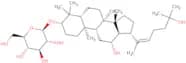
Pseudoginsenoside Rh2
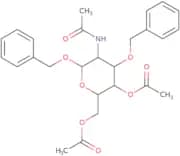
CAS :<p>Pseudoginsenoside Rh2 is a bioactive compound, which is a derivative of ginsenosides found in Panax ginseng. It is specifically extracted from the plant's root, known for its rich saponin content. Pseudoginsenoside Rh2 functions by interacting with various cellular pathways, influencing apoptosis, and cell cycle regulation. The mechanism of action involves modulation of signaling pathways, including PI3K/Akt and MAPK, which are crucial in controlling cell growth and survival.</p>Formule :C36H62O8Degré de pureté :Min. 95%Masse moléculaire :622.87 g/mol1,3-o-Dibenzyl-N-acetyl-β-D-glucosamine 4,6-diacetate
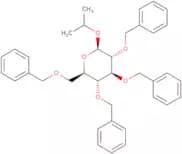
CAS :<p>Please enquire for more information about 1,3-o-Dibenzyl-N-acetyl-β-D-glucosamine 4,6-diacetate including the price, delivery time and more detailed product information at the technical inquiry form on this page</p>Formule :C26H31NO8Degré de pureté :Min. 95%Masse moléculaire :485.5 g/molIsopropyl 2,3,4,6-tetra-O-benzyl-b-D-glucopyranoside
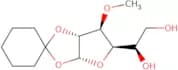
CAS :<p>Isopropyl 2,3,4,6-tetra-O-benzyl-b-D-glucopyranoside is a synthetic glycosylation product. It can be used as a building block for the synthesis of oligosaccharides and sugar derivatives. The product is available in custom synthesis and can be fluorinated to create new compounds. Isopropyl 2,3,4,6-tetra-O-benzyl-b-D-glucopyranoside can also be methylated to create new compounds. This product is mainly used in the preparation of saccharides and polysaccharides. It has a purity level of more than 99% and is not modified with any other functional groups.</p>Formule :C37H42O6Degré de pureté :Min. 95%Masse moléculaire :582.73 g/mol1,2-O-Cyclohexylidene-3-O-methyl-a-D-glucofuranose
CAS :<p>1,2-O-Cyclohexylidene-3-O-methyl-a-D-glucofuranose is a synthetic cyclic oligosaccharide that can be modified with methyl groups or fluorine atoms. It is a monosaccharide that has been shown to have potential for use as a drug delivery system.</p>Formule :C13H22O6Degré de pureté :Min. 95%Masse moléculaire :274.31 g/molL-Fucose-BSA
<p>L-fucose conjugated to BSA. Molecular weight of Glycoconjugate (MALDI) is approx 70Da.Average sugar residues per protein molecule is > 7.</p>Degré de pureté :Min. 95%Couleur et forme :Powder1-Chloro-2-deoxy-3,4-di-O-toluoyl-D-ribopyranose
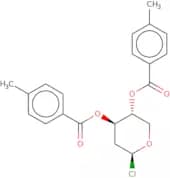
CAS :<p>1-Chloro-2-deoxy-3,4-di-O-toluoyl-D-ribopyranose is a custom synthesis of a complex carbohydrate. It is an Oligosaccharide and Polysaccharide that has been modified using methylation and glycosylation. The saccharide has also been fluorinated and the synthetic product is highly pure with CAS No. 516511-18-5. 1-Chloro-2,3,4,-diO-(1'-chloroethylidene) -D-[alpha] -ribopyranose is a sugar that can be used in many different applications including pharmaceuticals, agrochemicals, and biotechnology.</p>Formule :C21H21ClO5Degré de pureté :Min. 95%Couleur et forme :White to off-white solid.Masse moléculaire :388.84 g/mol1,4,5,6-Tetra-O-benzyl-myo-inositol
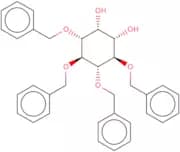
CAS :<p>1,4,5,6-Tetra-O-benzyl-myo-inositol is a benzylated derivative of myo-inositol. It is a pharmacological agent that has been shown to inhibit the growth of human colon adenocarcinoma cells and human glioblastoma cells in vitro. 1,4,5,6-Tetra-O-benzyl-myo-inositol also binds to cell membrane receptors and inhibits the activity of enzymes involved in the synthesis of phosphatidylcholine. The compound has been shown to be selective for axial glioblastoma tumors in animal models. The compound can be conjugated with different molecules and used as an assay for cytotoxicity studies on tumor cells. 1,4,5,6-Tetra-O-benzyl-myo-inositol has hydroxyl groups that are easily oxidized</p>Formule :C34H36O6Degré de pureté :Min. 95%Masse moléculaire :540.65 g/molDipyridamole mono-O-b-D-glucuronide
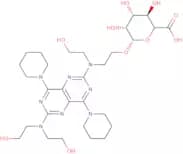
CAS :<p>Dipyridamole is a synthetic fluorinated sugar that is used in research as a model for natural oligosaccharides. It has been shown to be useful for investigating the glycosylation reactions of polysaccharides and proteins, as well as for studying carbohydrate-protein interactions. Dipyridamole mono-O-b-D-glucuronide is an example of a product that can be custom synthesized by our laboratory. The product has purity of >99% and CAS No. 63912-02-7.</p>Formule :C30H48N8O10Degré de pureté :Min. 95%Couleur et forme :Yellow solid.Masse moléculaire :680.75 g/mol5-Fluorouracil N-b-D-glucuronide
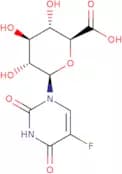
CAS :<p>5-Fluorouracil N-b-D-glucuronide is the major metabolite of 5-fluorouracil. It is mainly excreted in urine and bile, and has a high blood level. The glucuronide conjugate of 5-fluorouracin is hydrolyzed by beta-glucuronidase to generate 5-fluorouridine, which can be reabsorbed into the cell to form cytotoxic 5-fluoro uridine triphosphate. This process inhibits protein synthesis, leading to cell death. The half life of 5FU glucuronide is short and it needs to be constantly replaced with new doses. It has also been shown that levels of 5FU glucuronide are higher in tissues than in plasma, which may explain its inhibitory effect on tumors.</p>Formule :C10H11FN2O8Degré de pureté :Min. 95%Masse moléculaire :306.2 g/molN-(2-Deoxy-D-glucopyranosyl)-S-nitroso-N-acetyl-D,L-pencillamine
CAS :<p>N-(2-Deoxy-D-glucopyranosyl)-S-nitroso-N-acetyl-D,L-pencillamine is a custom synthesis of an Oligosaccharide. It is an unmodified saccharide with a CAS No. 188849-82-3. The chemical formula for this compound is C12H14N2O9 and its molecular weight is 368.24 g/mol. This compound has been synthesized using the Click modification, methylation, and fluorination techniques. N-(2-Deoxy-D-glucopyranosyl)-S-nitroso-N acetyl D,L pencillamine has a purity level of 95% or greater. This product has not been glycosylated or carbamoylated and does not contain any sugar moieties.</p>Formule :C13H23N3O8SDegré de pureté :Min. 95%Masse moléculaire :381.4 g/molPentaric acid
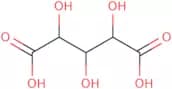
CAS :<p>Pentaric acid is a crystalline, monocarboxylic acid with a hydroxyl group. It is used as an inhibitor of corrosion in metal and as a disinfectant. Pentaric acid can be found in urine samples and has been shown to be an effective inhibitor of the enzymatic reaction that produces azobenzene, which is associated with the development of bladder cancer. This compound also inhibits the growth of bacteria. Pentaric acid is used as an additive in some detergents and soaps because it can inhibit the growth of bacteria on surfaces. <br>Pentaric acid was first synthesized by German chemist Otto Wohlert in 1834. Hydrogen ions are released when pentaric acid dissolves in water, lowering the pH level and causing corrosion to metal surfaces. The corrosion inhibition properties of pentaric acid have been known since its discovery, but its anti-bacterial properties were not discovered until recently when researchers found that pentar</p>Formule :C5H8O7Degré de pureté :Min. 95%Masse moléculaire :180.11 g/molD-Mannopyranose pentasulfate potassium
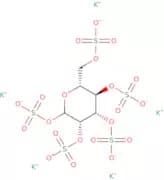
CAS :<p>D-Mannopyranose pentasulfate potassium salt is a synthetic carbohydrate with a saccharide backbone that has been fluorinated to introduce reactive sites. It is an oligosaccharide, which means it contains several sugar units linked together in a chain. This carbohydrate can be modified with methyl groups and glycosylations, and can have click modifications. This high purity product is suitable for use in a variety of applications, including as a custom synthesis or as a methylated glycosylated polysaccharide.</p>Formule :C6H12O21S5•KxDegré de pureté :Min. 95%Couleur et forme :White to off-white solid.Masse moléculaire :770.93 g/molMethyl L-rhamnopyranoside
CAS :<p>Methyl L-rhamnopyranoside is a sugar that is the product of the reaction between l-rhamnose and acetone. This compound has been used as a chiral building block for the synthesis of other sugars, such as D-arabinose and D-lyxose. The yield of this reaction depends on the concentration of potassium thioacetate and temperature. This compound can be obtained in two forms: (1) anomeric form, which is an intermediate in the synthesis of carbohydrates and (2) crystalline form, which is a white solid with melting point at 157.3°C. The anomeric form has a stereogenic center at carbon atom 3, whereas the crystalline form does not have any stereogenic centers. Methyl L-rhamnopyranoside also reacts with chlorination reagents to produce chlorinated derivatives, such as 2-chloro-3-(3′,4′-dimeth</p>Formule :C7H14O5Degré de pureté :Min. 95%Couleur et forme :PowderMasse moléculaire :178.18 g/molFucose 2-nitrophenylhydrazone
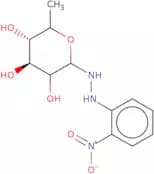
<p>Fucose 2-nitrophenylhydrazone is a custom synthesis that is a modification of fucose. It has been used in methylation, click modification, and fluorination. This compound has been shown to be effective in the synthesis of oligosaccharides and polysaccharides. Fucose 2-nitrophenylhydrazone has also been used as an intermediate for the synthesis of saccharides such as monosaccharide and sugar.</p>Formule :C12H17N3O6Degré de pureté :Min. 95%Masse moléculaire :299.111741,6-O-[(1R,2R)-1,2-Dimethoxy-1,2-dimethyl-1,2-ethanediyl]-3,4-O-[(1S,2S)-1,2-dimethoxy-1,2-dimethyl-1,2-ethanediyl]-5-benzoate-myo-i nositol
CAS :<p>1,6-O-[(1R,2R)-1,2-Dimethoxy-1,2-dimethyl-1,2-ethanediyl]-3,4-O-[(1S,2S)-1,2-dimethoxy-1,2-dimethyl-1,2-ethanediyl]-5-benzoate is an oligosaccharide with a complex structure. This chemical is fluorinated at the 1 and 6 positions of the glucose molecule. It has a total of 18 monosaccharides and two methyl groups. Its CAS number is 1068088-78-7. It has been shown to be synthesized by modifying the sugars with methylation or other chemical modifications. The molecular weight is 586.</p>Formule :C25H36O11Degré de pureté :Min. 95%Masse moléculaire :512.55 g/mol1,2,3,6-Tetra-O-galloylglucose
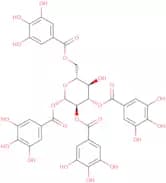
CAS :1,2,3,6-Tetra-O-galloylglucose is a biologically active compound that has been shown to have inhibitory effects on influenza virus and human pathogenic bacteria. It has also been shown to have anticomplementary activity and anti-infective properties against human pathogens. This molecule also exhibits anion radical scavenging activities and can be utilized as a natural antioxidant in food products. The ellagitannins found in this molecule are responsible for its antioxidant properties. 1) 6-Fluoro-3-indoxyl-beta-D-galactopyranoside (Rifapentine) Rifapentine is an antituberculosis drug that belongs to the class of rifamycins. It is the most active of the rifamycins for the treatment of tuberculosis. Rifapentine inhibits bacterial growth by binding to DNA-dependent RNA polymerase, thereby preventingFormule :C34H28O22Degré de pureté :Min. 95%Masse moléculaire :788.57 g/molImipramine N-b-D-glucuronide
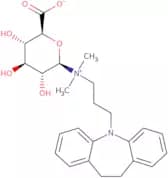
CAS :<p>Imipramine N-b-D-glucuronide is a metabolite of imipramine. Imipramine N-b-D-glucuronide is soluble in water and ethanol, but not in ether or chloroform. It has a molecular weight of 592.9 g/mol, and the CAS number is 165602-94-8. Imipramine N-b-D-glucuronide is soluble in water and ethanol, but not in ether or chloroform. It has a molecular weight of 592.9 g/mol, and the CAS number is 165602-94-8. Imipramine N-b-D-glucuronide can be modified with a click reaction to introduce fluorines at any desired position on the sugar molecule. This modification can be used for glycosylation studies as well as for fluorescent labeling of glycoconjugates for use in imaging studies.</p>Formule :C25H32N2O6Degré de pureté :Min. 95%Masse moléculaire :456.53 g/mol4-Deoxy-4-fluoro-D-galactopyranose
CAS :<p>4-Deoxy-4-fluoro-D-galactopyranose is a custom synthesis that is an oligosaccharide, polysaccharide, saccharide, and carbohydrate. It is fluorinated with a methyl group on the 4th carbon atom and has been modified to include a fluoro group at the 4th position of the molecule. 4-Deoxy-4-fluoro-D-galactopyranose can be used in research as it is high purity and has been modified into a monosaccharide sugar.</p>Degré de pureté :Min. 95%Gala1-2Gal-BSA
<p>Gala1-2Gal-BSA is a modified oligosaccharide with the chemical formula of C(3)H(6)O(4)n. It is a carbohydrate that can be synthesized from galactose and alpha-galactosyltransferase. Gala1-2Gal-BSA has been shown to have anti-cancer properties in vitro, but its mechanism of action is not known.</p>Degré de pureté :Min. 95%Ezetimibe hydroxy-b-D-glucuronide
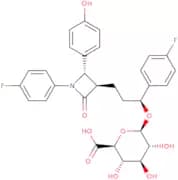
CAS :<p>Ezetimibe hydroxy-b-D-glucuronide is an oligosaccharide that can be synthesized from the modified sugar, L-glucuronic acid. It has a molecular weight of 536 and is soluble in water and methanol. This compound has been used in the synthesis of glycosides, saccharides, and polysaccharides. The chemical name for this compound is 1-(2-hydroxyethyl)-3-(((4'-carboxybenzyl)oxy)carbonyl)-2,6-diazaoctane glucuronide. Ezetimibe hydroxy-b-D-glucuronide has been shown to increase the absorption of cholesterol and decrease low density lipoprotein (LDL) levels in the blood by inhibiting intestinal cholesterol absorption.</p>Formule :C30H29F2NO9Degré de pureté :Min. 95%Masse moléculaire :585.55 g/mol



![1,6-O-[(1R,2R)-1,2-Dimethoxy-1,2-dimethyl-1,2-ethanediyl]-3,4-O-[(1S,2S)-1,2-dimethoxy-1,2-dimethy…](/_next/image/?url=https%3A%2Fstatic.cymitquimica.com%2Fproducts%2F3D%2Fthumb-webp%2FMD16693.webp&w=3840&q=75)