Glycosciences
La glycosciences est l'étude des glucides et de leurs dérivés, ainsi que des interactions et des fonctions biologiques auxquelles ils participent. Ce domaine de recherche est crucial pour comprendre une grande variété de processus biologiques, y compris la reconnaissance cellulaire, la signalisation, la réponse immunitaire et le développement des maladies. La glycosciences a des applications importantes en biotechnologie, en médecine et dans le développement de nouveaux médicaments et thérapies. Chez CymitQuimica, nous proposons une large sélection de produits de haute qualité et pureté pour la recherche en glycosciences. Notre catalogue comprend des monosaccharides, des oligosaccharides, des polysaccharides, des glyconjugués et des réactifs spécifiques, conçus pour soutenir les chercheurs dans leurs études sur la structure, la fonction et les applications des glucides dans les systèmes biologiques. Ces ressources sont destinées à faciliter les découvertes scientifiques et les applications pratiques dans divers domaines des biosciences et de la médecine.
Sous-catégories appartenant à la catégorie "Glycosciences"
- Aminosucres(108 produits)
- Anticorps Glyco-Related(282 produits)
- Glycolipides(46 produits)
- Glycosaminoglycanes (GAGs)(55 produits)
- Glycosides(419 produits)
- Monosaccharides(6.622 produits)
- Oligosaccharides(3.682 produits)
- Polysaccharides(503 produits)
11041 produits trouvés pour "Glycosciences"
Trier par
Degré de pureté (%)
0
100
|
0
|
50
|
90
|
95
|
100
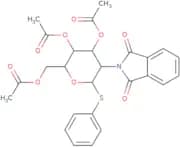
Phenyl-3,4,6-tri-O-acetyl-2-deoxy-2-phthalimido-b-D-thioglucopyranoside
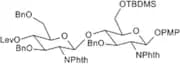
CAS :<p>Phenyl-3,4,6-tri-O-acetyl-2-deoxy-2-phthalimido-b-D-thioglucopyranoside is a glycosylation reagent that is used in the synthesis of complex carbohydrates. It reacts with an activated monosaccharide to form a glycosidic linkage between the sugar and the phenol group of the sugar. Phenyl 3,4,6 triacetate 2 deoxy 2 phthalimido B D thioglucopyranoside can be used for modifying polysaccharides and saccharides by fluorination or methylation. The compound has CAS No. 79528 49 7 and is available as custom synthesis. It is also available in high purity.</p>Degré de pureté :Min. 95%4-Methoxyphenyl 4-O-(3,6-di-O-benzyl-2-deoxy-4-O-levulinoyl-2-phthalimido-b-D-glucopyranosyl)-3-O-benzyl-6-O-tert-butyldimethylsilyl -2-deoxy-2-phthalimido-b-D-glucopyranoside
<p>4-Methoxyphenyl 4-O-(3,6-di-O-benzyl-2-deoxy-4-O-levulinoyl-2-phthalimido-b-D-glucopyranosyl)-3,6,3'-tri O -benzylidene -2,4′-(1,3,5) triazine -6,7′-[1,3]dioxane</p>Formule :C67H72N2O16SiDegré de pureté :Min. 95%Masse moléculaire :1,189.38 g/mol4-Nitrobenzyl 2,3,4,6-tetra-O-acetyl-b-D-thiogalactopyranoside
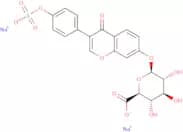
<p>4-Nitrobenzyl 2,3,4,6-tetra-O-acetyl-b-D-thiogalactopyranoside is a synthetic glycoside that can be used as the precursor to other carbohydrate derivatives. It is an efficient and economical method for the synthesis of 4-nitrobenzyl 2,3,4,6-tetra-O-acetyl-b-D-thiogalactopyranoside. This product has been shown to be stable in water and in organic solvents. The purity of this compound is greater than 99%.</p>Formule :C21H25NO11SDegré de pureté :Min. 95%Masse moléculaire :499.49 g/molDaidzein 7-b-D-glucuronide 4'-sulfate disodium salt
CAS :<p>Daidzein 7-b-D-glucuronide 4'-sulfate disodium salt (DAI) is a flavonoid that has significant antioxidant activity and is an inhibitor of the release of inflammatory cytokines. DAI has been shown to inhibit the production of necrotizing factor (NF)-κB and induce apoptosis in cultured dendritic cells. It also possesses anti-inflammatory properties, which may be due to its ability to inhibit phagocytosis and degranulation of mast cells. The major metabolites of DAI are glucuronides, sulfates, or sulfonates. These metabolites are excreted in urine and bile or hydrolyzed back into DAI by various enzymes such as esterases or glucuronidases.</p>Formule :C21H16Na2O13SDegré de pureté :Min. 95%Masse moléculaire :554.39 g/molMethyl b-D-thioxylopyranoside
CAS :<p>Methyl b-D-thioxylopyranoside is a synthetic sugar that is used in the synthesis of saccharides and oligosaccharides. It is also used to modify saccharides, such as glucosamine, by adding methyl groups to the sugar's hydroxyl group. Methyl b-D-thioxylopyranoside can be used for glycans with high purity and high yield. This product does not contain any other substances except for water and ethanol. The chemical formula for this product is C6H8O6.</p>Degré de pureté :Min. 95%Ivermectin monosaccharide
CAS :<p>Ivermectin monosaccharide is a molecule that has been shown to have an inhibitory effect on the uptake of glucose by cyathostomes. This molecule does not bind to inulin, but it does bind to the receptor binding site for ivermectin. Ivermectin monosaccharide has been shown to have a high affinity for the receptor binding site and can be used as an alternative method for detecting low concentrations of ivermectin.</p>Formule :C41H62O11Degré de pureté :Min. 95%Masse moléculaire :730.92 g/molMan-2a N-Glycan
CAS :<p>Man-2a N-glycan is a modification of the oligosaccharide mannose that is an important component of many glycoproteins. This product can be custom synthesized, and has been shown to have high purity. It is a carbohydrate that contains a monosaccharide and a polysaccharide. The glycan may also contain methylation, glycosylation, or fluorination. It has CAS No. 491845-49-9, which is the number assigned by the Chemical Abstracts Service (CAS) division of the American Chemical Society to identify substances.</p>Formule :C28H48N2O21Degré de pureté :Min. 95%Masse moléculaire :748.68 g/molButyl 2-acetamido-2-deoxy-b-D-glucopyranoside
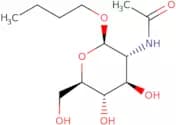
CAS :<p>Butyl 2-acetamido-2-deoxy-β-D-glucopyranoside is a photosynthetic organism that functions as an anti-EGFR antibody. It binds to the EGFR receptor on cancer cells and blocks its activation, preventing tumor growth. This product has been shown to be effective against a wide variety of cancers, including lung, breast, head and neck, ovarian, prostate and bladder cancers.</p>Formule :C12H23NO6Degré de pureté :Min. 95%Masse moléculaire :277.31 g/mol5-(2-Hydroxyethyl)-2'-deoxyuridine
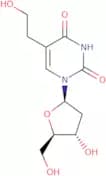
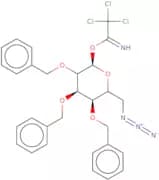
CAS :<p>5-(2-Hydroxyethyl)-2'-deoxyuridine is a regiospecific inhibitor of the enzyme thymidylate synthase. This drug inhibits the synthesis of thymine and uracil, which are used in DNA replication. 5-(2-Hydroxyethyl)-2'-deoxyuridine binds to the carbon chain of uracil, preventing its incorporation into DNA. 5-(2-Hydroxyethyl)-2'-deoxyuridine has been shown to be an effective inhibitor of thymidylate synthase in both prokaryotic and eukaryotic cells. The mechanism of action is thought to be competitive inhibition with respect to substrate binding at the active site of the enzyme. 5-(2-Hydroxyethyl)-2'-deoxyuridine can be synthesized by reacting acrylonitrile with 5-iodouridine chloride, followed by elimination reactions with methylene chloride or thionyl chloride. The product can then be</p>Formule :C11H16N2O6Degré de pureté :Min. 95%Couleur et forme :PowderMasse moléculaire :272.25 g/mol6-Azido-2,3,4-tri-O-benzyl-6-deoxy-a-D-mannopyranosyl trichloroacetimidate
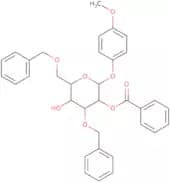
<p>6-Azido-2,3,4-tri-O-benzyl-6-deoxy-a-D-mannopyranosyl trichloroacetimidate (6A2TB) is a synthetic glycosylation reagent that is used in the synthesis of complex carbohydrates. It can be used in Click chemistry to introduce an azide group onto an alpha carbon. This reaction requires the presence of a copper catalyst and is very selective. 6A2TB is also useful for modification of saccharides with fluorination or methylation reactions.<br>This product has been demonstrated to have high purity and can be custom synthesized to meet customer specifications.</p>Formule :C29H29Cl3N4O5Degré de pureté :Min. 95%Masse moléculaire :619.92 g/mol4-Methoxyphenyl 2-O-benzoyl-3,6-di-O-benzyl-b-D-glucopyranoside
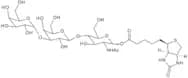
CAS :<p>4-Methoxyphenyl 2-O-benzoyl-3,6-di-O-benzyl-b-D-glucopyranoside is a mutant that has been identified in patients with cirrhosis. This variant is characterized by a transition from G to T at nucleotide position 1 of the coding region, which encodes for methionine at amino acid position 5. The mutant allele was found to be present in 53% of patients who had undergone abdominal ultrasonography and had liver cancer. In laboratory tests, this mutant demonstrated increased sensitivity to azide and an increased susceptibility to hepatoma. This variant has also been shown to be associated with an increased risk of developing cancer.</p>Formule :C34H34O8Degré de pureté :Min. 95%Masse moléculaire :570.63 g/molGala1-3Galb1-4GlcNAcb1-3Galb1-4Glc
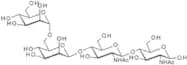
CAS :<p>Methylated glycans are carbohydrate-based molecules that are modified by the addition of a methyl group. These modifications can be used for many purposes, including as probes for enzymatic reactions and to block or enhance specific cell surface receptors. The modification is often done with a click chemistry reaction, which is a fast and efficient method that can also be used to modify other compounds such as proteins. Methylation of glycans is often done in the lab using methylamine gas, but it can also be accomplished through more complex methods like click chemistry or fluorination. Glycosylation is the process of adding sugars to other molecules and is one way to produce methylated glycans. Galactosamine (GalN) is an example of a monosaccharide that can be methylated and glycosylated, producing galactose-N-methyltransferase (Gal1MT) and Gal1M3GnT1. This product has been synthesized in</p>Formule :C32H55NO26Degré de pureté :Min. 95%Masse moléculaire :869.77 g/molHyaluronate biotin - Molecular Weight - 750kDa
<p>Hyaluronate biotin is a custom synthesis of 750kDa. It has been modified with fluorination, methylation and click modification. This product is a glycosylation of saccharide, which is a carbohydrate that can be found in many foods and is used as a sweetener. The saccharides are complex carbohydrates that consist of long chains of monosaccharides or simple sugars. Click modification is the process by which a small molecule, usually an azide group or nitrenium ion, reacts with an electron-deficient alkyne group to produce a new covalent bond without breaking either existing bond.</p>Degré de pureté :Min. 95%Biotinylated Linear B trisaccharide
<p>Blood group B antigen trisaccharide conjugated to Biotin</p>Formule :C30H49N3O18SDegré de pureté :Min. 95%Masse moléculaire :771.79 g/molα-Man-PEG3-Amine
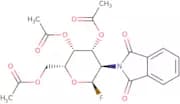
CAS :<p>Please enquire for more information about α-Man-PEG3-Amine including the price, delivery time and more detailed product information at the technical inquiry form on this page</p>Formule :C12H25NO8Degré de pureté :Min. 95%Masse moléculaire :311.33 g/mol3,4,6-Tri-O-acetyl-2-deoxy-2-phthalimido-a-D-galactopyranosyl fluoride
CAS :<p>3,4,6-Tri-O-acetyl-2-deoxy-2-phthalimido-a-D-galactopyranosyl fluoride is a synthetic glycoside of anhydrogalactose. It is a white crystalline powder and is soluble in water. 3,4,6-Tri-O-acetyl-2-deoxygalactofuranose has been used to study the reaction of glycosides with fluorinating agents. This product can be custom synthesized.</p>Formule :C20H20FNO9Degré de pureté :Min. 95%Masse moléculaire :437.37 g/molL-Sorbosone
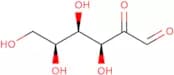
CAS :<p>L-Sorbosone is an antioxidant that can be used as a food additive or dietary supplement. It has been shown to have antioxidative properties and has the ability to inhibit oxidation reactions. The optimum concentration of L-sorbosone is 0.1 milligrams per liter and it is effective at inhibiting chemical reactions in a wide range of pH levels, from 2 to 8. L-Sorbosone belongs to the genus sorbose, which is a sugar alcohol that does not contain an aldehyde group. It also converts sorbose into dehydroascorbic acid and inhibits the enzyme activities of two important enzymes involved in cell culture, namely glutathione reductase and cytochrome p450, which are necessary for maintaining cellular redox balance.</p>Formule :C6H10O6Degré de pureté :Min. 95%Masse moléculaire :178.14 g/molD-Xylulose 5-phosphate lithium
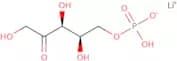
CAS :<p>D-Xylulose 5-phosphate lithium salt is a chiral ester that is used in the synthesis of natural products. It has been shown to be a potent inhibitor of bacterial growth and its use as an antibiotic may be limited due to its toxicity in humans. D-Xylulose 5-phosphate lithium salt can inhibit the functions of many enzymes, such as escherichia coli β-glucosidase and cerevisiae α-amylase. This compound inhibits microbial growth and is used to produce monosaccharides from long chain polysaccharides through enzymatic hydrolysis pathways. D-Xylulose 5-phosphate lithium salt also inhibits the production of human metabolites. The enzyme activities of this compound are monitored by measuring the levels of glucose, lactate, pyruvate, acetate, and ethanol in serum samples taken at different time intervals after administration.</p>Formule :C5H11O8P•LixDegré de pureté :Min. 95%Masse moléculaire :230.11 g/mol3,4-O-[(1R,2R)-1,2-Dimethoxy-1,2-dimethyl-1,2-ethanediyl]-1,6-O-[(1S,2S)-1,2-dimethoxy-1,2-dimethyl-1,2-ethanediyl]-D-myo-inositol
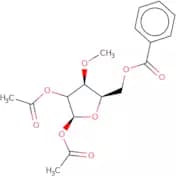
CAS :<p>3,4-O-[(1R,2R)-1,2-Dimethoxy-1,2-dimethyl-1,2-ethanediyl]-1,6-O-[(1S,2S)-1,2-dimethoxy-1,2-dimethyl-1,2-ethanediyl]-D-myo-inositol is a synthetic carbohydrate with the CAS number 176798-27-9. It is a polysaccharide that can be modified by methylation and glycosylation. The modification of saccharides is achieved by the use of click chemistry. This product is a complex carbohydrate with a high purity and fluorination.</p>Formule :C18H32O10Degré de pureté :Min. 95%Masse moléculaire :408.44 g/mol1,2-O-Di-O-acetyl-5-O-benzoyl-3-O-methyl-D-ribofuranose
CAS :<p>1,2-O-Di-O-acetyl-5-O-benzoyl-3-O-methyl -D-ribofuranose is a custom synthesis of a fluorinated sugar. It has been modified through fluorination at the C5 position and methylation at the O1 and O2 positions. This product can be used in the synthesis of oligosaccharides and saccharides that are glycosylated with sugars.</p>Formule :C17H20O8Degré de pureté :Min. 95%Masse moléculaire :352.34 g/mol




![3,4-O-[(1R,2R)-1,2-Dimethoxy-1,2-dimethyl-1,2-ethanediyl]-1,6-O-[(1S,2S)-1,2-dimethoxy-1,2-dimethy…](/_next/image/?url=https%3A%2Fstatic.cymitquimica.com%2Fproducts%2F3D%2Fthumb-webp%2FMD16692.webp&w=3840&q=75)