Glycosciences
La glycosciences est l'étude des glucides et de leurs dérivés, ainsi que des interactions et des fonctions biologiques auxquelles ils participent. Ce domaine de recherche est crucial pour comprendre une grande variété de processus biologiques, y compris la reconnaissance cellulaire, la signalisation, la réponse immunitaire et le développement des maladies. La glycosciences a des applications importantes en biotechnologie, en médecine et dans le développement de nouveaux médicaments et thérapies. Chez CymitQuimica, nous proposons une large sélection de produits de haute qualité et pureté pour la recherche en glycosciences. Notre catalogue comprend des monosaccharides, des oligosaccharides, des polysaccharides, des glyconjugués et des réactifs spécifiques, conçus pour soutenir les chercheurs dans leurs études sur la structure, la fonction et les applications des glucides dans les systèmes biologiques. Ces ressources sont destinées à faciliter les découvertes scientifiques et les applications pratiques dans divers domaines des biosciences et de la médecine.
Sous-catégories appartenant à la catégorie "Glycosciences"
- Aminosucres(108 produits)
- Anticorps Glyco-Related(282 produits)
- Glycolipides(46 produits)
- Glycosaminoglycanes (GAGs)(55 produits)
- Glycosides(419 produits)
- Monosaccharides(6.622 produits)
- Oligosaccharides(3.682 produits)
- Polysaccharides(503 produits)
11041 produits trouvés pour "Glycosciences"
Trier par
Degré de pureté (%)
0
100
|
0
|
50
|
90
|
95
|
100
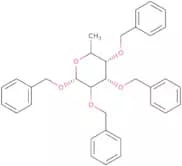
1,2,3,4-Tetra-O-benzyl-L-rhamnopyranoside
CAS :<p>Tetra-O-benzyl-L-rhamnopyranoside is a modification of L-rhamnopyranoside, an oligosaccharide with the formula CHO. It is a complex carbohydrate that can be synthesized from monosaccharides and polysaccharides. Tetra-O-benzyl-L-rhamnopyranoside is a high purity, custom synthesis, and synthetic product. The product is soluble in water and has a sweet taste. Tetra-O-benzyl-L-rhamnopyranoside is used in the synthesis of saccharides, glycosylation, methylation, fluorination, and click chemistry reactions.</p>Formule :C34H36O5Degré de pureté :Min. 95%Masse moléculaire :524.65 g/molMan-2b N-Glycan
CAS :<p>Man-2b N-glycan is an acidic glycoprotein that is synthesized in the endoplasmic reticulum of mammalian cells. It is a precursor to the oligosaccharide terminal sugar, which connects the glycan to protein. Man-2b N-glycan plays an important role in metabolic disorders such as renal proximal tubule dysfunction and metabolic acidosis by regulating protein synthesis. The Man-2b N-glycan mutation has been shown to lead to changes in cell surface proteins and metabolism, which can be modeled using a glycosylation mutant strain of yeast.</p>Formule :C28H48N2O21Degré de pureté :Min. 95%Masse moléculaire :748.68 g/molAzo-Xyloglucan
<p>Dyed and soluble azo-xyloglucan (tamarind) is used for the measurement of enzyme activity, research, biochemical enzyme assays and in vitro diagnostic analysis. It is a soluble chromogenic substrate for the assaying of endo-cellulase.</p>Degré de pureté :Min. 95%a1,6-Mannobiose-BSA
<p>a1,6-Mannobiose-BSA is a fluorinated monosaccharide that has been synthesized from mannose. It is a synthetic oligosaccharide that is used in glycosylation and polysaccharide modification. The compound has been modified with methyl groups and has undergone click chemistry to produce a reactive site on the sugar ring. This product has been synthesized using high purity reagents and has CAS No. 73978-99-2.</p>Degré de pureté :Min. 95%N-(e-Aminocaproyl)-b-D-galactopyranosyl amine
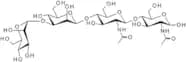
CAS :<p>N-(e-Aminocaproyl)-b-D-galactopyranosyl amine is a fluorinated monosaccharide with a complex carbohydrate structure that has been synthesized by custom synthesis. This product is used for glycosylation, polysaccharide modification, and click chemistry. It has been shown to be a high purity product with CAS No. 38822-56-9 and can be methylated or fluorinated.</p>Formule :C12H24N2O6Degré de pureté :Min. 95%Couleur et forme :SolidMasse moléculaire :292.33 g/molNeu5Acα(2-6)Galβ(1-4)GlcNAc-β-ethylamine
CAS :<p>Neu5Acα(2-6)Galβ(1-4)GlcNAc-β-ethylamine is a glycosylation agent that is used to modify complex carbohydrates, such as polysaccharides and oligosaccharides. This product is a custom synthesis, which may be modified according to customer specifications. These modifications include methylation, click modification, fluorination, and saccharide modification. The desired purity of this product can be determined by the level of fluorescence in the solution.</p>Formule :C27H47N3O19•NaDegré de pureté :Min. 95%Masse moléculaire :740.66 g/molTetradecasaccharide dp14
<p>Tetradecasaccharide dp14 is a custom-synthesized, fluorinated, methylated, and modified saccharide. Tetradecasaccharide dp14 has been shown to have a variety of biological activities that are dependent on the type of modification. For example, this compound inhibits the enzyme alpha-glucosidase in vitro and in vivo. This enzyme is responsible for breaking down complex carbohydrates into simple sugars. Tetradecasaccharide dp14 also has anti-inflammatory properties and can be used as an antifungal agent against Candida albicans.</p>Formule :C84H217N35O133S21Degré de pureté :Min. 95%Masse moléculaire :4,519.16 g/molMono(6-ethanediamine-6-deoxy)-β-cyclodextrin
CAS :<p>This beta-cyclodextrin (β-CD) derivative is a functionalized cyclic oligosaccharide composed of seven glucose units, characterized by a hydrophilic exterior and a lipophilic cavity (bigger than α-CD and smaller than γ-CDs), which allows it to encapsulate various guest molecules. This structural feature facilitates its use in multiple applications, including pharmaceuticals, food enhancement, and cosmetics. In the pharmaceutical industry, it enhances the solubility and stability of poorly water-soluble drugs, improving their bioavailability and efficacy while also masking unpleasant tastes. The food sector utilizes it as a stabilizer for flavors, colors, and nutrients, extending shelf life by protecting sensitive ingredients from degradation. In cosmetics, it serves as a complexing agent for fragrances and active components, ensuring their stability and controlled release. Its use expands to many other fields, including nanotechnology for drug delivery systems, environmental remediation for extracting organic pollutants, textiles for slow-release fragrances, and analytical chemistry for chiral separation.</p>Formule :C44H76N2O34Degré de pureté :Min. 95%Masse moléculaire :1,177.1 g/molEthyl-3,6-di-O-benzoyl-2-trifluoromethanesulfonyl-4-O-(2,3,4,6-tetra-O-acetyl-b-D-galactopyranosyl)-b-D-mannopyranoside
CAS :<p>Ethyl-3,6-di-O-benzoyl-2-trifluoromethanesulfonyl-4-O-(2,3,4,6-tetra-O-acetyl-b-D-galactopyranosyl)-b-D-mannopyranoside is a synthetic modified oligosaccharide that has been fluorinated. It is a complex carbohydrate that has a CAS number of 1008750-65-9. The modification of the monosaccharides in this product are methylation and click modification.</p>Formule :C37H41F3O19SDegré de pureté :Min. 95%Masse moléculaire :878.77 g/molXyloglucan
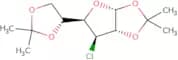
CAS :<p>Xyloglucans are members of a group of polysaccharides typically refered to as hemicelluloses. Hemicelluloses are plant cell wall polysaccharides that are not solubilized by water but are solubilized by aqueous alkali (e.g. 1 and 4M KOH). Other hemicellulosic polysaccharides include xylan, glucuronoxylan, arabinoxylan, mannan, glucomannan and galactoglucomannan. Hemicelluloses have a backbone of 1,4-linked β-D-pyranosyl residues in which O4 is in the equatorial orientation (e.g. Glc, Man, and Xyl). Xyloglucan is the predominant hemicellulose in the primary walls of dicots and non-graminaceous monocots and may account for up to 20% of the dry weight of the primary wall. Xyloglucan has a backbone composed of 1,4-linked β-D-Glcp residues. Up to 75% of these residues are substituted at O6 with mono-, di-, or triglycosyl side chains.</p>Degré de pureté :(Dry Basis) Min. 95%Couleur et forme :Powder3-Chloro-3-deoxy-1,2:5,6-di-O-isopropylidene-a-D-glucofuranose
CAS :<p>3-Chloro-3-deoxy-1,2:5,6-di-O-isopropylidene-a-D-glucofuranose is a monosaccharide that is used as an intermediate in the synthesis of complex carbohydrates. It is synthesized by the Click reaction of 3,4,5,6,-tetrachlorohexanoic acid with 2,3:5,6-diisopropylidene glucose. This product has been modified by fluorination and saccharide modification. Custom synthesis can be performed on this product to produce any desired oligosaccharides or polysaccharides. The purity of this product is >98%.</p>Formule :C12H19ClO5Degré de pureté :Min. 95%Masse moléculaire :278.73 g/mol1-O-Oleoyl-2-O-acetyl-3-O-(b-D-galactopyranosyl) syn-glycerol
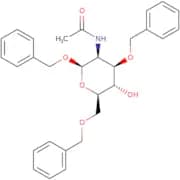
<p>1-O-Oleoyl-2-O-acetyl-3-O-(b-D-galactopyranosyl) syn-glycerol is a complex carbohydrate that is custom synthesized for use in modification reactions. It has been shown to be compatible with a variety of other saccharides and can be methylated, glycosylated, or fluorinated. This product is available in high purity and can be ordered as either a monosaccharide or a polysaccharide.</p>Formule :C29H52O10Degré de pureté :Min. 95%Masse moléculaire :560.72 g/molBenzyl 2-acetamido-3,6-di-O-benzyl-2-deoxy-b-D-glucopyranoside
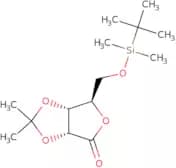
CAS :<p>Benzyl 2-acetamido-3,6-di-O-benzyl-2-deoxy-b-D-glucopyranoside is a glycosylation reagent that has been modified with the Click reaction. This product is a white powder that is soluble in water. It has a molecular weight of 637.3 and an assay of 99% by HPLC.</p>Degré de pureté :Min. 95%5-O-tert-Butyldimethylsilyl-2,3-O-isopropylidene-D-ribono-1,4-lactone
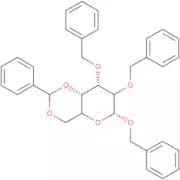
CAS :<p>5-O-tert-Butyldimethylsilyl-2,3-O-isopropylidene-D-ribono-1,4-lactone is a synthetic sugar. It is an intermediate used in the synthesis of oligosaccharides and saccharides. 5-O-tert-Butyldimethylsilyl-2,3-O-isopropylidene lactone is also used for click chemistry modifications for complex carbohydrates. The chemical compound is soluble in water and has high purity. This product does not contain any other substances that may be harmful to humans or the environment.</p>Formule :C14H26O5SiDegré de pureté :Min. 95%Masse moléculaire :302.44 g/mol1,2,3-Tri-O-benzyl-4,6-O-benzylidene-b-D-galactopyranose
CAS :<p>1,2,3-Tri-O-benzyl-4,6-O-benzylidene-b-D-galactopyranose is a saccharide that is used as a building block for the synthesis of oligosaccharides and polysaccharides. It has been modified with fluorination, methylation, and click chemistry. 1,2,3-Tri-O-benzyl-4,6-O-benzylidene-b-D-galactopyranose is CAS No. 57783–80–9. This product can be custom synthesized to meet your needs.</p>Formule :C34H34O6Degré de pureté :Min. 95%Masse moléculaire :538.63 g/mol1,2-Dipalmitoyl-sn-glycero-3-phospho-(1'-myoinositol-4'-phosphate)
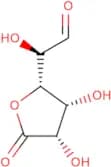
CAS :<p>1,2-Dipalmitoyl-sn-glycero-3-phospho-(1'-myoinositol-4'-phosphate) is a lipid kinase that has been shown to be localized in the cytoplasm. This enzyme is activated by receptor activity and autophagy, and plays a role in protein transport. It also activates phosphatase activity which regulates the actin cytoskeleton, and can be regulated by insulin-stimulated glucose levels. 1,2-Dipalmitoyl-sn-glycero-3-phospho-(1'-myoinositol-4'-phosphate) has been shown to have a regulatory function in epidermal growth factor (EGF)-induced cell proliferation. The physiological function of this enzyme is not yet known.</p>Formule :C41H80O16P2Degré de pureté :Min. 95%Masse moléculaire :891.01 g/molD-Glucofuranuronic acid,γ-lactone,1,6-13C2
CAS :<p>D-Glucofuranuronic acid,gamma-lactone,1,6-13C2 is an organic compound that is a glycosidic acid with a uronic acid group. It is composed of a hydrocarbon group and an acetylated d-xylose. This compound has been shown to have inhibitory activities against glycosidases and glycoside hydrolases. D-Glucofuranuronic acid,gamma-lactone,1,6-13C2 is synthesized by the reaction of trifluoroacetic acid with glyceraldehyde in the presence of water and an acid catalyst. It can be used as medicine for treating blood sugar levels but should not be taken in conjunction with other medicines because it inhibits their absorption.</p>Formule :C2C4H8O6Degré de pureté :Min. 95%Masse moléculaire :178.12 g/molTeichuronic acid
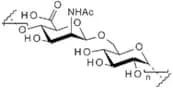
CAS :<p>Teichuronic acid is isolated from the cell walls of Micrococcus luteus. The structure has been elucidated as [ManNAcUAp-(β-1,6)-Glcp-(α -1,4)]n.</p>Degré de pureté :Min. 95%Scopoletin b-D-glucuronide
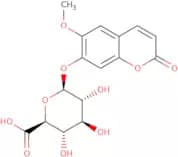
CAS :<p>Scopoletin b-D-glucuronide is a synthetic compound that is modified by the addition of a fluorine atom to the methyl group in scopoletin. Scopoletin b-D-glucuronide has shown antiviral activity against herpes simplex virus type 1 and 2, with an IC50 value of 1.6 μM. It also has antiviral activity against HIV type 1 and HIV type 2, with an IC50 value of 0.5 μM. This compound also inhibits viral DNA synthesis, which may be due to its inhibition of host cell protein synthesis and subsequent inhibition of viral protein synthesis. Scopoletin b-D-glucuronide has been shown to have anti-inflammatory effects in a mouse model for rheumatoid arthritis, and it may be due to its suppression of prostaglandin synthesis or interference with leukocyte chemotaxis.</p>Formule :C16H16O10Degré de pureté :Min. 95%Masse moléculaire :368.29 g/mol2-Deoxy-2-fluoro-2-C-methyl-D-ribofuranose
<p>2-Deoxy-2-fluoro-2-C-methyl-D-ribofuranose is a carbohydrate that contains a single sugar (monosaccharide) with the chemical formula C5H8O4. This compound is a synthetic monosaccharide that has been modified by fluorination, methylation, and glycosylation. It is often used in custom synthesis to create oligosaccharides or complex carbohydrates. 2DFFR can be ordered in high purity and has CAS No. 59737-89-7.</p>Degré de pureté :Min. 95%