Glycosciences
La glycosciences est l'étude des glucides et de leurs dérivés, ainsi que des interactions et des fonctions biologiques auxquelles ils participent. Ce domaine de recherche est crucial pour comprendre une grande variété de processus biologiques, y compris la reconnaissance cellulaire, la signalisation, la réponse immunitaire et le développement des maladies. La glycosciences a des applications importantes en biotechnologie, en médecine et dans le développement de nouveaux médicaments et thérapies. Chez CymitQuimica, nous proposons une large sélection de produits de haute qualité et pureté pour la recherche en glycosciences. Notre catalogue comprend des monosaccharides, des oligosaccharides, des polysaccharides, des glyconjugués et des réactifs spécifiques, conçus pour soutenir les chercheurs dans leurs études sur la structure, la fonction et les applications des glucides dans les systèmes biologiques. Ces ressources sont destinées à faciliter les découvertes scientifiques et les applications pratiques dans divers domaines des biosciences et de la médecine.
Sous-catégories appartenant à la catégorie "Glycosciences"
- Aminosucres(108 produits)
- Anticorps Glyco-Related(282 produits)
- Glycolipides(46 produits)
- Glycosaminoglycanes (GAGs)(55 produits)
- Glycosides(419 produits)
- Monosaccharides(6.622 produits)
- Oligosaccharides(3.682 produits)
- Polysaccharides(503 produits)
11042 produits trouvés pour "Glycosciences"
Trier par
Degré de pureté (%)
0
100
|
0
|
50
|
90
|
95
|
100
a-D-[2-13C]-Galactopyranosyl 1-phosphate dipotassium salt
CAS :<p>a-D-[2-13C]-Galactopyranosyl 1-phosphate dipotassium salt is a synthetic, fluorinated monosaccharide. It is used as a fluorine probe for glycosylation reactions and for the synthesis of oligosaccharides with novel properties. This product is also used in click chemistry to attach methyl groups to sugars and in methylation studies.</p>Formule :C6H13O9P·2KDegré de pureté :Min. 95%Couleur et forme :PowderMasse moléculaire :339.33 g/molHeparin derived dp24 saccharide ammonium salt
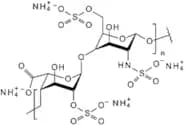
<p>Heparin derived dp24 saccharide ammonium salt is a complex carbohydrate and a saccharide. It is used for the modification of polysaccharides and oligosaccharides. The compound has been shown to reduce blood coagulation by preventing the binding of calcium ions to thrombin, which then blocks the conversion of fibrinogen to fibrin. Heparin derived dp24 saccharide ammonium salt has high purity and can be custom synthesized with high quality. The compound is also methylated, glycosylated, or click-modified.</p>Degré de pureté :Min. 95%Couleur et forme :White to yellow solid.Masse moléculaire :Average 68506-o-Benzyl D-mannose
CAS :Please enquire for more information about 6-o-Benzyl D-mannose including the price, delivery time and more detailed product information at the technical inquiry form on this pageFormule :C12H16O6Degré de pureté :Min. 95%Masse moléculaire :256.25 g/molb-Maltosyl azide
CAS :<p>b-Maltosyl azide is a glycosylation reagent that is used in the synthesis of complex carbohydrates, saccharides, and oligosaccharides. It has been shown to be an efficient methylation agent for alcohols and phenols, as well as a good fluorinating agent for alcohols. b-Maltosyl azide can be used to modify sugars with Click chemistry and polysaccharides with fluorination. This compound is also commonly used for custom synthesis of saccharides, oligosaccharides, and monosaccharides.</p>Formule :C12H21N3O10Degré de pureté :Min. 95%Masse moléculaire :367.3 g/molGM1-Ganglioside labelled by biotin
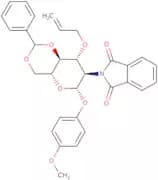
<p>GM1-biotin ganglioside (sodium salt) has a core tetrasaccharide structure (Galβ1,3GalNAcβ1,4Galβ1,4Glc) with sialic acid linked α2,3 to the inner galactose residue, ceramide linked β to position 1 on the reducing terminal glucose residue, and biotin to position 5 on sialic acid (Ledeen, 2009). GM1 ganglioside is abundant in all mammalian brains where it covers 10%-20% of the total ganglioside mixture. It is found in epithelial membranes and is a key element for bacterial toxicity and viral infection as it is the intestinal receptor for the cholera toxin, the B-subunits of heat-labile toxin, rotavirus, and simian virus 40. GM1 ganglioside functions as a neurotrophic and neuroprotective compound, and has been used therapeutically for diabetic and peripheral neuropathies. GM1 ganglioside also has the ability to bind amyloid-β proteins and is involved in Alzheimerâs pathogenesis (Chiricozzi, 2020).</p>Formule :C71H122N6O33SDegré de pureté :Min. 95%Masse moléculaire :1,619.82 g/mol4-Methoxyphenyl 3-O-allyl-4,6-O-benzylidene-2-deoxy-2-phthalimido-b-D-glucopyranoside
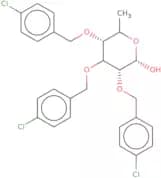
CAS :<p>4-Methoxyphenyl 3-O-allyl-4,6-O-benzylidene-2-deoxy-2-phthalimido-b-D-glucopyranoside (BAP) is a phosphatase inhibitor. It binds to the active site of the enzyme phosphatase and prevents it from hydrolyzing phosphate esters. BAP is used to prevent the release of calcium ions from bone, which can lead to osteitis fibrosa cystica in patients with esophagectomy or those who have undergone abdominal surgery. Thermodynamic studies indicate that BAP binds to phosphatases with a 1:1 stoichiometry and that this binding is irreversible.</p>Formule :C31H29NO8Degré de pureté :Min. 95%Masse moléculaire :543.56 g/mol2,3,5-Tri-O-p-chlorobenzyl-L-fucopyranoside
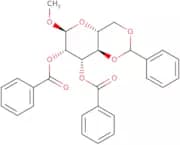
CAS :<p>2,3,5-Tri-O-p-chlorobenzyl-L-fucopyranoside is a modified sugar and an effective inhibitor of the glycosidase enzymes. It has been shown to inhibit the synthesis of glycogen in vitro. 2,3,5-Tri-O-p-chlorobenzyl-L-fucopyranoside is a major component of commercially available agarose gel electrophoresis buffers and is also used for modification of proteins by click chemistry. The compound can be custom synthesised with a high degree of purity and can be fluorinated for use in mass spectrometry.</p>Formule :C27H27Cl3O5Degré de pureté :Min. 95%Masse moléculaire :537.86 g/molMethyl 2,3-di-O-benzoyl-4,6-O-benzylidene-a-D-mannopyranoside
CAS :<p>Methyl 2,3-di-O-benzoyl-4,6-O-benzylidene-a-D-mannopyranoside is a custom synthesized compound that has been modified with fluorination and methylation. It is a monosaccharide sugar that has been synthetically produced. The synthesis of this compound includes the click modification of the benzoyl group to introduce fluoro groups. Methyl 2,3-di-O-benzoyl 4,6 O benzylidene a D mannopyranoside is an oligosaccharide sugar that is glycosylated and polysaccharides. This compound is made up of complex carbohydrates and high purity for research purposes.</p>Formule :C28H26O8Degré de pureté :Min. 95%Masse moléculaire :490.51 g/mol1,2,3,4-Tetra-O-acetyl-a-D-galacturonic acid methyl ester
CAS :<p>1,2,3,4-Tetra-O-acetyl-a-D-galacturonic acid methyl ester is a custom synthesis that has been modified with fluorination and methylation. The monosaccharide is an acetylated form of galacturonic acid. This synthetic compound has been shown to be effective in inhibiting the glycosylation of polysaccharides. Its saccharide chain includes four monosaccharides linked by glycosidic bonds. 1,2,3,4-Tetra-O-acetyl-a-D-galacturonic acid methyl ester is used as a sugar in the production of complex carbohydrates.</p>Degré de pureté :Min. 95%Fulvestrant 3-b-D-glucuronide
CAS :<p>Fulvestrant 3-b-D-glucuronide is a synthetic hormone that has been modified with the Click chemistry. This modification allows for the attachment of saccharides, such as polysaccharides and oligosaccharides. The modification also provides protection against degradative enzymes, which may be useful in increasing drug stability in vivo. Fulvestrant 3-b-D-glucuronide can be custom synthesized to meet your requirements and specifications. It is a high purity product with a CAS number of 261506-27-8 and an appearance of white crystalline powder. Fulvestrant 3-b-D-glucuronide is a complex carbohydrate and sugar that can be used for methylation reactions or glycosylation reactions.</p>Formule :C38H55F5O9SDegré de pureté :Min. 95%Masse moléculaire :782.9 g/molMethyl 2,3,4,6-tetra-O-benzyl-D-mannopyranoside
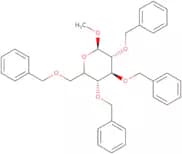
CAS :<p>Methyl 2,3,4,6-tetra-O-benzyl-D-mannopyranoside is a benzylated sugar that has been glycosidically linked to an amino acid. This product has been shown to be a contaminant in the synthesis of other compounds and can be used as a chloride or benzylating reagent. It is used in the preparation of glycosyl halides and condensations. Methyl 2,3,4,6-tetra-O-benzyl-D-mannopyranoside is also used in the synthesis of natural products such as flavones and alkaloids.</p>Formule :C35H38O6Degré de pureté :Min. 95%Masse moléculaire :554.67 g/molGalnacβ(1-3)GlcNAc-β-PNP
CAS :<p>Galnacβ(1-3)GlcNAc-β-PNP is a modification of galactose. Galnacβ(1-3)GlcNAc-β-PNP is used in the synthesis of complex carbohydrates, including oligosaccharides and polysaccharides. It is also used as a glycosylation or methylation site for the synthesis of sugar chains on proteins and glycoproteins. This product has been fluorinated to increase its stability and solubility in organic solvents.</p>Formule :C22H31N3O13Degré de pureté :Min. 95%Masse moléculaire :545.5 g/mol(2S, 4S, 4'R) [4,4'-bi-1,3-dioxolane]-2-methanol-2,2'-dimethyl
CAS :<p>2,4-Dioxolane is a synthetic compound with the molecular formula (2S, 4S, 4'R) [4,4'-bi-1,3-dioxolane]-2-methanol-2,2'-dimethyl. It was first synthesized in 1963 by C. L. Hedrick and coworkers at Eli Lilly and Company as a potential drug for the treatment of schizophrenia. The chemical structure of 2,4-dioxolane consists of two oxetanes linked together with an ether bond. In this molecule both hydroxyl groups are on the same side of the carbon chain.</p>Formule :C9H16O5Degré de pureté :Min. 95%Masse moléculaire :204.22 g/molMethyl 2-O-allyl-3-O-(2,3,4,6-tetra-O-acetyl-a-D-mannopyranosyl)-a-D-mannopyranoside
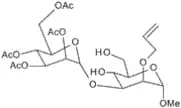
CAS :Methyl 2-O-allyl-3-O-(2,3,4,6-tetra-O-acetyl-a-D-mannopyranosyl)-a-D-mannopyranoside is a modification of the carbohydrate that is synthesized by an acetylation of the mannose residue. It has been synthesized as a potential therapeutic agent for cancer treatment. Methyl 2-O-allyl 3,4,6 tetra O acetyl a D mannoside (MAA) is an oligosaccharide which consists of three monosaccharides: mannose (1), allose (2) and glucose (3). The modification of MAA involves the addition of methyl groups to the allyl group on position 1. This modification can be done through fluorination or methylation. Methylated derivatives have shown anti tumor activity in vivo and in vitro studies. The complex carbohydrate has high purity andFormule :C24H36O15Degré de pureté :Min. 95%Masse moléculaire :564.53 g/mol3,4-Di-O-acetyl-1,6-anhydro-2-deoxy-2-fluoro-b-D-glucopyranose
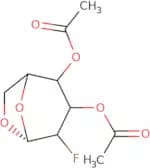
CAS :<p>3,4-Di-O-acetyl-1,6-anhydro-2-deoxy-2-fluoro-b-D-glucopyranose is a synthetic sugar that has been modified to include a fluorine atom. It is a complex carbohydrate that is used in the synthesis of glycosides. 3,4-Di-O-acetyl-1,6-anhydro-2,3 -difluoro b D glucopyranose can be used in the synthesis of an acetylated glycoside with click chemistry. This modification can be achieved through methylation and/or glycosylation reactions. 3,4 Di O acetyl 1,6 anhydro 2 deoxy 2 fluoro b D glucopyranose can also be used in the synthesis of oligosaccharides or saccharides by modifying either its glycone or reducing end.</p>Formule :C10H13FO6Degré de pureté :Min. 95%Masse moléculaire :248.21 g/molSialyl-dimeric Lex-nona-APD-HSA
<p>Sialyl-dimeric Lex-nona-APD-HSA is a monosaccharide that belongs to the group of complex carbohydrates. It is a custom synthesis product, which has been synthesized by the methylation and glycosylation of a high purity oligosaccharide. The structural formula for this product is C14H30FNO6S2. This product is highly purified and has been fluorinated at one hydroxyl group. Sialyl-dimeric Lex-nona-APD-HSA has CAS No. 569078-29-4 and molecular weight of 432.5 g/mol.br><br>br><br>This product can be used as a synthetic sugar in various applications such as food, pharmaceuticals, cosmetics, and agrochemicals industries.br><br>br><br>The following are some properties of this compound: <br>1) Nonvolatile solids content: 98%</p>Degré de pureté :Min. 95%CMP-Pseudaminic acid
<p>CMP-Pseudaminic acid is a chemical compound that belongs to the group of thuringiensis. It is biosynthesized by the action of enzymes, which catalyze the conversion of sialic acid to CMP-pseudaminic acid. This process is carried out in two steps. The first step involves a reaction between sialic acid and ATP and the second step entails an enzymatic reaction between CMP-pseudaminic acid and UDP-glucose. X-ray crystal structures have been obtained for both steps of this process, with the second step being more complex than the first. Chemical diversity has been observed in pseudaminics, with some being glycosylated while others are not. Analysis with spectrometry has shown that pseudaminics are highly o-glycosylated at their hydroxy groups and have high levels of carbon atoms as well as hydroxyl groups. Structural analysis has revealed that pseudaminics</p>Formule :C22H32N5O15PDegré de pureté :Min. 95%Masse moléculaire :637.49 g/mol3,4,6-Tri-O-acetyl-2-deoxy-2-phthalimido-D-glucopyranosyl bromide
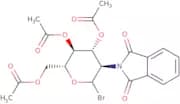
CAS :<p>3,4,6-Tri-O-acetyl-2-deoxy-2-phthalimido-D-glucopyranosyl bromide is a synthetic compound that has been used in the synthesis of glycosides and oligosaccharides. It can be used to prepare an artificial sugar with a click modification. The chemical structure consists of three acetyl groups on the 2′ position on the sugar ring, which may be methylated or fluorinated. The compound is insoluble in water and melts at 161°C. 3,4,6-Tri-O-acetyl-2-deoxy-2-phthalimido-D-glucopyranosyl bromide is classified as a carbohydrate and is soluble in alcohols, ethers, and chloroform.</p>Formule :C20H20BrNO9Degré de pureté :Min. 95%Masse moléculaire :498.28 g/molD-Xylose-BSA
<p>D-Xylose-BSA is an anaesthetic agent that is used to treat depression and postoperative pain. It is a natural compound that has been found in the blood cells of humans and animals. D-Xylose-BSA interacts with endogenous receptors for biotinylated D-xylose on granulocytes, which leads to activation of these cells and consequent release of inflammatory mediators. The ability of D-xylose-BSA to bind to microbial surfaces may be due to its chemical structure, which consists of a glycosilated hydrophilic part and a lipid part. D-Xylose-BSA also binds to polymorphonuclear leukocytes, postoperative erythrocytes, and replanted skin grafts.</p>Degré de pureté :Min. 95%Decasaccharide dp10
<p>Decasaccharide dp10 is a complex carbohydrate that is made up of ten monosaccharides. It is a synthetic oligosaccharide that has been fluorinated and glycosylated. The decasaccharide has been synthesized using click chemistry and methylation, before being purified to produce a high-purity product. Decasaccharide dp10 can be used in the modification of complex carbohydrates, as well as for the synthesis of glycans with customized structures.</p>Formule :C60H155N25O95S15Degré de pureté :Min. 95%Masse moléculaire :3,227.97 g/mol
![a-D-[2-13C]-Galactopyranosyl 1-phosphate dipotassium salt](/_next/image/?url=https%3A%2Fstatic.cymitquimica.com%2Fproducts%2F3D%2Fthumb-webp%2FMG138862.webp&w=3840&q=75)





![(2S, 4S, 4'R) [4,4'-bi-1,3-dioxolane]-2-methanol-2,2'-dimethyl](/_next/image/?url=https%3A%2Fstatic.cymitquimica.com%2Fproducts%2F3D%2Fthumb-webp%2FMM44925.webp&w=3840&q=75)