Glycosciences
La glycosciences est l'étude des glucides et de leurs dérivés, ainsi que des interactions et des fonctions biologiques auxquelles ils participent. Ce domaine de recherche est crucial pour comprendre une grande variété de processus biologiques, y compris la reconnaissance cellulaire, la signalisation, la réponse immunitaire et le développement des maladies. La glycosciences a des applications importantes en biotechnologie, en médecine et dans le développement de nouveaux médicaments et thérapies. Chez CymitQuimica, nous proposons une large sélection de produits de haute qualité et pureté pour la recherche en glycosciences. Notre catalogue comprend des monosaccharides, des oligosaccharides, des polysaccharides, des glyconjugués et des réactifs spécifiques, conçus pour soutenir les chercheurs dans leurs études sur la structure, la fonction et les applications des glucides dans les systèmes biologiques. Ces ressources sont destinées à faciliter les découvertes scientifiques et les applications pratiques dans divers domaines des biosciences et de la médecine.
Sous-catégories appartenant à la catégorie "Glycosciences"
- Aminosucres(108 produits)
- Anticorps Glyco-Related(282 produits)
- Glycolipides(46 produits)
- Glycosaminoglycanes (GAGs)(55 produits)
- Glycosides(419 produits)
- Monosaccharides(6.624 produits)
- Oligosaccharides(3.682 produits)
- Polysaccharides(503 produits)
11046 produits trouvés pour "Glycosciences"
Trier par
Degré de pureté (%)
0
100
|
0
|
50
|
90
|
95
|
100
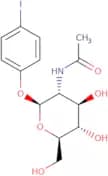
4-Iodophenyl 2-acetamido-2-deoxy-b-D-glucopyranoside
CAS :<p>4-Iodophenyl 2-acetamido-2-deoxy-b-D-glucopyranoside is a modification of an oligosaccharide. It is synthesized using custom chemistry and purified to high purity. This compound is a monosaccharide that is methylated and glycosylated. CAS No. 38229-81-1</p>Formule :C14H18INO6Degré de pureté :Min. 95%Masse moléculaire :423.2 g/molMirabegron O-glucuronide
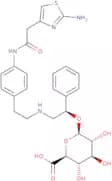
CAS :<p>Mirabegron is a drug that has been used to treat overactive bladder and urinary incontinence. Mirabegron is an agonist of the beta-3 adrenergic receptor and increases the levels of cAMP in cells by binding to this receptor. This leads to relaxation of smooth muscle tissue, which decreases resistance in the bladder and urethra and promotes urine storage. Mirabegron O-glucuronide is a metabolite of mirabegron that can be detected in urine using mass spectrometry methods. Mirabegron O-glucuronide has been found in human liver samples following oral administration, as well as in human blood samples after intravenous administration.</p>Degré de pureté :Min. 95%Monofucosyl-para-lacto-N-neohexaose IV
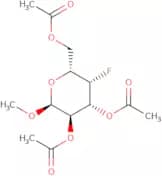
CAS :<p>Monofucosyl-para-lacto-N-neohexaose IV is a monofucosylated glycan consisting of a single pyranose ring. It is a synthetic oligosaccharide that has been modified with Click chemistry to introduce an alkyne group at the reducing end. The alkyne group can be further modified by nucleophilic substitution reactions, such as fluorination, or glycosylation. Monofucosyl-para-lacto-N-neohexaose IV is used in the synthesis of complex carbohydrates.</p>Formule :C46H78N2O35Degré de pureté :Min. 95%Masse moléculaire :1,219.1 g/molMethyl 2,3,6-tri-O-acetyl-4-deoxy-4-fluoro-a-D-galactopyranoside
CAS :<p>Methyl 2,3,6-tri-O-acetyl-4-deoxy-4-fluoro-a-D-galactopyranoside is a modification of the naturally occurring carbohydrate, galactose. It is synthesized from 4-fluoro galactose and acetyl chloride in the presence of sodium methoxide. This compound can be used as an intermediate for the synthesis of oligosaccharides or polysaccharides. Methyl 2,3,6-tri-O-acetylgalactopyranoside is a monosaccharide that has been modified by methylation and glycosylation. It can also be fluorinated to form methyl 2,3,6,-tri-,O-(2'-deoxy)galactopyranoside.</p>Formule :C13H19FO8Degré de pureté :Min. 95%Masse moléculaire :322.28 g/molTopiramate dimer impurity
CAS :<p>Topiramate dimer impurity is a Glycosylation, Oligosaccharide, sugar, Synthetic, Fluorination, Custom synthesis, Methylation, Monosaccharide that is custom synthesized and is available as a high purity and complex carbohydrate. It has a CAS No. 35405-70-0 and is available in Click modification. This product is used to modify polysaccharides or saccharides by click chemistry reactions.</p>Formule :C24H39NO13SDegré de pureté :Min. 95%Masse moléculaire :581.63 g/mol2N-Fmoc-4N-(2,3,4,6-tetra-O-acetyl-b-D-galactopyranosyl)-L-asparagine
CAS :<p>2N-Fmoc-4N-(2,3,4,6-tetra-O-acetyl-b-D-galactopyranosyl)-L-asparagine is a fluorinated carbohydrate that has been synthesized and modified. It can be used in glycosylation reactions to produce oligosaccharides or polysaccharides. This compound is also useful in click chemistry since it can be methylated and undergo other chemical modifications. 2N-Fmoc-4N-(2,3,4,6-tetra-O-acetyl-b-Dgalactopyranosyl)-L asparagine is a white powder with a CAS number of 46746578.</p>Formule :C33H36N2O14Degré de pureté :Min. 95%Masse moléculaire :684.66 g/molD-[UL-13C6,15N]Glucosamine HCl
<p>D-[UL-13C6,15N]Glucosamine HCl is a complex carbohydrate that can be custom synthesized to order. It is a synthetic sugar that has been modified by Click chemistry. The synthesis of this product requires the use of fluorination and glycosylation reactions. This product can be used in a variety of applications including methylation, modification, or oligosaccharide synthesis. D-[UL-13C6,15N]Glucosamine HCl is also known as glucosamine hydrochloride and has CAS number 1088-96-4.</p>Formule :C6H13NO5·HClDegré de pureté :Min. 95%Couleur et forme :White PowderMasse moléculaire :222.58 g/mol2-Hydroxybenzylbeta-D-glucopyranoside
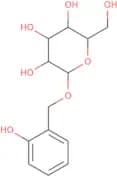
CAS :<p>2-Hydroxybenzylbeta-D-glucopyranoside is a fluorinated monosaccharide that has been custom synthesized for the glycosylation of complex carbohydrate. It is a synthetic compound that features a click modification and methylation. This product is offered in high purity and is available for custom synthesis.</p>Formule :C13H18O7Degré de pureté :Min. 95%Masse moléculaire :286.28 g/molMethyl-O-(2-azido-3,4-di-O-benzyl-2-deoxy-a-D-glucopyranosyl)-(1-4)-O-(2,3-di-O-benzyl-b-D-glucopyranosyluronicacid)- (1-4)-O-(2-azi do-2-deoxy-a-D-glucopyranosyl)-(1-4)-O-(3-O-benzyl-a-L-idopyranosyluronic acid)-(1-4)-3-O-benzyl- 2-benzyloxycarbonyla
CAS :<p>Maltodextrin is a polysaccharide that is made up of glucose units linked together by alpha-glycosidic bonds. Maltodextrin is commonly used as a food additive, but it also has several industrial applications. It can be used to produce escherichia coli, which is a bacterium that produces maltose and amylopectin. Maltodextrin can also be used as an animal feed supplement or as an ingredient in baby food. The glycosidic bond between the glucose units are metabolized by mouse enzymes to produce maltose and glycogen, which are both plant metabolites. Maltodextrin consists of unbranched subunits with linear chains of alpha-1,4-linked glucose residues that have alpha-1,6-linked branches at every second residue. This means that maltodextrin has a glycosidic linkage between the two glucose molecules in the chain and one of these links will always be an alpha-</p>Formule :C81H91N7O27Degré de pureté :Min. 95%Masse moléculaire :1,594.62 g/moltrans-3'-Hydroxycotinine-O-b-D-glucuronide D3 sodium salt
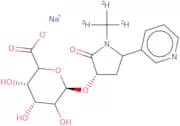
Produit contrôlé<p>Trans-3'-Hydroxycotinine-O-b-D-glucuronide D3 sodium salt is a modification of the natural product trans-3'-hydroxycotinine. It is an oligosaccharide with a complex carbohydrate structure, which may be synthesized by custom synthesis or by glycosylation. This modification has a high purity and may be monosaccharide or polysaccharide. Trans-3'-hydroxycotinine-O-b-D-glucuronide D3 sodium salt may have CAS number and fluorination. It has been shown to have antihistamine activities, which are due to its ability to inhibit the release of histamine from mast cells in the lungs.</p>Formule :C16H16N2O8D3·NaDegré de pureté :Min. 95%Masse moléculaire :393.34 g/mol2.5-Dimethyl-4-hydroxy-3(2H)-furanone-b-D-glucoside-6'-malonate
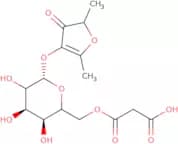
CAS :<p>2.5-Dimethyl-4-hydroxy-3(2H)-furanone-b-D-glucoside-6'-malonate is a methylated monosaccharide with a molecular formula of C8H10O3 and a molecular weight of 208.18 g/mol. It is synthesized by the reaction of 3,4,5-trimethoxybenzaldehyde with 2,5-dimethylhydroquinone in the presence of sodium carbonate and malonic acid under refluxing conditions. 2.5-Dimethyl-4-hydroxy-3(2H)-furanone-b-D glucoside 6'-malonate has been used in the synthesis of oligosaccharides and polysaccharides. This product is available for custom synthesis, click modification, fluorination and saccharide modification.</p>Formule :C15H20O11Degré de pureté :Min. 95%Masse moléculaire :376.31 g/molBenzyl b-D-xylopyranoside
CAS :<p>Benzyl b-D-xylopyranoside is an inorganic compound that is used as a radioactive tracer to study the movement of fluid and macromolecules in the apical membrane of the chondrocyte. It was shown to be effective in preventing the formation of tissue-damaging acute phase proteins when administered at a time point corresponding to the onset of an acute inflammatory response. Benzyl b-D-xylopyranoside has also been shown to have regulatory effects on untreated control cells, but not on untreated control cells. This drug inhibits biosynthesis of GAGs, which are molecules that provide structural support for cells and tissues. The mechanism by which benzyl b-D-xylopyranoside exerts its effect is not yet known.</p>Formule :C12H16O5Degré de pureté :Min. 95%Masse moléculaire :240.25 g/molN-Acetyl-D-lactosamine-sp-biotin
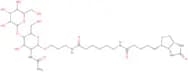
<p>N-Acetyl-D-lactosamine-sp-biotin is an oligosaccharide that is synthesized by the condensation of N-acetylglucosamine and sphingosine. It is a complex carbohydrate that can be modified with fluorination, monosaccharide, and polysaccharides. N-Acetyl-D-lactosamine-sp-biotin has been shown to have a high purity and can be used in the synthesis of glycosylation, methylation, or click chemistry.</p>Formule :C33H57N5O15SDegré de pureté :Min. 95%Couleur et forme :PowderMasse moléculaire :795.9 g/mol2,3-O-Carbonyl-4,6-O-isopropylidene-a-D-mannopyranoside
CAS :<p>2,3-O-Carbonyl-4,6-O-isopropylidene-a-D-mannopyranoside is a custom synthesis of a monosaccharide with a fluorinated methyl group. It is an oligosaccharide with a saccharide that contains an oxygen atom and two carbon atoms. This carbohydrate is polysaccharide which has glycosylation. 2,3-O-Carbonyl-4,6-O-isopropylidene-a-D-mannopyranoside is also known as CAS No. 669730 - 3,6'-diacetoxyacetone</p>Formule :C10H14O7Degré de pureté :Min. 95%Masse moléculaire :246.21 g/mol5,7-Bis-(benzyloxy)-a-(4-(benzyloxy)phenyl)-3-[3,4-di-O-acetyl-a-O-acetyl-a-L-rhamnopyranosyloxyl]-4H-chromen-4-one
CAS :<p>This product is a custom synthesis. This product is a methylation, click modification, and oligosaccharide. This product is a polysaccharide and saccharide. This product is fluorinated and complex carbohydrate. This product is high purity with modification. This product has monosaccharides and sugar. This product is synthetic and CAS No. 849938-27-8.</p>Formule :C53H48O12Degré de pureté :Min. 95%Masse moléculaire :876.94 g/molRaloxifene-4'-D-glucuronide lithium salt
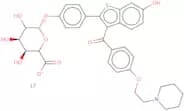
CAS :Raloxifene-4'-D-glucuronide lithium salt is a metabolite of raloxifene, an estrogen receptor modulator. It has been used in the treatment of osteoporosis and breast cancer. Raloxifene-4'-D-glucuronide lithium salt inhibits protein synthesis by inhibiting the activity of ribosomes. Raloxifene-4'-D-glucuronide lithium salt binds to microsomal preparations, which are organelles found in liver cells that synthesize proteins. This binding slows down the rate at which proteins are synthesized, leading to its anti-cancer properties.Formule :C34H34NO10S·LiDegré de pureté :Min. 95%Masse moléculaire :655.64 g/molBenzyl 2,3-O-[(1S,2S)-1,2-dimethoxy-1,2-dimethyl-1,2-ethanediyl]-4-nitrobenzoyl-a-L-xylopyranoside
CAS :<p>This product is a custom synthesis. The structure is a complex carbohydrate with an oligosaccharide component. The product is synthesized from methylated benzyl 2,3-O-[(1S,2S)-1,2-dimethoxy-1,2-dimethyl-1,2-ethanediyl]-4-nitrobenzoyl-a-L-xylopyranoside and then modified by fluorination and click chemistry. The saccharide component consists of a monosaccharide and multiple polysaccharides.</p>Formule :C25H29NO10Degré de pureté :Min. 95%Masse moléculaire :503.5 g/molN6-Isopentenyladenine-7-glucoside
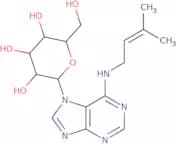
CAS :<p>N6-Isopentenyladenine-7-glucuronide is a synthetic monosaccharide that is used in the synthesis of complex carbohydrates. It is also a fluorinated compound that has been modified to form a glucuronide, which is an organic compound with a sugar and an alcohol group. N6-Isopentenyladenine-7-glucuronide can be used as a raw material for the production of oligosaccharides and polysaccharides, which are complex carbohydrates. This product can be custom synthesized to meet different requirements. It is available in high purity and the CAS number for this product is 59384-58-6.</p>Formule :C16H23N5O5Degré de pureté :Min. 95%Masse moléculaire :365.38 g/molO-(2-Azido-4,6-O-benzylidene-2-deoxy-a-D-galactopyranosyl)-N-[(9H-fluoren-9-ylmethoxy)carbonyl]-L-threonine tert-Butyl Ester
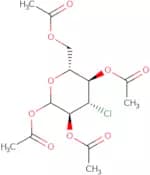
CAS :<p>The compound is an O-linked glycosylation site-specifically modified oligosaccharide. The modification is a methylation of the hydroxyl group on the 2-position of the sugar moiety. The carbohydrate is a polysaccharide that has been fluorinated at one or more positions. It has CAS No. 195976-07-9 and was synthesized by glycosylation and methylation of L-threonine tert-butyl ester with D-galactopyranosyl chloride in presence of 4,6-O-(2,3,4,6-tetraisopropoxybenzoyl)-D-galactopyranosyl chloride (TIPB) and sodium hydrogen carbonate (NaHCO).</p>Formule :C36H40N4O9Degré de pureté :Min. 95%Masse moléculaire :672.72 g/mol1,2,4,6-Tetra-O-acetyl-3-chloro-3-deoxy-D-glucopyranose
CAS :<p>1,2,4,6-Tetra-O-acetyl-3-chloro-3-deoxy-D-glucopyranose (1) is a synthetic oligosaccharide that has been modified with a fluorine atom at the 6 position of the glucose moiety. This modification has been shown to have increased stability in acidic environments. Glycosylation can be achieved by reacting 1 with an appropriate glycosylant such as bromoacetyl bromide or chloroacetyl chloride. The saccharide unit may also be methylated at the 2 and 4 positions of the glucose moiety to confer protection against enzymatic degradation. Click modification can be used to attach other molecules such as proteins or peptides to 1,2,4,6-tetra-O-acetyl-3-chloro-3-deoxy--D--glucopyranose via a covalent bond between</p>Formule :C14H19ClO9Degré de pureté :Min. 95%Masse moléculaire :366.75 g/mol




![D-[UL-13C6,15N]Glucosamine HCl](/_next/image/?url=https%3A%2Fstatic.cymitquimica.com%2Fproducts%2F3D%2Fthumb-webp%2FMG15630.webp&w=3840&q=75)


![5,7-Bis-(benzyloxy)-a-(4-(benzyloxy)phenyl)-3-[3,4-di-O-acetyl-a-O-acetyl-a-L-rhamnopyranosyloxyl]…](/_next/image/?url=https%3A%2Fstatic.cymitquimica.com%2Fproducts%2F3D%2Fthumb-webp%2FMB16635.webp&w=3840&q=75)
![Benzyl 2,3-O-[(1S,2S)-1,2-dimethoxy-1,2-dimethyl-1,2-ethanediyl]-4-nitrobenzoyl-a-L-xylopyranoside](/_next/image/?url=https%3A%2Fstatic.cymitquimica.com%2Fproducts%2F3D%2Fthumb-webp%2FMB16613.webp&w=3840&q=75)
![O-(2-Azido-4,6-O-benzylidene-2-deoxy-a-D-galactopyranosyl)-N-[(9H-fluoren-9-ylmethoxy)carbonyl]-L-…](/_next/image/?url=https%3A%2Fstatic.cymitquimica.com%2Fproducts%2F3D%2Fthumb-webp%2FMA60609.webp&w=3840&q=75)