Glycosciences
La glycosciences est l'étude des glucides et de leurs dérivés, ainsi que des interactions et des fonctions biologiques auxquelles ils participent. Ce domaine de recherche est crucial pour comprendre une grande variété de processus biologiques, y compris la reconnaissance cellulaire, la signalisation, la réponse immunitaire et le développement des maladies. La glycosciences a des applications importantes en biotechnologie, en médecine et dans le développement de nouveaux médicaments et thérapies. Chez CymitQuimica, nous proposons une large sélection de produits de haute qualité et pureté pour la recherche en glycosciences. Notre catalogue comprend des monosaccharides, des oligosaccharides, des polysaccharides, des glyconjugués et des réactifs spécifiques, conçus pour soutenir les chercheurs dans leurs études sur la structure, la fonction et les applications des glucides dans les systèmes biologiques. Ces ressources sont destinées à faciliter les découvertes scientifiques et les applications pratiques dans divers domaines des biosciences et de la médecine.
Sous-catégories appartenant à la catégorie "Glycosciences"
- Aminosucres(108 produits)
- Anticorps Glyco-Related(282 produits)
- Glycolipides(46 produits)
- Glycosaminoglycanes (GAGs)(55 produits)
- Glycosides(419 produits)
- Monosaccharides(6.622 produits)
- Oligosaccharides(3.682 produits)
- Polysaccharides(503 produits)
11041 produits trouvés pour "Glycosciences"
Trier par
Degré de pureté (%)
0
100
|
0
|
50
|
90
|
95
|
100
Trifluoroacetamidopropyl b-D-galactopyranoside
<p>Trifluoroacetamidopropyl b-D-galactopyranoside is a custom synthesis that is an Oligosaccharide. It is a complex carbohydrate with CAS No., and can be modified with methylation, glycosylation, and click modification. Trifluoroacetamidopropyl b-D-galactopyranoside has high purity and fluoride, which makes it a Synthetic.</p>Degré de pureté :Min. 95%Galacturonan DP3/DP4 sodium salt
<p>A mixture of sodium trigalacturonate & tetragalacturonate (α-1,4 sodium galacturonotriose + α-1,4 sodium galacturonotetraose) is derived from pectin or pectic acid, by enzymatic or partial acid hydrolysis (Combo, 2012). It is used inâ¯galacturonic acidâ¯metabolism research as a substrate to identify, differentiate, and characterize endo- and exopolygalacturonase(s), and gluconase(s) (Jayani, 2005). The addition of very short fragments of homogalacturonan, tri-galacturonate, and tetra-galacturonate oligosaccharides, restore development in dark-grown, de-etiolated seedling mutants, suggesting that they are unable to generate de-methylesterified pectin fragments. A model of spatiotemporally separated photoreceptive and signal-responsive cell types has been proposed, that contains overlapping subsets of the regulatory network of light-dependent seedling development (Sinclair, 2017).</p>Degré de pureté :Min. 95%Couleur et forme :Powder1,2,3-Tri-O-Acetyl-5-deoxy-D-ribose
CAS :<p>1,2,3-Tri-O-acetyl-5-deoxy-D-ribose is an efficient and environmentally benign method for the synthesis of acyclic acetals. The condensation process involves the use of a chloroformate to introduce the carbonyl group into a hydroxyl group on the sugar. This reaction can be carried out in an organic solvent or water as well. The reaction rate is fast due to a high nucleophilicity of the chloride ion. The product can then be converted into an amide by reacting it with ammonia in a basic medium. This reaction results in a high yield and is useful for recycling acetonitrile that would otherwise be released into the environment.</p>Formule :C11H16O7Degré de pureté :Min. 95%Masse moléculaire :260.24 g/molβ-L-Fucopyranosyl phosphate
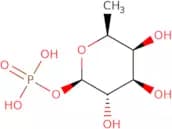
CAS :<p>b-L-Fucopyranosyl phosphate is a glycosylphosphate that is expressed on the cell surface of many organisms and is an analog of the natural sugar. It has been shown to be a competitive inhibitor, uncompetitive inhibitor, or stereoselective of glycoconjugates. b-L-Fucopyranosyl phosphate binds to the lectin receptor by binding at the monosaccharide in the terminal position, which prevents the attachment of glycoconjugates to this receptor. This binding decreases cellular adhesion and causes cells to become less adherent to other cells or surfaces. The ph optimum for b-L-fucopyranosyl phosphate is 7.5 and it can be used in vitro as a preparative hplc column eluent for lectins.</p>Formule :C6H13O8PDegré de pureté :Min. 95%Couleur et forme :PowderMasse moléculaire :244.14 g/mol6'-Sulpho Lewisx-BSA
<p>6'-Sulpho Lewisx-BSA is a complex carbohydrate that contains a saccharide moiety with a sulfated Lewisx epitope. It has been synthesized using click chemistry and modified with methylation and fluorination to yield the desired structure. The carbohydrate is of high purity and can be used in research as a model for glycosylation and glycosidic linkage. The carbohydrate also has properties that are analogous to those observed in glycoconjugates, such as antibodies and lectins.</p>Degré de pureté :Min. 95%Isopropyl 2,3,4,6-tetra-O-benzyl-b-D-glucopyranoside
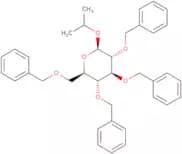
CAS :<p>Isopropyl 2,3,4,6-tetra-O-benzyl-b-D-glucopyranoside is a synthetic glycosylation product. It can be used as a building block for the synthesis of oligosaccharides and sugar derivatives. The product is available in custom synthesis and can be fluorinated to create new compounds. Isopropyl 2,3,4,6-tetra-O-benzyl-b-D-glucopyranoside can also be methylated to create new compounds. This product is mainly used in the preparation of saccharides and polysaccharides. It has a purity level of more than 99% and is not modified with any other functional groups.</p>Formule :C37H42O6Degré de pureté :Min. 95%Masse moléculaire :582.73 g/mol3-[(2,3,4,6-Tetra-O-acetyl-b-D-galactopyranosyl)thio]-propanoic acid
CAS :<p>3-[(2,3,4,6-Tetra-O-acetyl-b-D-galactopyranosyl)thio]-propanoic acid is a modified carbohydrate with the chemical formula (C14H12O4S). It is an oligosaccharide composed of a saccharide and a sugar. The saccharide portion of 3-[(2,3,4,6-Tetra-O-acetyl-b-D-galactopyranosyl)thio]-propanoic acid is classified as a carbohydrate and has CAS number 79360-05-7. The sugar portion of 3-[(2,3,4,6-Tetra-O-acetyl-b-D</p>Formule :C17H24O11SDegré de pureté :Min. 95%Masse moléculaire :436.43 g/molMethyl 2-acetamido-4-O-(2-acetamido-3,4,6-tri-O-acetyl-2-deoxy-b-D-glucopyranosyl)-2-deoxy-b-D-glucopyranoside
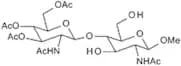
CAS :<p>Methyl 2-acetamido-4-O-(2-acetamido-3,4,6-tri-O-acetyl-2-deoxy-b-D-glucopyranosyl)-2-deoxy-b-D-glucopyranoside is a custom synthesis that is fluorinated and methylated to create an acetal. The monosaccharide is a custom synthesis that has been modified with click chemistry. This oligosaccharide is found in glycosylation reactions and can be used for the synthesis of polysaccharides. Methyl 2 acetamido 4 O-(2 acetamido 3,4,6 tri O acetyl 2 deoxy b D glucopyranosyl) 2 deoxy b D glucopyranoside has CAS Number 97242 82 5.</p>Formule :C23H36N2O14Degré de pureté :Min. 95%Masse moléculaire :564.54 g/mol1,4:3,6-Dianhydro-2,5-di-O-ethyl-D-glucitol
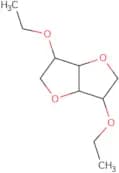
CAS :<p>1,4:3,6-Dianhydro-2,5-di-O-ethyl-D-glucitol (1,4:3,6-DDG) is a synthetic monosaccharide that has been modified with fluorination. It is a complex carbohydrate that can be used in the synthesis of glycosylations and polysaccharides. The chemical modification of 1,4:3,6-DDG with fluorination results in its increased stability under acidic conditions. This product is custom synthesized to meet the requirements of our clients.</p>Degré de pureté :Min. 95%2,3,6,2',3',4',6'-Hepta-O-acetyl-a-D-lactosyl fluoride
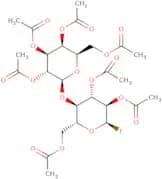
CAS :<p>2,3,6,2',3',4',6'-Hepta-O-acetyl-a-D-lactosyl fluoride (HAP) is a synthetic compound that has been modified with fluorine and methyl groups. It is a monosaccharide with a glycosylation pattern that includes a terminal glucose unit. HAP has been shown to be an effective carbohydrate in the synthesis of complex carbohydrate structures.</p>Formule :C26H35FO17Degré de pureté :Min. 95%Masse moléculaire :638.54 g/mol4-O-Acetyl-3,6-di-O-(3,4,6-tri-O-acetyl-1,2-ethylidene-b-D-mannopyranosyl)-1,2-ethylidene-b-D-mannopyranose
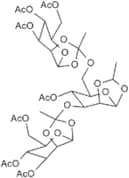
CAS :<p>Methylation of 4-O-acetyl-3,6-di-O-(3,4,6-tri-O-acetyl-1,2-ethylidene bDmannopyranosyl)-1,2-ethylidene bDmannopyranose with methyl iodide and potassium carbonate in the presence of sodium hydroxide leads to the formation of 4-O-acetyl 3,6 di O-(3,4,6 tri O acetyl 1 , 2 ethylene b D mannopyranosyl)-1 , 2 ethylene b D mannopyranose. This compound is a polysaccharide that is similar to cellulose. It is used in the synthesis of complex carbohydrates.</p>Formule :C38H52O25Degré de pureté :Min. 95%Masse moléculaire :908.8 g/mol1,2-O-Cyclohexylidene-3-O-methyl-a-D-glucofuranose
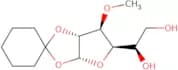
CAS :<p>1,2-O-Cyclohexylidene-3-O-methyl-a-D-glucofuranose is a synthetic cyclic oligosaccharide that can be modified with methyl groups or fluorine atoms. It is a monosaccharide that has been shown to have potential for use as a drug delivery system.</p>Formule :C13H22O6Degré de pureté :Min. 95%Masse moléculaire :274.31 g/mol2-Acetamido-3-O-(2,3,4,6-tetra-O-acetyl-b-D-galactopyranosyl)-4,6-di-O-acetyl-2-deoxy-a-D-galactopyranosyl-Fmoc-L- serine
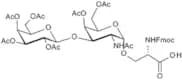
CAS :<p>2-Acetamido-3-O-(2,3,4,6-tetra-O-acetyl-b-D-galactopyranosyl)-4,6-di-O-acetyl-2-deoxy-a-D-galactopyranosyl is an Oligosaccharide. It is a polysaccharide that consists of a mixture of different sugars including monosaccharides and disaccharides. 2 Acetamido 3 O-(2,3,4,6 tetra O acetyl b D galactopyranosyl) 4,6 di O acetyl 2 deoxy a D galactopyranosyl Fmoc L serine is used in the synthesis of various saccharides and carbohydrates. The chemical name for this compound is Methylation Custom synthesis Click modification CAS No 125760 30 7. The molecular weight for this compound is 548. The</p>Formule :C44H52N2O21Degré de pureté :Min. 95%Masse moléculaire :944.88 g/mol2,5-Anhydro-1-azido-1-deoxy-D-glucitol
CAS :<p>2,5-Anhydro-1-azido-1-deoxy-D-glucitol is a white to off-white crystalline powder with a molecular weight of 416.2 g/mol and an empirical formula of C6H14O7. The chemical structure is O-(2,5-anhydro-D-glucitol)N3. 2,5-Anhydro-1-azido-1-deoxy--D--glucitol can be modified with various functional groups to create different derivatives for specific applications. It is soluble in water, methanol and ethanol but not in ether or acetone. It also has the ability to form stable complexes with many metal ions due to its high charge density.<br>2,5--Anhydro--1--azido--1--deoxy--D--glucitol is used as a sugar donor when making glycosides by glycosylation reactions. It can</p>Formule :C6H11N3O4Degré de pureté :Min. 95%Masse moléculaire :189.17 g/mol(+)-1,4-Di-O-benzyl-D-threitol
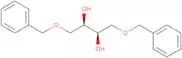
CAS :<p>(+)-1,4-Di-O-benzyl-D-threitol is a carbohydrate which is an enantiomer of D-threitol. It has been used as a model membrane to investigate the interaction of divalent cations with the lipid bilayer. The (+) form of this compound has been shown to be catalytic in the desymmetrization of racemic mixtures of carbohydrates. This enantiomer can be readily chromatographically separated from its mirror image by chiral chromatography techniques.</p>Formule :C18H22O4Degré de pureté :Min. 95%Masse moléculaire :302.36 g/mol3-Amino-2,3-dideoxy-D-myo-inositol
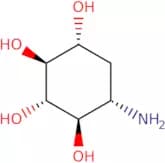
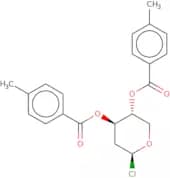
CAS :<p>3-Amino-2,3-dideoxy-D-myo-inositol (3ADMI) is a gene product that belongs to the class of chemical biology. It is an actuator that has been shown to be able to bind and activate enzymes. 3ADMI is used as a substrate in the calibration of enzyme kinetics and as an analog for aminoglycosides. The conjugates of 3ADMI have been shown to prevent viral replication by inhibiting the synthesis of DNA or RNA.</p>Formule :C6H13NO4Degré de pureté :Min. 95%Couleur et forme :White/Off-White SolidMasse moléculaire :163.17 g/mol1-Chloro-2-deoxy-3,4-di-O-toluoyl-D-ribopyranose
CAS :<p>1-Chloro-2-deoxy-3,4-di-O-toluoyl-D-ribopyranose is a custom synthesis of a complex carbohydrate. It is an Oligosaccharide and Polysaccharide that has been modified using methylation and glycosylation. The saccharide has also been fluorinated and the synthetic product is highly pure with CAS No. 516511-18-5. 1-Chloro-2,3,4,-diO-(1'-chloroethylidene) -D-[alpha] -ribopyranose is a sugar that can be used in many different applications including pharmaceuticals, agrochemicals, and biotechnology.</p>Formule :C21H21ClO5Degré de pureté :Min. 95%Couleur et forme :White to off-white solid.Masse moléculaire :388.84 g/molMethyl (methyl 5-acetamido-4,7,8,9-tetra-O-acetyl-3,5-dideoxy-2-thio-D-glycero-D-galacto-2-nonulopyranosid)onate
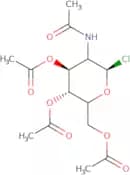
CAS :<p>Methyl (methyl 5-acetamido-4,7,8,9-tetra-O-acetyl-3,5-dideoxy-2-thio-D-glycero-D-galacto-2-nonulopyranosid)onate is a sugar that is used in the synthesis of complex carbohydrates. It can be synthesized by modification of the glycosylation of monosaccharides or oligosaccharides. Methyl (methyl 5-acetamido-4,7,8,9--tetra--O--acetyl--3,5--dideoxy--2--thio--D---glycero---D---galacto---2--nonulopyranosid)onate has CAS No. 1442403688 and molecular weight of 486.</p>Formule :C23H31NO12SDegré de pureté :Min. 95%Masse moléculaire :545.56 g/mol2-Acetamido-3,4,6-tri-O-acetyl-2-deoxy-α-D-galactopyranosyl chloride
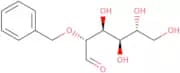
CAS :<p>2-Acetamido-3,4,6-tri-O-acetyl-2-deoxy-a-D-galactopyranosyl chloride is a chemical compound that can be obtained by the reaction of acetamidomalonic acid with chloral hydrate. This product is soluble in water and has a crystalline form. It reacts with thiols or arylthiols to form disulfides and thioglycosides. 2-Acetamido-3,4,6-tri-O-acetyl-2-deoxy-a-D-galactopyranosyl chloride is also used as an intermediate for the preparation of 1,5,-anhydrofructose. It is used as a catalyst for transfer hydrogenation reactions and phase transfer catalysis.</p>Formule :C14H20ClNO8Degré de pureté :Min. 95%Couleur et forme :PowderMasse moléculaire :365.76 g/mol2-O-Benzyl-D-glucose
CAS :<p>2-O-Benzyl-D-glucose is a disaccharide that is an intermediate in the synthesis of benzoic acid. It is benzylated with benzaldehyde and then reacted with sodium hydroxide to form 2-O-benzylidene-D-glucose. Spectroscopy has shown that this product has an anomeric proton at δH 7.1 to 7.4 and a pyranoside group at δH 4.2 to 4.6, which are characteristic of 2-O-benzylidene-D-glucose. The sugar's molecular formula is C9H12O5, and its molecular weight is 230. The sugar has been shown to be acylated with acetate or benzoic acid as well as undergo glycosidation reactions in the presence of sulfuric acid or sodium hydroxide.</p>Formule :C13H18O6Degré de pureté :Min. 95%Masse moléculaire :270.28 g/mol



![3-[(2,3,4,6-Tetra-O-acetyl-b-D-galactopyranosyl)thio]-propanoic acid](/_next/image/?url=https%3A%2Fstatic.cymitquimica.com%2Fproducts%2F3D%2Fthumb-webp%2FMT04253.webp&w=3840&q=75)