Glycosciences
Sous-catégories appartenant à la catégorie "Glycosciences"
- Aminosucres(108 produits)
- Anticorps Glyco-Related(283 produits)
- Glycolipides(46 produits)
- Glycosaminoglycanes (GAGs)(55 produits)
- Glycosides(419 produits)
- Monosaccharides(6.619 produits)
- Oligosaccharides(3.711 produits)
- Polysaccharides(505 produits)
11027 produits trouvés pour "Glycosciences"
Rhamnolipids C8-C8
CAS :Rhamnolipids C8-C8 are a group of lipids that are produced by the bacterium Burkholderia cepacia. They have been shown to have a strong ability to bind to and remove substances from water, such as heavy metals, lignin, and polychlorinated biphenyls. Rhamnolipids C8-C8 can be used in industrial settings for wastewater treatment or in the environment for bioremediation of pollutants. The physicochemical properties of rhamnolipids C8-C8 are determined by their composition of fatty acids and their degree of unsaturation. These properties can vary depending on the origin of the bacteria producing them.
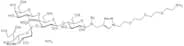
Formule :C22H40O9Degré de pureté :Min. 95%Masse moléculaire :448.55 g/molGM2-Oligosaccharide-spacer-NH2 ammonium
GM2-Oligosaccharide-spacer-NH2 ammonium is a complex carbohydrate with an oligosaccharide spacer and a hydrophobic NH2 group. The product is custom synthesized to your specifications and is available in high purity. It can be modified with fluorination or click chemistry. GM2-Oligosaccharide-spacer-NH2 ammonium is used in the synthesis of polysaccharides, saccharides, and carbohydrates. Some of its applications include modifying proteins, monosaccharides, and sugars.
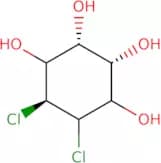
Formule :C44H75N7O27·NH3Degré de pureté :Min. 95%Masse moléculaire :1,151.13 g/mol1,2-Dichloro-1,2-dideoxy-myo-inositol
1,2-Dichloro-1,2-dideoxy-myo-inositol is a methylated saccharide. It is used in the synthesis of complex carbohydrates and can be modified to include fluorine atoms. 1,2-Dichloro-1,2-dideoxy-myo-inositol has been shown to inhibit the growth of Staphylococcus aureus and Clostridium perfringens.
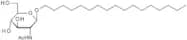
Degré de pureté :Min. 95%Heptadecyl 2-acetamido-2-deoxy-b-D-glucopyranoside
CAS :Heptadecyl 2-acetamido-2-deoxy-b-D-glucopyranoside is a solubilized ion pair that can be catalysed by amines and immobilized lipase. It is also a hydrophobic fatty acid ester. Heptadecyl 2-acetamido-2-deoxy-b-D-glucopyranoside is catalyzed by an enzyme, lipase, to form the corresponding amide. This reaction yield is increased in the presence of hexane, which aids in hydrolysis of the ester linkage between heptadecyl and 2,2′-diacetylidenebis(3,4,6,-trimethylphenol). Heptadecyl 2-acetamido-2-deoxyglucopyranoside is used as a substrate for lipases to produce amides from amines. This product has been used in the production of
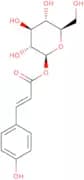
Formule :C25H49NO6Degré de pureté :Min. 95%Masse moléculaire :459.66 g/molp-Coumaroyl-b-D-glucose
CAS :P-Coumaroyl-b-D-glucose is a flavanone that belongs to the class of flavonoids. It is an intermediate in the synthesis of many other flavonoids, such as apigenin, labiatae, and rhamnetin. P-Coumaroyl-b-D-glucose has been shown to downregulate the expression of genes encoding proteins involved in the biosynthesis of proanthocyanidins and anthocyanins. This compound also induces apoptosis by binding to the mitochondria membrane and increasing reactive oxygen species production. P-Coumaroyl-b-D-glucose can be used as a marker for phenylpropanoid metabolism in plants.
Formule :C15H18O8Degré de pureté :Min. 95%Couleur et forme :White PowderMasse moléculaire :326.3 g/molD-[1-13C]Xylose
CAS :D-[1-13C]Xylose is a carbon source that is used to study the metabolism of glycolytic carbon in cells. It has been labeled with 13C and can be used as a tracer for the study of the distribution of metabolites, including glucuronic acid, mannose, and xylose. This can be done by nuclear magnetic resonance (NMR) spectroscopy or by using a magnetic resonance spectroscopy technique. The use of D-[1-13C]xylose has been shown to be an effective way to label cryptococcus neoformans cells in order to understand their metabolism.
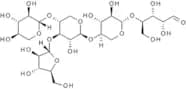
Formule :C5H10O5Degré de pureté :Min. 95%Masse moléculaire :151.12 g/mol3'3-a-L-Arabinofuranosyl-xylotetraose
CAS :3'3-a-L-Arabinofuranosyl-xylotetraose is a custom synthesis of an oligosaccharide. It is a polysaccharide that is modified by methylation, glycosylation and carbamoylation. This carbohydrate has been fluorinated at the 3'3 position. The monosaccharide composition of this molecule is erythrose, arabinose and xylose.
Formule :C25H42O21Degré de pureté :Min. 95 Area-%Couleur et forme :White PowderMasse moléculaire :678.59 g/mol2-Amino-2-deoxy-D-altrose
CAS :2-Amino-2-deoxy-D-altrose (2AD) is a molecule with the chemical formula C6H14N2O4. It belongs to the class of compounds known as uronic acids. 2AD is an acetylated molecule that has been structurally studied by X-ray crystallography and NMR spectroscopy. The molecule contains a ring of six carbon atoms, two of which are epoxide groups. The nature of this compound is glycosidic, with focus on hexamethylphosphoramide and diamino oligosaccharides. 2AD has been shown to have anti-inflammatory activities in animals, but its exact mechanism of action remains unknown. This compound may act through a ring-opening reaction or by inhibiting prostaglandin synthesis.
Formule :C6H13NO5Degré de pureté :Min. 95%Masse moléculaire :179.17 g/mol5,7-Bis-(benzyloxy)-a-(4-(benzyloxy)phenyl)-3-[3,4-di-O-acetyl-a-O-acetyl-a-L-rhamnopyranosyloxyl]-4H-chromen-4-one
CAS :This product is a custom synthesis. This product is a methylation, click modification, and oligosaccharide. This product is a polysaccharide and saccharide. This product is fluorinated and complex carbohydrate. This product is high purity with modification. This product has monosaccharides and sugar. This product is synthetic and CAS No. 849938-27-8.
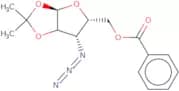
Formule :C53H48O12Degré de pureté :Min. 95%Masse moléculaire :876.94 g/mol3-Azido-5-O-benzoyl-3-deoxy-1,2-O-isopropylidene-a-D-ribofuranose
3-Azido-5-O-benzoyl-3-deoxy-1,2-O-isopropylidene a D-ribofuranose (3ABI) is a synthetic monosaccharide that can be synthesized via a custom synthesis. 3ABI is an oligosaccharide that has the ability to modify glycosylation and polysaccharide synthesis. The fluorination of this sugar provides it with high purity and stability. 3ABI has been shown to have a CAS number of 44793-23-2.
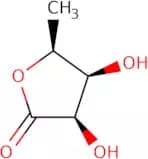
Formule :C15H17N3O5Degré de pureté :Min. 95%Masse moléculaire :319.31 g/mol5-Deoxy-L-lyxono-1,4-lactone
CAS :5-Deoxy-L-lyxono-1,4-lactone is a crystalline solid that belongs to the class of hydroxamic acids. This compound has been shown to react with hydroxylamine in an aldonic reaction and to inhibit the enzyme xanthin oxidase. The monoclinic crystal structure of 5-Deoxy-L-lyxono-1,4-lactone was determined by XRD analysis. This compound is synthesized from glyoxylate and malonitrile in an efficient manner. It also inhibits glucose oxidation and can be used as an additive for food products.
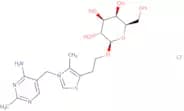
Formule :C5H8O4Degré de pureté :Min. 95%Masse moléculaire :132.12 g/molThiamine galactoside
CAS :Thiamine galactoside is a custom synthesis of a monosaccharide. It is modified with fluorination, methylation and saccharide. The resulting product has a molecular weight of 578.08 g/mol and the chemical formula C24H34N6O18S2.
Formule :C18H27O6N4S·C2H3O2Degré de pureté :Min. 95%Masse moléculaire :486.54 g/molDecyl glucose neopentyl glycol
CAS :Decyl glucose neopentyl glycol is a molecule that is commonly used in cell-based assays to measure the hydrogen peroxide release by cells. It is also used to transport hydrogen peroxide, which is a reactive oxidative species, intracellularly and extracellularly. Decyl glucose neopentyl glycol has been shown to have a range of different isoforms in cellular systems. This allows it to be used as an effective fluorescent marker for the detection of hydrogen peroxide mediated events.
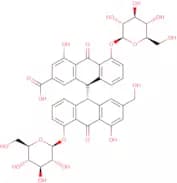
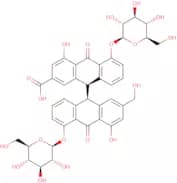
Formule :C35H68O12Degré de pureté :Min. 95%Masse moléculaire :680.91 g/molSennoside D
CAS :Sennoside D is a fatty acid that can be isolated from the sennosides found in the leaves of the plant Senna alata. It has been shown to have anti-tumor properties and may play a role in treating colon cancer, breast cancer, and skin cancer. Sennoside D has also been shown to be effective against autoimmune diseases such as arthritis, ulcerative colitis, and Crohn's disease. The low energy of this compound may be due to its formation rate. The hydroxide solution (NaOH) is used in the synthesis of this molecule because it binds with carbon dioxide molecules to form sodium bicarbonate and carbon dioxide gas which can then be captured by water. This process produces a high yield of sennoside D. In addition, the bound form of this molecule is soluble in organic solvents and insoluble in water, which makes it suitable for skin conditions as well as colon cancer treatments.
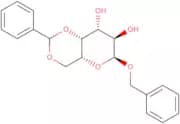
Degré de pureté :Min. 95%Couleur et forme :SolidBenzyl 4,6-O-benzylidene-a-D-galactopyranoside
CAS :4,6-O-Benzylidene-a-D-galactopyranoside is an artificial sweetener that has a high purity and can be custom synthesized. This compound is also known as an oligosaccharide or complex carbohydrate. It is a member of the saccharide family, which includes monosaccharides and disaccharides. 4,6-O-Benzylidene-a-D-galactopyranoside is a sugar that has been modified by glycosylation and methylation. This product has CAS No. 57783-86-5 and can be found in the Glycosides section of the Chemical Directory.
Formule :C20H22O6Degré de pureté :Min. 95%Masse moléculaire :358.39 g/mol3'-Sialyllactose-APD-HSA
3'-Sialyllactose-APD-HSA is a complex carbohydrate with Oligosaccharide and Polysaccharide. It is a modification of saccharides, which are composed of monosaccharides or simple sugars. 3'-Sialyllactose-APD-HSA is a synthetic compound that has been modified by the addition of fluorine atoms to the sugar molecule. This modification prevents the sugar from being broken down by enzymes in the body and ensures that it remains intact until it reaches its target site. 3'-Sialyllactose-APD-HSA is used as a drug delivery system for cancer drugs, such as doxorubicin and paclitaxel.
Degré de pureté :Min. 95%Vitamin D3 b-D-glucuronide
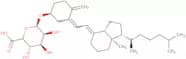
CAS :Vitamin D3 b-D-glucuronide is a modified version of vitamin D3. It is a high purity chemical with a purity level of at least 99%. This product can be used in the synthesis of complex carbohydrates and saccharides.
Formule :C33H52O7Degré de pureté :Min. 95%Masse moléculaire :560.76 g/molSennoside C
CAS :Sennoside C is a bioactive phytochemical extracted from the leaves of Eclipta prostrata. It has been shown to have anti-tumor and anti-inflammatory properties. Sennoside C has also been found to be effective in treating autoimmune diseases, including psoriasis and rheumatoid arthritis. Sennoside C is a low-energy compound that binds with fatty acids to form a bound form. This bound form can be hydrolyzed by sodium hydroxide solution to release free sennosides, which are anthraquinone glycosides that can be used for the treatment of skin conditions such as eczema and dermatitis.
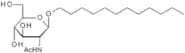
Formule :C42H40O19Degré de pureté :Min. 95%Couleur et forme :SolidMasse moléculaire :848.76 g/molDodecyl 2-acetamido-2-deoxy-b-D-glucopyranoside
CAS :Dodecyl 2-acetamido-2-deoxy-b-D-glucopyranoside is a synthetic glycosylate which has the potential to be used for the synthesis of various oligosaccharides and polysaccharides. It has a high purity and can be modified with various functional groups such as fluorination, methylation, acetylation, and click chemistry. Dodecyl 2-acetamido-2-deoxy-b-D-glucopyranoside is currently being researched as a treatment for cancer.
Formule :C20H39NO6Degré de pureté :Min. 95%Masse moléculaire :389.53 g/molClofibric acid acyl-b-D-glucuronide
CAS :Clofibric acid acyl-b-D-glucuronide is a reactive chemical species that has been shown to have genotoxic effects. It binds to DNA and forms covalent adducts, leading to mutations in the DNA sequence. Clofibric acid acyl-b-D-glucuronide is a metabolite of clofibrate, which is used for the treatment of hyperlipidemia and atherosclerosis. This metabolite can be detected in human blood, serum, and liver samples by GC/MS, with a limit of detection of 0.1 ng/mL (0.0003 µg/L).
Formule :C16H19ClO9Degré de pureté :Min. 95%Masse moléculaire :390.77 g/mol

![D-[1-13C]Xylose](/_next/image/?url=https%3A%2Fstatic.cymitquimica.com%2Fproducts%2F3D%2Fthumb-webp%2FVCA84921.webp&w=3840&q=75)
![5,7-Bis-(benzyloxy)-a-(4-(benzyloxy)phenyl)-3-[3,4-di-O-acetyl-a-O-acetyl-a-L-rhamnopyranosyloxyl]…](/_next/image/?url=https%3A%2Fstatic.cymitquimica.com%2Fproducts%2F3D%2Fthumb-webp%2FMB16635.webp&w=3840&q=75)