Glycosciences
Sous-catégories appartenant à la catégorie "Glycosciences"
- Aminosucres(108 produits)
- Anticorps Glyco-Related(283 produits)
- Glycolipides(46 produits)
- Glycosaminoglycanes (GAGs)(55 produits)
- Glycosides(419 produits)
- Monosaccharides(6.619 produits)
- Oligosaccharides(3.711 produits)
- Polysaccharides(505 produits)
11027 produits trouvés pour "Glycosciences"
Gala1-3Galb1-4(6-deoxyGlcNAc)-HSA
Gala1-3Galb1-4(6-deoxyGlcNAc)-HSA is a custom synthesis of a complex carbohydrate. It is an oligosaccharide with CAS No. and Polysaccharide that has been modified by Methylation, Glycosylation, and Click modification. Carbohydrate is one of the most important macronutrients for human health, as it provides energy and cell building blocks. Sugar (e.g., glucose) is the simplest form of carbohydrate, while saccharide refers to chains of sugar molecules. Gala1-3Galb1-4(6-deoxyGlcNAc)-HSA has been fluorinated and synthesized with high purity in order to be used as a drug delivery system. This drug can be used to treat various diseases such as diabetes mellitus type I or II, cancer, or HIV/AIDS.
Degré de pureté :Min. 95%α-6⁴-6³-Di-galactosyl-mannopentaose
CAS :α-6⁴-6³-Di-galactosyl-mannopentaose is a specialized oligosaccharide, which is a type of complex carbohydrate. This compound is derived from natural plant sources and its structure comprises a mannopentaose core linked with two galactose units. The mode of action involves specific interactions with gut microbiota, where it selectively enriches beneficial bacterial populations, such as Bifidobacteria and Lactobacilli. These interactions occur by serving as a fermentation substrate, promoting the growth of microbes that confer beneficial effects on host health.
Formule :C42H72O36Degré de pureté :Min. 95%Masse moléculaire :1,153 g/molb-Core-APE-HSA
b-Core-APE-HSA is a custom synthesis of an oligosaccharide. This product is a complex carbohydrate with a CAS number and the molecular weight range of 500 to 10,000 Daltons. It is a polysaccharide that has been modified by methylation or glycosylation. The saccharide in this product is either glucose or mannose and it can be modified using click chemistry, fluorination, or other modifications. This product has high purity and can be synthesized using synthetic techniques such as glycosylation or Methylation.
Degré de pureté :Min. 95%Palatinose monohydrate
CAS :Palatinose monohydrate is a hydrogenated form of the natural disaccharide palatinose. It is often used as a solid catalyst in pharmaceutical preparations and has been shown to have a lower molecular weight than sucrose. Palatinose monohydrate may have beneficial effects on postprandial plasma glucose, protein data, and lipid metabolism. The hydrogenation process also produces fatty acids that are less reactive than those found in other sugars. Amine groups are also reduced in palatinose monohydrate, which may improve its taste. Palatinose monohydrate is not toxic at high doses and has been shown to be safe for use in toxicity studies. Surface methodology has been used to characterize the surface properties of palatinose monohydrate crystals, which can be used as a model for other sugar crystals.
Formule :C12H24O12Degré de pureté :Min. 95%Masse moléculaire :360.31 g/mol5-(β-D-Galactopyranosyloxy)-DL-lysine
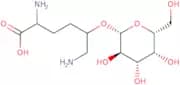
CAS :5-(β-D-Galactopyranosyloxy)-DL-lysine is a custom synthesized compound that has been modified with 5-(β-D-galactopyranosyloxy) groups. It is an oligosaccharide, polysaccharide, and saccharide that belongs to the category of carbohydrates. This product is available for purchase in high purity and has been fluorinated. The CAS number for this product is 35910-05-5.
Formule :C12H24N2O8Degré de pureté :Min. 95%Couleur et forme :PowderMasse moléculaire :324.33 g/mol(2R,4R)-2-[D-Xylo-tetrahydroxybut-1-yl]-1,3-thiazolidine-4-carboxylic acid
CAS :(2R,4R)-2-[D-Xylo-tetrahydroxybut-1-yl]-1,3-thiazolidine-4-carboxylic acid is a methylated saccharide that has been modified by the click chemistry method. It is a synthetic product with high purity and good quality. This compound can be used for glycosylation and oligosaccharide synthesis. (2R,4R)-2-[D-Xylo-tetrahydroxybut-1-yl]-1,3-thiazolidine-4-carboxylic acid has CAS No. 110270-19-4 and can be found in complex carbohydrates in nature.
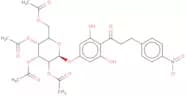
Formule :C8H15NO6SDegré de pureté :Min. 95%Masse moléculaire :253.27 g/mol4'-O-(b-D-2,3,4,6-Tetra-O-acetyl-glucopyranosyl)-4-nitrophloretin
CAS :4'-O-(b-D-2,3,4,6-Tetra-O-acetyl-glucopyranosyl)-4-nitrophloretin is a custom synthesis with Modification. This product was prepared by fluorination and methylation of 4'-O-(b-D-2,3,4,6-tetra-O-[1,2:1,3]triazolium chloride)-4' nitrophloretin. The molecular formula is C21H18N8O12 and molecular weight is 524.32. CAS No. 82628-87-3.
Formule :C29H31NO15Degré de pureté :Min. 95%Masse moléculaire :633.55 g/mol2-Acetamido-1,3,4,6-tetra-O-acetyl-2-deoxy-5-thio-a-D-glucopyranose
CAS :2-Acetamido -1,3,4,6-tetra-O-acetyl-2-deoxy-5-thio-a-D-glucopyranose is a custom synthesis. It is an oligosaccharide and polysaccharide. It is a carbohydrate that has been modified by fluorination and a click modification. The complex carbohydrate contains one monosaccharide sugar. 2AATG can be used in the synthesis of other carbohydrates.
Formule :C16H23NO9SDegré de pureté :Min. 95%Masse moléculaire :405.42 g/molPhenyl 2,3,6-tri-O-benzyl-b-D-thioglucopyranoside
CAS :Phenyl 2,3,6-tri-O-benzyl-b-D-thioglucopyranoside is a high purity, custom synthesis sugar that has been modified with Click modification, fluorination and glycosylation. It is a synthetic compound in the form of an oligosaccharide and monosaccharide. Phenyl 2,3,6-tri-O-benzyl-b-D-thioglucopyranoside has CAS No. 97974-20-4 and can be found under Modification.
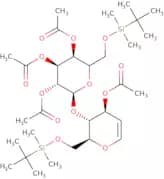
Formule :C33H34O5SDegré de pureté :Min. 95%Masse moléculaire :542.69 g/mol3,2',3',4'-Tetra-O-acetyl-6,6'-di-O-tert-butyldimethylsilyl-lactal
CAS :3,2',3',4'-Tetra-O-acetyl-6,6'-di-O-tert-butyldimethylsilyl-lactal is a glycosylation agent that can be used in the synthesis of oligosaccharides and polysaccharides. It can be fluorinated to create a reactive site for methylation and click modification. 3,2',3',4'-Tetra-O-acetyl-6,6'-di-O-tert-butyldimethylsilyl-lactal is an acetylated lactal with a silyl ether protecting group. This product has been custom synthesized and is available in high purity.
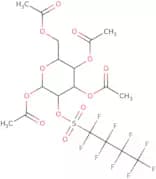
Degré de pureté :Min. 95%1,3,4,6-Tetra-O-acetyl-2-O-nonafluorobutane-sulfonyl-b-D-mannopyranose
CAS :1,3,4,6-Tetra-O-acetyl-2-O-nonafluorobutane-sulfonyl-b-D-mannopyranose is a fluorinated saccharide that can be custom synthesized. It is a glycosylated carbohydrate with a 1,3,4,6 tetra acetyl substitution at the 2 position of the b D mannopyranose moiety. The chemical formula for this compound is C12H28O8FS2. It has been shown to have potential as an antihyperglycemic agent and has been found to be active in tumor models.
Formule :C18H19O12SF9Degré de pureté :Min. 95%Masse moléculaire :630.39 g/molAmitriptilyne N-b-D-glucuronide
Amitriptilyne N-b-D-glucuronide is a fluorinated, monosaccharide that is used in synthetic oligosaccharides and polysaccharides. This product can be custom synthesized to meet customer specifications. Amitriptilyne N-b-D-glucuronide is an oligosaccharide with a complex carbohydrate structure. It can be modified by glycosylation, methylation, and click chemistry. The CAS number for this product is 122470-06-8. The sugar content of this product ranges from 98% to 99%. The purity of this product is greater than 99%.
Degré de pureté :Min. 95%Decyl glucose neopentyl glycol
CAS :Decyl glucose neopentyl glycol is a molecule that is commonly used in cell-based assays to measure the hydrogen peroxide release by cells. It is also used to transport hydrogen peroxide, which is a reactive oxidative species, intracellularly and extracellularly. Decyl glucose neopentyl glycol has been shown to have a range of different isoforms in cellular systems. This allows it to be used as an effective fluorescent marker for the detection of hydrogen peroxide mediated events.
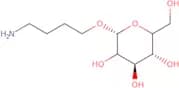
Formule :C35H68O12Degré de pureté :Min. 95%Masse moléculaire :680.91 g/mol4-Aminobutyl β-D-galactopyranoside
CAS :4-Aminobutyl b-D-galactopyranoside is a methylated saccharide that is also a glycosylation reaction product of 4-aminobutyl b-D-galactopyranoside. It has been modified with Click chemistry and fluorinated for use in carbohydrate research, including glycoprotein synthesis, carbohydrate modification, and oligosaccharide synthesis. 4-Aminobutyl b-D-galactopyranoside has been shown to be a potent inhibitor of the enzyme aminoglycoside adenyltransferase 1 (AGT1), which is involved in the synthesis of bacterial cell wall peptidoglycan. This compound has been used as a model for glycosylation reactions as it contains both an amino and sugar moiety.
Formule :C10H21NO6Degré de pureté :Min. 95%Masse moléculaire :251.28 g/mol3-O-Methyl-D-mannopyranose
CAS :3-O-Methyl-D-mannopyranose is a glycosidic compound with immunostimulating properties. It is an intermediate in the synthesis of 3,6-anhydro-N-acetylneuraminic acid and other related carbohydrates. The hydrolysis of this molecule yields silver trifluoromethanesulfonate, chloride, and low molecular weight material. 3-O-Methyl-D-mannopyranose can be used as a reagent for the preparation of high molecular weight material by ion exchange chromatography or by dehydrative coupling.
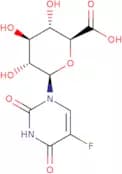
Formule :C7H14O6Degré de pureté :Min. 95%Masse moléculaire :194.18 g/mol5-Fluorouracil N-b-D-glucuronide
CAS :5-Fluorouracil N-b-D-glucuronide is the major metabolite of 5-fluorouracil. It is mainly excreted in urine and bile, and has a high blood level. The glucuronide conjugate of 5-fluorouracin is hydrolyzed by beta-glucuronidase to generate 5-fluorouridine, which can be reabsorbed into the cell to form cytotoxic 5-fluoro uridine triphosphate. This process inhibits protein synthesis, leading to cell death. The half life of 5FU glucuronide is short and it needs to be constantly replaced with new doses. It has also been shown that levels of 5FU glucuronide are higher in tissues than in plasma, which may explain its inhibitory effect on tumors.
Formule :C10H11FN2O8Degré de pureté :Min. 95%Masse moléculaire :306.2 g/mol2-Amino-2-deoxy-D-altrose
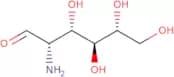
CAS :2-Amino-2-deoxy-D-altrose (2AD) is a molecule with the chemical formula C6H14N2O4. It belongs to the class of compounds known as uronic acids. 2AD is an acetylated molecule that has been structurally studied by X-ray crystallography and NMR spectroscopy. The molecule contains a ring of six carbon atoms, two of which are epoxide groups. The nature of this compound is glycosidic, with focus on hexamethylphosphoramide and diamino oligosaccharides. 2AD has been shown to have anti-inflammatory activities in animals, but its exact mechanism of action remains unknown. This compound may act through a ring-opening reaction or by inhibiting prostaglandin synthesis.
Formule :C6H13NO5Degré de pureté :Min. 95%Masse moléculaire :179.17 g/molMogroside II A2
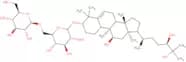
CAS :Mogroside II A2 is a fructan that is found in the fruit of the plant Glycosmis erythrorhiza, which is a member of the family Rutaceae. This compound has been shown to have immune-modulating properties and is used as an ingredient in some pharmaceutical drugs. Mogroside II A2 has also been demonstrated to have antiviral activity and may be helpful for cancer treatment. The effects of this compound on kidney fibrosis are unclear; however, it does have anti-inflammatory properties.
Formule :C42H72O14Degré de pureté :Min. 95%Couleur et forme :PowderMasse moléculaire :801.01 g/mol1,4:3,6-Dianhydro-5-nitro-D-glucitol
CAS :Isosorbide is a naturally occurring sugar alcohol (polyol) that is found in small quantities in many plants and fruits. It is used as a pharmaceutical drug to treat angina pectoris, congestive heart failure, and high blood pressure. Isosorbide has been shown to inhibit the activity of matrix metalloproteinases (MMPs), which are enzymes that degrade extracellular matrix proteins. This effect may be beneficial for patients with disorders such as arthritis. Isosorbide also increases nitric oxide production, leading to vasodilation and improved blood flow. The therapeutic effect of isosorbide has been demonstrated in experimental models using mice with congestive heart failure due to myocardial infarction or chronic heart disease. Pharmacological treatment of these animals with isosorbide resulted in an improvement of left ventricular function, reduction of myocardial fibrosis, and reduced levels of cardiac markers.
Formule :C6H9NO6Degré de pureté :Min. 95%Masse moléculaire :191.14 g/molDipalmitin
CAS :Dipalmitin is a chemical substance that belongs to the group of fatty acid esters. It has been shown to inhibit the activity of a number of enzymes, including proteases and lipases. Dipalmitin also inhibits the production of diacylglycerol and glycerides in cells, which are necessary for cellular growth. The exact mechanism by which dipalmitin inhibits these enzymes is unknown, but it has been hypothesized that it may function as a competitive inhibitor or an allosteric inhibitor. Dipalmitin also has been shown to have antiviral properties against HIV infection in model systems. The antiviral activity has been attributed to its ability to inhibit viral protein synthesis and block the assembly of viral particles at the cell membrane.
Formule :C35H68O5Degré de pureté :Min. 95%Masse moléculaire :568.91 g/mol


![(2R,4R)-2-[D-Xylo-tetrahydroxybut-1-yl]-1,3-thiazolidine-4-carboxylic acid](/_next/image/?url=https%3A%2Fstatic.cymitquimica.com%2Fproducts%2F3D%2Fthumb-webp%2FMX01042.webp&w=3840&q=75)