Glycosciences
La glycosciences est l'étude des glucides et de leurs dérivés, ainsi que des interactions et des fonctions biologiques auxquelles ils participent. Ce domaine de recherche est crucial pour comprendre une grande variété de processus biologiques, y compris la reconnaissance cellulaire, la signalisation, la réponse immunitaire et le développement des maladies. La glycosciences a des applications importantes en biotechnologie, en médecine et dans le développement de nouveaux médicaments et thérapies. Chez CymitQuimica, nous proposons une large sélection de produits de haute qualité et pureté pour la recherche en glycosciences. Notre catalogue comprend des monosaccharides, des oligosaccharides, des polysaccharides, des glyconjugués et des réactifs spécifiques, conçus pour soutenir les chercheurs dans leurs études sur la structure, la fonction et les applications des glucides dans les systèmes biologiques. Ces ressources sont destinées à faciliter les découvertes scientifiques et les applications pratiques dans divers domaines des biosciences et de la médecine.
Sous-catégories appartenant à la catégorie "Glycosciences"
- Aminosucres(108 produits)
- Anticorps Glyco-Related(282 produits)
- Glycolipides(46 produits)
- Glycosaminoglycanes (GAGs)(55 produits)
- Glycosides(419 produits)
- Monosaccharides(6.624 produits)
- Oligosaccharides(3.682 produits)
- Polysaccharides(503 produits)
11046 produits trouvés pour "Glycosciences"
Trier par
Degré de pureté (%)
0
100
|
0
|
50
|
90
|
95
|
100
Chondroitin sulfate C sodium salt
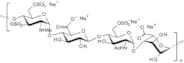
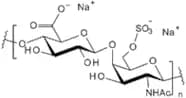
CAS :The disaccharide repeating unit of chondroitin sulphate consists of N-acetyl galactosamine sulphate linked β1,4 to glucuronic acid. Each monosaccharide may be left unsulphated, sulphated once, or sulphated twice. The most common pattern is that the hydroxyl groups of the 4 and 6 positions of the N-acetyl-galactosamine are sulphated, with some chains having the position 2 of the glucuronic acid sulphated. Average molecular weight of 23,000 to 41,000Couleur et forme :White Powder(2R, 3R, 4R) -3, 4- Dihydroxy- 2- (hydroxymethyl) - 1- pyrrolidinepropanoic acid
CAS :<p>(2R, 3R, 4R) -3, 4-Dihydroxy-2-(hydroxymethyl)-1-pyrrolidinepropanoic acid is a sugar derivative of Glycosylation. The compound is a custom synthesis that can be modified to meet your requirements. The CAS number is 1207674-35-8. This product has purity of >99% and can be used in the laboratory or as an intermediate in chemical synthesis.</p>Degré de pureté :Min. 95%1,2,3,4-Tetra-O-acetyl-β-D-glucopyranose
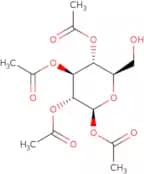
CAS :Building block for the 6-O-modification of Glc, including 6-O-glycosylationsFormule :C14H20O10Degré de pureté :Min. 98 Area-%Couleur et forme :PowderMasse moléculaire :348.3 g/mol2-Acetamido- 2- deoxy- 3, 4, 6- tri- O- methyl-D- glucose
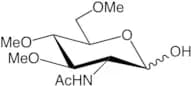
CAS :2-Acetamido-2-deoxy-3,4,6-tri-O-methyl-D-glucose is a modified sugar. It can be used as a feedstock in glycosylation reactions. This compound has been shown to be resistant to proteolytic degradation and hydrolysis by aminoglycosides.Formule :C11H21NO6Degré de pureté :Min. 95%Masse moléculaire :263.29 g/mol[2R- (2a, 3a, 4b, 5b) ] -1-Benzyl- 3,4-O-isopropylidene-2-methyl- 3, 4, 5- piperidinetriol
<p>This product is a custom synthesis. It is an oligosaccharide that has been modified with fluorine and methylation. This product is glycosylated, which means it has a complex carbohydrate attached to the sugar. It can be used as a monosaccharide or an oligosaccharide, depending on how it will be used in a reaction. This product is synthetic and can be ordered for high purity.</p>Degré de pureté :Min. 95%N-Acetyl-L-talosaminuronic acid
CAS :<p>N-Acetyl-L-talosaminuronic acid is a natural product that has been shown to have anti-inflammatory activity in experimental models of inflammatory bowel disease. N-Acetyl-L-talosaminuronic acid inhibits the production of proinflammatory cytokines, such as tumor necrosis factor alpha (TNFα), by binding to TNFα receptors on the surface of cells. This can be attributed to its ability to inhibit ATP levels and reduce oxidative stress, which are both factors that contribute to inflammation. N-Acetyl-L-talosaminuronic acid also has been shown to inhibit inflammatory responses in human monocytes and neutrophils. It binds specifically to her2+ breast cancer cells and inhibits their growth in culture. Furthermore, it has been shown to have cytotoxic effects on bladder cancer cells and can be used for the treatment of bladder cancer.</p>Formule :C8H13NO7Degré de pureté :Min. 95 Area-%Couleur et forme :PowderMasse moléculaire :235.19 g/mol1,2:3,4:5,6-Tri-O-isopropylidene-L-glycero-L-gulo-heptitol
<p>1,2:3,4:5,6-Tri-O-isopropylidene-L-glycero-L-gulo-heptitol is a methylated saccharide. It is a synthetic carbohydrate with a molecular weight of 568.87 and a CAS No. of 310540-53-0. This product is soluble in water and has been shown to be resistant to the pH of stomach acid. 1,2:3,4:5,6-Tri-O-isopropylidene-L-glycero-L-gulo-heptitol can be used as a click modification or modification reaction to make oligosaccharides or polysaccharides. This product can also be used for glycosylation reactions or custom synthesis of carbohydrates such as sugars or complex carbohydrates. 1,2:3,4:5,6 -Tri -O -isopropylidene -</p>Degré de pureté :Min. 95%5-Azido-5-deoxy-6,7-O-isopropylidene-D-glycero-L-gluco-heptono-1.4-lactone
5-Azido-5-deoxy-6,7-O-isopropylidene-D-glycero-L-gluco-heptono-1.4-lactone is a methylated glycoside that can be used in the synthesis of complex carbohydrates. The compound has a CAS number of 66827–16–0 and can also be found under the name 5-[3-(2,3,4,6,7,8,-Hexahydrobenzo[b]thiophenium Sulfonyl)propyl]-5′-[3-(2,3,4,6,7,8,-Hexahydrobenzo[b]thiophenium Sulfonyl)propyl]-5′-[(2S)-1-(hydroxymethyl)piperidinium]dithiocarbamate. 5‑Azido‑5‑deoxy‑Degré de pureté :Min. 95%Heparin derived dp10 saccharide ammonium salt
Heparin-derived dp10 saccharide ammonium salt is a glycosylation product of heparin. This compound is synthesized by the treatment of heparin with a fluorinating agent, such as N-fluoro-N'-(2-chloroethyl)peroxycarbonyl chloride or N-fluoro-N'-(2-bromoethyl)peroxycarbonyl chloride, followed by reaction with an amine. The compound can be modified for specific applications through the use of click chemistry, which allows for the selective modification of either the sugar or side chain of the molecule. This product has been characterized and shown to have high purity and a CAS number.Degré de pureté :Min. 95%Couleur et forme :PowderMasse moléculaire :~3000 (Average)1,2,3,4-Tetra-O-acetyl-6-azido-6-deoxy-D-galactopyranose
CAS :<p>Synthetic carbohydrate building block</p>Formule :C14H19N3O9Degré de pureté :Min. 95%Masse moléculaire :373.32 g/molN-Cbz-D-glucosamine
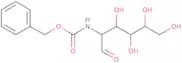
CAS :N-Cbz-D-glucosamine is a synthetic molecule that is used in the synthesis of oligosaccharides. It is an acceptor for choline hydroxylase and participates in the biosynthesis of glycoproteins. N-Cbz-D-glucosamine inhibits virus RNA synthesis and has been shown to be effective against uninfected cells. The ring opening of the molecule leads to the formation of a cyclic amide, which can inhibit protein synthesis by binding to ribosomes.Formule :C14H19NO7Degré de pureté :Min. 95%Couleur et forme :PowderMasse moléculaire :313.3 g/molβ-Xylobiose hexa-O-acetate
CAS :<p>β-Xylobiose hexa-O-acetate is an acetyl protected xylobiose</p>Formule :C22H30O15Degré de pureté :Min. 95%Couleur et forme :PowderMasse moléculaire :534.46 g/molN-Acetyl-heparin
CAS :N-Acetyl heparin is a glycosaminoglycan, which occurs in many mammalian tissues and has important anticoagulant and thrombolytic properties. The chemical structure is composed mainly of two disaccharide repeating units A and B. A is L-iduronic acid 2-suplhate linked α-(1,4) to 2-deoxy-2-sulfamido-D-galactose 6-sulphate, while B is D-glucuronic acid β-(1,4) linked to 2-deoxy-2-sulfamido-D-glucose 6-sulphate.Degré de pureté :Min. 95%Couleur et forme :PowderL-Idonic acid sodium
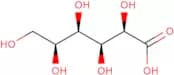
CAS :<p>L-Idonic acid sodium is a plant hormone that regulates carbohydrate metabolism. It has been shown to regulate the synthesis of galacturonic acid and malic acid, which are important for the production of glucose. L-Idonic acid sodium also regulates the synthesis of fatty acids, which are important for cell membrane formation. L-Idonic acid sodium is an intermediate in the biosynthesis of l-tartaric acid, which is an enzyme substrate. The gene product that encodes this molecule has been characterized as a protein with a molecular weight of approximately 9,000 daltons and a hydroxyl group on C-3.</p>Formule :C6H11O7NaDegré de pureté :Min. 95%Couleur et forme :PowderMasse moléculaire :218.15 g/mol(2R, 3R, 4R) -3, 4- Difluoro- 1- (phenylmethyl) - 2- pyrrolidinemethanol
CAS :(2R, 3R, 4R) -3, 4- Difluoro- 1- (phenylmethyl) - 2- pyrrolidinemethanol is a synthetic compound that has been modified to contain fluoro substituents. It is an intermediate for the synthesis of oligosaccharides and complex carbohydrates. This compound can be used in click chemistry or glycosylation reactions. The purity of this compound is greater than 99% and it has not been tested on animals.Degré de pureté :Min. 95%6-O-(b-D-Galactopyranosyl)-D-glucopyranose
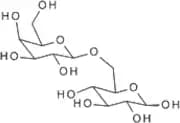
CAS :<p>6-O-(b -D-Galactopyranosyl)-D-glucopyranose, also called allolactose, is a glucose disaccharide with β1-6 glycosidic link, similar to lactose (glucose β1-4 linked). Allolactose is an inducer of the lac operon in E. coli and many other enteric bacteria.</p>Formule :C12H22O11Degré de pureté :Min. 90 Area-%Couleur et forme :White PowderMasse moléculaire :342.3 g/molDextran 70 - MW 64,000 to 76,000
CAS :Dextran is α-(1,6)-linked α-D-glucan with α-(1,3)-linked glucose branch points produced by fermentation of Leuconostoc mesenteroides via the action of the enzyme dextransucrase on sucrose. The main use for native dextran is as an extender in blood transfusions and products having a range of sharp cut-off molecular weights are produced commercially for this and other applications. A complex of Iiron with dextran, known as iron dextran, is used as a source of iron for baby piglets which are often anaemic at birth.Couleur et forme :White Off-White Powder2,3,4,6-Tetra-O-acetyl-b-D-thiogalactopyranose
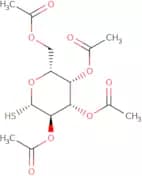
CAS :<p>2,3,4,6-Tetra-O-acetyl-b-D-thiogalactopyranose is a synthetic sugar that is prepared by the fluorination of D-galactopyranose and subsequent acetylation. This compound can be used for glycosylation reactions and as a substrate for click chemistry. It is an oligosaccharide with four monosaccharides in its backbone. The CAS number of 2,3,4,6-Tetra-O-acetyl-b-D-thiogalactopyranose is 50615-66-2.</p>Formule :C14H20O9SDegré de pureté :Min. 95%Couleur et forme :PowderMasse moléculaire :364.37 g/mol4-Methoxyphenyl 2,4,6-tri-O-acetyl-b-D-galactopyranoside
CAS :4-Methoxyphenyl 2,4,6-tri-O-acetyl-b-D-galactopyranoside is a synthetic carbohydrate that can be modified to meet your requirements. It is also known as Glycosylation, Oligosaccharide, sugar, Synthetic, Fluorination, Custom synthesis, Methylation, CAS No. 383905-62-2 and Monosaccharide Polysaccharide Saccharide. This product has been Click modification and complex carbohydrate. We offer this product at high purity and with modification.Formule :C19H24O10Degré de pureté :Min. 95%Masse moléculaire :412.39 g/molIsopropyl beta-D-glucopyranoside
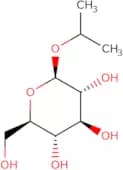
CAS :<p>Isopropylbeta-D-glucopyranoside is a chemical compound that has been studied for its antibacterial activity. It has been shown to inhibit the growth of bacteria by reacting with fatty acids in the cell membrane, which leads to the disruption of the cell membrane and death. Isopropylbeta-D-glucopyranoside is a member of the sugar alcohols class, and it can be synthesized from glucose, fatty acid, and hydrochloric acid using an acid catalyst. The reaction system is typically carried out in microcapsules.</p>Formule :C9H18O6Degré de pureté :Min. 95%Couleur et forme :PowderMasse moléculaire :222.24 g/molSialyllacto-N-fucopentaose I
<p>Sialyllacto-N-fucopentaose I is a high purity, custom synthesis, fluorinated carbohydrate that has been modified by methylation and click chemistry. This oligosaccharide is composed of a saccharide with a molecular weight of 908.5 g/mol and an enantiomeric purity of 99%. Sialyllacto-N-fucopentaose I is an Oligosaccharide with a CAS number of 61497-04-8. It is used in the synthesis of polysaccharides or as a monosaccharide or sugar substitute to produce high purity products.</p>Formule :C43H72N2O33Degré de pureté :Min. 95%Masse moléculaire :1,145.03 g/molKifunensine
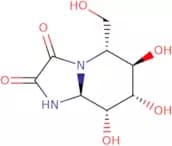
CAS :<p>Kifunensine is a potent and specific inhibitor of plant and animal α-mannosidase I with IC50 in nanomolar range. It inhibits the enzyme isoforms in Golgi apparatus (GMI) and endoplasmatic reticulum (ERMI). The compound prevents mannose trimming on glycoproteins and shifts the glycoform content from complex to oligomannose type. It's used for the production of recombinant therapeutic glycoproteins with mannose rich N-linked glycans.</p>Formule :C8H12N2O6Degré de pureté :Min. 99 Area-%Couleur et forme :PowderMasse moléculaire :232.19 g/mol4-Aminobutyl 6-O-(a-D-mannopyranosyl)-a-D-mannopyranoside
<p>4-Aminobutyl 6-O-(a-D-mannopyranosyl)-a-D-mannopyranoside is a synthetic saccharide that can be used as a substituent in the synthesis of complex carbohydrates. It is an aminobutyric acid methyl ester derivative of D-mannose with a pyranose ring. 4-Aminobutyl 6-O-(a-D-mannopyranosyl)-a-D-mannopyranoside has been shown to react with acetic anhydride and diazomethane to yield methylated derivatives of D-glucal, D-sorbitol, and DMPG. It is also used for the synthesis of oligosaccharides, glycosylations, and fluorinations.</p>Degré de pureté :Min. 95%6-Deoxy-D-lactosylamine
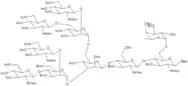
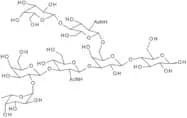
<p>6-Deoxy-D-lactosylamine (6DLA) is a carbohydrate that belongs to the group of oligosaccharides. It is an N-substituted glycosylated sugar with a methyl ester at the 6 position. The chemical name for 6DLA is 6-deoxy-N,N′,N″-(2,3,4,6-tetra-O-acetyl)-β--galactopyranosyl-(1→4)-β--glucopyranoside and it has CAS number 59225-12-5. This product can be custom synthesized and offers high purity. It can also be modified in different ways to create new products such as fluorination or methylation.</p>Degré de pureté :Min. 95%Benzyl 2-acetamido-4-O-{2-acetamido-4-O-[[2,4-Di-O-acetyl-3-O-[2,4-di-O-(2-acetamido-3,4,6-tri-O-acetyl-2-deoxy-b-D-glucopyranosyl)- 3,6-di-O-benzyl-a-D-mannopyranosyl]-6-O-[3,4-di-O-acetyl-2,6-di-O-(2-acetamido-3,4,6-tri-O-acetyl-2-deoxy-b-D-glucopyr
CAS :<p>The carbohydrate is a saccharide that is a modification of the monosaccharide. It is synthesized from D-mannose and D-glucose and has a fluorination at the C4 position. The carbohydrate has been custom synthesized for high purity, methylation, glycosylation, and click modification.</p>Formule :C167H206N6O65SDegré de pureté :Min. 95%Masse moléculaire :3,369.49 g/mol1,2-O-Isopropylidene-a-D-xylofuranose
CAS :Chiral building block for synthesis of carbohydrate and nucleoside derivativesFormule :C8H14O5Degré de pureté :(%) Min. 98%Couleur et forme :White PowderMasse moléculaire :190.19 g/molMonofucosyllacto-N-hexaose I
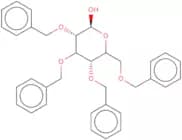
CAS :<p>Sialylated tetrasaccharide found in human milk, possible health benefits for the neonate by supporting resistance to pathogens, gut maturation, immune function, and cognitive development. Purity typically above 70%. Contains other oligosaccharide fragments. For a typical IC trace see datasheet section</p>Formule :C46H78N2O35Degré de pureté :(By Hpaec) Min. 70%Couleur et forme :PowderMasse moléculaire :1,219.1 g/mol2,3,4,6-Tetra-O-benzyl-L-mannopyranose
CAS :<p>2,3,4,6-Tetra-O-benzyl-L-mannopyranose is a synthetic saccharide. It is a high purity sugar that can be used as a custom synthesis and glycosylation reagent. This compound is also known as 1,2:3,4:5,6-penta-O-benzylidene-D-mannopyranose. It has CAS No. 103368-00-9 and Carbohydrate.</p>Formule :C34H36O6Degré de pureté :Min. 95%Masse moléculaire :540.7 g/molLactose octaisobutyrate
<p>Synthetic building block for oligosaccharide synthesis</p>Formule :C44H70O19Degré de pureté :Min. 95%Couleur et forme :PowderMasse moléculaire :903.02 g/molMethyl 2,3,4-tri-O-benzoyl-6-O-triisopropylsilyl-a-D-galactopyranoside
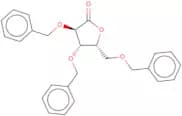
CAS :Methyl 2,3,4-tri-O-benzoyl-6-O-triisopropylsilyl-a-D-galactopyranoside is a custom synthesis with CAS No. 356060-82-7. It is a high purity Glycosylation and Carbohydrate that has been modified with fluorination and synthesized using the Click modification. This product is a complex carbohydrate with an Oligosaccharide and Polysaccharide structure. Methyl 2,3,4-tri-O-benzoyl-6-O-triisopropylsilyl -a -D -galactopyranoside has been methylated and glycosylated.Formule :C37H46O9SiDegré de pureté :Min. 95%Masse moléculaire :662.84 g/mol2,3,5-Tri-O-benzyl-D-xylonic acid-1,4-lactone
CAS :<p>2,3,5-Tri-O-benzyl-D-xylonic acid-1,4-lactone is a complex carbohydrate that has been synthesized from saccharides. This compound is fluorinated and methylated at the 2, 3, and 5 positions of the xylan backbone. The lactone ring has been modified with a click chemistry reaction to introduce an alkyne group for glycosylation. This product can be custom synthesized to include any modification of your choice.</p>Formule :C26H26O5Degré de pureté :Min. 98 Area-%Couleur et forme :PowderMasse moléculaire :418.48 g/molEthyl 2-O-benzoyl-3-O-benzyl-4-O-Fmoc-b-D-thioglucopyranoside
<p>Ethyl 2-O-benzoyl-3-O-benzyl-4-O-Fmoc-b-D-thioglucopyranoside is a sugar that belongs to the class of carbohydrates. It is a synthetic compound and can be used as a building block for oligosaccharides, monosaccharides, and saccharides. This product has been shown to have high purity, custom synthesis, and fluoroquinolone resistance.</p>Degré de pureté :Min. 95%2,3,4-Trichloro-2,3,4-trideoxy-D-fructose
<p>2,3,4-Trichloro-2,3,4-trideoxy-D-fructose is a custom synthesis that is a complex carbohydrate. It has been modified with glycosylation and methylation to produce the desired product. This compound has shown potential for use as a therapeutic agent in cancer treatment.</p>Formule :C6H9Cl3O3Degré de pureté :Min. 95%Masse moléculaire :235.5 g/mol4-Aminophenyl 1,3-a-1,6-a-D-mannotriose
<p>4-Aminophenyl 1,3-a-1,6-a-D-mannotriose is a custom synthesis of the complex carbohydrate Oligosaccharide. It belongs to the group of saccharides and has a CAS number. This product is modified with methylation and glycosylation and is made up of a series of monosaccharides linked by alpha (1,4) or beta (1,2) glycosidic bonds. 4-Aminophenyl 1,3-a-1,6-a-D-mannotriose may be fluorinated during its synthesis using an electrophilic substitution reaction. This product is synthetic and has high purity.</p>Degré de pureté :Min. 95%3'-Sialyl Lewis A-sp-biotin
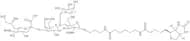
CAS :3'-Sialyl Lewis A-sp-biotin is a biotinylated oligosaccharideFormule :C50H84N6O26SDegré de pureté :Min. 95%Couleur et forme :White PowderMasse moléculaire :1,217.29 g/mol3,4,6-Tri-O-acetyl-N-azidoacetylmannosamine
<p>3,4,6-Tri-O-acetyl-N-azidoacetylmannosamine is a custom synthesis, modification and fluorination of mannose. It is an oligosaccharide composed of 3,4,6-tri-O-acetyl-N-azidoacetylmannosamine which is linked to a glycosylated saccharide. The carbohydrate backbone is composed of two glucose molecules with the modified mannose attached at the 1 position on each. This compound can be used in research as a model for N3'-linked sugar modifications and has been shown to have antiviral properties.</p>Degré de pureté :Min. 95%Methyl 2,3,4-tri-O-acetyl-6-O-triisopropylsilyl-a-D-mannopyranoside
CAS :<p>Methyl 2,3,4-tri-O-acetyl-6-O-triisopropylsilyl-a-D-mannopyranoside is a custom synthesis of a monosaccharide with a fluorinated methyl group. The compound has been synthesized by the Click modification of an oligosaccharide and polysaccharide. This product is available in high purity, and can be modified to suit your needs. For more information, please contact us today!</p>Formule :C22H40O9SiDegré de pureté :Min. 95%Masse moléculaire :476.64 g/molα-D-Galacturonic acid 1-phosphate
a-D-Galacturonic acid 1-phosphate is a component of the polygalacturonate skeleton. It is an intermediate in the biosynthesis of d-galacturonic acid and galacturonic acid. This compound is also involved in cellular growth, as it is a precursor for uronic acids. The enzyme catalyzing the conversion of a-D-galacturonic acid 1-phosphate to uronic acid has been purified from Phaseolus vulgaris. It has been shown that this enzyme can be inhibited by phosphatase inhibitors such as pyridoxal phosphate, and that it can be activated by nucleotide analogs such as adenosine 5'-diphosphate (ADP) or cytidine 5'-triphosphate (CTP).Formule :C6H11O10PDegré de pureté :Min. 95%Couleur et forme :PowderMasse moléculaire :274.12 g/mol5,6-O-Isopropylidene-L-gulono-1,4-lactone
CAS :5,6-O-Isopropylidene-L-gulono-1,4-lactone is a glycerol derivative that has potent cytotoxic activity. It is able to inhibit the growth of cancer cells and induce apoptosis in human cell lines. 5,6-O-Isopropylidene-L-gulono-1,4-lactone can be used as an anti-cancer drug for the treatment of various types of cancers. The drug also has an ability to inhibit polyurethane synthesis and introduce new functional groups into polyurethanes. 5,6-O-Isopropylidene L gulono 1,4 lactone is not toxic to healthy cells because it does not bind to DNA or RNA; however it binds to polymers such as proteins and polyurethane chains. This compound has been shown to have a skeleton consisting of triterpenoid structures.Formule :C9H14O6Masse moléculaire :218.20 g/mol1-Deoxy-D-sorbose
<p>D-sorbose is a diastereomer of D-xylose. It inhibits the glycolysis pathway, which stops the production of energy and leads to cell death. D-sorbose is synthesized from D-xylose by enzymatic conversion with 1,4-dihydroxybenzene. The crystalline form of D-sorbose is polymorphic and can be identified using X-ray diffraction. It has been shown to have cytotoxic effects on C. elegans and A. actinomycetes, but not on E. coli or other Gram negative bacteria. The imbalance in the ratio of these organisms may lead to an increased risk for cancer in humans.</p>Degré de pureté :Min. 95%Fructooligosaccharide
CAS :Fructooligosaccharide is a natural carbohydrate that is used in dietary supplements and as an additive to food products. It is a prebiotic, meaning it stimulates the growth of beneficial bacteria in the colon. Fructooligosaccharide has been shown to be effective against bowel disease by up-regulating protein genes and enzyme activities. Fructooligosaccharide also has significant anti-inflammatory properties. The anti-inflammatory effects may be due to its ability to inhibit prostaglandin synthesis.Degré de pureté :Min. 95 Area-%Couleur et forme :White PowderPregelatinized starch
CAS :Starch is a two component polysaccharide mixture of amylose and amylopectin. Amylose is a linear polysaccharide of α (1,4)-linked glucose residues and averages 20 to 30% of the total in most native starches. Amylopectin is a highly branced glucan containing both a (1,4) and a (1,6) linkages. The number of glucose residues in a single starch molecule can vary from five hundred to several hundred thousand, depending on the type of starch. Starch is the major storage form of energy in plants, just as glycogen is the storage form of energy for animals. The plant directs the starch molecules to the amyloplasts, where they are deposited to form granules. Thus, both in plants and in the extracted concentrate, starch exists as granules varying in diameter from 2 to 130 μm.Degré de pureté :Min. 95%Couleur et forme :Powder2-Azido- 2- deoxy- 5, 6- O- isopropylidene -L- gulonic acid g- lactone
<p>2-Azido-2-deoxy-5,6-O-isopropylidene-L-gulonic acid g-lactone is a synthetic compound that is used as a building block in the synthesis of various saccharides. It can be modified to form glycosylation products and complex carbohydrates. The chemical name for this compound is 2-azido-2,3,4,5,6 -pentafluoroethane sulfonic acid. This molecule has a molecular weight of 162.14 and a molecular formula of C9H9F7O4S. It has an empirical formula of C8H12FO5S. 2-Azido-2,3,4,5,6 -pentafluoroethane sulfonic acid is soluble in water and ethanol and can be stored at room temperature for up to one year without decomposing.</p>Degré de pureté :Min. 95%1,2-Dideoxy-3,5-di-O-toluoyl-D-ribose
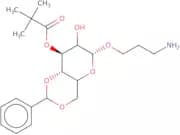
CAS :<p>1,2-Dideoxy-3,5-di-O-toluoyl-D-ribose is a synthetic sugar that can be used in the synthesis of complex carbohydrates. It has been modified with fluorine, methylation, and click chemistry. It is also available as a high purity product. 1,2-Dideoxy-3,5-di-O-toluoyl-D-ribose is an oligosaccharide that is used in glycosylation reactions to form polysaccharides or saccharides. Click chemistry allows for the modification of this sugar with other molecules such as amino acids or peptides. This modification may be useful for studying protein interactions or for drug development.</p>Formule :C21H22O5Degré de pureté :Min. 95%Masse moléculaire :354.4 g/mol3-Aminopropyl 4,6-O-benzylidene-3-O-pivaloyl-b-D-galactopyranoside
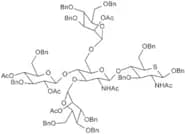
CAS :<p>3-Aminopropyl 4,6-O-benzylidene-3-O-pivaloyl-b-D-galactopyranoside is a glycosylated and fluorinated saccharide that is used as a building block for the synthesis of complex carbohydrates. It can be modified to produce glycans with desired properties, such as improved solubility or stability in high temperatures. This product is available in custom synthesis and high purity.</p>Formule :C21H31NO7Degré de pureté :Min. 95%Masse moléculaire :409.47 g/molBenzyl 2-acetamido-4-O-[2-acetamido-4-O-(2,4-di-O-acetyl-3,6-di-O-benzyl-b-D-glucopyranosyl)-3,6-di-O-(2-O-acetyl-3,4,6-tri-O-benzyl -a-D-mannopyranosyl)-2-deoxy-b-D-glucopyranosyl]-3,6-di-O-benzyl-2-deoxy-5-thio-b-D-glucopyranoside
<p>This compound is a custom synthesis for Modification, Fluorination, Methylation, Monosaccharide, Synthetic, Click modification, Oligosaccharide and saccharide. It has CAS No. and Polysaccharide as Carbohydrate. The molecular weight of this compound is</p>Formule :C119H132N2O29SDegré de pureté :Min. 95%Masse moléculaire :2,086.38 g/mol2,3,5-Tri-O-benzyl-L-xylofuranose
CAS :<p>2,3,5-Tri-O-benzyl-L-xylofuranose is a sugar molecule that has been modified to inhibit glycosidases. 2,3,5-Tri-O-benzyl-L-xylofuranose is an iminosugar that inhibits the enzyme β-glucosidase and α-galactosidase. The compound is not metabolized and it binds to the enzyme's active site. 2,3,5-Tri-O-benzyl L xylofuranose has been shown to be effective at inhibiting all of the glycosidases tested in this study with inhibition potencies ranging from 0.1 mM to 10 mM. This compound also inhibits epoxides and cyclic enzymes such as azido reductase and dihydropyrimidine dehydrogenase.</p>Formule :C26H28O5Degré de pureté :Min. 95%Couleur et forme :PowderMasse moléculaire :420.5 g/mol1,2,3,4,6-Penta-O-acetyl-5-thio-b-D-galactopyranoside
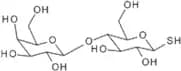
<p>The 1,2,3,4,6-Penta-O-acetyl-5-thio-b-D-galactopyranoside is a custom synthesis. The compound is a complex carbohydrate that belongs to the group of Oligosaccharides. It is a saccharide with six hydroxyl groups and one acetate ester group. The CAS number for this compound is CID:270145-25-0. This compound has been modified by methylation and glycosylation. The 1,2,3,4,6-Penta-O-acetyl-5-thio-b-D-galactopyranoside can be used as an intermediate in the synthesis of other compounds with similar structures.</p>Degré de pureté :Min. 95%4-O-(b-D-Galactopyranosyl)-b-D-thioglucopyranose
4-O-(b-D-Galactopyranosyl)-b-D-thioglucopyranose is a custom synthesis carbohydrate. It is an oligosaccharide that consists of a monosaccharide with a b-D-galactopyranosyl group and a b-D-thioglucopyranose group. 4-O-(b-D-Galactopyranosyl)-b-D-thioglucopyranose is a polysaccharide and belongs to the class of carbohydrates, which are saccharides or sugars. Carbohydrates are important in cell walls and are modified by methylation, glycosylation, and click modification. Carbohydrates can be classified as simple or complex carbohydrates. Simple carbohydrates contain one molecule with one type of sugar unit bonded together, while complex carbohydrates have more than one type of sugar unit bonded together.Formule :C12H22O10SDegré de pureté :Min. 95%Couleur et forme :PowderMasse moléculaire :358.36 g/mol6’-Sulfated-N-acetyllactosamine
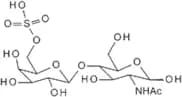
<p>6’-Sulfated-N-acetyllactosamine (6SA) is a complex carbohydrate that is a glycosylation product of lactose. It is methylated at the hydroxyl group and then click-modified by the addition of sulfate groups. 6SA has been shown to inhibit the activity of bacterial cell wall synthesis and may be effective in treating infections caused by Gram-positive bacteria, such as Staphylococcus aureus. 6SA also has antifungal properties and is effective against Candida albicans, including drug-resistant strains. This compound can be custom synthesized or purchased from commercial suppliers.</p>Formule :C14H25NO14SDegré de pureté :Min. 95%Couleur et forme :PowderMasse moléculaire :463.41 g/mol


![[2R- (2a, 3a, 4b, 5b) ] -1-Benzyl- 3,4-O-isopropylidene-2-methyl- 3, 4, 5- piperidinetriol](/_next/image/?url=https%3A%2Fstatic.cymitquimica.com%2Fproducts%2F3D%2Fthumb-webp%2FMB163318.webp&w=3840&q=75)