Glycosciences
La glycosciences est l'étude des glucides et de leurs dérivés, ainsi que des interactions et des fonctions biologiques auxquelles ils participent. Ce domaine de recherche est crucial pour comprendre une grande variété de processus biologiques, y compris la reconnaissance cellulaire, la signalisation, la réponse immunitaire et le développement des maladies. La glycosciences a des applications importantes en biotechnologie, en médecine et dans le développement de nouveaux médicaments et thérapies. Chez CymitQuimica, nous proposons une large sélection de produits de haute qualité et pureté pour la recherche en glycosciences. Notre catalogue comprend des monosaccharides, des oligosaccharides, des polysaccharides, des glyconjugués et des réactifs spécifiques, conçus pour soutenir les chercheurs dans leurs études sur la structure, la fonction et les applications des glucides dans les systèmes biologiques. Ces ressources sont destinées à faciliter les découvertes scientifiques et les applications pratiques dans divers domaines des biosciences et de la médecine.
Sous-catégories appartenant à la catégorie "Glycosciences"
- Aminosucres(108 produits)
- Anticorps Glyco-Related(282 produits)
- Glycolipides(46 produits)
- Glycosaminoglycanes (GAGs)(55 produits)
- Glycosides(419 produits)
- Monosaccharides(6.624 produits)
- Oligosaccharides(3.682 produits)
- Polysaccharides(503 produits)
11046 produits trouvés pour "Glycosciences"
Trier par
Degré de pureté (%)
0
100
|
0
|
50
|
90
|
95
|
100
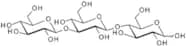
1,3:1,4 b-Glucotriose (A)
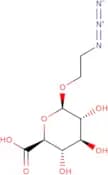
CAS :<p>1,3:1,4 b-Glucotriose (A) is a custom synthesis that is available with a purity of ≥98%. It is a fluorinated polysaccharide with a complex structure that can be modified to produce different variations. The methylation status of the compound can be customized as well. This product is an oligosaccharide and polysaccharide sugar that contains one glucose unit. It has been synthesized from the monosaccharide sugar and it can be used for chemical modification or for research purposes.</p>Formule :C18H32O16Degré de pureté :Min. 95%Couleur et forme :White PowderMasse moléculaire :504.44 g/mol2-Azidoethyl b-D-glucopyranosiduronic acid
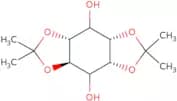
CAS :<p>2-Azidoethyl b-D-glucopyranosiduronic acid is a synthetic, fluorinated sugar that is used as a click modification to saccharides. It has the ability to be modified with methyl groups and glycosylation, which provide potential for synthesis of complex carbohydrates. The CAS number for 2-azidoethyl b-D-glucopyranosiduronic acid is 128095-64-7.</p>Formule :C8H13N3O7Degré de pureté :Min. 95%Masse moléculaire :263.2 g/mol1,2:4,5-Di-O-isopropylidene-D,L-myo-inositol
CAS :<p>1,2:4,5-Di-O-isopropylidene-D,L-myo-inositol is a custom synthesized product that has been modified to contain a fluorine atom. It is an oligosaccharide and polysaccharide. This product is used as a synthetic precursor to other products such as saccharides, carbohydrates and monosaccharides.</p>Formule :C12H20O6Degré de pureté :Min. 95%Masse moléculaire :260.28 g/molb-L-Xylose-1-phosphate
<p>b-L-Xylose-1-phosphate is a methylated, fluorinated, and custom synthesized monosaccharide that can be modified to produce an oligosaccharide or polysaccharide. This monomer is a sugar that is found in complex carbohydrates and has a purity of greater than 99%. It can be used for the synthesis of saccharides or as a fluorination agent.</p>Degré de pureté :Min. 95%Lipid A (E. Coli) triethylammonium salt
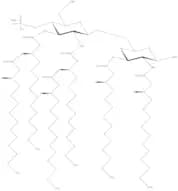
CAS :The Lipid A moiety of lipopolysaccharide forms the outer monolayer of the outer membrane in most Gram-negative bacteria. Escherichia coli lipid A is synthesized on the cytoplasmic side of the inner membrane by a conserved pathway of nine constitutive enzymes. Following attachment of the core oligosaccharide, nascent core-lipid A is flipped to the outer surface of the inner membrane by the ABC transporter MsbA, where the O-antigen polymer is attached. These complex glycoforms protect bacteria from antibiotics and complement-mediated lysis. The core and O-antigen domains are required for virulence and consequently are present in most clinical and environmental isolates (Raetz, 2007).Formule :C94H178N2O25P2Degré de pureté :Min. 95%Masse moléculaire :1,798.37 g/molConiferin
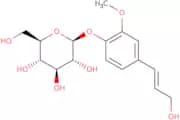
CAS :<p>Coniferin is a phenolic compound found in plants. It is a 4-hydroxycinnamic acid ester of p-hydroxybenzoic acid. Coniferin can be used as an additive for food and animal feed, as well as a preservative for cellulose. Coniferin has been shown to inhibit the growth of cancer cells, such as K562 cells, by affecting energy metabolism and polymerase chain reaction activities. The physiological effects of coniferin have not been extensively studied but it has been shown to inhibit enzyme activities in plant tissues. Coniferin has also been shown to act synergistically with crystalline cellulose and dihydroconiferyl alcohol to produce HPC powder, which is used for the preparation of HPC-cellulose membranes for protein separation.</p>Formule :C16H22O8Degré de pureté :Min. 95%Masse moléculaire :342.34 g/molD-Glucose-(toluene-4-sulfonylhydrazone)
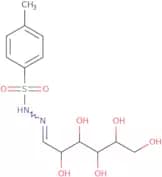
CAS :<p>D-Glycose-(Toluene-4-sulfonylhydrazone) is a modified sugar that is used as a building block for glycosylation. It has been used in the synthesis of complex carbohydrates, methylation, click chemistry and polysaccharides. The sulfonyl group on the toluene ring makes this compound a good candidate for fluorination, saccharide modification and Oligosaccharide synthesis. This product can be custom synthesized with high purity and CAS No. 5328-51-8.</p>Degré de pureté :Min. 95%2-O-Acetyl-1,3,4,6-tetra-O-benzyl-b-D-galactopyranoside
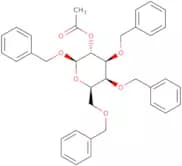
CAS :<p>2-O-Acetyl-1,3,4,6-tetra-O-benzyl-b-D-galactopyranoside is a custom synthesis that belongs to the class of complex carbohydrates. This compound contains a saccharide with a sugar group and is fluorinated at the 2 position. It has been modified by methylation on the C2 position and has an acetyl group on the C3 position.</p>Formule :C36H38O7Degré de pureté :Min. 95%Masse moléculaire :582.68 g/molHyaluronate biotin - Molecular Weight - 20kDa
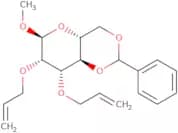
<p>Hyaluronate biotin is a high purity, complex carbohydrate that has been modified with methylation and glycosylation. It has a molecular weight of 20kDa and is supplied as a powder. It is a white to off-white solid that can be dissolved in water or buffer solutions. This product can be used as an excipient in the manufacture of biologics such as vaccines, antibodies, enzymes, or other therapeutic proteins.</p>Degré de pureté :Min. 95%Methyl 2,3-di-O-allyl-4,6-O-benzylidene-a-D-mannopyranoside
CAS :<p>Methyl 2,3-di-O-allyl-4,6-O-benzylidene-a-D-mannopyranoside is a high purity and custom synthesis of a sugar. It can be used for the modification of the carbohydrate and saccharide. Methyl 2,3-di-O-allyl-4,6-O-benzylidene-a-Dmannopyranoside is an oligosaccharide that has been modified with fluorination. It is also a polysaccharide that contains saccharides.</p>Formule :C20H26O6Degré de pureté :Min. 95%Masse moléculaire :362.42 g/molNA3 N-Glycan
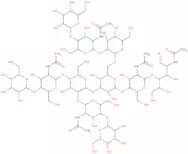
CAS :<p>NA3 N-glycan is a base that forms glycosidic bonds with other molecules. It has been shown to be pharmacologically active in tissues and has a safety profile. NA3 N-glycan is metabolized by the serine protease, which cleaves it from its glycosylated protein. The resulting molecule lacks a reactive group, which prevents it from forming toxic reactions with other molecules. NA3 N-glycan has been used for pharmacokinetic modeling and for mass spectrometric measurements of proteins in human serum and plasma.</p>Formule :C76H127N5O56Degré de pureté :Min. 95%Couleur et forme :Solid.Masse moléculaire :2,006.82 g/molMan-3b N-Glycan
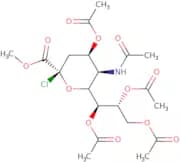
CAS :<p>Man-3b N-Glycan is a glycan with a mannose backbone and an N-acetylglucosamine branch. This glycan can be customized to the user’s specification, including the desired sugar sequence and the length of the oligosaccharide. Man-3b N-Glycans are synthesized by modification of commercially available saccharides or by custom synthesis.</p>Formule :C34H58N2O26Degré de pureté :Min. 95%Masse moléculaire :910.82 g/molN-Acetyl-2-chloro-2-deoxyneuraminic acid methyl ester 4,7,8,9-tetraacetate
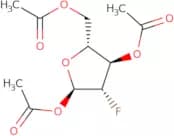
CAS :<p>N-Acetyl-2-chloro-2-deoxyneuraminic acid methyl ester 4,7,8,9-tetraacetate is a sialic acid analog that has been shown to have antiviral properties. It binds to the influenza virus and inhibits its activity by blocking the hemagglutinin receptor. The compound is soluble in water and organic solvents and can be modified with perbenzylated groups to increase its stability in plasma and tissues. N-Acetyl-2-chloro-2-deoxyneuraminic acid methyl ester 4,7,8,9-tetraacetate is resistant to hydrolysis by esterases and can also be used for the treatment of infections caused by bacteria or fungi.</p>Formule :C20H28ClNO12Degré de pureté :Min. 95%Couleur et forme :PowderMasse moléculaire :509.89 g/mol1,3,5-Tri-O-acetyl-2-deoxy-2-fluoro-a-D-arabinofuranose
CAS :<p>1,3,5-Tri-O-acetyl-2-deoxy-2-fluoro-a-D-arabinofuranose is a sugar that is modified with fluorine. It has been synthesized using the "click" reaction methodology and is available for custom synthesis. This synthetic sugar can be used in glycosylation reactions or as a monosaccharide or polysaccharide in complex carbohydrate click chemistry. This product is of high purity and can be modified with methyl groups or other functional groups to suit your needs.</p>Formule :C11H15FO7Degré de pureté :Min. 95%Masse moléculaire :278.23 g/molThioglucosides
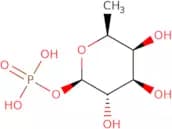
<p>Thioglucosides are a type of sugar that is modified with a thiol group at the C-3 position. A thioglucose can be synthesized by methylation, click modification, and fluorination. Thioglucoses have been used in the past for the production of oligosaccharides and polysaccharides, as well as in complex carbohydrate research. They are also used in the production of high purity monosaccharide sugars. This product is available for custom synthesis to meet your needs.</p>Degré de pureté :Min. 95%β-L-Fucopyranosyl phosphate
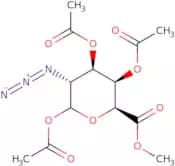
CAS :<p>b-L-Fucopyranosyl phosphate is a glycosylphosphate that is expressed on the cell surface of many organisms and is an analog of the natural sugar. It has been shown to be a competitive inhibitor, uncompetitive inhibitor, or stereoselective of glycoconjugates. b-L-Fucopyranosyl phosphate binds to the lectin receptor by binding at the monosaccharide in the terminal position, which prevents the attachment of glycoconjugates to this receptor. This binding decreases cellular adhesion and causes cells to become less adherent to other cells or surfaces. The ph optimum for b-L-fucopyranosyl phosphate is 7.5 and it can be used in vitro as a preparative hplc column eluent for lectins.</p>Formule :C6H13O8PDegré de pureté :Min. 95%Couleur et forme :PowderMasse moléculaire :244.14 g/mol2-Azido-1,3,4-tri-O-acetyl-2-deoxy-D-galacturonide methyl ester
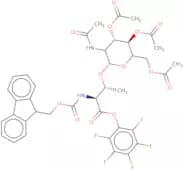
CAS :<p>2-Azido-1,3,4-tri-O-acetyl-2-deoxy-D-galacturonide methyl ester is a custom synthesis that is intended for use in research. This product is not a food or drug and is not intended to diagnose, treat, cure or prevent any disease.</p>Formule :C13H17N3O9Degré de pureté :Min. 95%Couleur et forme :Colourless SolidMasse moléculaire :359.29 g/mol2-Acetamido-3,4,6-tri-O-acetyl-2-deoxy-a-D-galactopyranosyl-L-threonine pentafluorophenyl ester
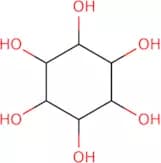
CAS :<p>This product is a modification of a complex carbohydrate that has been synthesized from D-galactose and L-threonine. It is an Oligosaccharide, Carbohydrate, Custom synthesis, Synthetic, High purity, Monosaccharide, Methylation, Glycosylation, Polysaccharide with a CAS No. 182369-94-4.<br>This product is fluorinated at the 2 position of the acetamido group. The saccharide unit has been methylated at the 2 position of the acetamido group. This product is also glycosylated at the 6 position of the acetamido group and it is an alpha-linked sugar.</p>Formule :C39H37F5N2O13Degré de pureté :Min. 95%Masse moléculaire :836.71 g/molD-muco-Inositol
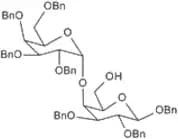
CAS :<p>D-Mucinol is an inositol that is structurally similar to scyllo-inositol. It has been shown to inhibit the growth of cancer cells and also inhibits the release of calcium ions from the mitochondria, which may be due to its ability to inhibit polymerase chain reaction. D-Mucinol is a potential treatment for ovarian cancer and other cancers.<br>D-Mucinol is a dinucleotide phosphate that binds with guanine nucleotides on DNA, inhibiting transcriptional elongation by binding to the RNA polymerase II enzyme. This prevents the production of mRNA, inhibiting protein synthesis and leading to cell death.<br>D-Mucinol has been shown to have cytostatic effects against HL60 cells in vitro, which are thought to be related to its ability to inhibit mononucleotide phosphates, including p-nitrophenyl phosphate (PNPP), at high concentrations. D-Mucin</p>Formule :C6H12O6Degré de pureté :Min. 95%Masse moléculaire :180.16 g/mol1,2,3-Tri-O-benzyl-4-O-(2,3,4,6-tetra-O-benzyl-a-D-galactopyranosyl)-b-D-galactopyranoside
<p>1,2,3-Tri-O-benzyl-4-O-(2,3,4,6-tetra-O-benzyl-a-D-galactopyranosyl)-b-D-galactopyranoside is an oligosaccharide with a galactosamine residue at the nonreducing end. It is a triacylglycerol that has been methylated and fluorinated. This product can be used as a sugar for synthesis of complex carbohydrates or for modification of monosaccharides. The high purity of this product makes it suitable for use in pharmaceuticals and other applications requiring high purity.</p>Formule :C61H64O11Degré de pureté :Min. 95%Masse moléculaire :973.15 g/mol