Glycosciences
La glycosciences est l'étude des glucides et de leurs dérivés, ainsi que des interactions et des fonctions biologiques auxquelles ils participent. Ce domaine de recherche est crucial pour comprendre une grande variété de processus biologiques, y compris la reconnaissance cellulaire, la signalisation, la réponse immunitaire et le développement des maladies. La glycosciences a des applications importantes en biotechnologie, en médecine et dans le développement de nouveaux médicaments et thérapies. Chez CymitQuimica, nous proposons une large sélection de produits de haute qualité et pureté pour la recherche en glycosciences. Notre catalogue comprend des monosaccharides, des oligosaccharides, des polysaccharides, des glyconjugués et des réactifs spécifiques, conçus pour soutenir les chercheurs dans leurs études sur la structure, la fonction et les applications des glucides dans les systèmes biologiques. Ces ressources sont destinées à faciliter les découvertes scientifiques et les applications pratiques dans divers domaines des biosciences et de la médecine.
Sous-catégories appartenant à la catégorie "Glycosciences"
- Aminosucres(108 produits)
- Anticorps Glyco-Related(282 produits)
- Glycolipides(46 produits)
- Glycosaminoglycanes (GAGs)(55 produits)
- Glycosides(419 produits)
- Monosaccharides(6.624 produits)
- Oligosaccharides(3.682 produits)
- Polysaccharides(503 produits)
11046 produits trouvés pour "Glycosciences"
Trier par
Degré de pureté (%)
0
100
|
0
|
50
|
90
|
95
|
100
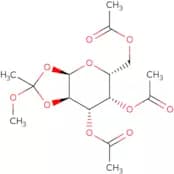
3,4,6-Tri-O-acetyl-a-D-galactopyranose 1,2-(methyl orthoacetate)
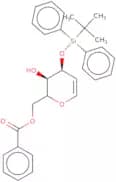
CAS :<p>The survey was conducted to understand the current workforce and their feedback on the automated testing. The median number of respondents exceeded the number that was needed for a statistically significant result. The automated testing has helped to reduce the time it takes to test new features and has also improved the resilience of the developers. Feedback from testers has been positive, with many saying that they would recommend automated testing to other companies. This survey was conducted by an analyst who had an understanding of human-computer interaction and software development.</p>Formule :C15H22O10Degré de pureté :Min. 95%Masse moléculaire :362.33 g/mol6-O-Benzoyl-3-O-tert-butyldiphenylsilyl-D-glucal
<p>6-O-Benzoyl-3-O-tert-butyldiphenylsilyl-D-glucal is a modification of the oligosaccharide, 6-O-(benzoyloxy)hexyl glucal. The product is used as a synthetic intermediate in the synthesis of complex carbohydrates. It is also used in the production of high purity monosaccharides and polysaccharides. This product has been shown to be effective in methylation reactions, glycosylation reactions, and fluorination reactions.</p>Degré de pureté :Min. 95%4-(Methylnitrosamino)-1-(3-pyridyl)-1-butanone-N-b-D-glucuronide
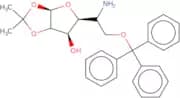
CAS :<p>4-(Methylnitrosamino)-1-(3-pyridyl)-1-butanone-N-b-D-glucuronide is a high purity, custom synthesis, sugar modified, fluorinated, glycosylated and carbonylated synthetic compound. It belongs to the class of saccharides and has a CAS No. 350508-26-8. This complex carbohydrate has been shown to have antiarthritic activities in rats.</p>Formule :C16H21N3O8Degré de pureté :Min. 95%Masse moléculaire :383.35 g/mol5-Amino-5-deoxy-1,2-O-isopropylidene-6-O-trityl-a-D-galactofuranose
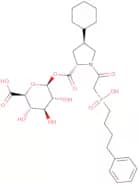
CAS :<p>5-Amino-5-deoxy-1,2-O-isopropylidene-6-O-trityl-a-D-galactofuranose is a fluorinated analog of the natural sugar galactose. This compound has been used as a substrate for the synthesis of modified oligosaccharides and polysaccharides. It is also used in research for its ability to act as a methylation reagent. 5ADOGF has been modified with click chemistry to form 5-(2,3,4,5,6,7,8,9,10) -aminopropylidene-[beta]-D-[alpha]-D-[beta]-D-[alpha]-D-[beta]-D-[alpha] -galactofuranose (APGDF). The CAS number for this compound is 109681-00-7.</p>Formule :C18H31NO5Degré de pureté :Min. 95%Masse moléculaire :461.55 g/molFosinoprilat acyl-b-D-glucuronide
CAS :<p>Fosinoprilat acyl-b-D-glucuronide is a modified fosinoprilat which is an orally active, potent and long lasting inhibitor of angiotensin-converting enzyme (ACE) with a high degree of selectivity for ACE. It has been shown to be effective in the treatment of hypertension, congestive heart failure, and diabetic nephropathy. Fosinoprilat acyl-b-D-glucuronide has been synthesized by click modification from L-fosinoprilat. The carbohydrate moiety is attached to the methyl group of the amine group on the saccharide backbone. This drug exhibits low toxicity and good stability in vivo.</p>Formule :C29H42NO11PDegré de pureté :Min. 95%Masse moléculaire :611.62 g/mol?-Gal-nonoate
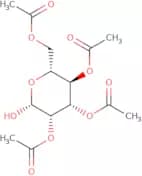
CAS :<p>β-Gal-nonoate is a high purity, custom synthesis, sugar modified with fluorination, glycosylation, and methylation. It is a synthetic molecule that has CAS No. 357192-77-9. β-Gal-nonoate is a modification of β-galactoside and it's glycosylated with oligosaccharides and monosaccharides. It is an oligosaccharide that can be complex carbohydrate.</p>Formule :C10H19N3O7Degré de pureté :Min. 95%Masse moléculaire :293.27 g/mol2,3,4,6-Tetra-O-acetyl-b-D-mannopyranose
CAS :<p>2,3,4,6-Tetra-O-acetyl-b-D-mannopyranose (2,3,4,6TOA) is a methylated form of b-D-mannopyranose. This compound can be synthesized by the click reaction between an aldehyde group and an amine group. The modification of 2,3,4,6TOA with acetyl groups at the 2-, 3-, 4-, and 6-positions provides a novel carbohydrate that has not been previously reported in the literature. 2,3,4,6TOA is one of many oligosaccharides that are used as building blocks for complex carbohydrate synthesis.<br>2,3,4,6TOA has high purity and is available for custom synthesis. It's potential application includes glycosylation reactions or as a substrate for fluorination reactions.</p>Degré de pureté :Min. 95%(Hydroxypropyl)methyl cellulose - USP39, Viscocity 3000-5600 cP
CAS :<p>Viscoelastic polymer; excipient; food additive</p>Degré de pureté :Min. 95%Emodin-1-O-b-D-glucopyranoside
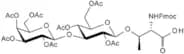
<p>Emodin-1-O-b-D-glucopyranoside is a synthetic, fluorinated, glycosylated oligosaccharide. It can be used as a high purity, non-fluorinated carbohydrate for research purposes. Emodin-1-O-b-D-glucopyranoside has been modified via Click chemistry to provide the desired functional group and is available in various sizes.</p>Degré de pureté :Min. 95%Hepta-O-acetyl-b-Lactosyl-N-Fmoc-L-threonine
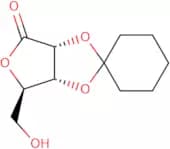
CAS :<p>Hepta-O-acetyl-b-Lactosyl-N-Fmoc-L-threonine is a substance that can be used for the diagnosis of radiation exposure. It is a liquid that is injected into the body, where it accumulates in tissues such as bone marrow. The presence of Hepta-O-acetyl-b-Lactosyl-N-Fmoc-L-threonine in bone marrow cells can be detected using an imaging technique called balloon injury. This liquid also has synergistic effects with radiation and may be useful for the treatment of diseases such as thrombolysis.</p>Formule :C45H53NO22Degré de pureté :Min. 95%Masse moléculaire :959.9 g/molD-Ribonolactone 2,3-cyclohexyl ketal
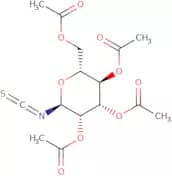
CAS :<p>D-Ribonolactone 2,3-cyclohexyl ketal is a custom synthesis. It is a synthetic modification of the natural D-ribose sugar molecule. It has been modified by methylation and glycosylation to yield a complex carbohydrate with a high degree of purity. The fluorination process has been used to introduce fluorine atoms into the molecule.</p>Formule :C11H16O5Degré de pureté :Min. 95%Masse moléculaire :228.24 g/mol2,3,4,6-Tetra-O-acetyl-a-D-mannopyranosyl isothiocyanate
CAS :<p>2,3,4,6-Tetra-O-acetyl-a-D-mannopyranosyl isothiocyanate (TMIT) is a custom synthesis that has been modified to include a fluorine atom. TMIT is a polysaccharide that has been modified by methylation and glycosylation. This compound has been synthesized from the natural carbohydrate D-mannopyranose. TMIT is known for its ability to inhibit protein glycosylation in bacteria cells. It also has high purity with an Oligosaccharide CAS No. 93221-21-7 and modification of saccharides with the addition of methyl groups. The chemical structure of TMIT can be found at 2,3,4,6-Tetra-O-acetyl-a-D-mannopyranosyl isothiocyanate (TMIT).</p>Formule :C15H19NO9SDegré de pureté :Min. 95%Masse moléculaire :389.38 g/molMomordicoside G
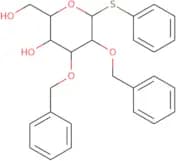
CAS :<p>Momordicoside G is a plant-derived compound that belongs to the group of monoterpenoids. It has been shown to stimulate cell growth and differentiation in vitro by binding to epidermal growth factor (EGF) and colony-stimulating factor (CSF) receptors. Momordicoside G has also been shown to inhibit pentobarbital sodium-induced lung cell lysis, which may be due to its ability to induce synthesis of fatty acids. This molecule has been found in a variety of model organisms, including bacteria and yeast. The fluorescence emission spectrum of momordicoside G has been reported and it was shown that this molecule binds to DNA polymerase. Studies have also shown that momordicoside G can inhibit RNA extraction from lung fibroblasts, which may be due to its ability to bind with RNA polymerase II.</p>Formule :C37H60O8Degré de pureté :Min. 95%Masse moléculaire :632.87 g/molPhenyl 2,3-di-O-benzyl-b-D-thiogalactopyranoside
CAS :<p>Phenyl 2,3-di-O-benzyl-b-D-thiogalactopyranoside is an organic compound that is used in the synthesis of saccharides. It is a custom synthesis product and can be modified to create a variety of products. Phenyl 2,3-di-O-benzyl-b-D-thiogalactopyranoside has been shown to have high purity and quality, as well as excellent stability. This product is also available in a variety of grades.</p>Degré de pureté :Min. 95%Glycerone phosphate lithium salt
CAS :<p>Glycerone phosphate lithium salt is a reactive molecule that serves as an intermediate in the synthesis of rapamycin, a complex of glycerone phosphate and rapamycin. Glycerone phosphate lithium salt is used to detect the presence of glutamate dehydrogenase and to purify monoclonal antibodies. Glycerone phosphate lithium salt has been shown to react with platinum-based chemotherapy, which may be due to its ability to bind to active sites on cancer cells. This molecule also has been shown to reduce high cholesterol levels in mice and inhibit skin cancer tumor growth. Glycerone phosphate lithium salt's physiological effects have not been fully determined, but it may have some anticancer activity.</p>Formule :C3H7O6P·xLiDegré de pureté :Min. 95%Masse moléculaire :170.06 g/mol4-Methylumbelliferyl 6-O-(tert-butyldiphenylsilyl)-b-D-galactopyranoside
CAS :<p>4-Methylumbelliferyl 6-O-(tert-butyldiphenylsilyl)-b-D-galactopyranoside is a fluorescent saccharide that is useful as a reagent for the detection of glycosidases and glycosyltransferases. It is also used to detect the presence of sialic acid residues on glycoconjugates, as well as to determine the terminal sugars in glycoconjugates. This product has been shown to bind to 3'-terminal sialic acid residues on N-glycans, but not to terminal galactose residues.</p>Formule :C32H36O8SiDegré de pureté :Min. 95%Masse moléculaire :576.71 g/mol3,4,6-Tri-O-acetyl-2-azido-2-deoxy-a-D-galactopyranosyl fluoride
<p>3,4,6-Tri-O-acetyl-2-azido-2-deoxy-a-D-galactopyranosyl fluoride is a custom synthesis that has been modified. It has fluorination and methylation at the 6 position and a click modification at the 2 position. The monosaccharide is a galactose with an acetyl group at the 3 position, while the oligosaccharide is a triantennary saccharide. This compound is used in glycosylation reactions to create complex carbohydrates.</p>Degré de pureté :Min. 95%Methyl b-N-acetyllactosamine
CAS :<p>Methyl b-N-acetyllactosamine is a sulfated glycosaminoglycan (GAG) that is expressed in the brain and is involved in the development of myelin. This compound has been shown to inhibit the transfer of sulfate groups, which are essential for the synthesis of GAGs. Methyl b-N-acetyllactosamine inhibits transglycosylation reactions, which is a process by which sugar moieties are transferred from one molecule to another. This inhibition results in decreased cross-coupling reactions and decreases the production of GAGs. Methyl b-N-acetyllactosamine has been shown to have potent inhibitory properties against sulfonylating enzymes, such as regiospecifically catalyzed sulfonylation and transglycosylation. It also has been shown to inhibit the transition state in an enzymatic reaction involving triazoles.</p>Formule :C15H27NO11Degré de pureté :Min. 95%Masse moléculaire :397.38 g/molD-Arabonic acid
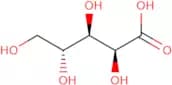
CAS :D-Arabonic acid is an acidic compound that is a sodium salt of D-arabitol. It is used as a kinetic, reactive model system for the study of the mechanism of action and inhibition of enzymes such as polymerase chain reaction (PCR) and DNA-dependent RNA polymerase (RdRP). D-Arabonic acid has been shown to be a potent inhibitor of these enzymes, although it does not inhibit other enzyme classes. The target enzyme binds to the substrate by electrostatic interactions with the negative oxygen atoms on the nitrogen atoms in its basic structure. The reaction mechanism may involve oxidation catalysts such as iron or copper ions. Kinetic data can be obtained using laser ablation.Formule :C5H10O6Degré de pureté :Min. 95%Masse moléculaire :166.13 g/molLacto-N-fucopentaose II-APD-KLH
CAS :<p>Lacto-N-fucopentaose II-APD-KLH is a fluorinated, monosaccharide, synthetic, oligosaccharide, complex carbohydrate. It has CAS No. 21973-23-9 and a custom synthesis. Lacto-N-fucopentaose II-APD-KLH can be used as a glycosylation or polysaccharide with click modification or methylation. The high purity of this product is 99%.</p>Degré de pureté :Min. 95%