Glycosciences
La glycosciences est l'étude des glucides et de leurs dérivés, ainsi que des interactions et des fonctions biologiques auxquelles ils participent. Ce domaine de recherche est crucial pour comprendre une grande variété de processus biologiques, y compris la reconnaissance cellulaire, la signalisation, la réponse immunitaire et le développement des maladies. La glycosciences a des applications importantes en biotechnologie, en médecine et dans le développement de nouveaux médicaments et thérapies. Chez CymitQuimica, nous proposons une large sélection de produits de haute qualité et pureté pour la recherche en glycosciences. Notre catalogue comprend des monosaccharides, des oligosaccharides, des polysaccharides, des glyconjugués et des réactifs spécifiques, conçus pour soutenir les chercheurs dans leurs études sur la structure, la fonction et les applications des glucides dans les systèmes biologiques. Ces ressources sont destinées à faciliter les découvertes scientifiques et les applications pratiques dans divers domaines des biosciences et de la médecine.
Sous-catégories appartenant à la catégorie "Glycosciences"
- Aminosucres(108 produits)
- Anticorps Glyco-Related(282 produits)
- Glycolipides(46 produits)
- Glycosaminoglycanes (GAGs)(55 produits)
- Glycosides(419 produits)
- Monosaccharides(6.622 produits)
- Oligosaccharides(3.682 produits)
- Polysaccharides(503 produits)
11041 produits trouvés pour "Glycosciences"
Trier par
Degré de pureté (%)
0
100
|
0
|
50
|
90
|
95
|
100
2,3,4,6-Tetra-O-acetyl-b-D-thioglucopyranose sodium salt
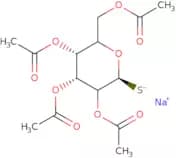
CAS :<p>2,3,4,6-Tetra-O-acetyl-b-D-thioglucopyranose sodium salt is a synthetic monosaccharide that can be used for glycosylation. This product is synthesized by the addition of acetyl groups to the 2-, 3-, 4-, and 6-positions on the glucose moiety. The resulting product has been shown to have a high degree of purity as well as a low content of impurities.</p>Formule :C14H19O9SNaDegré de pureté :Min. 95%Masse moléculaire :386.35 g/mol2,3,4,6-Tetra-O-benzyl-1-O-(4-nitrobenzoyl)-b-D-glucopyranose
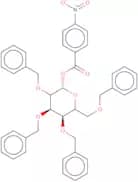
<p>2,3,4,6-Tetra-O-benzyl-1-O-(4-nitrobenzoyl)-b-D-glucopyranose is a synthetic sugar that is the building block for oligosaccharides and polysaccharides. It has been modified with fluorination and methylation to produce a high purity product. The CAS number for this compound is 248940-24-5.</p>Formule :C41H39NO9Degré de pureté :Min. 95%Masse moléculaire :689.77 g/molAmyl 2-acetamido-2-deoxy-b-D-glucopyranoside
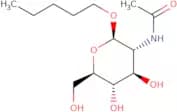
CAS :<p>Amyl 2-acetamido-2-deoxy-b-D-glucopyranoside is a chemical compound that is used as an additive for industrial purposes. It is soluble in n-butanol, ethylene glycol, ferrocene, and methanol. The molecular weight of this chemical compound is 542.07 g/mol.</p>Formule :C13H25NO6Degré de pureté :Min. 95%Masse moléculaire :291.34 g/molPBS 57
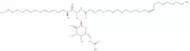
CAS :<p>PBS 57 is a pluripotent cell-derived protein that has been shown to be a potent vaccine adjuvant. PBS 57 is derived from the plasma of pregnant women and contains the following antigenic determinants: glucose, human albumin, and human immunoglobulin G. PBS 57 can stimulate both humoral and cellular immunity in mice with deficiencies in antibody production or T cells. PBS 57 has also been shown to have strong pro-inflammatory cytokine activity, which may be due to its ability to induce galacturonic acid release from macrophages.</p>Formule :C50H96N2O9Degré de pureté :Min. 95%Masse moléculaire :869.31 g/molL-[2-13C]Xylose
CAS :<p>Please enquire for more information about L-[2-13C]Xylose including the price, delivery time and more detailed product information at the technical inquiry form on this page</p>Formule :C5H10O5Degré de pureté :Min. 95%Masse moléculaire :151.12 g/molLumefantrine glucuronide - (mixture of diasteromers)
<p>Lumefantrine glucuronide is a sugar molecule that is glycosylated. It is the active form of lumefantrine and has been shown to be effective against malaria. Lumefantrine glucuronide binds to the parasite's RBCs, inhibiting the conversion of glucose into glycogen, thus preventing the production of ATP. Lumefantrine glucuronide is synthesized by attaching a sugar molecule to an amino acid backbone through an amide bond. The sugar molecule in this case is known as Glucuronic acid and it can be methylated or fluorinated. Lumefantrine glucuronide is also modified with Click chemistry, which involves attaching a reactive group to a chemical species that reacts with other chemical species at a distance. This modification allows for the attachment of polymers such as saccharides or oligosaccharides onto lumefantrine glucuronide.</p>Formule :C36H40Cl3NO7Degré de pureté :Min. 95%Masse moléculaire :705.06 g/molMethyl (methyl 3-deoxy-D-arabino-hept-2-ulopyranosid)onate-7-phosphate
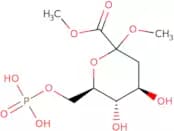
CAS :<p>Methyl (methyl 3-deoxy-D-arabino-hept-2-ulopyranosid)onate-7-phosphate is a Glycosylation, Oligosaccharide, sugar, Synthetic, Fluorination, Custom synthesis, Methylation, Monosaccharide, Polysaccharide, saccharide with CAS No. 91382-80-8. It is typically used as a modifier of complex carbohydrate. This product has high purity and can be modified.</p>Formule :C9H17O10PDegré de pureté :Min. 95%Masse moléculaire :316.2 g/molR-Phenyleprine-3-D-glucuronide
<p>R-Phenyleprine-3-D-glucuronide is a synthetic compound that is used for the modification of saccharides. It has fluoro groups and has been shown to be active in glycosylation reactions. R-Phenyleprine-3-D-glucuronide can also be used as a methylating agent, or as an intermediate in the synthesis of oligosaccharides and monosaccharides. The molecular weight of this compound is 594.</p>Degré de pureté :Min. 95%Hyaluronate fluorescein - Molecular Weight - 2500kDa
<p>Hyaluronate fluorescein is a polymer of hyaluronic acid that has been modified with fluorescein. It is synthesized by the methylation and saccharide coupling of an oligosaccharide, followed by Click modification and the addition of a fluorescent dye. Hyaluronate fluorescein has a molecular weight of 2500kDa. It is highly purified and can be custom-synthesized to suit specific needs.</p>Degré de pureté :Min. 95%Couleur et forme :PowderMethyl N-trifluoroacetyldaunosaminide
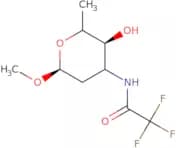
CAS :<p>Methyl N-trifluoroacetyldaunosaminide is a naturally occurring amino sugar that has been shown to have biological relevance. It has been shown to inhibit the activity of bacterial enzymes, such as daunosamine reductase and daunosamine kinase, which are involved in the biosynthesis of anthracyclines in bacteria. The structural analogues of methyl N-trifluoroacetyldaunosaminide have been shown to be effective against a range of Gram-positive and Gram-negative bacteria including Staphylococcus aureus, Mycobacterium tuberculosis, Mycobacterium avium complex and Pseudomonas aeruginosa.</p>Formule :C9H14F3NO4Degré de pureté :Min. 95%Masse moléculaire :257.21 g/molEthyl a-L-thiorhamnopyranoside
<p>Ethyl a-L-thiorhamnopyranoside is a synthetic, fluorinated monosaccharide. It is an oligosaccharide with a complex carbohydrate structure and can be used as a building block for the synthesis of glycosides, polysaccharides, and other sugar derivatives. This product can also be modified by methylation, click reactions, or other chemical reactions to produce desired structures. The purity of this product is >98%.</p>Degré de pureté :Min. 95%D-Glucose diethyl mercaptal
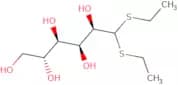
CAS :<p>D-Glucose diethyl mercaptal is a homogeneous catalyst that can be used to acetylate galactitol to produce D-arabinose. It acts as an efficient and selective catalyst for the reaction of nitrous acid with hydrochloric acid, which produces acetyl chloride. Acetyl chloride is a reactive compound that can be used in the synthesis of many other compounds. <br>D-Glucose diethyl mercaptal has been used in chromatographic methods to separate d-arabinose from L-arabinose. The ring-opening polymerization of D-glucopyranose by mercaptals leads to the formation of polyols, which are useful materials for the production of plastics and rubber products. Chloride ions are required for this reaction, while hydrogen chloride is produced as a byproduct.</p>Formule :C10H22O5S2Degré de pureté :Min. 95%Masse moléculaire :286.41 g/molPhenyl 2-deoxy-2-phthalimido-b-D-thioglucopyranoside
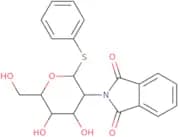
CAS :<p>Phenyl 2-deoxy-2-phthalimido-b-D-thioglucopyranoside is a glycosylation agent that has a glycone with a pyranoside at the 3′ position and an amide bond at the 2′ position. It is used in the synthesis of oligosaccharides and polysaccharides, as well as for Click modification. The compound is also used to modify proteins and saccharides. Phenyl 2-deoxy-2-phthalimido-b-D-thioglucopyranoside has been shown to be stable when heated, making it useful for complex carbohydrate synthesis.</p>Formule :C20H19NO6SDegré de pureté :Min. 98 Area-%Couleur et forme :PowderMasse moléculaire :401.43 g/molMaltoheptaose hydrate
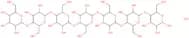
CAS :<p>Maltoheptaose hydrate is a mixture of oligosaccharides and monosaccharides that has been shown to be effective as a biocide. Maltoheptaose hydrate has been shown to be an effective radiation absorber, with the ability to absorb microwaves and other forms of radiation. The compound also has the capacity to form hydrogen bonds, which can lead to the formation of alcohols in solution. This property makes maltoheptaose hydrate a useful recording agent for microwave radiation, as well as being able to absorb alcohols. Maltoheptaose hydrate is composed of both monomeric and monosaccharides, which are saccharides.</p>Formule :C42H74O37Degré de pureté :Min. 95%Masse moléculaire :1,171 g/molOctyl 2-acetamido-2-deoxy-b-D-glucopyranosyl-(1-2)-a-D-mannopyranosyl-(1-2)-b-D-glucopyranoside
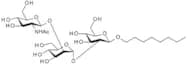
CAS :<p>Octyl 2-acetamido-2-deoxy-b-D-glucopyranosyl-(1-2)-a-D-mannopyranosyl-(1-2)-b-D-glucopyranoside is a custom synthetic sugar that is used in the synthesis of complex carbohydrates. This product has been fluorinated to give it a high level of purity and is available for purchase at CAS No. 1268248-67-4. Octyl 2 acetamido 2 deoxy b D glucopyranosyl (1 2) a D mannopyranosyl (1 2) b D glucopyranoside has been modified with methylation, Click modification, and glycosylation. It can be used in polysaccharide synthesis or glycosylation reactions to produce polysaccharides with different properties.</p>Formule :C28H51NO16Degré de pureté :Min. 95%Masse moléculaire :657.7 g/mol1,2,3,4,6-Penta-O-acetyl-b-L-glucopyranose
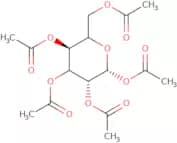
CAS :<p>Penta-O-acetyl-b-L-glucopyranose is a pentaacetate that can be used to study insulinotropic activity. It has been shown to stimulate pancreatic islet cells and increase the production of insulin in vitro.</p>Formule :C16H22O11Degré de pureté :Min. 95%Masse moléculaire :390.34 g/molPhenyl 2,3,4-tri-O-benzyl-b-L-thiorhamnopyranose
CAS :<p>Phenyl 2,3,4-tri-O-benzyl-b-L-thiorhamnopyranose is a custom synthesis of a carbohydrate which is modified with fluorine. This compound has been used for the synthesis of saccharides and oligosaccharides. Phenyl 2,3,4-tri-O-benzyl-b-L-thiorhamnopyranose has high purity and is methylated. It can be glycosylated and click modified with ease.</p>Formule :C33H34O4SDegré de pureté :Min. 95%Masse moléculaire :526.69 g/mol2,3,4,6-Tetra-O-benzoyl-b-D-glucopyranosyl isothiocyanate
CAS :<p>2,3,4,6-Tetra-O-benzoyl-b-D-glucopyranosyl isothiocyanate (TBG) is a fluorescent compound that has been shown to inhibit the activity of proteinase and other enzymes. TBG is also an inhibitor of human blood glucose levels. This compound is not chiral, but it can be used as a reagent for the production of chiral compounds. TBG binds to DNA with high affinity and specificity. It has been shown to act as a growth factor for some cancer cells by inhibiting the expression of p21 protein.</p>Formule :C35H27NO9SDegré de pureté :Min. 95%Masse moléculaire :637.66 g/molPhenyl 3,4-di-O-acetyl-2-O-benzyl-a-L-thiorhamnopyranoside
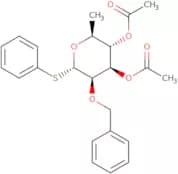
CAS :<p>Phenyl 3,4-di-O-acetyl-2-O-benzyl-a-L-thiorhamnopyranoside is an oligosaccharide that is a modification of the glycosidic linkage. It is synthesized by reacting phenyl 3,4 diacetate with 2,3,4 O benzyl thiorhamnose. Phenyl 3,4 diacetate can be prepared by reacting phenol with acetaldehyde in the presence of sodium ethoxide and then reacting with acetic anhydride to yield this product. This compound can also be prepared by methylating a L thiorhamnopyranoside and then glycosylating it with a carbonyl group. Phenyl 3,4 diacetate reacts with phenol in the presence of concentrated sulfuric acid to produce phenyl 3,4 diacetoxybenzoic acid which can be converted to phenyl 3,4 diacetoxy</p>Formule :C23H26O6SDegré de pureté :Min. 95%Masse moléculaire :430.51 g/molTetra-O-acetyl-2-acetamido-2-deoxy-b-D-mannose
<p>Tetra-O-acetyl-2-acetamido-2-deoxy-b-D-mannose is a modified sugar that is synthesized by the methylation of 2,4,6-trichloroacetimidate. This compound has been used in the synthesis of glycosylations and other modifications. Tetra-O-acetyl-2-acetamido-2-deoxy-b-D mannose can be custom synthesized to your specifications with high purity.</p>Degré de pureté :Min. 95%

![L-[2-13C]Xylose](/_next/image/?url=https%3A%2Fstatic.cymitquimica.com%2Fproducts%2F3D%2Fthumb-webp%2FDUA50663.webp&w=3840&q=75)