Glycosciences
La glycosciences est l'étude des glucides et de leurs dérivés, ainsi que des interactions et des fonctions biologiques auxquelles ils participent. Ce domaine de recherche est crucial pour comprendre une grande variété de processus biologiques, y compris la reconnaissance cellulaire, la signalisation, la réponse immunitaire et le développement des maladies. La glycosciences a des applications importantes en biotechnologie, en médecine et dans le développement de nouveaux médicaments et thérapies. Chez CymitQuimica, nous proposons une large sélection de produits de haute qualité et pureté pour la recherche en glycosciences. Notre catalogue comprend des monosaccharides, des oligosaccharides, des polysaccharides, des glyconjugués et des réactifs spécifiques, conçus pour soutenir les chercheurs dans leurs études sur la structure, la fonction et les applications des glucides dans les systèmes biologiques. Ces ressources sont destinées à faciliter les découvertes scientifiques et les applications pratiques dans divers domaines des biosciences et de la médecine.
Sous-catégories appartenant à la catégorie "Glycosciences"
- Aminosucres(108 produits)
- Anticorps Glyco-Related(282 produits)
- Glycolipides(46 produits)
- Glycosaminoglycanes (GAGs)(55 produits)
- Glycosides(419 produits)
- Monosaccharides(6.622 produits)
- Oligosaccharides(3.682 produits)
- Polysaccharides(503 produits)
11041 produits trouvés pour "Glycosciences"
Trier par
Degré de pureté (%)
0
100
|
0
|
50
|
90
|
95
|
100
Methyl 1-(6-tert-butylmethylsilyl-4'-hydroxyraloxifene)-2,3,4,-tri-O-acetyl-b-D-glycopyranuronate
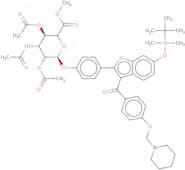
CAS :<p>This is a complex carbohydrate, which is a modification of an oligosaccharide. The structure of this carbohydrate is based on the sugar methyl 1-(6-tert-butylmethylsilyl-4'-hydroxyraloxifene)-2,3,4,-tri-O-acetyl-b-D-glycopyranuronate. This modification has been shown to be useful for glycosylation and polysaccharide synthesis. This compound can be synthesized by click chemistry and has high purity with little or no impurities.</p>Formule :C46H55NO13SSiDegré de pureté :Min. 95%Masse moléculaire :890.08 g/molMethyl 5-deoxy-2,3-O-isopropylidene-a-D-ribofuranoside
<p>Methyl 5-deoxy-2,3-O-isopropylidene-a-D-ribofuranoside is a synthetic modification of the natural sugar ribose. It is used in the synthesis of oligosaccharides and saccharides. Click chemistry has been used to attach a fluorine atom to the carbon at position 2 of the sugar ring, which has led to improved reactivity. Methyl 5-deoxy-2,3-O-isopropylidene-a-D-ribofuranoside is also used in glycosylation reactions and is an important component in the production of complex carbohydrates.</p>Formule :C9H16O4Degré de pureté :Min. 95%Masse moléculaire :188.22 g/molLosartan N1-glucuronide
CAS :<p>Losartan N1-glucuronide is a glucuronidated metabolite of losartan that is produced naturally in the human body. It is converted from losartan by the enzyme UDP-glucuronosyltransferase, which is found in humans and other animals. The rate of glucuronidation varies between individuals and is determined by genetic factors. Losartan N1-glucuronide has shown to be an effective inhibitor of angiotensin II, with an IC50 value of 1.4 μM. This inhibition can be reversed by dobutamine or recombinant human UGT2B7 enzyme, which are both competitive inhibitors of the enzyme UGT2B7. Magnetic resonance spectroscopy has been used to study the kinetic properties of this inhibitor and its effect on dobutamine-induced changes in cardiac function.</p>Formule :C28H31ClN6O7Degré de pureté :Min. 95%Masse moléculaire :599.03 g/molEthyl b-D-ribo-hex-3-ulopyranoside
CAS :<p>Ethyl b-D-ribo-hex-3-ulopyranoside is a synthetic, fluorinated monosaccharide that is used as a building block for the synthesis of complex carbohydrates. It is also used in glycosylations, click modifications, and methylations to modify saccharides.</p>Degré de pureté :Min. 95%CYMAL-6 neopentyl glycol
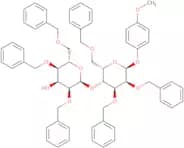
<p>CYMAL-6 neopentyl glycol (CYMAL-6) is a monoclonal antibody that binds to the chloride channel protein in human cells. CYMAL-6 has been shown to inhibit uptake of chloride ions, leading to an increase in extracellular pH and an inhibition of cellular respiration. It has been shown to be effective in patients with pigmentosa or hematological disorders such as leukemia and lymphoma. The structural studies on CYMAL-6 have shown that this drug can be used as a fluorescent probe for the study of chloride ion channels.</p>Formule :C47H84O22Degré de pureté :Min. 95%Masse moléculaire :1,001.16 g/mol4-Methoxyphenyl 4-O-(2,4,6-tri-O-benzyl-b-D-galactopyranosyl)-2,3,6-tri-O-benzyl-b-D-glucopyranoside
CAS :<p>4-Methoxyphenyl 4-O-(2,4,6-tri-O-benzyl-b-D-galactopyranosyl)-2,3,6-tri-O-benzyl-b-D-glucopyranoside is a suppressor of genes that has been shown to be active in the treatment of leukemia. It suppresses transcription by inhibiting histone H3 acetylation and DNA replication by binding to the dna replication complex at sites of replication. The suppression of genes may be due to its ability to inhibit translation by blocking signal sequences and hybridization with complementary mRNA.</p>Formule :C61H64O12Degré de pureté :Min. 95%Masse moléculaire :989.15 g/molD-Arabino-5-hexulosonic acid
CAS :<p>D-Arabino-5-hexulosonic acid is an intermediate in the pentose phosphate pathway. It is a component of the hexuronate, which is an important precursor for galactitol, 6-phosphate, and acid dehydrogenase. D-Arabino-5-hexulosonic acid is also an important intermediate in the glycolytic pathway for ATP production. The gene product has been shown to be involved in aerobic glycolysis, which is utilized by Staphylococcus aureus to produce energy from glucose fermentation. D-Arabino-5-hexulosonic acid plays a role in ion exchange and mitochondrial metabolism as well.</p>Formule :C6H10O7Degré de pureté :Min. 95%Masse moléculaire :194.14 g/molBenzyl b-D-xylopyranoside
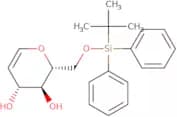
CAS :<p>Benzyl b-D-xylopyranoside is an inorganic compound that is used as a radioactive tracer to study the movement of fluid and macromolecules in the apical membrane of the chondrocyte. It was shown to be effective in preventing the formation of tissue-damaging acute phase proteins when administered at a time point corresponding to the onset of an acute inflammatory response. Benzyl b-D-xylopyranoside has also been shown to have regulatory effects on untreated control cells, but not on untreated control cells. This drug inhibits biosynthesis of GAGs, which are molecules that provide structural support for cells and tissues. The mechanism by which benzyl b-D-xylopyranoside exerts its effect is not yet known.</p>Formule :C12H16O5Degré de pureté :Min. 95%Masse moléculaire :240.25 g/mol6-O-tert-Butyldiphenylsilyl-D-glucal
CAS :<p>6-O-tert-Butyldiphenylsilyl-D-glucal is a methylated sugar that can be used for glycosylation. It is an important building block for the synthesis of oligosaccharides and polysaccharides. The compound is readily available in high purity, which makes it suitable for synthesis of complex carbohydrates. In addition to its use as a synthetic reagent, 6-O-tert-Butyldiphenylsilyl-D-glucal can be used as a fluorinating agent. This product is listed as CAS No. 87316-22-1 in the Chemical Abstract Service (CAS) registry.</p>Degré de pureté :Min. 95%Phenyl 2,3,4-tri-O-acetyl-6-O-benzyl-b-D-thiogalactopyranoside
CAS :<p>Phenyl 2,3,4-tri-O-acetyl-6-O-benzyl-b-D-thiogalactopyranoside is a complex carbohydrate with an Oligosaccharide and Polysaccharide backbone. This compound can be modified with methylation to produce a saccharide with a specific structure. Phenyl 2,3,4-tri-O-acetyl-6-O-benzylb -D -thiogalactopyranoside is a high purity, synthetic glycosylated material. It has been fluorinated to form the corresponding fluorinated product.</p>Degré de pureté :Min. 95%5,7-Bis-(benzyloxy)-a-(4-(benzyloxy)phenyl)-3-[3,4-di-O-acetyl-a-O-acetyl-a-L-rhamnopyranosyloxyl]-4H-chromen-4-one
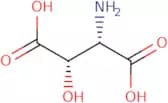
CAS :<p>This product is a custom synthesis. This product is a methylation, click modification, and oligosaccharide. This product is a polysaccharide and saccharide. This product is fluorinated and complex carbohydrate. This product is high purity with modification. This product has monosaccharides and sugar. This product is synthetic and CAS No. 849938-27-8.</p>Formule :C53H48O12Degré de pureté :Min. 95%Masse moléculaire :876.94 g/mol(3S)-3-Hydroxy-L-aspartic acid
CAS :<p>3-hydroxy-L-aspartic acid is a non-protein amino acid that is found in mammalian tissue and has been shown to have structural and functional similarities to glutamate. It is involved in the metabolism of energy, such as the synthesis of fatty acids and epidermal growth factor. 3-Hydroxy-L-aspartic acid also binds to calcium ions, which may be due to its carboxylate group. This compound does not have a disulfide bond, unlike many other amino acids.<br>3S)-3-Hydroxy-L-aspartic acid can be used as a monoclonal antibody for the detection of pseudobactin, an antibiotic secreted by Pseudomonas bacteria that inhibits protein synthesis in eukaryotes.</p>Formule :C4H7NO5Degré de pureté :Min. 95%Masse moléculaire :149.1 g/molD-Ribose-2,3,4,5-13C4
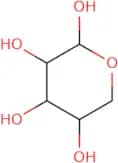
CAS :<p>D-Ribose-2,3,4,5-13C4 is a complex carbohydrate with saccharide units. It is synthesized by the chemical modification of D-ribose. This product can be used to modify or methylate glucose and other carbohydrates. It has been shown to inhibit the formation of amyloid plaques in Alzheimer's disease, which may be due to its ability to reduce nitric oxide and reactive oxygen species levels. The purity of this product is at least 98%.</p>Formule :C5H10O5Degré de pureté :Min. 95%Masse moléculaire :154.1 g/mol2-Acetamido-3-O-benzoyl-2-deoxy-a-D-galactopyranosyl Fmoc serine phenacyl ester
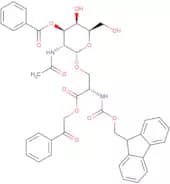
CAS :<p>2-Acetamido-3-O-benzoyl-2-deoxy-a-D-galactopyranosyl Fmoc serine phenacyl ester is a complex carbohydrate. It is an oligosaccharide with a molecular weight of 902 Da that is synthesized from 2,4,6,-trihydroxybenzoic acid and 2,3,4,6,-tetraacetylphenylserine. The carbohydrate has been modified by methylation, glycosylation and fluorination. The synthesis of this compound has been carried out using the click chemistry reaction. This product has a purity of 99+% and can be used in the modification of other carbohydrates.</p>Formule :C41H40N2O12Degré de pureté :Min. 95%Masse moléculaire :752.78 g/molFluorescein isothiocyanate-carboxymethyl-dextran - Average MW 4,000
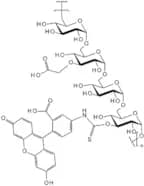
<p>Fluorescein isothiocyanate carboxymethyl dextran (FITC-CM Dextran) has been reported to provide a valuable carrier for nanoparticles of iron oxide. These products provide a potent tool for contrast enhancement in magnetic resonance imaging.</p>Degré de pureté :Min. 95%Couleur et forme :PowderFluorescein isothiocyanate-carboxymethyl-dextran - Average MW 150,000
<p>Fluorescein isothiocyanate carboxymethyl dextran (FITC-CM Dextran) has been reported to provide a valuable carrier for nanoparticles of iron oxide. These products provide a potent tool for contrast enhancement in magnetic resonance imaging.</p>Degré de pureté :Min. 95%D-Glucitol-2-13C
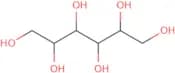
CAS :<p>D-Glucitol-2-13C is a stable isotope-labeled analog of mannitol, which is a sugar alcohol used as an osmotic diuretic. It has been shown to have anticancer properties by inducing apoptosis in cancer cells. D-Glucitol-2-13C has been used as a metabolic tracer in studies investigating tumor metabolism and the effects of kinase inhibitors on cancer cell proliferation. This compound can be detected using luciferase-based assays and has potential as a diagnostic tool for cancer detection. Additionally, D-Glucitol-2-13C has been found in Chinese urine samples and may have a role in protein metabolism. Overall, this compound shows promise as an important tool in cancer research and diagnosis.</p>Formule :C6H14O6Degré de pureté :Min. 95%Masse moléculaire :182.17 g/molAgarodecaose
<p>Agarose is a polysaccharide found in red algae, typically Gelidium and Gracilaria. It is a strictly alternating polysaccharide of α-1,3 linked D-galactose and β-1,4 linked L-3,6 anhydrogalactose with occasional sulfation at position 6 of the anhydrogalactose residue. Agaro-oligosaccharides result from cleavage at galactose residues and neoagaro-oligosaccharides from cleavage at 3,6-anhydro residues. A number of publications have suggested that agarodecaose has properties that include: anti-microbial, antiviral, prebiotic, anti-tumoral, immunomodulatory, anti-inflammatory, glucosidase inhibitory, and hepatoprotective properties.</p>Formule :C66H102O51Degré de pureté :Min. 95%Couleur et forme :SolidMasse moléculaire :1,711.49 g/mol2-Hydroxyimipramine b-D-glucuronide
CAS :<p>2-Hydroxyimipramine b-D-glucuronide is a custom synthesis, modification, and fluorination of the drug 2-hydroxyimipramine. The methyl group from the molecule is replaced with a fluoro group. This modification leads to a new compound with improved pharmacokinetic properties. The new compound also has glycosylation sites on the sugar ring that are not present in the parent drug. This modification may lead to an increase in the therapeutic efficacy of 2-hydroxyimipramine b-D-glucuronide as it interacts with other drugs and increases their bioavailability.</p>Formule :C25H32N2O7Degré de pureté :Min. 95%Couleur et forme :SolidMasse moléculaire :472.54 g/molSucrose octasulfate octatriethylammonium salt
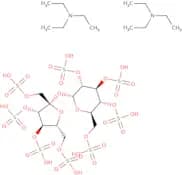
CAS :<p>Used for treatment of duodenal ulcers and gastroesophageal reflux</p>Formule :C12H22O35S8•(C6H15N)8Degré de pureté :Min. 95%Couleur et forme :PowderMasse moléculaire :982.81 g/mol




![5,7-Bis-(benzyloxy)-a-(4-(benzyloxy)phenyl)-3-[3,4-di-O-acetyl-a-O-acetyl-a-L-rhamnopyranosyloxyl]…](/_next/image/?url=https%3A%2Fstatic.cymitquimica.com%2Fproducts%2F3D%2Fthumb-webp%2FMB16635.webp&w=3840&q=75)