Composés apparentés aux enzymes, aux peptides et aux protéines
Les composés liés aux enzymes, peptides et protéines sont essentiels pour étudier et manipuler les voies biochimiques. Ces composés incluent des enzymes qui catalysent les réactions biochimiques, des peptides qui servent d'hormones et de molécules de signalisation, et des protéines qui accomplissent une vaste gamme de fonctions au sein des organismes. Cette catégorie comprend des inhibiteurs, activateurs, substrats et autres réactifs indispensables pour l'enzymologie, la protéomique et la recherche sur les peptides. Chez CymitQuimica, nous proposons une sélection variée de composés de haute qualité pour faciliter vos recherches en cinétique enzymatique, fonction des protéines et synthèse des peptides, garantissant des résultats précis et fiables.
Sous-catégories appartenant à la catégorie "Composés apparentés aux enzymes, aux peptides et aux protéines"
- Acides aminés (AA)(40.509 produits)
- Enzymes(3.560 produits)
- Peptides(30.719 produits)
- Protéines(15.022 produits)
1312 produits trouvés pour "Composés apparentés aux enzymes, aux peptides et aux protéines"
Trier par
Degré de pureté (%)
0
100
|
0
|
50
|
90
|
95
|
100
Tolterodine tartrate
CAS :<p>Muscarinic antagonist</p>Formule :C22H31NO·C4H6O6Degré de pureté :Min. 95%Couleur et forme :PowderMasse moléculaire :475.57 g/molDiflucortolone valerate
CAS :Produit contrôlé<p>Diflucortolone valerate is a corticosteroid that is used to treat inflammatory skin diseases. It is a prodrug that is hydrolyzed in vivo to diflucortolone, its active form. Diflucortolone valerate has been shown to be effective against alopecia areata and mycological skin infections. The optimum concentration of this drug for treating these conditions is 0.5% or less, with side effects such as erythema, scaling, and burning at the application site occurring at higher concentrations. Diflucortolone valerate also has broad-spectrum antimicrobial activity against bacteria and fungi, including methicillin-resistant Staphylococcus aureus (MRSA) isolates.</p>Formule :C27H36F2O5Degré de pureté :Min. 95%Couleur et forme :PowderMasse moléculaire :478.57 g/molNesfatin-1 (human) trifluoroacetate salt
CAS :<p>Please enquire for more information about Nesfatin-1 (human) trifluoroacetate salt including the price, delivery time and more detailed product information at the technical inquiry form on this page</p>Formule :C427H691N113O134Degré de pureté :Min. 95%Masse moléculaire :9,551.74 g/molHuman-24, human
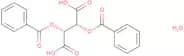
CAS :<p>This antibody is a mouse IgG2a monoclonal antibody to human 24, a protein of unknown function. It blocks the binding of this protein to its ligand, inhibiting the function of this protein.</p>Degré de pureté :Min. 95%Dibenzoyl-L-tartaric acid monohydrate
CAS :<p>Dibenzoyl-L-tartaric acid monohydrate is a chiral molecule that can be found in nature. It is soluble in organic solvents, but insoluble in water. Dibenzoyl-L-tartaric acid monohydrate has an affinity for carboxylate ligands and absorbs at 360 nm. The optical rotation of this compound is +20° to -50°, depending on the concentration and pH of the solution. This molecule is a potential pollutant because it can be degraded by oxidation or photolysis, yielding environmentally hazardous compounds. Its conformation may be changed by light or heat and, as a result, its properties may also change.</p>Formule :C18H14O8·H2ODegré de pureté :Min. 95%Couleur et forme :PowderMasse moléculaire :376.31 g/mol(+/-)-Synephrine tartrate
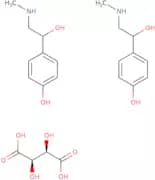
CAS :<p>Synephrine is a drug that is used as an appetite suppressant and weight-loss aid. It can be found in dietary supplements, where it is marketed as a stimulant. Synephrine has been shown to have an inhibitory effect on the carotid sinus reflexes, which are nerve impulses that regulate blood pressure. This drug also has a pressor effect on the heart and causes an increase in systolic and diastolic blood pressures. The enantiomers of synephrine are (+)synephrine or (-)-synephrine tartrate, which differ only in the stereochemistry of their chiral centers. The hydrochloric acid present in synephrine tartrate breaks down into amines such as histamine and serotonin, which cause swelling of smooth muscles found in the walls of blood vessels. When taken orally, this drug is metabolized by hydrolysis to picric acid or (+)-synephrine or (-)-synephrine tartrate,</p>Formule :(C9H13NO2)2•C4H6O6Degré de pureté :Min. 95%Couleur et forme :PowderMasse moléculaire :484.5 g/molSodium phytate hydrate
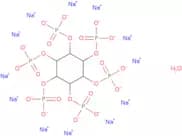
CAS :<p>Chelator of multivalent metal ions; food perservative; antioxidant</p>Formule :C6H6Na12O24P6·xH2ODegré de pureté :Min. 75.0%Couleur et forme :White PowderMasse moléculaire :923.82 g/molSDF-1β (human) trifluoroacetate salt
CAS :<p>Please enquire for more information about SDF-1beta (human) trifluoroacetate salt including the price, delivery time and more detailed product information at the technical inquiry form on this page</p>Formule :C382H620N114O97S5Degré de pureté :Min. 95%Masse moléculaire :8,522.05 g/molRivastigmine tartrate
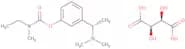
CAS :Produit contrôlé<p>Acetylcholinesterase and butyrylcholinesterase inhibitor</p>Formule :C18H28N2O8Degré de pureté :Min. 95%Couleur et forme :White PowderMasse moléculaire :400.42 g/molPefloxacin mesylate dihydrate
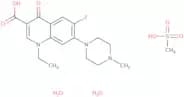
CAS :<p>Pefloxacin mesylate is a prodrug of pefloxacin that is hydrolyzed to the active form in vivo. Pefloxacin is an antibiotic that inhibits bacterial growth by interfering with DNA synthesis by binding to the bacterial ribosome, thereby blocking protein synthesis. This drug has been shown to be effective against gram-positive bacteria such as Streptococcus pneumoniae and Staphylococcus aureus. However, it is not active against gram-negative bacteria such as Escherichia coli or Pseudomonas aeruginosa. Pefloxacin mesylate dihydrate can be administered intravenously at a low dose without any adverse effects on healthy adults. It has also been shown to inhibit the growth of antibiotic-resistant strains of many species, including methicillin-resistant Staphylococcus aureus (MRSA) and Enterococcus faecium.</p>Formule :C17H20FN3O3·CH4O3S·2H2ODegré de pureté :Min. 95%Masse moléculaire :465.49 g/mol25-Hydroxyvitamin D3 monohydrate
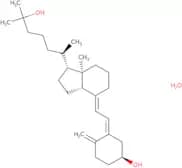
CAS :<p>25-Hydroxyvitamin D3 monohydrate is a vitamin D analog that has been shown to reduce elevated levels of parathyroid hormone and improve bone mineral density. It is used for the treatment of chronic kidney disease, hyperparathyroidism, and osteoporosis. 25-Hydroxyvitamin D3 monohydrate has been found to be effective in the treatment of these conditions because it increases the body's production of calcitriol, the active form of vitamin D. Calcitriol promotes calcium absorption in the gut and reduces renal excretion of calcium by inhibiting parathyroid hormone synthesis. This drug also inhibits pro-inflammatory cytokines such as IL-1β, IL-6, and TNF-α.</p>Formule :C27H44O2·H2ODegré de pureté :Min. 97 Area-%Couleur et forme :White PowderMasse moléculaire :418.65 g/molTriethyl citrate
CAS :<p>Triethyl citrate (TEC) is an ester of citric acid, which is a natural compound. It is a reactive chemical that can react with potassium dichromate (K2Cr2O7) to form potassium citrate, or with malonic acid to form triethyl malonate. Triethyl citrate has been used as a reagent in analytical methods for the determination of water permeability and biological properties. In addition, it has been used as a precursor for the synthesis of dimethyl fumarate (DMF). DMF is an anti-inflammatory drug that may be useful in the treatment of multiple sclerosis.</p>Formule :C12H20O7Degré de pureté :Min. 99 Area-%Couleur et forme :Colorless Clear LiquidMasse moléculaire :276.28 g/molClofibrate
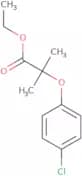
CAS :<p>Clofibrate is a lipid-lowering agent that is used for the treatment of hyperlipidemia. It is a non-selective inhibitor of fatty acid synthesis and has been shown to inhibit cancer cell growth in vitro. Clofibrate inhibits tumor cell proliferation and induces apoptosis, which may be due to its ability to inhibit protein synthesis in cancer cells. This drug also suppresses the growth of breast cancer cells by inhibiting their ability to proliferate.</p>Formule :C12H15ClO3Degré de pureté :Min. 95%Couleur et forme :Colorless Clear LiquidMasse moléculaire :242.7 g/molManganese(II) chloride monohydrate
CAS :<p>Manganese(II) chloride monohydrate is a high quality, reagent grade chemical that is used as a complexing agent and intermediate in the production of fine chemicals. It can also be used as a versatile building block for the synthesis of speciality chemicals. Manganese(II) chloride monohydrate is a useful scaffold with which to build other molecules and has been found to be an important reaction component for the synthesis of various organic compounds.</p>Formule :Cl2Mn·H2ODegré de pureté :Min. 95%Couleur et forme :PowderMasse moléculaire :143.86 g/molCholesteryl isobutyrate
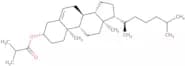
CAS :Produit contrôlé<p>Cholesteryl isobutyrate is a diagnostic target tissue for cancer. It is a fatty acid that is metabolized by 3β-hydroxysteroid dehydrogenase, which converts it to the corresponding alcohol. Cholesteryl isobutyrate can be detected in urine samples with a chromatographic method and coatings. The fusogenic properties of cholesteryl isobutyrate make it an excellent film-forming polymer for drug delivery systems. The phase transition temperature of cholesteryl isobutyrate has been determined to be around 27°C, which makes it an ideal candidate for cellular drug delivery applications.</p>Formule :C31H52O2Degré de pureté :Min. 95%Couleur et forme :PowderMasse moléculaire :456.74 g/mol6-Amino-4-hydroxy-2-mercaptopyrimidine monohydrate
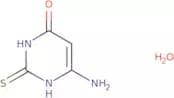
CAS :<p>6-Amino-4-hydroxy-2-mercaptopyrimidine monohydrate (6AP) is a chemical compound that has been shown to have potent antibacterial activity against Gram-positive bacteria. It is also effective at inhibiting the growth of S. aureus, both in vitro and in vivo. 6AP can be used as an alternative treatment for cancer, where it inhibits the growth of tumor cells by blocking ferrocene, which plays an important role in cancer cell proliferation and survival. The efficacy of 6AP against bacterial infections has been demonstrated in vitro with a variety of Gram-positive pathogens, including S. aureus, Streptococcus pneumoniae, Enterococcus faecalis, and Bacillus anthracis.</p>Formule :C4H5N3OS•H2ODegré de pureté :Min. 95%Couleur et forme :PowderMasse moléculaire :161.18 g/molMethyl 12-ketostearate
CAS :<p>Methyl 12-ketostearate is an organic compound with the formula CH(CH)COCH=CHCOCH=CHCOOCH3. It is a colorless liquid with a fishy odor. The compound is used as a precursor to other compounds, such as esters and amides. It can be prepared by the reaction of methyl mercaptoacetate and copper chromite in dimethylformamide: Methyl 12-ketostearate + CuCrO4 → Methyl 12-ketostearate + CuCrO4 → Methyl 12-ketostearate + CuCrO4 → Methyl 12-ketostearate + CuCrO4 → Methyl 12-ketostearate + CuCrO4 → Methyl 12-ketostearate + CuCrO4 →</p>Formule :C19H36O3Degré de pureté :Min. 97 Area-%Couleur et forme :White PowderMasse moléculaire :312.49 g/molSodium disulfitoaurate(I) - aqueous solution
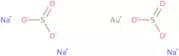
CAS :<p>Sodium disulfitoaurate(I) - aqueous solution is a triamine that is used for the chemical fixation of gold nanoparticles onto fabric. It is also used in the production of solar cells, where it serves as an absorber layer. Sodium disulfitoaurate(I) - aqueous solution has been shown to be able to remove cyanogen from the air and water, which makes it useful in the diagnosis of cyanide poisoning. This agent can be prepared by reacting hydrochloric acid with sodium sulphite or sodium hydrosulphite.</p>Formule :AuNa3O6S2Degré de pureté :Min. 95%Couleur et forme :Colorless Clear LiquidMasse moléculaire :426.06 g/molEstradiol 17-valerate
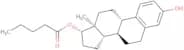
CAS :<p>Estradiol is a form of the hormone estrogen that has been modified to be more lipophilic. It is used in combination with other drugs to treat menopausal symptoms and as an adjuvant for the treatment of breast cancer in women. Estradiol 17-valerate is also used in the treatment of schizophrenia, although not as often as estradiol valerate, because it has a shorter duration of action. The mechanism of action is thought to be due to its ability to increase the concentration of dopamine at nerve terminals by blocking reuptake or inhibiting its metabolism. This may result in relief from distal tubule dysfunction and an improvement in urinary tract symptoms associated with benign prostatic hypertrophy. There are many other possible mechanisms of action including the prevention of bone loss, increased bone age, and increased NMDA receptor binding potentials.</p>Formule :C23H32O3Degré de pureté :Min. 95%Couleur et forme :PowderMasse moléculaire :356.5 g/molL-Aspartic acid sodium salt monohydrate
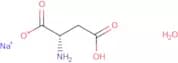
CAS :<p>L-Aspartic acid sodium salt monohydrate is a sodium carbonate salt of L-aspartic acid that has been shown to inhibit the growth of leishmania in vitro. It may also be effective against other protozoa and amoeba, including Entamoeba histolytica and Naegleria fowleri. L-Aspartic acid sodium salt monohydrate inhibits acid formation by inhibiting the enzyme carbonate synthetase. This compound also has potential as a drug target for infantile lysosomal storage disease due to its ability to activate glutamate, which is an amino acid that is deficient in this condition. The surface methodology used for this study was titration calorimetry, which can be used to measure the thermodynamic properties of activated carboxylates.</p>Formule :C4H6NO4Na·H2OCouleur et forme :White Off-White Clear LiquidMasse moléculaire :173.1 g/mol