Composés apparentés aux enzymes, aux peptides et aux protéines
Les composés liés aux enzymes, peptides et protéines sont essentiels pour étudier et manipuler les voies biochimiques. Ces composés incluent des enzymes qui catalysent les réactions biochimiques, des peptides qui servent d'hormones et de molécules de signalisation, et des protéines qui accomplissent une vaste gamme de fonctions au sein des organismes. Cette catégorie comprend des inhibiteurs, activateurs, substrats et autres réactifs indispensables pour l'enzymologie, la protéomique et la recherche sur les peptides. Chez CymitQuimica, nous proposons une sélection variée de composés de haute qualité pour faciliter vos recherches en cinétique enzymatique, fonction des protéines et synthèse des peptides, garantissant des résultats précis et fiables.
Sous-catégories appartenant à la catégorie "Composés apparentés aux enzymes, aux peptides et aux protéines"
- Acides aminés (AA)(40.509 produits)
- Enzymes(3.560 produits)
- Peptides(30.719 produits)
- Protéines(15.022 produits)
1312 produits trouvés pour "Composés apparentés aux enzymes, aux peptides et aux protéines"
Trier par
Degré de pureté (%)
0
100
|
0
|
50
|
90
|
95
|
100
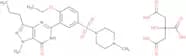
Sildenafil citrate
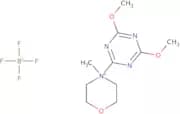
CAS :<p>Sildenafil is an inhibitor of phosphodiesterase type-5 (PDE-5). It is used in the treatment of erectile dysfunction. Sildenafil inhibits the enzyme phosphodiesterase type-5, which prevents the conversion of cyclic guanosine monophosphate to cyclic adenosine monophosphate, and this results in relaxation of smooth muscle cells and increased blood flow to the corpus cavernosum. The PDE-5 inhibitors are selective for human PDE-5 and do not inhibit PDEs 1, 2, 3, or 6. The inhibition of PDE-5 by sildenafil is reversible. Sildenafil has been shown to be a potent inhibitor of cyclase activity in vitro. br> The LC/MS/MS method was developed to measure the concentration of sildenafil in human serum. This analytical method provides a linear calibration curve with limits of quant</p>Formule :C28H38N6O11SDegré de pureté :Min. 95%Couleur et forme :White PowderMasse moléculaire :666.7 g/mol4-(4,6-Dimethoxy-1,3,5-triazin-2-yl)-4-morpholinium tetrafluoroborate
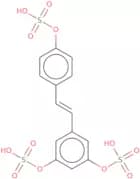
CAS :<p>4-(4,6-Dimethoxy-1,3,5-triazin-2-yl)-4-morpholinium tetrafluoroborate is a modulating agent that is used in the treatment of infectious and metabolic disorders. The compound has been shown to increase the activity of fatty acid oxidation and decrease the production of inflammatory mediators. 4-(4,6-Dimethoxy-1,3,5-triazin-2-yl)-4-morpholinium tetrafluoroborate interacts with a variety of proteins by binding to their Nterminal domains. It can be conjugated to other molecules and then used as probes for kinetic studies or as antiinflammatory compounds.</p>Formule :C10H17N4O3•BF4Degré de pureté :Min. 97 Area-%Couleur et forme :PowderMasse moléculaire :328.07 g/moltrans-Resveratrol-3,4',5-trisulfate trisodium salt
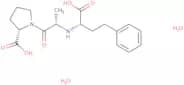
CAS :<p>Trans-resveratrol-3,4',5-trisulfate trisodium salt is a fine chemical that can be used as a building block for research chemicals and pharmaceuticals. It is often used as a reagent in organic synthesis, due to its solubility in organic solvents. This compound has been shown to have activity against Alzheimer's disease. Trans-resveratrol-3,4',5-trisulfate trisodium salt also has anti-inflammatory properties.</p>Formule :C14H9Na3O12S3Degré de pureté :Min. 95%Couleur et forme :PowderMasse moléculaire :534.38 g/molEnalaprilat dihydrate
CAS :<p>Enalaprilat is an angiotensin-converting enzyme (ACE) inhibitor that prevents the formation of angiotensin II, a potent vasoconstrictor. It is used to treat high blood pressure and congestive heart failure. Enalaprilat is metabolized to enalapril, which has been found to act as an active inhibitor of DNA polymerase. This drug is also capable of inhibiting the synthesis of other proteins, such as those involved in protein transport and cell wall biogenesis.</p>Formule :C18H28N2O7Degré de pureté :Min. 98 Area-%Couleur et forme :PowderMasse moléculaire :384.42 g/mol2,3-Dimethylphenylhydrazine hydrochloride hydrate
CAS :<p>2,3-Dimethylphenylhydrazine hydrochloride hydrate is a fine chemical that is used as a building block for research chemicals and speciality chemicals. It is also a high quality reagent and useful scaffold for the synthesis of complex compounds. 2,3-Dimethylphenylhydrazine hydrochloride hydrate is versatile, being able to be used in reactions involving nucleophilic substitution or elimination reactions. This product can be used in reactions involving the formation of carbon-carbon bonds.</p>Formule :C8H12N2•HCl•(H2O)xDegré de pureté :Min. 95%Couleur et forme :PowderMasse moléculaire :172.66 g/molSDF-1α (human) trifluoroacetate salt
CAS :<p>Please enquire for more information about SDF-1alpha (human) trifluoroacetate salt including the price, delivery time and more detailed product information at the technical inquiry form on this page</p>Formule :C356H578N106O93S4Degré de pureté :Min. 95%Masse moléculaire :7,959.32 g/mol(5S)-N-(5-Amino-1-carboxypentyl) iminodiacetic acid hydrate
CAS :<p>(5S)-N-(5-Amino-1-carboxypentyl) iminodiacetic acid hydrate is a sophisticated chelating agent, designed for precise control in various biochemical applications. The reactive moieties of this compound are particularly useful in affinity chromatography and surface functionalization, making it a valuable tool in both protein purification and the development of biosensors or other biotechnological applications. Affinity chromatography: As a metal-chelator, it is particularly adept at binding divalent metal cations such as Ni²⁺, Co²⁺, and Cu²⁺, which are instrumental in stabilizing protein structures or facilitating enzyme activity. When complexed with Ni²⁺ (nickel) ions (5S)-N-(5-Amino-1-carboxypentyl) iminodiacetic acid forms a surface that can specifically capture proteins engineered with a polyhistidine tag (His-tag). Such interactions facilitate the purification and isolation of target proteins with high specificity, allowing immobilization in a controlled orientation without compromising functional integrity.Surface functionalization: The free amine group allows for conjugation via strong covalent bonds to surfaces such as glass, silica, gold (e.g., electrodes), polymers, hydrogels and magnetic beads. This creates metal-functionalized surfaces for biospecific interactions with His-tagged proteins. Examples of potential applications of this include Surface Plasmon Resonance (SPR), fluorescence microscopy and use in artificial cell systems with hydrogel-based cell-mimicking environments. Thus giving (5S)-N-(5-Amino-1-carboxypentyl) iminodiacetic acid a broad scope in its application in advanced biochemical assays and materials science.</p>Formule :C10H18N2O6·xH2ODegré de pureté :Min. 95 Area-%Couleur et forme :White PowderMasse moléculaire :262.26 g/mol5-Acetamido-6-amino-3-methyluracil hydrate
CAS :<p>5-Acetamido-6-amino-3-methyluracil hydrate (AAU) is a drug that is used as an analytical reagent in the determination of caffeine, 5-hydroxytryptophan, and other compounds. It can be used to assess interactions between drugs and enzyme activities. AAU has been shown to be a suitable substrate for many enzymes, including alcohol dehydrogenase, acetylcholinesterase, catalase, and glucose oxidase. The sample preparation procedure is performed by dissolving the compound in water or ethanol. The sample is then filtered before it is analyzed using high performance liquid chromatography (HPLC). The chemical properties of AAU are such that it can be easily transported from one place to another without undergoing significant changes in physical properties. AAU has been shown to have no effect on biological samples when exposed to radiation.</p>Formule :C7H10N4O3·H2ODegré de pureté :Min. 95%Couleur et forme :Slightly Yellow PowderMasse moléculaire :216.2 g/molrec PDGF AA (human)
<p>Please enquire for more information about rec PDGF AA (human) including the price, delivery time and more detailed product information at the technical inquiry form on this page</p>Degré de pureté :Min. 95%Copper(II) chloride dihydrate
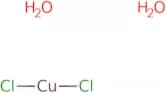
CAS :<p>Copper(II) chloride dihydrate (CuCl2·2H2O) is a copper compound that can be used as an antimicrobial agent. It has been shown to inhibit the growth of bacteria, yeast and fungi by inhibiting cell division at the G1/S phase boundary. Copper(II) chloride dihydrate has also been shown to inhibit cyclin D2 production in HL-60 cells and to cause coumarin derivatives to react with DNA, leading to its structural analysis. It is soluble in water but insoluble in organic solvents. When exposed to air, it reacts with water vapor to form copper chloride (CuCl). Copper(II) chloride dihydrate is acidic and can react with bases such as amines or ammonia; this reaction may result in drug interactions.</p>Formule :CuCl2·2H2ODegré de pureté :Min. 95%Couleur et forme :PowderMasse moléculaire :170.48 g/molGallic acid monohydrate
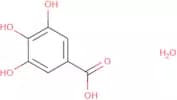
CAS :<p>Gallic acid monohydrate is a natural phenolic compound present in plants, such as oak and sumac. It has been shown to have anticarcinogenic properties in animal models of cancer. Gallic acid monohydrate inhibits the growth of tumor cells by binding to the DNA of tumor cells and inhibiting the synthesis of RNA and proteins. It also possesses antioxidant properties, which may be due to its ability to scavenge free radicals. Gallic acid monohydrate is soluble in water, but not in organic solvents such as ether or chloroform. It exists as two crystalline polymorphs: one anhydrous form that occurs at room temperature and a hydrated form that appears when heated above 40 degrees Celsius. In vitro assays have shown that gallic acid monohydrate is stable when exposed to heat, light, and pH changes.END></p>Formule :C7H8O6Degré de pureté :Min. 95%Couleur et forme :White PowderMasse moléculaire :188.13 g/mol9-Mesityl-2,7-dimethyl-10-phenylacridinium tetrafluoroborate
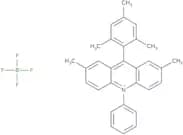
CAS :<p>9-Mesityl-2,7-dimethyl-10-phenylacridinium tetrafluoroborate is a versatile building block and reagent for organic synthesis. It is a fine chemical that is used in the production of research chemicals and speciality chemicals. 9-Mesityl-2,7-dimethyl-10-phenylacridinium tetrafluoroborate can be used as a reaction component to synthesize complex compounds with various functional groups. It has been reported to have high quality, being both useful and stable. CAS NO: 1621020-00-5</p>Formule :C30H28BF4NCouleur et forme :Yellow PowderMasse moléculaire :489.35 g/molMagnesium chloride hexahydrate
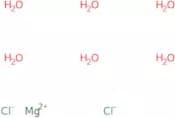
CAS :<p>Magnesium chloride hexahydrate is a chemical compound with the formula MgCl2·6H2O. It is used as an electrolyte in wastewater treatment and for the production of magnesium metal. The optimum concentration for this chemical is between 0.1-0.3 mol/L, which can be found in nature. Magnesium chloride hexahydrate is also used as a component in dextran sulfate, which is an additive to prevent clumping of particles suspended in water or other liquids. This compound has been shown to affect the activity of enzymes such as xylanase, protease, and amylase. Magnesium chloride hexahydrate has a phase transition temperature of 40 °C and can form coordination geometry structures with copper(II) ions at high temperatures.</p>Formule :MgCl2·6H2OCouleur et forme :PowderMasse moléculaire :203.3 g/molFerrocenium Tetrafluoroborate
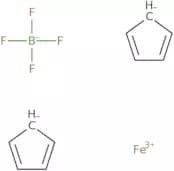
CAS :<p>Ferrocenium tetrafluoroborate is a chiral, unreactive compound that is synthesized through the reaction of ferrocene and tetrafluoroboric acid. Ferrocenium tetrafluoroborate is a kinetic polymer that can be used as a linker in the synthesis of polymeric materials. This compound has been shown to catalyze the epoxidation of aliphatic alcohols to yield epoxides. Ferrocenium tetrafluoroborate has also been shown to catalyze the epoxidation of cyclic olefins, such as 1-octene. Ferrocenium tetrafluoroborate is an achiral catalyst and does not change during the course of the reaction.</p>Formule :C10H2BF4FeCouleur et forme :Brown PowderMasse moléculaire :264.77 g/molAlendronic acid monosodium salt trihydrate - USP
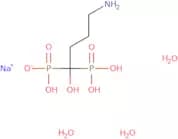
CAS :<p>Farnesyl diphosphate synthase inhibitor; inhibits bone resorption</p>Formule :C4H18NNaO10P2Degré de pureté :Min. 95%Couleur et forme :White PowderMasse moléculaire :325.12 g/molTolterodine tartrate
CAS :<p>Muscarinic antagonist</p>Formule :C22H31NO·C4H6O6Degré de pureté :Min. 95%Couleur et forme :PowderMasse moléculaire :475.57 g/mol4-(2-(Dimethylamino)-1-(1-hydroxycyclohexyl)ethyl)phenol
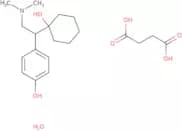
CAS :Produit contrôlé<p>Venlafaxine is a selective serotonin and norepinephrine reuptake inhibitor (SNRI) that is used to treat depression. Venlafaxine inhibits the reuptake of serotonin and norepinephrine into the presynaptic neuron, increasing their availability in the synaptic cleft. Venlafaxine has been shown to be effective in treating major depressive disorder and other depressive disorders, such as dysthymia and post-partum depression. The antidepressant effects of venlafaxine are believed to be due to its ability to block the uptake of serotonin and norepinephrine in the brain, resulting in an increased concentration of these neurotransmitters. Venlafaxine is metabolized by CYP2D6, CYP3A4, CYP1A2 and CYP2C19 enzymes, which may result in drug interactions with other drugs metabolized by these enzymes. To control for this effect, venlafaxine blood</p>Formule :C16H25NO2Degré de pureté :Min. 97 Area-%Couleur et forme :PowderMasse moléculaire :263.38 g/molChloral hydrate
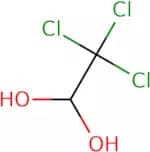
CAS :Produit contrôlé<p>Chloral hydrate is a sedative and hypnotic drug that is used in the treatment of insomnia, anxiety disorders, and seizure disorders. It has also been used as an anticonvulsant and muscle relaxant. Chloral hydrate binds to the 5-HT2 receptors on neurons to produce its sedative effects. The therapeutic dose of chloral hydrate ranges from 1 to 3 g per day in adults, with a maximum dose of 12 g per day. Clinical studies have shown that chloral hydrate can cause liver damage when combined with other drugs such as acetaminophen or alcohol.</p>Formule :C2H3Cl3O2Degré de pureté :Min. 95%Couleur et forme :PowderMasse moléculaire :165.4 g/molCalcium-D-galactonate hydrate
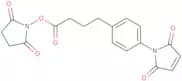
CAS :<p>Calcium-D-galactonate hydrate is a reagent that is used in organic synthesis as a complex compound. It can also be used as an intermediate for the synthesis of calcium-D-galactonate, which is a useful scaffold for the construction of bioactive molecules. Calcium-D-galactonate hydrate has been shown to have many uses in the pharmaceutical and fine chemical industries. This compound is also an important reactant in research, due to its versatility and usefulness in organic synthesis.</p>Formule :C12H22CaO14·5H2ODegré de pureté :Min. 98%Couleur et forme :White PowderMasse moléculaire :520.45 g/molN-Succinimidyl 4-(p-maleimidophenyl)butyrate
CAS :<p>N-Succinimidyl 4-(p-maleimidophenyl)butyrate is a fatty acid that has been shown to regulate the effector proteins of cell surface receptors. It has been shown to be site specific, with water permeability and a molecule size of about 200 Daltons. It is able to bind to the regulatory sites on proteins and inhibit their function. The binding of N-succinimidyl 4-(p-maleimidophenyl)butyrate to antibodies can cause an antibody response in humans and other mammals. Additionally, this fatty acid can also be used as a substrate for protein synthesis. N-Succinimidyl 4-(p-maleimidophenyl)butyrate binds to the subunits of proteins by hydrogen bonding or hydrophobic interactions, which are necessary for protein synthesis. This compound has been shown to inhibit the messenger RNA (mRNA) production in Galleria mellonella larvae,</p>Formule :C18H16N2O6Degré de pureté :Min. 95%Couleur et forme :PowderMasse moléculaire :356.33 g/mol