Composés apparentés aux enzymes, aux peptides et aux protéines
Les composés liés aux enzymes, peptides et protéines sont essentiels pour étudier et manipuler les voies biochimiques. Ces composés incluent des enzymes qui catalysent les réactions biochimiques, des peptides qui servent d'hormones et de molécules de signalisation, et des protéines qui accomplissent une vaste gamme de fonctions au sein des organismes. Cette catégorie comprend des inhibiteurs, activateurs, substrats et autres réactifs indispensables pour l'enzymologie, la protéomique et la recherche sur les peptides. Chez CymitQuimica, nous proposons une sélection variée de composés de haute qualité pour faciliter vos recherches en cinétique enzymatique, fonction des protéines et synthèse des peptides, garantissant des résultats précis et fiables.
Sous-catégories appartenant à la catégorie "Composés apparentés aux enzymes, aux peptides et aux protéines"
- Acides aminés (AA)(40.509 produits)
- Enzymes(3.559 produits)
- Peptides(30.720 produits)
- Protéines(15.023 produits)
1312 produits trouvés pour "Composés apparentés aux enzymes, aux peptides et aux protéines"
Trier par
Degré de pureté (%)
0
100
|
0
|
50
|
90
|
95
|
100
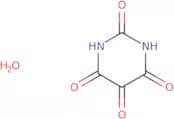
Alloxane monohydrate
CAS :<p>A pyrimidine derivative, widely used for the induction of diabetes in experimental animals. It preferentially accumulates in pancreatic β cells in Langerhans islets via glucose transporter GLUT2. In the presence of intracellular thiols such as glutathione, it gets involved in a cyclic redox reaction with its reduction product, dialuric acid. This triggers the production of toxic levels of reactive oxygen species (ROS) and directs the cells in necrosis. Alloxan also inhibits glucokinase, which regulates glucose-induced insulin secretion.</p>Formule :C4H2N2O4·H2ODegré de pureté :Min. 95%Couleur et forme :White PowderMasse moléculaire :160.09 g/molTrimethylamine-N-oxide dihydrate
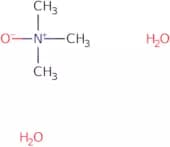
CAS :<p>Trimethylamine-N-oxide dihydrate (TMAO) is the anhydrous form of trimethylamine oxide (TMAO). It has a number of applications in industry and research. TMAO is used as a diagnostic agent for metal carbonyls, such as lead and arsenic, and also for hydrogen bond. In addition, it can be used to determine the presence of hydroxyl groups in organic compounds, such as fatty acids. The hydroxyl group reacts with Iodosobenzene to form an iodide ion that can be measured by nmr spectroscopy. This reaction is affected by the presence of other atoms or molecules that have electron donating properties, such as an oxygen atom or a carbonyl group. TMAO can also be used in cancer research to study how tumors develop resistance to chemotherapy drugs.</p>Formule :C3H13NO3Couleur et forme :White PowderMasse moléculaire :111.14 g/molChromotropic acid disodium dihydrate
CAS :<p>Chromotropic acid dihydrate is a chromogenic compound that has an adsorption mechanism and is used as an analytical reagent. Chromotropic acid disodium dihydrate (CDA) is used in the determination of hydrochloric acid, natural gas and other liquids. It also can be used to measure the concentration of tyramine hydrochloride. CDA has been shown to be effective in the measurement of molecular orbitals and kinetic constants. The optical sensor is sensitive to wavelengths ranging from 200-900 nm, with a peak absorption at around 500 nm. This sensor can be used for many types of chemical reactions, such as organic synthesis, hydrogenation, and oxidation.</p>Formule :C10H6O8S2Na2·2H2ODegré de pureté :Min. 95%Couleur et forme :Off-White PowderMasse moléculaire :400.29 g/molDimethylglyoxime disodium salt octahydrate
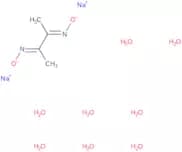
CAS :<p>Dimethylglyoxime is a pesticide that has been used to control insects and nematodes. It has been found to be effective in controlling mosquitoes, flies, and other pests. This compound is also used as an extractor in microextraction. Dimethylglyoxime is not toxic to humans and does not cause any adverse effects on the environment or human health. It can be used with chlorine for wastewater treatment.</p>Formule :C4H8N2Na2O2·8H2ODegré de pureté :Min. 95%Couleur et forme :PowderMasse moléculaire :306.22 g/molL-Cysteine hydrochloride monohydrate
CAS :<p>L-Cysteine is a nonessential amino acid that has the ability to disrupt bacterial cell membranes. It can be produced by hydrolysis of human hair, feathers, and animal hides. L-Cysteine is used as a food additive and flavouring agent in human food and animal feed. It is also used as an additive in the manufacture of plastics, adhesives, and rubber products. L-Cysteine hydrochloride monohydrate (L-Cys HCl) is a white crystalline powder that dissolves readily in water. L-Cys HCl has been shown to have anti-inflammatory properties due to its ability to inhibit the production of prostaglandins.</p>Formule :C3H7NO2S·HCl·H2ODegré de pureté :Min. 95%Couleur et forme :White Off-White PowderMasse moléculaire :175.64 g/molN-α-Acetyl-DL-arginine dihydrate
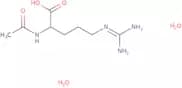
CAS :<p>N-alpha-Acetyl-DL-arginine dihydrate (AAD) is a versatile building block that can be used to synthesize functionalized molecules. AAD is an intermediate for the production of pharmaceuticals and other useful compounds. It is also a reaction component in organic synthesis, and has been shown to have high purity.</p>Formule :C8H16N4O3•(H2O)2Degré de pureté :90%Couleur et forme :PowderMasse moléculaire :252.27 g/molCaffeine citrate
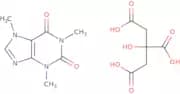
CAS :Produit contrôlé<p>Caffeine citrate is a low-dose caffeine product that has been shown to increase locomotor activity in rats. Caffeine citrate is an ester of caffeine and citric acid. It inhibits the enzyme that breaks down acetylcholine, which may lead to an increase in brain functions. Caffeine citrate is used as a treatment for apnea in pediatric patients, and it has also been shown to prevent bacterial translocation and reduce liver impairment caused by certain drugs. The therapeutic effect of caffeine citrate may be due to its ability to inhibit mitochondrial membrane potential, or its effects on basic proteins such as sodium citrate, or both.</p>Formule :C8H10N4O2·C6H8O7Couleur et forme :White PowderMasse moléculaire :386.31 g/molRivastigmine tartrate
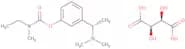
CAS :Produit contrôlé<p>Acetylcholinesterase and butyrylcholinesterase inhibitor</p>Formule :C18H28N2O8Degré de pureté :Min. 95%Couleur et forme :White PowderMasse moléculaire :400.42 g/mol3-Nitrophenylguanidine nitrate
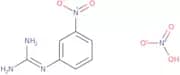
CAS :<p>3-Nitrophenylguanidine nitrate is a drug that targets the enzyme kinases, which are involved in the regulation of cell growth and division. It has been shown to inhibit the activity of stromal tumor cells, as well as chronic myeloid leukemia cells. 3-Nitrophenylguanidine nitrate inhibits protein synthesis by inhibiting demethylation and efflux, which enables imatinib to bind to the target site. This drug also has a rapid onset of action and can be used for monitoring chronic myeloid leukemia patients without the need for positron emission tomography (PET) scanning.</p>Formule :C7H8N4O2•HNO3Degré de pureté :Min. 95%Couleur et forme :PowderMasse moléculaire :243.18 g/molBrimonidine-D-tartrate
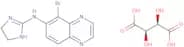
CAS :<p>Brimonidine-D-tartrate is a selective alpha-2 adrenergic agonist, which is a pharmacological compound derived synthetically, targeting specific receptor subtypes in the adrenergic receptor family. Its mode of action involves reducing aqueous humor production and increasing uveoscleral outflow in the eye, thereby lowering intraocular pressure. Additionally, it induces peripheral vasoconstriction, playing a role in reducing redness in rosacea.</p>Formule :C15H16BrN5O6Couleur et forme :White PowderMasse moléculaire :442.22 g/molN-Propyl-2-ene-2,4,6-triphenylpyridinium tetrafluoroborate
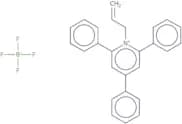
CAS :<p>N-Propyl-2,4,6-triphenylpyridinium tetrafluoroborate (NPPBF) is a versatile building block with a wide range of applications in the synthesis of complex compounds. It is a fine chemical that has been used as a reagent, speciality chemical, and useful scaffold for research chemicals. NPPBF has been shown to be an intermediate in the synthesis of various pharmaceuticals and agrochemicals. It can also be used as a reaction component in organic synthesis. The compound is soluble in polar solvents such as DMF, DMSO, THF, and acetonitrile.</p>Formule :C26H22N•BF4Degré de pureté :Min. 95%Masse moléculaire :435.26 g/molCholine Citrate - ca. 65% in Water
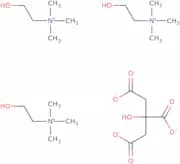
CAS :<p>Choline citrate is a salt of choline and citric acid that is used for the treatment of liver disease. Choline citrate is a precursor for acetylcholine, which is important for the function of the nervous system. It has been shown to be effective in treating fatty acid deficiency in mice. Choline citrate also acts as an intermediary in the metabolism of phospholipids and sphingolipids. It improves locomotor activity, helps with muscle contractions, and increases creatine kinase levels in mice. This product may be used to treat various symptoms such as fatigue, nausea, vomiting, diarrhea, and fever. The fruit extract may contribute to this product's effectiveness by providing additional choline. Choline citrate is also known to increase acetylcholine levels through its action on receptor cells and cyclic nucleotide phosphodiesterase enzymes. The increased levels of acetylcholine may reduce inflammation caused by inflammatory diseases such as ulcerative colitis or</p>Formule :C6H5O7·3C5H14NODegré de pureté :Min. 95%Couleur et forme :PowderMasse moléculaire :501.61 g/molFolic acid dihydrate
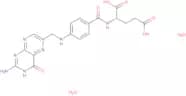
CAS :<p>Folic acid dihydrate is a water-soluble vitamin that is involved in the production of nucleic acids and amino acids. It is a component of many compounds, such as DNA and RNA, and is essential for cell growth. Folic acid dihydrate can be synthesized by bacteria, which use it as an energy source. The radionuclide form of folic acid has been used to study the thermal expansion of food composition and to determine the nutrient content of foods. In addition, folic acid dihydrate has been used in tissue culture experiments to measure receptor binding or growth factor activity. Folic acid dihydrate has also been investigated for its ability to inhibit the growth of infectious diseases, including Streptococcus faecalis, Helicobacter pylori and HIV-1.</p>Formule :C19H19N7O6Degré de pureté :97 To 102%Masse moléculaire :441.4 g/molOrphenadrine citrate salt
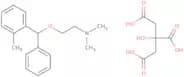
CAS :Produit contrôlé<p>Orphenadrine citrate salt is a nonsteroidal anti-inflammatory drug that is used to treat pain and inflammation. It is also used in the treatment of cancer, as well as in the prevention of side effects associated with chemotherapy. Orphenadrine citrate salt is primarily used to relieve muscle spasms and to reduce pain, especially in cases of cancer. This medication has been shown to be effective for treating cervical cancer, psychiatric patients, and geriatric patients. Orphenadrine citrate salt has also been found to have antibiotic properties against bacteria such as capsicum annuum and other drugs that are metabolized by the liver.</p>Formule :C24H31NO8Degré de pureté :Min. 95%Couleur et forme :White To Off-White SolidMasse moléculaire :461.5 g/mol3,5-Pyrazoledicarboxylic acid monhydrate
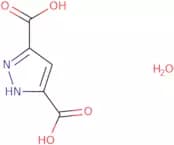
CAS :<p>3,5-Pyrazoledicarboxylic acid monhydrate (PDA) is a hydrogen-bonding molecule that can be used for the production of various compounds. PDA can be synthesized in a stepwise process from 3,5-dihydroxypyridine and pyrazole. In this process, the first step involves the formation of an amide bond between 3,5-dihydroxypyridine and pyrazole to form 3,5-pyrazolidinecarboxamide. The second step is the dehydrogenation of 3,5-pyrazolidinecarboxamide to form PDA with loss of one water molecule. This compound shows photocatalytic activity due to its coordination chemistry properties.</p>Formule :C5H4N2O4·H2ODegré de pureté :Min. 95%Couleur et forme :White PowderMasse moléculaire :174.11 g/molFerrous gluconate dihydrate
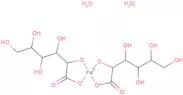
CAS :<p>Ferrous gluconate dihydrate is a fine chemical that has many applications in research and development. It is a versatile building block that can be used as a starting material for the synthesis of complex compounds, such as drugs, pesticides, and perfumes. Ferrous gluconate dihydrate can also be used as a reaction component to produce speciality chemicals, such as benzyl alcohols. In addition to its usefulness in research, ferrous gluconate dihydrate is an important reagent for the production of high-quality pharmaceuticals.</p>Formule :C12H22FeO14·2H2ODegré de pureté :Min. 95%Couleur et forme :PowderMasse moléculaire :482.17 g/molSodium butyrate
CAS :<p>Reversible inhibitor of histone deacetylases (HDAC) that causes histone hyperacetylation, changes in chromatin structure and in gene expression. Sodium butyrate was shown to induce apoptosis in adenoma and carcinoma cell lines as well as to stimulate neurogenesis following cerebral ischemic injury. Sodium butyrate is present in large bowel as naturally occurring fatty acid and a by-product of bacterial fermentation of dietary fibres.</p>Formule :C4H7NaO2Couleur et forme :White PowderMasse moléculaire :110.09 g/molFmoc-L-glutamic acid-O-tert-butyl ester hydrate
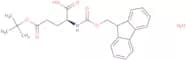
CAS :<p>Fmoc-L-glutamic acid-O-tert-butyl ester hydrate is a useful scaffold that is used in the synthesis of complex compounds. It can be used as a reaction component for the preparation of speciality chemicals and as an intermediate for the production of fine chemicals. Fmoc-L-glutamic acid-O-tert-butyl ester hydrate has a CAS number of 204251-24-1.</p>Formule :C24H27NO6•H2ODegré de pureté :Min. 95%Couleur et forme :White PowderMasse moléculaire :443.49 g/molDiisopropyl D-tartrate
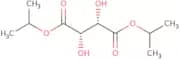
CAS :<p>Diisopropyl tartrate is a chemical compound that has been used in the synthesis of antibiotics. It is bifunctional, meaning that it can act as both a nucleophile and a base. The chloride forms a nucleophilic addition with the allyl group, forming an intermediate that is an excellent leaving group for the final product. Diisopropyl tartrate is used to synthesize monomers for polymers, such as chloroprene and styrene, which are used in the manufacture of plastics and rubber. This chemical is also used in catalytic asymmetric reactions, where it acts as a catalyst by stabilizing one enantiomer over another to promote stereoselective reactions.</p>Formule :C10H18O6Degré de pureté :Min. 95%Couleur et forme :Colorless Clear LiquidMasse moléculaire :234.25 g/molCinnamyl butyrate
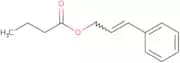
CAS :<p>Cinnamyl butyrate is a chemical compound that belongs to the class of diphenyl ethers. It has been shown to reduce plasma glucose levels in mice by inhibiting fatty acid synthesis and stimulating glucose uptake into cells. Cinnamyl butyrate also acts as a cross-linking agent, which enhances the stability of polymers by forming covalent bonds between reactive groups. The surface methodology used for this study was a surface science technique called atomic force microscopy (AFM). This method can be used to measure the thickness of the film, or the diameter of the particles. The AFM images showed that cinnamyl butyrate formed a thin film that was uniform over large areas.</p>Formule :C13H16O2Degré de pureté :Min. 95%Couleur et forme :Clear LiquidMasse moléculaire :204.26 g/mol