Composés apparentés aux enzymes, aux peptides et aux protéines
Les composés liés aux enzymes, peptides et protéines sont essentiels pour étudier et manipuler les voies biochimiques. Ces composés incluent des enzymes qui catalysent les réactions biochimiques, des peptides qui servent d'hormones et de molécules de signalisation, et des protéines qui accomplissent une vaste gamme de fonctions au sein des organismes. Cette catégorie comprend des inhibiteurs, activateurs, substrats et autres réactifs indispensables pour l'enzymologie, la protéomique et la recherche sur les peptides. Chez CymitQuimica, nous proposons une sélection variée de composés de haute qualité pour faciliter vos recherches en cinétique enzymatique, fonction des protéines et synthèse des peptides, garantissant des résultats précis et fiables.
Sous-catégories appartenant à la catégorie "Composés apparentés aux enzymes, aux peptides et aux protéines"
- Acides aminés (AA)(40.556 produits)
- Enzymes(3.560 produits)
- Peptides(30.712 produits)
- Protéines(15.022 produits)
1312 produits trouvés pour "Composés apparentés aux enzymes, aux peptides et aux protéines"
Trier par
Degré de pureté (%)
0
100
|
0
|
50
|
90
|
95
|
100
Indium(III) nitrate hydrate
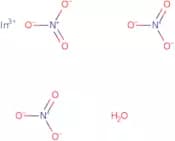
CAS :<p>Indium(III) nitrate hydrate is an inorganic compound that reacts with aqueous solutions of potassium dichromate or malonic acid to produce a precipitate. The chemical stability of this compound has been demonstrated by reacting it with nitric acid, which produced a white solid. A structural analysis of this compound has shown that the reaction mechanism may involve the formation of InO particles and oxide anions. The particle size is between 1-2 microns and the morphology is spherical.</p>Formule :In(NO3)3•(H2O)xDegré de pureté :Min. 95%Masse moléculaire :300.83 g/molSodium phosphate dibasic heptahydrate
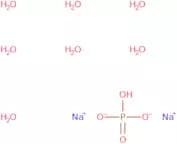
CAS :<p>The particle size of sodium phosphate dibasic heptahydrate is between 0.1 and 1.0 μm. It has a fluorescence detector that can be used to identify metabolic disorders in humans, such as autoimmune diseases and human immunoglobulin deficiency. The particle size of sodium phosphate dibasic heptahydrate is between 0.1 and 1.0 μm. It has a fluorescence detector that can be used to identify metabolic disorders in humans, such as autoimmune diseases and human immunoglobulin deficiency. The particle size of sodium phosphate dibasic heptahydrate is between 0.1 and 1.0 μm. It has a fluorescence detector that can be used to identify metabolic disorders in humans, such as autoimmune diseases and human immunoglobulin deficiency</p>Formule :Na2HPO4·7H2ODegré de pureté :Min. 95%Couleur et forme :White PowderMasse moléculaire :268.07 g/molDipotassium hydrogen phosphate trihydrate
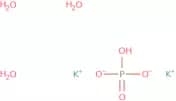
CAS :<p>Please enquire for more information about Dipotassium hydrogen phosphate trihydrate including the price, delivery time and more detailed product information at the technical inquiry form on this page</p>Formule :K2HPO4•(H2O)3Masse moléculaire :228.22 g/molZinc bromide dihydrate
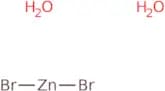
CAS :<p>Zinc bromide dihydrate is a crystalline compound that is used as a catalyst for the conversion of metalloporphyrins to hydroporphyrins. This process is used in the production of vitamin B12. Zinc bromide dihydrate can also be used to inhibit the function of ion pumps, which are proteins that pump ions across membranes. The inhibition of these pumps may lead to a decrease in intracellular calcium levels and an increase in free radicals.<br>Zinc bromide dihydrate has been shown to react with chlorophylls, vinylated heterostructures, and polyvinyl nonmetals. These reactions produce morphology changes in zinc bromide dihydrate crystals</p>Formule :ZnBr2•2H2ODegré de pureté :Min. 95%Couleur et forme :PowderMasse moléculaire :261.22 g/molManganese(II) sulfate monohydrate
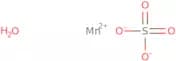
CAS :<p>Manganese sulfate monohydrate is a compound that is chemically stable at room temperature. It can be dissolved in water for use as a nutrient solution. Manganese sulfate monohydrate has been shown to be an essential cofactor for the activity of glycolytic enzymes in muscle cells, and is also important for normal neurological function. Manganese sulfate monohydrate has been shown to inhibit locomotor activity in rats, and may have potential applications in the treatment of Parkinson’s disease. The reaction mechanism is not well understood but it may be due to the inhibition of adenosine triphosphatase (ATP) synthesis by manganese ions.</p>Formule :MnO4S·H2ODegré de pureté :Min. 98.0%Couleur et forme :PowderMasse moléculaire :169.02 g/molIron(II) tetrafluoroborate - 40-45% aqueous solution
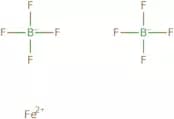
CAS :<p>Iron(II) tetrafluoroborate is a green-yellow crystalline solid that is soluble in water. It has been shown to have structural and optical properties that are similar to those of ferric chloride, but with the advantage of being less toxic. Iron(II) tetrafluoroborate is used as a homogeneous catalyst for organic reactions such as the hydrogenation of nitroarenes and the reduction of ketones. The catalytic activity of Iron(II) tetrafluoroborate arises from its ability to form hydrogen bonding interactions with other molecules and ions in solution.<br>Iron(II) tetrafluoroborate undergoes a number of reactions with other compounds, including cleavage products such as hydrogen sulfate and nitrogen atoms, which may be due to its chelate ligand. In coordination chemistry, Iron(II) tetrafluoroborate can form coordination complexes by reacting with potassium dichromate or calcium carbonate. These complexes are</p>Formule :B2F8FeDegré de pureté :About 45%Couleur et forme :Slightly Green Clear LiquidMasse moléculaire :229.45 g/mol(Met186)-Melanocyte Protein PMEL 17 (185-193) (human, bovine, mouse) trifluoroacetate salt
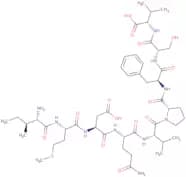
CAS :<p>Please enquire for more information about (Met186)-Melanocyte Protein PMEL 17 (185-193) (human, bovine, mouse) trifluoroacetate salt including the price, delivery time and more detailed product information at the technical inquiry form on this page</p>Formule :C47H74N10O14SDegré de pureté :Min. 95%Masse moléculaire :1,035.22 g/molPeptide YY (3-36) (human) trifluoroacetate salt
CAS :<p>Peptide YY (3-36) (human) trifluoroacetate salt H-Ile-Lys-Pro-Glu-Ala-Pro-Gly-Glu-Asp-Ala-Ser-Pro-Glu-Glu-Leu-Asn -Arg -Tyr -Tyr -Ala -Ser -Leu -Arg <br>Peptide YY (3.36) is a peptide hormone that is secreted by L cells in the small intestine and colon. It has been shown to be an effective treatment for obesity, type 2 diabetes, and other metabolic disorders. Peptide YY (3.36) has been shown to increase insulin sensitivity, reduce food intake and body weight, increase metabolic rate, and improve glucose homeostasis in animal studies. In humans, it has been found to have similar effects on postprandial plasma levels of peptide YY (3.</p>Formule :C180H279N53O54Degré de pureté :Min. 95%Masse moléculaire :4,049.47 g/molSodium phosphate dibasic dodecahydrate
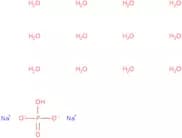
CAS :<p>Sodium phosphate dibasic dodecahydrate is a sodium salt that has been used in analytical chemistry, water treatment, and as a buffering agent. It is also used as a synergistic agent with other sodium salts to increase their bioavailability. This substance has been studied extensively for its effects on cancer tissues and has shown promise in inhibiting the growth of cancer cells. Sodium phosphate dibasic dodecahydrate is not very soluble in water but is highly permeable through human serum membranes. It can be administered orally or intravenously and will have different effects depending on the route of administration.</p>Formule :H3PO4·Na2·12H2ODegré de pureté :Min. 95%Masse moléculaire :358.14 g/molIron(III) sulfate hydrate
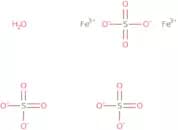
CAS :<p>Iron(III) sulfate hydrate is a chemical compound that is used as a coagulant in wastewater treatment. It reacts with hydrogen ions to form ferric hydroxides, which are insoluble and settle out of the water. Iron sulfate also has been used to identify the presence of bacteria in histological preparations by staining. The optimum concentration for this reaction is 1%. The reaction mechanism for this process is not known and it is difficult to determine the optimal pH range because it depends on the type of bacteria being studied. Iron(III) sulfate hydrate has a carcinogenic potential, but this risk can be minimized by adding an acidic substance such as caproic acid or citric acid to the solution. Iron(III) sulfate hydrate also has been shown to have nutrient-rich properties and can be used as a nutrient solution in conditions where other nutrients are unavailable. When heated, iron sulfate undergoes a redox reaction, producing water vapor and fer</p>Formule :Fe2(SO4)3•(H2O)xDegré de pureté :Min. 95%Couleur et forme :Off-White To Yellow To Beige SolidMasse moléculaire :399.88 g/molPhosphomolybdic acid hydrate
CAS :<p>Phosphomolybdic acid hydrate is a molybdenum-containing compound that exhibits biological activity. It has been found to have an effect on water permeability and the biological sample, which can be detected by synchronous fluorescence. The electrochemical impedance spectroscopy can be used to measure the effects of phosphomolybdic acid hydrate on energy metabolism. This compound has also been shown to act as a catalyst in analytical methods, such as laser ablation, and can be used in a model system for hydrogen bonding interactions with zirconium oxide.</p>Formule :MoO3·H3PO4·xH2ODegré de pureté :Min. 95%Couleur et forme :Off-White To Dark Yellow SolidMasse moléculaire :1,825.49 g/mol2-Dimethylaminoethanol (+)-bitartrate salt
CAS :Produit contrôlé<p>2-Dimethylaminoethanol (+)-bitartrate salt is a potent, reversible inhibitor of protein synthesis that binds reversibly to the 50S ribosomal subunit. It is used in regulatory toxicology and clinical pathology as a positive control for the study of chronic toxicity and long-term effects. 2-Dimethylaminoethanol (+)-bitartrate salt has shown no treatment effect on ovary weight or estrous cycle length in female Sprague-Dawley rats after chronic exposure and long-term exposure at doses up to 1,000 mg/kg/day. This drug has also shown no effect on rat fertility or reproductive performance, indicating it does not cause reproductive toxicity.</p>Formule :C4H11NO·C4H6O6Couleur et forme :White Off-White PowderMasse moléculaire :239.22 g/mol