Composés apparentés aux enzymes, aux peptides et aux protéines
Les composés liés aux enzymes, peptides et protéines sont essentiels pour étudier et manipuler les voies biochimiques. Ces composés incluent des enzymes qui catalysent les réactions biochimiques, des peptides qui servent d'hormones et de molécules de signalisation, et des protéines qui accomplissent une vaste gamme de fonctions au sein des organismes. Cette catégorie comprend des inhibiteurs, activateurs, substrats et autres réactifs indispensables pour l'enzymologie, la protéomique et la recherche sur les peptides. Chez CymitQuimica, nous proposons une sélection variée de composés de haute qualité pour faciliter vos recherches en cinétique enzymatique, fonction des protéines et synthèse des peptides, garantissant des résultats précis et fiables.
Sous-catégories appartenant à la catégorie "Composés apparentés aux enzymes, aux peptides et aux protéines"
- Acides aminés (AA)(40.558 produits)
- Enzymes(3.560 produits)
- Peptides(30.680 produits)
- Protéines(15.028 produits)
1312 produits trouvés pour "Composés apparentés aux enzymes, aux peptides et aux protéines"
Trier par
Degré de pureté (%)
0
100
|
0
|
50
|
90
|
95
|
100
Pefloxacin mesylate dihydrate
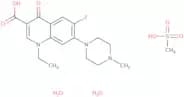
CAS :<p>Pefloxacin mesylate is a prodrug of pefloxacin that is hydrolyzed to the active form in vivo. Pefloxacin is an antibiotic that inhibits bacterial growth by interfering with DNA synthesis by binding to the bacterial ribosome, thereby blocking protein synthesis. This drug has been shown to be effective against gram-positive bacteria such as Streptococcus pneumoniae and Staphylococcus aureus. However, it is not active against gram-negative bacteria such as Escherichia coli or Pseudomonas aeruginosa. Pefloxacin mesylate dihydrate can be administered intravenously at a low dose without any adverse effects on healthy adults. It has also been shown to inhibit the growth of antibiotic-resistant strains of many species, including methicillin-resistant Staphylococcus aureus (MRSA) and Enterococcus faecium.</p>Formule :C17H20FN3O3·CH4O3S·2H2ODegré de pureté :Min. 95%Masse moléculaire :465.49 g/molErythromycinacistrate
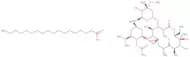
CAS :<p>Erythromycinacistrate is a macrolide antibiotic, which is derived from the bacterium *Saccharopolyspora erythraea*. Its mode of action involves binding to the 50S ribosomal subunit of susceptible bacteria, thereby inhibiting protein synthesis. This action effectively halts bacterial growth and replication, making it particularly effective against a wide range of Gram-positive and some Gram-negative bacteria.</p>Formule :C39H69NO14·C18H36O2Degré de pureté :Min. 95%Masse moléculaire :1,060.44 g/molrec IL-4 (human)
<p>Please enquire for more information about rec IL-4 (human) including the price, delivery time and more detailed product information at the technical inquiry form on this page</p>Degré de pureté :Min. 95%Clemastine fumarate
CAS :<p>Histamine (H1) receptor antagonist</p>Formule :C25H30ClNO5Degré de pureté :Min. 95%Couleur et forme :White PowderMasse moléculaire :459.96 g/molDimethylammonium tetrafluoroborate
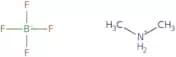
CAS :Produit contrôlé<p>Dimethylammonium tetrafluoroborate is a reagent that is used in organic chemistry. It is a solid with a melting point of -56°C and can be synthesized by the reaction of ethyl amine and hexafluoro-2-butyne. This reagent has been used to synthesize quaternary ammonium salts, anions, and aliphatic hydrocarbons. Dimethylammonium tetrafluoroborate is also employed as a solvent for some devices due to its physicochemical properties, including its low boiling point and high dielectric constant.</p>Formule :C2H8BF4NDegré de pureté :Min. 95%Masse moléculaire :132.9 g/molAlizarin complexone dihydrate
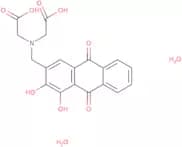
CAS :<p>Alizarin complexone dihydrate reacts with Lanthanum or Cesium(III) ions to form a red chelate, which, in turn, reacts with fluoride ions to give a blue ternary complex (Alizarin Fluorine Blue); to detect fluoride.</p>Formule :C19H15NO8·2H2OCouleur et forme :PowderMasse moléculaire :421.35 g/mol1-Octanesulfonic sodium salt monohydrate
CAS :<p>1-Octanesulfonic acid sodium salt monohydrate is an animal drug that has been used for the long-term treatment of chronic exposure to animals. It can be used as a component of a chromatographic method for the analysis of dopamine in biological fluids. 1-Octanesulfonic acid sodium salt monohydrate has also been shown to have antipsychotic effects, which may be due to its ability to increase dopaminergic neurotransmission by inhibiting the reuptake of dopamine. This drug is not active against human cancer cells, but it does inhibit imatinib (the active form) and other tyrosine kinase inhibitors at micromolar concentrations, making it a potential candidate for use in pharmaceutical dosages as an adjunct therapy for chronic myeloid leukemia.</p>Formule :C8H17O3SNa•H2ODegré de pureté :Min. 95%Couleur et forme :White PowderMasse moléculaire :234.29 g/mol6α-Fluoro-11β,17,21-Trihydroxypregna-1,4-Diene-3,20-Dione 17-Valerate
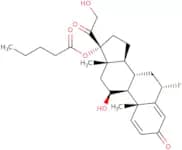
CAS :Produit contrôlé<p>6alpha-Fluoro-11beta,17,21-Trihydroxypregna-1,4-Diene-3,20-Dione 17-Valerate is a hydrogenated and esterified form of 6alpha-fluoro-11beta,17,21-trihydroxypregna1,4diene3,20dione. It is an oil with a fatty acid ester that has been synthetically modified to be more hydrophobic. 6alpha-Fluoro-11beta,17,21-Trihydroxypregna1,4diene3,20dione 17valerate is used in the synthesis of pharmaceuticals and hormones. It can also be used as an enhancer for the stability of pharmaceutical preparations.</p>Formule :C26H35FO6Degré de pureté :Min. 95%Masse moléculaire :462.55 g/molDimethyl glutarate
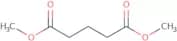
CAS :<p>Dimethyl glutarate is a white crystalline solid that is soluble in water, ethanol, and methanol. It has a neutral pH and a high resistance to hydrolysis. Dimethyl glutarate is produced by the reaction of glutarate with phenolic acid and dimethyl acetate. The reaction mechanism involves the formation of an intermediate compound called oxalyl chloride which reacts with the phosphorous acid to form the desired product. Experimental solubility data shows that dimethyl glutarate has a solubility at 25°C of 1.2 g/100 mL in water and 0.6 g/100 mL in chloroform.</p>Formule :C7H12O4Degré de pureté :Min. 98%Couleur et forme :Clear LiquidMasse moléculaire :160.17 g/mol2-Chloroethanesulfonic acid sodium hydrate
CAS :<p>2-Chloroethanesulfonic acid sodium hydrate is a chemical compound that belongs to the class of primary amines. It has a strong tendency to adsorb on surfaces, which can be seen in its FTIR spectra. 2-Chloroethanesulfonic acid sodium hydrate is a white crystalline solid and is insoluble in water. This compound has been found to have a high reactivity with metal ions, such as Na+, K+, Ca2+, and Mg2+. 2-Chloroethanesulfonic acid sodium hydrate reacts slowly with chloropropane, but more quickly with chloroacetic acid. The reaction time depends on the concentration of the reactants and the temperature at which it is heated.</p>Formule :C2H4ClO3SNa·H2ODegré de pureté :Min. 98%Couleur et forme :White PowderMasse moléculaire :184.58 g/molCerium trichloride heptahydrate
CAS :<p>Cerium trichloride heptahydrate is a reactive compound. It reacts with amines, forming salts and other compounds. Cerium trichloride heptahydrate is highly toxic and can cause death in humans by inhalation or ingestion. This chemical has been shown to be effective against choroidal neovascularization (CNV) in a mouse model of age-related macular degeneration by intravitreal injection. The preparative method for this compound is precipitation from a solution of ceric nitrate, sodium carbonate, and hydrochloric acid. Cerium trichloride heptahydrate has an average particle diameter of about 0.4 micrometers and contains functional groups that are covalently bonded to the lanthanum atom. The reaction yield for this compound is 100%.</p>Formule :CeCl3•(H2O)7Degré de pureté :Min. 98%Couleur et forme :PowderMasse moléculaire :372.58 g/molNeratinib
CAS :<p>Irreversible ErbB receptor tyrosine kinase inhibitor</p>Formule :C30H29ClN6O3Degré de pureté :Min. 95%Couleur et forme :White PowderMasse moléculaire :557.04 g/mol4-Methoxybenzoic acid sodium
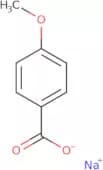
CAS :<p>4-Methoxybenzoic acid sodium is an amide that has been used as a preservative and antimicrobial agent in food products. It is also a second-order rate constant with a Ca2+ concentration of 0.1 mM for staphylococcus. The fatty acids of 4-methoxybenzoic acid sodium are hydrophobic and inhibit the growth of microorganisms by disrupting the cell membrane, which leads to leakage of cellular content. This compound also inhibits the activity of fatty acyl coenzyme A reductase and has been shown to have a microbicidal effect on gram-positive bacteria, such as Staphylococcus aureus. 4-Methoxybenzoic acid sodium has also been shown to be effective against Candida albicans, Streptococcus pyogenes, and Bacillus subtilis when combined with an antimicrobial peptide or cationic surfactant.</p>Formule :C8H7NaO3Degré de pureté :Min. 98 Area-%Couleur et forme :PowderMasse moléculaire :174.13 g/molL-Cysteine hydrochloride hydrate
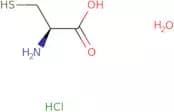
CAS :<p>L-Cysteine hydrochloride hydrate is an amino acid that belongs to the group of antimicrobial agents. It is a precursor in the biosynthesis of proteins and nucleic acids. L-Cysteine hydrochloride hydrate inhibits bacterial growth by reacting with iron and forming an insoluble complex that cannot be used for metabolic processes. Cysteine also reacts with dehydroascorbic acid to form a fluorescent compound, which can be detected using fluorescence probe and fluorometric methods. This reaction is pH dependent, with a lower pH favoring the formation of the fluorescent product. The optimum pH for this reaction is approximately 7.0-8.5, at which point it is most effective against bacteria such as Escherichia coli, Pseudomonas aeruginosa, and Staphylococcus aureus.</p>Formule :C3H7NO2S·HCl·xH2OCouleur et forme :PowderMasse moléculaire :157.62 g/molCyclopentadienyldicarbonyl(tetrahydrofuran)iron(II) tetrafluoroborate
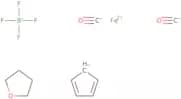
CAS :<p>Cyclopentadienyldicarbonyl(tetrahydrofuran)iron(II) tetrafluoroborate is a chemical that is used as a building block in research and speciality chemical synthesis. The compound has been shown to be versatile, with many possible reactions, including the formation of a complex. This compound can also be used as an intermediate for another chemical or as a scaffold for other compounds. Cyclopentadienyldicarbonyl(tetrahydrofuran)iron(II) tetrafluoroborate is a high quality reagent that can be used in reaction processes with low toxicity.</p>Formule :C11H13FeO3•BF4Degré de pureté :Min. 95%Couleur et forme :SolidMasse moléculaire :335.87 g/molLithium tetraborate
CAS :<p>Lithium tetraborate (LiBO) is a compound used in the preparation of samples for laser ablation. It can be synthesized by reacting lithium carbonate with boron nitride in a hydrochloric acid solution at room temperature. Lithium tetraborate is often used as a buffer to increase the pH of the solution and to maintain it at a constant level during reactions. This compound has been studied extensively, and its spectroscopic properties have been well documented. The thermal expansion coefficient of LiBO is high, which makes it suitable for use in radiation experiments. Lithium tetraborate has also been shown to be an effective catalyst for organic synthesis reactions that require high activation energies, such as the synthesis of phenol from benzene and formaldehyde.</p>Formule :Li2B4O7Degré de pureté :Min. 95%Couleur et forme :PowderMasse moléculaire :169.12 g/molVeratramine
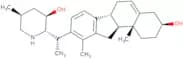
CAS :<p>Veratramine is a natural drug that is used as an anti-inflammatory agent and for the treatment of autoimmune diseases. It has been shown to have significant cytotoxicity in epithelial cells, but not in mesenchymal cells. Veratramine also has a matrix effect on these cell types. Veratramine's surface methodology can be used to measure the degree of inflammation by measuring the level of cytokines at the site of injury. This technique also allows for analysis of human serum samples using LC-MS/MS techniques to identify acute toxicities and steroid alkaloids that may be present.</p>Formule :C27H39NO2Degré de pureté :Min. 95%Couleur et forme :PowderMasse moléculaire :409.60 g/molOrexin A (human) TFA
CAS :<p>Orexin A (human) TFA is a high quality reagent that can be used as an intermediate in the synthesis of complex compounds, useful for research and development. It has many potential uses, including as a fine chemical, speciality chemical and reaction component. Orexin A (human) TFA is a versatile building block with many applications, such as being a useful scaffold or building block in reactions where it can be used in the synthesis of other compounds. It is also a valuable research chemical that can be used to study orexin receptors and their ligands.</p>Formule :C152H243N47O44S4•C2HF3O2Degré de pureté :Min. 95 Area-%Couleur et forme :White Off-White PowderMasse moléculaire :3,675.13 g/molrec Endothelial IL-8 (human)
CAS :<p>Please enquire for more information about rec Endothelial IL-8 (human) including the price, delivery time and more detailed product information at the technical inquiry form on this page</p>Formule :C397H644N114O111S4Degré de pureté :Min. 95%Masse moléculaire :8,918.33 g/molBis(8-quinolinolato)zinc(II)
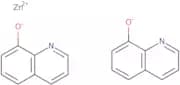
CAS :<p>Bis(8-quinolinolato)zinc (II) is a molecule that contains carboxylate groups. It has been shown to be processable and can be used in fabrication processes. Bis(8-quinolinolato)zinc (II) also exhibits optical properties. The metal ion in the molecule is able to form complexes with other metals, which may affect transport properties, ionization mass and morphology of the compound. It can also be used for magnetic resonance spectroscopy studies, as well as plasma mass spectrometry.</p>Formule :C18H12N2O2ZnDegré de pureté :Min. 95%Couleur et forme :PowderMasse moléculaire :353.7 g/mol