Composés apparentés aux enzymes, aux peptides et aux protéines
Les composés liés aux enzymes, peptides et protéines sont essentiels pour étudier et manipuler les voies biochimiques. Ces composés incluent des enzymes qui catalysent les réactions biochimiques, des peptides qui servent d'hormones et de molécules de signalisation, et des protéines qui accomplissent une vaste gamme de fonctions au sein des organismes. Cette catégorie comprend des inhibiteurs, activateurs, substrats et autres réactifs indispensables pour l'enzymologie, la protéomique et la recherche sur les peptides. Chez CymitQuimica, nous proposons une sélection variée de composés de haute qualité pour faciliter vos recherches en cinétique enzymatique, fonction des protéines et synthèse des peptides, garantissant des résultats précis et fiables.
Sous-catégories appartenant à la catégorie "Composés apparentés aux enzymes, aux peptides et aux protéines"
- Acides aminés (AA)(40.575 produits)
- Enzymes(3.561 produits)
- Peptides(30.631 produits)
- Protéines(15.042 produits)
1312 produits trouvés pour "Composés apparentés aux enzymes, aux peptides et aux protéines"
Trier par
Degré de pureté (%)
0
100
|
0
|
50
|
90
|
95
|
100
Lorcaserin hydrochloride hemihydrate
CAS :Produit contrôlé<p>Serotonin receptor 5-HT2C agonist</p>Formule :(C11H14ClN)2•(HCl)2•H2ODegré de pureté :Min. 95%Couleur et forme :White PowderMasse moléculaire :482.31 g/molPantoprazole sodium hydrate
CAS :<p>Proton pump inhibitor; anti-ulcer</p>Formule :C16H14F2N3NaO4SDegré de pureté :Min. 95%Couleur et forme :White PowderMasse moléculaire :405.35 g/mol5,6-Diamino-1,3-dimethyl uracil hydrate
CAS :<p>5,6-Diamino-1,3-dimethyl uracil hydrate is a purine derivative that inhibits the growth of cancer cells by blocking the enzyme ribonucleotide reductase. This leads to a decrease in DNA synthesis, protein synthesis, and cell division. The anticancer activity of 5,6-Diamino-1,3-dimethyl uracil hydrate is due to its ability to inhibit the formation of ATP and the GTP cycle. It also has a potent inhibitory effect on the structural analysis of DNA and RNA. 5,6-Diamino-1,3-dimethyl uracil hydrate has been shown to produce apoptotic effects in many types of cancer cells. This drug also has specific agonist properties for G protein coupled receptors that are responsible for activating apoptosis.</p>Formule :C6H10N4O2·xH2ODegré de pureté :Min. 95%Couleur et forme :PowderMasse moléculaire :170.17 g/molImipramine N-oxide hydrate
CAS :Produit contrôlé<p>Imipramine N-oxide hydrate is a polymer drug that belongs to the group of amines. It inhibits the activity of CYP450 enzymes and has been shown to be effective in treating inflammatory bowel disease (IBD). Imipramine N-oxide hydrate prevents adenosine A3 receptor activation and suppresses the production of dinucleotide phosphate, which may be responsible for its effectiveness in treating IBD. Imipramine N-oxide hydrate also has an effect on liver cells, which may lead to its effectiveness in treating infectious diseases. The drug is not active against autoimmune diseases, but it may have an effect on toll-like receptors.</p>Formule :C19H24N2O·xH2ODegré de pureté :Min. 95%Couleur et forme :White PowderMasse moléculaire :296.41 g/mol2-Cyanoethyl phosphate barium salt hydrate
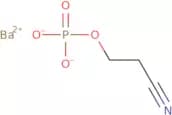
CAS :<p>2-Cyanoethyl phosphate barium salt hydrate is an alkaline compound that is soluble in water. It has been used to synthesize phosphodiesters, benzene, dioxan and alcohols. The chemical was originally developed as a reagent for the quantitative conversion of ethyl acetate esters to their corresponding acid chlorides. This reaction can be carried out quantitatively in tetrahydrofuran at room temperature with yields of about 95%. 2-Cyanoethyl phosphate barium salt hydrate also converts alcohols to their corresponding monophosphates quantitatively in alkaline conditions. Crystalline forms are obtained by reacting the compound with triethylamine and benzene.</p>Formule :C3H6BaNO4P•xH2ODegré de pureté :Min. 95%Couleur et forme :PowderMasse moléculaire :324.42 g/molS-Methylisovalerate
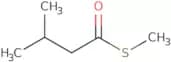
CAS :<p>S-Methylisovalerate is a branched fatty acid that is an intermediate in the biosynthesis of valine. It has been isolated from Corynebacterium glutamicum and Brevibacterium sp. S-Methylisovalerate has been identified by gas chromatography/mass spectrometry (GC/MS) as a major component of the volatile organic compounds produced by strains of Corynebacterium glutamicum and Brevibacterium sp. The GC/MS profile of these strains consists mainly of ester compounds, such as methyl ethyl acetate and butyric acid.</p>Formule :C6H12OSDegré de pureté :Min. 95%Couleur et forme :Colorless Clear LiquidMasse moléculaire :132.22 g/molSodium carbonate monohydrate
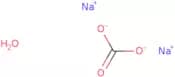
CAS :Produit contrôlé<p>Sodium carbonate monohydrate is a versatile chemical that can be used as a building block in the synthesis of complex compounds. It is also used as an intermediate in the production of research chemicals or as a reagent. Sodium carbonate monohydrate has high quality and is useful in many reactions. This compound can be used to make various scaffolds, which are structures that provide stability for molecules or atoms during a reaction.</p>Formule :Na2CO3·H2ODegré de pureté :Min. 95%Couleur et forme :PowderMasse moléculaire :124 g/molPentoxyverine citrate
CAS :Produit contrôlé<p>Pentoxyverine is an antimuscarinic and antitussive drug present in formulations to treat chronic cough, bronchitis, and sinusitis. Although its mechanism is not fully understood, this drug has been shown to act as an agonist at sigma-1 receptors. Also, mice and rat studies have suggested that Pentoxyverine has anticonvulsant properties.</p>Formule :C26H39NO10Degré de pureté :Min. 95%Couleur et forme :PowderMasse moléculaire :525.59 g/molAmfenac sodium salt hydrate
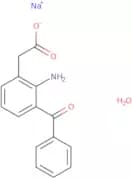
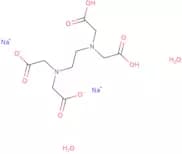
CAS :<p>Amfenac sodium salt hydrate is a nonsteroidal anti-inflammatory drug that inhibits prostaglandin synthesis. It has been shown to have minimal toxicity and inhibit the production of PGE2 in vitro. Amfenac sodium salt hydrate has also been shown to have anti-inflammatory properties in vivo, as it was able to inhibit bowel disease in rats. Amfenac sodium salt hydrate also has a protective effect against mitochondrial membrane depolarization in basic fibroblasts, which may be due to its ability to maintain levels of ATP.</p>Formule :C15H14NNaO4Degré de pureté :Min. 95%Couleur et forme :PowderMasse moléculaire :295.27 g/molEthylenediaminetetraacetic acid disodium dihydrate
CAS :<p>Hexadentate chelator</p>Formule :C10H14N2Na2O8·2H2OCouleur et forme :White PowderMasse moléculaire :372.24 g/molToremifene citrate
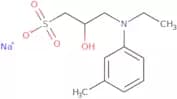
CAS :Produit contrôlé<p>Estrogen receptor modulator</p>Formule :C32H36ClNO8Degré de pureté :Min. 95%Couleur et forme :PowderMasse moléculaire :598.08 g/molN-Ethyl-N-(2-hydroxy-3-sulfopropyl)-3-methylaniline sodium salt dihydrate
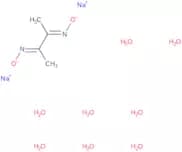
CAS :<p>N-Ethyl-N-(2-hydroxy-3-sulfopropyl)-3-methylaniline sodium salt dihydrate (NMS) is a functional group with a side effect profile that is characterized by low incidence of adverse events. This drug has been shown to be well tolerated in clinical use, and there is evidence that it may be useful for the treatment of infectious diseases. Clinical studies have demonstrated that NMS can improve fatty acid and cholesterol levels, as well as reducing carnitine palmitoyltransferase activity. These effects are due to the inhibition of lipoprotein lipase, cholesterol esterase and carnitine palmitoyltransferase enzymes. In addition, NMS has been shown to be effective against dermatitis caused by atopic dermatitis or psoriasis.</p>Formule :C12H18NNaO4S·2H2ODegré de pureté :Min. 98 Area-%Couleur et forme :White PowderMasse moléculaire :331.36 g/molDimethylglyoxime disodium salt octahydrate
CAS :<p>Dimethylglyoxime is a pesticide that has been used to control insects and nematodes. It has been found to be effective in controlling mosquitoes, flies, and other pests. This compound is also used as an extractor in microextraction. Dimethylglyoxime is not toxic to humans and does not cause any adverse effects on the environment or human health. It can be used with chlorine for wastewater treatment.</p>Formule :C4H8N2Na2O2·8H2ODegré de pureté :Min. 95%Couleur et forme :PowderMasse moléculaire :306.22 g/molrec IL-2 (human)
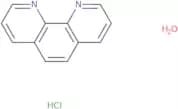
CAS :<p>Please enquire for more information about rec IL-2 (human) including the price, delivery time and more detailed product information at the technical inquiry form on this page</p>Degré de pureté :Min. 95%o-Phenanthroline monohydrochloride monohydrate
CAS :<p>o-Phenanthroline monohydrochloride monohydrate is a ligand that is used in crystallography to study the crystal structure of metal ions. It has been shown to be an efficient catalyst for the ring-opening of chloroformates, and can also be used as an analytical reagent that is capable of detecting chlorine in organic compounds. The hydrate form of o-phenanthroline monohydrochloride has a molecular formula of C12H14ClN3O4·2H2O and a molecular weight of 392.7 g/mol.</p>Formule :C12H8N2·HCl·H2OCouleur et forme :PowderMasse moléculaire :234.68 g/molGhrelin trifluoroacetate
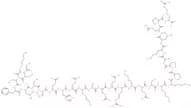
CAS :<p>Ghrelin is a peptide hormone that regulates appetite and has been shown to have potent anti-cachectic effects in animal models. It is thought to be an important regulator of body weight, insulin resistance, and metabolism. Ghrelin is synthesized in the stomach and released into the bloodstream when the stomach is empty. Ghrelin binds to ghrelin receptors in the hypothalamus, which stimulate growth hormone release from the pituitary gland. This hormone also binds to other cells in the hypothalamus, such as neurons that produce orexin, which may account for its effects on sleep patterns. Ghrelin has been shown to inhibit tumor growth by suppressing angiogenesis and inducing apoptosis. The molecular weight of ghrelin is 3497 Da. The sequence of ghrelin consists of 28 amino acids: Gly-Ser-Ser(octanoyl)-Phe-Leu-Ser-Pro-Glu-His-Gln-Lys-Ala</p>Formule :C147H245N45O42•(C2HO2F3)xDegré de pureté :Min. 95 Area-%Couleur et forme :PowderMasse moléculaire :3,314.8 g/molBrucine Hydrochloride Monohydrate
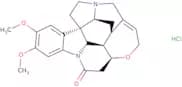
CAS :<p>Alkaloid with anti-tumoral activity</p>Formule :C23H26N2O4·HCl·H2ODegré de pureté :Min. 98%Couleur et forme :PowderMasse moléculaire :448.94 g/mol1,1'-Dioctadecyl-3,3,3',3'-tetramethylindodicarbocyanine perchlorate
CAS :<p>1,1'-Dioctadecyl-3,3,3',3'-tetramethylindodicarbocyanine perchlorate (DiI) is a useful scaffold for the synthesis of complex compounds. It is a high-quality research chemical that is used in the synthesis of speciality chemicals and fine chemicals. DiI reacts with diazonium salts to produce blue or red fluorescent compounds. This compound can be used as a reagent for the production of amino acids or amines. It also reacts with other organic compounds to form complexes. The CAS number for DiI is 127274-91-3.</p>Formule :C61H99N2•ClO4Degré de pureté :Min. 95%Couleur et forme :Red To Brown SolidMasse moléculaire :959.9 g/molrac-Metoprolol hemitartrate
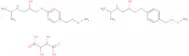
CAS :Produit contrôlé<p>Metoprolol is a beta-adrenergic receptor blocker that is used in the treatment of high blood pressure and congestive heart failure. It also has an effect on the regulation of energy metabolism, decreasing myocardial oxygen consumption, and increasing myocardial contractility. The drug binds to erythrocyte membrane proteins, including albumin and alpha-1-acid glycoprotein, which are responsible for transporting metoprolol from plasma to the tissue. Metoprolol succinate is a prodrug that is metabolized by esterases to release metoprolol in vivo. Metoprolol has been shown to reduce systolic blood pressure in patients with hypertension. It has been found to be effective in reducing symptoms of cardiac arrhythmias, such as atrial fibrillation or ventricular tachycardia, when combined with other antiarrhythmic drugs. Metoprolol can also be used for the treatment of metabolic disorders such</p>Formule :C34H56N2O12Couleur et forme :White PowderMasse moléculaire :684.81 g/molEstradiol 17-butyrate
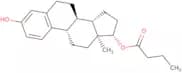
CAS :<p>Estradiol 17-butyrate is a fine chemical that can be used as a versatile building block or in the synthesis of complex compounds. This product is a research chemical, but it can also be used as a reagent or a CAS No. 18069-79-9. It has many applications in the field of chemistry, including being useful as an intermediate in organic synthesis and as a reaction component. Estradiol 17-butyrate is also useful for use as a scaffold for the preparation of other chemicals with similar properties.</p>Formule :C22H30O3Degré de pureté :Min. 95%Couleur et forme :PowderMasse moléculaire :342.47 g/mol