Antimicrobiens
Les antimicrobiens sont des agents qui détruisent ou inhibent la croissance des microorganismes, y compris les bactéries, les virus, les champignons et les parasites. Ces composés sont essentiels dans la prévention et le traitement des infections, jouant un rôle crucial en médecine, en agriculture et dans l'industrie alimentaire. Chez CymitQuimica, nous proposons une vaste gamme d'antimicrobiens de haute qualité et pureté, adaptés à diverses applications scientifiques et industrielles. Notre catalogue comprend des antibiotiques, des antifongiques, des antiviraux et des désinfectants, tous conçus pour répondre aux besoins de la recherche et du développement, ainsi qu'aux applications cliniques et de production. Avec nos produits, les professionnels peuvent garantir l'efficacité et la sécurité dans le contrôle des infections et la protection de la santé publique.
Sous-catégories appartenant à la catégorie "Antimicrobiens"
- Antibiotiques(4.126 produits)
- Antifongiques(874 produits)
- Antiparasitaires(699 produits)
- Antiviraux(764 produits)
2423 produits trouvés pour "Antimicrobiens"
Trier par
Degré de pureté (%)
0
100
|
0
|
50
|
90
|
95
|
100
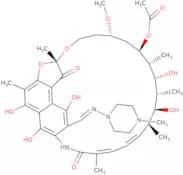
Rifampicin, Antibiotic for Culture Media Use Only
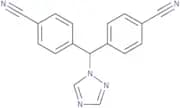
CAS :<p>Rifampicin is a drug that inhibits protein synthesis in bacteria and is used to treat tuberculosis. Rifampicin binds to the beta subunit of the bacterial RNA polymerase, inhibiting transcription and translation. It has been shown to inhibit the acetylcholine receptor function in rats, which may be related to its antituberculosis activity. Histopathological studies have shown that rifampicin inhibits the growth of human tumors in mice, including lung cancer, breast cancer, and leukemia. The drug is also being studied for its potential use in treating Alzheimer's disease. The pharmacokinetics and oral bioavailability of rifampicin have been studied and Rifampicin has been shown to be an effective anti-tuberculosis drug.</p>Formule :C43H58N4O12Degré de pureté :Min. 90.0 Area-%Masse moléculaire :822.94 g/molLetrozole
CAS :Produit contrôlé<p>Letrozole is a non-steroidal aromatase inhibitor, which is synthesized chemically. This product acts by inhibiting the aromatase enzyme, thus reducing estrogen production in the body. Estrogen plays a critical role in the proliferation of hormone-sensitive breast cancer cells, and by lowering its levels, Letrozole effectively impedes cancer growth.</p>Formule :C17H11N5Masse moléculaire :285.30 g/molNoracronycine
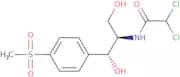
CAS :<p>Please enquire for more information about Noracronycine including the price, delivery time and more detailed product information at the technical inquiry form on this page</p>Formule :C19H17NO3Degré de pureté :Min. 95%Masse moléculaire :307.3 g/molThiamphenicol
CAS :<p>Thiamphenicol is a semisynthetic derivative of chloramphenicol with action on bacterial protein synthesis inhibition and is used for treating bacterial infections, particularly in veterinary medicine.</p>Formule :C12H15Cl2NO5SDegré de pureté :Min. 98 Area-%Couleur et forme :PowderMasse moléculaire :356.22 g/molFuraprofen
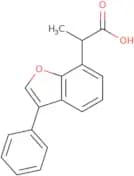
CAS :<p>Furaprofen is a nonsteroidal anti-inflammatory drug (NSAID), which is a synthetic pharmaceutical compound derived from the carboxylic acid class. Its mode of action involves inhibiting the enzyme cyclooxygenase (COX), which plays a crucial role in the biosynthesis of pro-inflammatory prostaglandins. By blocking COX activity, Furaprofen reduces the formation of these signaling molecules, thereby alleviating inflammation and pain.</p>Formule :C17H14O3Degré de pureté :Min. 95%Masse moléculaire :266.29 g/molGemifioxacin
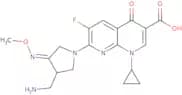
CAS :<p>Gemifloxacin is an antibacterial agent primarily classified as a fluoroquinolone antibiotic, which is a synthetic compound derived from chemical processes in pharmaceutical manufacturing. Its mechanism of action involves the inhibition of key bacterial enzymes, namely DNA gyrase and topoisomerase IV. These enzymes are crucial for bacterial DNA replication, transcription, repair, and recombination. By obstructing these enzymes, Gemifloxacin effectively inhibits bacterial cell division and growth, leading to the eradication of susceptible bacterial strains.</p>Formule :C18H20FN5O4Degré de pureté :Min. 95%Masse moléculaire :389.38 g/molAT-511
CAS :<p>AT-511 is an antiviral compound, which is derived from organic synthesis processes associated with the development of nucleotide analogs. It acts by targeting the RNA-dependent RNA polymerase, a crucial enzyme in the replication process of RNA viruses. By inhibiting this enzyme, AT-511 effectively halts viral replication, reducing the viral load within the host.</p>Formule :C24H33FN7O7PDegré de pureté :Min. 95%Masse moléculaire :581.5 g/molTuberculosis inhibitor 3
CAS :<p>Tuberculosis inhibitor 3 is a synthesized chemical compound designed to target the Mycobacterium tuberculosis bacterium, which is the causative agent of tuberculosis. This inhibitor is derived through advanced chemical synthesis techniques, involving the modification of specific molecular structures to enhance its binding affinity and specificity toward the bacterial cellular targets.</p>Formule :C21H22F6N4O3SDegré de pureté :Min. 95%Masse moléculaire :524.5 g/molDuocarmycin MA
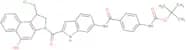
CAS :<p>Duocarmycin MA is a cytotoxic compound, which is a derivative of natural products isolated from bacteria of the Streptomyces genus. Its mode of action involves the alkylation of DNA, leading to the cleavage of the DNA helix and ultimately resulting in cell apoptosis. This process is highly selective for adenine-thymine rich regions, allowing it to precisely target and disrupt cancerous cells.</p>Formule :C34H31ClN4O5Degré de pureté :Min. 95%Masse moléculaire :611.1 g/molSulconazole nitrate
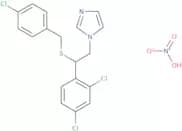
CAS :<p>Sulconazole nitrate is an antifungal agent, which is a synthetic compound derived from imidazole. Its mode of action involves the inhibition of ergosterol synthesis, an essential component of fungal cell membranes, leading to increased membrane permeability and ultimately cell death.</p>Formule :C18H16Cl3N3O3SDegré de pureté :Min. 95%Masse moléculaire :460.76 g/molClindamycin-d3 hydrochloride
CAS :Produit contrôlé<p>Clindamycin-d3 hydrochloride is an isotopically labeled pharmaceutical compound, specifically designed for use in the field of analytical chemistry and pharmacokinetics. It is derived from clindamycin, a known antibiotic sourced from modifications of the naturally occurring compound lincomycin, produced by the actinobacterium Streptomyces lincolnensis. The incorporation of deuterium atoms, replacing hydrogen, allows for its use in sophisticated analytical methods such as mass spectrometry, where it serves to trace the metabolic pathways and to quantify the bioavailability and distribution of clindamycin in biological systems with high precision.</p>Formule :C18H30ClD3N2O5S•HClDegré de pureté :Min. 95%Masse moléculaire :464.46 g/molFosfomycin calcium monohydrate
CAS :<p>Fosfomycin calcium monohydrate is an antibacterial agent, derived from Streptomyces species. This compound functions as a structural analog of phosphoenolpyruvate, interfering with cell wall synthesis. Specifically, it targets and irreversibly inhibits the enzyme UDP-N-acetylglucosamine enolpyruvyl transferase (MurA), which is critical in the early stages of bacterial cell wall biosynthesis. This inhibition prevents the formation of peptidoglycan, leading to bacterial cell lysis.</p>Formule :C3H7CaO5PDegré de pureté :Min. 95%Masse moléculaire :194.14 g/molNaftifine N-Oxide
CAS :<p>Naftifine N-Oxide is an antifungal agent, which is derived from synthetic chemical processes. Its structure is based on the modification of the known antifungal, naftifine, by introducing an N-oxide functional group, which may enhance certain pharmacokinetic properties. As a synthetic derivative, Naftifine N-Oxide is specifically designed to interfere with the biosynthesis of ergosterol, an essential component of fungal cell membranes. By inhibiting squalene epoxidase, an enzyme crucial to the ergosterol pathway, Naftifine N-Oxide effectively disrupts the development and maintenance of the fungal cell membrane, compromising cell integrity and leading to antifungal activity.</p>Formule :C21H21NODegré de pureté :Min. 95%Masse moléculaire :303.4 g/molCeftibuten Hydrate
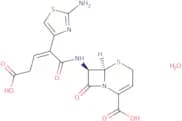
CAS :<p>Ceftibuten Hydrate is a third-generation cephalosporin antibiotic, which is a synthetic derivative of naturally occurring cephalosporin C, derived from the fungus Acremonium. It functions by inhibiting bacterial cell wall synthesis, leading to cell lysis and death. This bactericidal action is accomplished through the binding to specific penicillin-binding proteins (PBPs) located inside the bacterial cell wall, disrupting the final transpeptidation step of peptidoglycan synthesis in bacterial cell walls.</p>Formule :C15H14N4O6S2·xH2ODegré de pureté :Min. 95%Masse moléculaire :410.42 g/molPropicillin
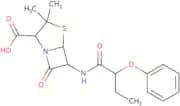
CAS :<p>Propicillin is a broad-spectrum antimicrobial agent that has been shown to be effective against both gram-positive and gram-negative bacteria. Propicillin belongs to the group of nonsteroidal anti-inflammatory drugs. It is a particle that is soluble in water and lipid. Propicillin does not inhibit the growth of Streptococcus species, but does cause cell lysis by attaching to fatty acids on the surface of cells. Propicillin also inhibits microbial infection by inhibiting enzymes involved in fatty acid synthesis. The human serum pharmacokinetics of propicillin have been studied and found to be similar to those of ampicillin, which allows for use as an intravenous drug in humans. The pharmacokinetics, biochemical properties, and cellular mechanisms are complex, but it is known that propicillin binds to bacterial ribosomes and inhibits protein synthesis by binding to the peptidyl transferase centre on the ribosome.</p>Formule :C18H22N2O5SDegré de pureté :Min. 95%Masse moléculaire :378.4 g/molCoronarin D ethyl ether
CAS :<p>Coronarin D ethyl ether is a diterpenoid compound, which is derived from the plant Hedychium coronarium, also known as white ginger lily. This compound belongs to a class of naturally occurring chemicals with complex polycyclic structures. The source of Coronarin D ethyl ether is the rhizome of Hedychium coronarium, which is part of the Zingiberaceae family. These plants are often studied for their bioactive properties and potential therapeutic applications.</p>Formule :C22H34O3Degré de pureté :Min. 95%Masse moléculaire :346.5 g/molPyrimorph
CAS :<p>Pyrimorph is a fungicide, which is a synthetic compound with specific activity against oomycete pathogens. It belongs to the chemical class of morpholines. Its mode of action involves the disruption of the biosynthetic pathways essential for the survival and proliferation of oomycetes, leading to their effective inhibition. Pyrimorph specifically targets the biosynthesis of cellulose in the cell walls of these pathogens, inhibiting their capacity to multiply and cause disease.</p>Formule :C22H25ClN2O2Degré de pureté :Min. 95%Masse moléculaire :384.9 g/molClindamycin 4-phosphate
CAS :<p>Clindamycin 4-phosphate is a semi-synthetic antibiotic, which is a derivative of the natural antibiotic lincomycin. It is specifically synthesized from Streptomyces lincolnensis cultures. The mode of action of Clindamycin 4-phosphate involves inhibiting bacterial protein synthesis by binding to the 50S subunit of the bacterial ribosome, thus preventing peptide chain elongation and subsequent bacterial growth.</p>Formule :C18H34ClN2O8PSDegré de pureté :Min. 95%Masse moléculaire :504.96 g/molA2ti-1
CAS :<p>A2ti-1 is a specialized therapeutic agent, which is derived from recombinant DNA technology with the specific mode of action of targeting and modulating cytokine signaling pathways within the immune system. It is designed to interact with specific cytokine receptors, thereby inhibiting or modulating the downstream signaling cascades that are pivotal in the inflammatory response and immune regulation.</p>Formule :C20H22N4O2SDegré de pureté :Min. 95%Masse moléculaire :382.5 g/molAcetoxypolygodial
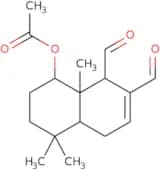
CAS :<p>Acetoxypolygodial is a sesquiterpenoid compound, which is a naturally derived product from the roots of the plant Polygonum hydropiper. This compound exhibits its mode of action through its ability to disrupt microbial cell membranes, leading to increased permeability and eventual cell death. Its primary mechanism involves direct interaction with lipid bilayers, causing destabilization.</p>Formule :C17H24O4Degré de pureté :Min. 95%Masse moléculaire :292.4 g/mol