Antimicrobiens
Sous-catégories appartenant à la catégorie "Antimicrobiens"
- Antibiotiques(4.138 produits)
- Antifongiques(906 produits)
- Antiparasitaires(700 produits)
- Antiviraux(766 produits)
2431 produits trouvés pour "Antimicrobiens"
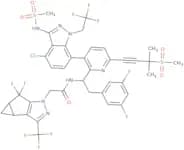
Lenacapavir
CAS :Lenacapavir is a capsid inhibitor with a mode of action that interferes with the HIV capsid protein, disrupting multiple stages of the viral lifecycle. It is used for treating multidrug-resistant HIV infections.
Formule :C39H32ClF10N7O5S2Degré de pureté :Min. 95%Couleur et forme :PowderMasse moléculaire :968.28 g/molRef: 3D-AL180739
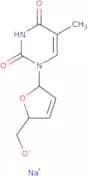
Produit arrêtéStavudine sodium
CAS :Stavudine sodium is an antiretroviral medication, which is a synthetic nucleoside analogue. It is primarily sourced from chemical synthesis processes, enabling precise control over its molecular structure to ensure efficacy in its intended application. The mode of action for stavudine sodium involves its incorporation into viral DNA through reverse transcription. Once integrated, it acts as a chain terminator, inhibiting the elongation of the viral DNA and thus effectively halting the replication of the human immunodeficiency virus type 1 (HIV-1).
Formule :C10H11N2NaO4Degré de pureté :Min. 95%Masse moléculaire :246.19 g/molDL-chloramphenicol
CAS :DL-chloramphenicol is a broad-spectrum antibiotic, which is a synthetic compound derived from natural chloramphenicol originally isolated from the bacterium Streptomyces venezuelae. This compound exerts its effects by inhibiting bacterial protein synthesis. It binds to the 50S subunit of the bacterial ribosome, preventing peptide bond formation and consequently halting the growth of susceptible bacteria. The optical isomer, DL-chloramphenicol, contains equal parts of both D- and L- isomers, with the L-form being responsible for its antibiotic activity.
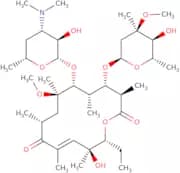
Formule :C11H12Cl2N2O5Degré de pureté :Min. 95%Masse moléculaire :323.13 g/mol(10E)-10,11-Didehydro-11-deoxy-6-O-methylerythromycin
CAS :(E)-10,11-Didehydro-11-deoxy-6-O-methylerythromycin is a semisynthetic macrolide antibiotic, which is derived from erythromycin, a natural product obtained from the bacterium *Saccharopolyspora erythraea*. This compound functions as an inhibitor of protein synthesis by binding to the 50S ribosomal subunit of bacteria, thus preventing the growth and proliferation of susceptible bacterial strains. The alteration in its chemical structure, notably the methylation at the 6-O position, enhances its stability and improves its pharmacokinetic profile compared to the parent compound, erythromycin.
Formule :C38H67NO12Degré de pureté :Min. 95%Masse moléculaire :729.94 g/molFlufenoxystrobin
CAS :Flufenoxystrobin is a synthetic fungicide, which is derived from the strobilurin class of compounds known for their antifungal properties. It operates by inhibiting mitochondrial respiration in fungal cells, specifically blocking the electron transport chain at the Qo site of cytochrome b. This disruption in energy production is lethal to the targeted fungi.
Formule :C19H16ClF3O4Degré de pureté :Min. 95%Masse moléculaire :400.8 g/molImazamox-o-desmethyl
CAS :Imazamox-o-desmethyl is a herbicide metabolite, which is derived from the biotransformation of the imazamox compound, typically occurring during degradation processes. Its mode of action involves targeting the acetohydroxyacid synthase (AHAS) enzyme—a critical component in the biosynthesis of branched-chain amino acids in plants. This inhibition disrupts plant growth, leading to effective weed control.
Formule :C14H17N3O4Degré de pureté :Min. 95%Masse moléculaire :291.3 g/molMecillinam, Antibiotic for Culture Media Use Only
CAS :Mecillinam is a beta-lactam antibiotic specifically designed for use in culture media. It is derived from the amidinopenicillin family, featuring a unique ability to interfere with bacterial cell wall synthesis. Its mode of action involves inhibiting penicillin-binding protein 2 (PBP2), an essential enzyme for cell wall elongation and maintenance in Gram-negative bacteria. This targeted inhibition results in the formation of spherical cells and subsequent cell lysis.
Formule :C15H23N3O3SDegré de pureté :Min. 95 Area-%Masse moléculaire :325.43 g/molRef: 3D-Q-201343
Produit arrêté1-Naphthol-o-sulfate potassium
CAS :1-Naphthol-o-sulfate potassium is a sulfate ester, which is a derivative of naphthol. It is synthesized from 1-naphthol, a phenolic compound, through sulfation, typically using chlorosulfonic acid or oleum, followed by neutralization with potassium hydroxide to produce the potassium salt form. This particular compound is involved in various biochemical pathways, especially as a conjugated metabolite in phase II metabolism.
Formule :C10H8KO4SDegré de pureté :Min. 95%Masse moléculaire :263.33 g/molCeratotoxin A
CAS :Ceratotoxin A is a peptide toxin, which is derived from the venom of the female fruit fly *Ceratitis capitata*. This toxin is part of a group of antimicrobial peptides that play a crucial role in the innate immune response of the fly. Ceratotoxin A functions by integrating into the cell membranes of bacteria, leading to membrane disruption and subsequent bacterial cell death.
Formule :C135H243N35O32Degré de pureté :Min. 95%Masse moléculaire :2,868.6 g/molAbacavir sulfate
CAS :Abacavir sulfate is a pharmaceutical compound classified as a nucleoside reverse transcriptase inhibitor (NRTI), which is derived from synthetic sources. Its mode of action involves the inhibition of the reverse transcriptase enzyme, essential for the replication of HIV. By incorporating itself into the viral DNA chain during replication, Abacavir effectively halts the process, preventing further multiplication of the virus within the host cells.
This antiretroviral medication is primarily used in the management and treatment of human immunodeficiency virus (HIV-1) infections. Abacavir sulfate is a critical component in highly active antiretroviral therapy (HAART), contributing to the reduction of viral load, enhancing immune function, and improving the long-term clinical outcomes in patients living with HIV. Its application in combination therapies has been instrumental in transforming HIV from a fatal disease into a manageable chronic condition.Formule :C14H18N6O·H2O4SDegré de pureté :Min. 95%Masse moléculaire :384.41 g/molAminosidine
CAS :Aminosidine is a nucleoside analogue that inhibits the HIV-1 reverse transcriptase and the integrase, which are enzymes involved in viral DNA synthesis. Aminosidine is active against Leishmania spp., but not against bacteria. Aminosidine has been shown to be effective in experimental models of human bowel disease and in patients with inflammatory bowel disease. It was also found to be active against wild-type strains of human immunodeficiency virus type 1, but not resistant mutants. The mechanism of action is the inhibition of cellular mitochondrial membrane potential.
Degré de pureté :Min. 95%Clarithromycin - EP
CAS :A macrolide, broad-spectrum antibiotic that targets cytochrome P4503A4 (CYP3A4). Clarithromycin has been used to potentiate the pharmacological effects of some drugs that are metabolised by the cytochrome P450.
Formule :C38H69NO13Degré de pureté :Min. 95%Masse moléculaire :747.95 g/molBentaluron
CAS :Bentaluron is a synthetic fungicide, which is a chemical compound developed to combat fungal pathogens in agriculture. Its source originates from rigorous industrial chemical synthesis, ensuring efficacy and stability. The mode of action of Bentaluron involves disrupting essential biochemical pathways within fungal cells, specifically targeting and inhibiting enzymes critical for fungal growth and metabolism. This precise interference prevents the synthesis of vital cellular components, ultimately halting the proliferation of the fungus.
Formule :C11H13N3OSDegré de pureté :Min. 95%Masse moléculaire :235.31 g/molLoracarbef monohydrate
CAS :Loracarbef monohydrate is a synthetic antibiotic, which is derived from carbacephem compounds with a mode of action that involves inhibiting bacterial cell wall synthesis. This is achieved by binding to penicillin-binding proteins, thereby blocking the cross-linking of peptidoglycan chains which are crucial for bacterial cell wall structural integrity.
Formule :C16H16ClN3O4·H2ODegré de pureté :Min. 95%Masse moléculaire :367.78 g/molLydicamycin
CAS :Lydicamycin is an antibacterial compound, which is a polyketide-derived antibiotic produced by the microorganism Streptomyces. This natural compound functions by inhibiting bacterial protein synthesis, effectively interrupting critical cellular processes within susceptible bacteria. The mode of action primarily focuses on binding to the bacterial ribosome, thereby disrupting protein production and inhibiting bacterial growth.
Formule :C47H74N4O10Degré de pureté :Min. 95%Masse moléculaire :855.11 g/molAldicarb d3
CAS :Aldicarb d3 is an isotopically labeled compound, categorized as a carbamate pesticide, which is derived from chemical synthesis using deuterium labeling. Its mode of action involves the inhibition of acetylcholinesterase, an enzyme essential for nerve function, leading to the disruption of neurological processes in pest organisms.
Formule :C7H14N2O2SDegré de pureté :Min. 95%Masse moléculaire :193.28 g/molDesmethyl ferroquine
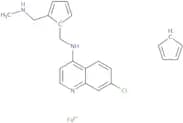
CAS :Desmethyl ferroquine is an antimalarial compound, which is a derivative of ferroquine. It is synthesized through chemical modification processes, specifically designed to enhance its pharmacokinetic and pharmacodynamic properties. This compound exhibits its mode of action by compromising the integrity of the Plasmodium parasite's digestive vacuole. By doing so, it disrupts heme detoxification, which is crucial for the parasite’s survival within red blood cells.
Formule :C22H22ClFeN3Degré de pureté :Min. 95%Masse moléculaire :419.7 g/molNocardicin G
CAS :Nocardicin G is a monocyclic β-lactam antibiotic, which is sourced from certain strains of the soil-dwelling actinobacterium *Nocardia*. This organism is known for its ability to synthesize various bioactive compounds. The mode of action of Nocardicin G involves inhibiting bacterial cell wall synthesis by targeting penicillin-binding proteins, resulting in the bactericidal effect against susceptible bacterial strains. This compound specifically disrupts the formation of the peptidoglycan layer, which is essential for bacterial integrity and survival.
Formule :C19H19N3O6Degré de pureté :Min. 95%Masse moléculaire :385.4 g/molOligomycin B
CAS :Oligomycin B is an antibiotic compound, which is derived from Streptomyces species. It is an inhibitor of the mitochondrial ATP synthase complex, specifically targeting the F₀ subunit of ATP synthase. This action obstructs the proton channel, preventing the flow of protons across the mitochondrial membrane. As a result, Oligomycin B effectively halts ATP synthesis by oxidative phosphorylation, which is crucial for the survival of aerobic organisms.
Formule :C45H72O12Degré de pureté :Min. 95%Couleur et forme :PowderMasse moléculaire :805.05 g/molCarbovir triphosphate triethylamine
CAS :Carbovir triphosphate triethylamine is a nucleotide analog, which is a derivative of nucleoside analogs designed for antiviral applications. It is synthesized through chemical modification of guanosine analogs, resulting in its active triphosphate form. This compound functions as a potent antiretroviral agent by mimicking natural nucleotides and interfering with viral DNA synthesis. The active triphosphate impedes the action of viral reverse transcriptase by incorporating itself into the viral DNA chain, causing premature termination and effectively halting viral replication.
Degré de pureté :Min. 95%