Antimicrobiens
Sous-catégories appartenant à la catégorie "Antimicrobiens"
- Antibiotiques(4.138 produits)
- Antifongiques(906 produits)
- Antiparasitaires(700 produits)
- Antiviraux(766 produits)
2431 produits trouvés pour "Antimicrobiens"
2,4,5,6-Tetrachlorophenol-13C6
CAS :2,4,5,6-Tetrachlorophenol-13C6 is an isotopically labeled chemical compound, primarily used as a reference standard in analytical chemistry. This compound, derived from its non-labeled counterpart 2,4,5,6-tetrachlorophenol, is synthesized through the incorporation of carbon-13 isotopes. Its primary mode of action involves acting as a stable, traceable marker, facilitating accurate quantification and analysis of environmental samples, particularly in mass spectrometry.
Formule :C6H2Cl4ODegré de pureté :Min. 95%Masse moléculaire :237.8 g/molSpiramycin hexanedioate
CAS :Spiramycin hexanedioate is a macrolide antibiotic, which is derived from the bacterium *Streptomyces ambofaciens*. Its mode of action involves binding to the 50S ribosomal subunit of susceptible bacteria, thereby inhibiting protein synthesis. This interaction results in the interruption of bacterial growth and reproduction, particularly effective against Gram-positive organisms.
Formule :C49H84N2O18Degré de pureté :Min. 95%Masse moléculaire :989.2 g/molSafracin B
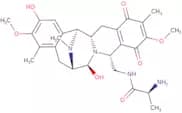
CAS :Exhibits antitumour activity against L1210 and P388 leukemias and B16 melanoma
Formule :C28H36N4O7Degré de pureté :Min. 95%Masse moléculaire :540.61 g/molBromobutide-desbromo
CAS :Bromobutide-desbromo is a chemical compound that functions as a selective herbicide. It is derived from synthetic sources and is specifically formulated to interfere with photosynthesis in target plants. The mode of action of bromobutide-desbromo involves inhibiting photosystem II, a crucial component of the photosynthetic electron transport chain in plants. This inhibition disrupts the energy conversion process, leading to a decrease in ATP and NADPH production, which are essential for plant growth.
Formule :C15H23NODegré de pureté :Min. 95%Masse moléculaire :233.35 g/molSpiromesifen-alcohol-4-hydroxymethyl
CAS :Spiromesifen-alcohol-4-hydroxymethyl is a selective miticide, which is a derivative of spiromesifen. This compound is sourced from novel chemical synthesis approaches focusing on the manipulation of chemical structures to improve efficacy and selectivity. The mode of action of Spiromesifen-alcohol-4-hydroxymethyl centers on disrupting the lipid biosynthesis pathway within target mites and whiteflies. By inhibiting acetyl-CoA carboxylase, it leads to impaired energy storage and membrane biosynthesis, ultimately causing the mortality of these pests.
Formule :C17H20O4Degré de pureté :Min. 95%Masse moléculaire :288.34 g/molCefmetazole lactone
CAS :Cefmetazole lactone is an antibiotic, classified as a cephalosporin, which is a type of β-lactam antimicrobial compound. It is derived from the Cephalosporium fungus, known for its progenitor antimicrobial properties. As a second-generation cephalosporin, cefmetazole lactone operates by inhibiting bacterial cell wall synthesis, essentially interfering with the transpeptidation process of peptidoglycan, a critical component of the bacterial cell wall. This disruption leads to cell lysis and eventual bacterial death, mainly affecting Gram-positive and some Gram-negative bacteria.
Formule :C13H13N3O5S2Degré de pureté :Min. 95%Masse moléculaire :355.40 g/molDimoxystrobin-5-benzoic acid
CAS :Dimoxystrobin-5-benzoic acid is a chemical fungicide, which is a synthetic compound derived from the strobilurin class of fungicides. It functions by inhibiting mitochondrial respiration in fungi, specifically blocking the electron transfer at the Qo site of the cytochrome bc1 complex. This mode of action disrupts energy production in fungal cells, thereby curbing their growth and proliferation.
Formule :C19H20N2O5Degré de pureté :Min. 95%Masse moléculaire :356.4 g/molCefminox Sodium
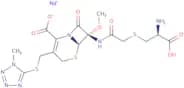
CAS :Cefminox Sodium is a beta-lactam antibiotic, which is synthesized through chemical modification of naturally occurring compounds. This product is classified as a second-generation cephalosporin, derived from cephalosporin C obtained from the fungus Acremonium. It exerts its mode of action by inhibiting bacterial cell wall synthesis. This occurs through the binding to penicillin-binding proteins, ultimately disrupting the cross-linking of peptidoglycan chains which are essential for bacterial cell wall integrity.
Formule :C16H20N7O7S3·NaDegré de pureté :Min. 95%Masse moléculaire :541.56 g/molFlufenacet-methylsulfone
CAS :Flufenacet-methylsulfone is an herbicidal derivative, which is sourced from the modification of flufenacet metabolites. It operates by inhibiting the biosynthesis of very-long-chain fatty acids, which are crucial components in the formation of cell membranes within target plant species. This biochemical intervention disrupts normal cell division and elongation in weeds, ultimately inhibiting their growth and establishment.
Formule :C12H16FNO3SDegré de pureté :Min. 95%Masse moléculaire :273.33 g/molCefodizime
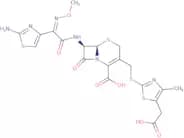
CAS :Cefodizime is a third-generation cephalosporin antibiotic, which is derived from the fungus Acremonium. It exerts its bactericidal effects by inhibiting bacterial cell wall synthesis. This action is achieved through binding to penicillin-binding proteins (PBPs), leading to the interruption of peptidoglycan cross-linking essential for the bacterial cell wall integrity. The breakdown of cell wall synthesis results in the lysis and death of the bacterial cell.
Degré de pureté :Min. 95%Dioxohongdenafil
CAS :Dioxohongdenafil is a synthetic compound, which is a type of pharmaceutical analog. It is derived from sildenafil, a well-known phosphodiesterase type 5 (PDE5) inhibitor, originally conceptualized through chemical modification of the parent compound. The mode of action of Dioxohongdenafil involves competitive inhibition of the PDE5 enzyme, leading to an increase in cyclic guanosine monophosphate (cGMP) levels. This biochemical alteration results in vasodilation and increased blood flow, mimicking the therapeutic mechanism observed in sildenafil.
Formule :C25H30N6O5Degré de pureté :Min. 95%Masse moléculaire :494.5 g/mol2-Sec-butyl-1-(decyloxy)-4-tritylbenzene
CAS :2-Sec-butyl-1-(decyloxy)-4-tritylbenzene is a synthetic organic compound, typically utilized in chemical research and development. It is sourced through a series of organic synthesis reactions, involving alkylation, etherification, and aromatic substitution, primarily in a controlled laboratory environment.
Formule :C39H48ODegré de pureté :Min. 95%Masse moléculaire :532.8 g/mol1-Anthroylnitrile
CAS :1-Anthroylnitrile is a chemical compound, specifically an organic aromatic compound known as a polycyclic aromatic nitrile, which is synthesized from anthracene via nitrile substitution at the 1-position. With its aromatic structure, 1-Anthroylnitrile exhibits unique photophysical properties, functioning as a significant fluorescent probe due to its strong absorption and emission in the UV-visible spectrum.
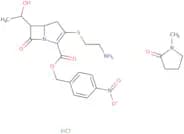
Formule :C16H9NODegré de pureté :Min. 95%Masse moléculaire :231.25 g/molThienamycin p-nitrobenzyl ester, N-methylpyrrolidinone hydrochloride
CAS :Thienamycin p-nitrobenzyl ester, N-methylpyrrolidinone hydrochloride is a synthetic compound commonly utilized in biochemical research, particularly in the study of beta-lactam antibiotics. It is derived through synthetic pathways involving the modification of thienamycin, a naturally occurring beta-lactam antibiotic, to enhance its stability and facilitate its study in various experimental settings. This modification allows for investigation into the structure-activity relationships and potential enhancements of antibiotic function.Formule :C23H31ClN4O7SDegré de pureté :Min. 95%Masse moléculaire :543 g/molCephalexin hydrate, Antibiotic for Culture Media Use Only
CAS :Please enquire for more information about Cephalexin hydrate, Antibiotic for Culture Media Use Only including the price, delivery time and more detailed product information at the technical inquiry form on this page
Formule :C16H19N3O5SDegré de pureté :Min. 95.0 Area-%Masse moléculaire :365.41 g/molPicarbutrazox
CAS :Picarbutrazox is a fungicide, which is a product derived from chemical synthesis designed to protect crops by inhibiting fungal growth. It works through a specific mode of action that targets and disrupts the biosynthesis of essential lipids within fungal cells. This disruption ultimately leads to the cessation of cell membrane formation, impeding the growth and proliferation of the fungi.
Formule :C20H23N7O3Degré de pureté :Min. 95%Masse moléculaire :409.4 g/molCoronarin D ethyl ether
CAS :Coronarin D ethyl ether is a diterpenoid compound, which is derived from the plant Hedychium coronarium, also known as white ginger lily. This compound belongs to a class of naturally occurring chemicals with complex polycyclic structures. The source of Coronarin D ethyl ether is the rhizome of Hedychium coronarium, which is part of the Zingiberaceae family. These plants are often studied for their bioactive properties and potential therapeutic applications.
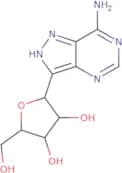
Formule :C22H34O3Degré de pureté :Min. 95%Masse moléculaire :346.5 g/molFormycin A
CAS :Formycin A is a nucleoside analog, which is an antibiotic product derived from certain Streptomyces species. Its mode of action involves mimicking adenosine, one of the four nucleosides in RNA. By doing so, it interferes with the RNA processing of certain microorganisms, ultimately disrupting their ability to synthesize proteins effectively. This interference results in the inhibition of bacterial and parasitic growth.
Formule :C10H13N5O4Degré de pureté :Min. 95%Masse moléculaire :267.24 g/molDicloxacillin sodium salt
CAS :Dicloxacillin is a penicillin antibiotic that is used to treat bacterial infections of the gastrointestinal tract, skin, and urinary tract. It binds to the penicillin-binding proteins in bacterial cell walls by competitive inhibition. Dicloxacillin inhibits bacterial growth by binding to the enzyme cell wall synthesis that is required for cell wall biosynthesis, inhibiting protein synthesis and cell division. This drug also has a toxic effect on respiratory system cells, which may be due to its ability to induce apoptosis. Dicloxacillin sodium salt is available as tablets for oral administration or as an intravenous solution for injection. It can interact with other drugs, such as benzalkonium chloride and matrix effect; it also has analytical methods such as chromatographic analysis and rate constant.
Formule :C19H17Cl2N3O5S·NaDegré de pureté :Min. 95%Masse moléculaire :493.32 g/molMesosulfuron
CAS :Mesosulfuron is a selective herbicide, which is a synthetic chemical compound with a specific mode of action designed to inhibit acetolactate synthase (ALS). This enzyme inhibition disrupts the biosynthesis of essential amino acids such as valine, leucine, and isoleucine, leading to the cessation of cell division and consequent plant growth arrest. The herbicide is primarily utilized in agricultural settings, particularly for post-emergence control of various grass weeds within cereal crops, including wheat and barley. Its application is crucial for managing weed competition that can significantly impact crop yield and quality. Mesosulfuron is absorbed through the foliage and roots of targeted species, providing systemic action that ensures effective control. Its usage is governed by stringent regulations to minimize environmental impact and to manage herbicide resistance through integrated weed management strategies.
Formule :C16H19N5O9S2Degré de pureté :Min. 95%Masse moléculaire :489.5 g/mol