Antimicrobiens
Sous-catégories appartenant à la catégorie "Antimicrobiens"
- Antibiotiques(4.137 produits)
- Antifongiques(904 produits)
- Antiparasitaires(700 produits)
- Antiviraux(767 produits)
2432 produits trouvés pour "Antimicrobiens"
N-Acetyl glyphosate-13C2,15N
CAS :N-Acetyl glyphosate-13C2,15N is a stable isotope-labeled analog of the well-known herbicide glyphosate. This product is synthesized using isotopically enriched carbon and nitrogen sources. Its mode of action involves inhibiting the shikimate pathway by targeting the enzyme 5-enolpyruvylshikimate-3-phosphate synthase (EPSPS), crucial for aromatic amino acid biosynthesis in plants. This pathway is not present in animals, making it a valuable target for selective herbicidal action.
Formule :C5H10NO6PDegré de pureté :Min. 95%Masse moléculaire :214.09 g/molOxohongdenafil
CAS :Please enquire for more information about Oxohongdenafil including the price, delivery time and more detailed product information at the technical inquiry form on this page
Formule :C25H32N6O4Degré de pureté :Min. 95%Masse moléculaire :480.6 g/molInteriotherinA
CAS :InteriotherinA is a bioactive compound, which is derived from specific strains of bacteria. It operates through a sophisticated mode of action that involves modulating the activity of nerve cells by binding to particular receptors on their membranes. This interaction can alter ion channel function, thereby influencing the electrochemical signaling within these cells.
Formule :C29H28O8Degré de pureté :Min. 95%Masse moléculaire :504.5 g/molMetolachlor mercapturate
CAS :Metolachlor mercapturate is a metabolite of the herbicide Metolachlor, which is derived from the degradation of the primary active ingredient found in various agricultural herbicide formulations. It is formed through biotransformation processes in plants, soil, and water, where the parent compound undergoes enzymatic reactions leading to its metabolic products. The primary mode of action involves the inhibition of elongase enzymes, which are crucial for the synthesis of fatty acids in plants, thus preventing cell division and impacting weed growth effectively.
Formule :C20H30N2O5SDegré de pureté :Min. 95%Masse moléculaire :410.5 g/mol2-Amino-5-(4-hydroxy-3,5-dimethoxybenzyl)pyrimidin-4-ol
CAS :2-Amino-5-(4-hydroxy-3,5-dimethoxybenzyl)pyrimidin-4-ol is a synthetic pyrimidine derivative, which is meticulously engineered through organic synthesis pathways. This compound emerges from a tailored chemical reaction involving the strategic manipulation of a pyrimidine core to incorporate specific functional groups. The unique structural configuration of this molecule allows it to interact with biological macromolecules, primarily through hydrogen bonding and pi-pi interactions, potentially influencing biochemical pathways.
Formule :C13H15N3O4Degré de pureté :Min. 95%Masse moléculaire :277.28 g/mol(E)-Ceftriaxone disodium
CAS :(E)-Ceftriaxone disodium is a broad-spectrum cephalosporin antibiotic, which is derived from the fermentation of the fungus Acremonium. This semi-synthetic antibiotic works by inhibiting bacterial cell wall synthesis. It achieves this by binding to the penicillin-binding proteins (PBPs) in the bacterial cell membrane, which ultimately interferes with peptidoglycan cross-linking, leading to cell lysis and death.
Formule :C18H16N8Na2O7S3Degré de pureté :Min. 95 Area-%Masse moléculaire :598.54 g/mol1-(6-Amino-3,5-difluoropyridin-2-yl)-8-bromo-6-fluoro-7-[3-(methylamino)azetidin-1-yl]-4-oxoquinoline-3-carboxylic acid
CAS :1-(6-Amino-3,5-difluoropyridin-2-yl)-8-bromo-6-fluoro-7-[3-(methylamino)azetidin-1-yl]-4-oxoquinoline-3-carboxylic acid is a synthetically derived quinoline derivative, which is produced through advanced organic chemistry methodologies involving halogenated pyridines and quinoline frameworks. The compound functions primarily as an antibacterial agent, targeting bacterial topoisomerase enzymes, thereby disrupting DNA replication and transcription processes.Formule :C19H15BrF3N5O3Degré de pureté :Min. 95%Masse moléculaire :498.3 g/molThiosildenafil-despiperazine
CAS :Thiosildenafil-despiperazine is a derivative of sildenafil, which is a phosphodiesterase type 5 (PDE5) inhibitor. This compound is synthesized through structural modifications of sildenafil, leading to alterations in its pharmacological profile and potential applications. The source of this derivative involves chemical synthesis techniques to modify the core structure of sildenafil, specifically targeting modifications in the piperazine ring and replacing it with a thioside group to enhance or alter desired effects.
Formule :C17H20N4O4S2Degré de pureté :Min. 95%Masse moléculaire :408.5 g/molGatifloxacin related compound E
CAS :Gatifloxacin related compound E is a chemical reference standard, which is often used in pharmaceutical and analytical chemistry research for the identification and quantification of impurities. It is generally synthesized or isolated as part of the quality control and validation process for the production of the antibiotic Gatifloxacin. The mode of action of this compound revolves around its structural similarity to Gatifloxacin, which allows it to serve as a benchmark to ensure the accuracy and reliability of high-performance liquid chromatography (HPLC) and other analytical techniques.
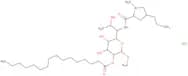
Formule :C19H22FN3O4·HClDegré de pureté :Min. 95%Masse moléculaire :411.86 g/molLincomycin 2-palmitate hydrochloride
CAS :Lincomycin 2-palmitate hydrochloride is a semi-synthetic antibiotic, derived from the natural antibiotic lincomycin through chemical modification. It is sourced from fermentative processes involving the bacterium *Streptomyces lincolnensis*. The compound exerts its action by inhibiting protein synthesis in susceptible bacteria. This occurs through its binding to the 50S subunit of the bacterial ribosome, thereby hindering peptide chain elongation and ultimately arresting bacterial growth.Formule :C34H65ClN2O7SDegré de pureté :Min. 95%Masse moléculaire :681.41 g/mol1-Chloro-2,2-bis(4'-chlorophenyl)ethane
CAS :1-Chloro-2,2-bis(4'-chlorophenyl)ethane is an organochlorine pesticide known for its agricultural applications. It is a synthetic product derived from chlorinated hydrocarbons. It functions primarily through its mode of action as an insecticide by interfering with the nervous system of insects. It disrupts normal nerve function by causing prolonged opening of sodium channels in nerve cells, leading to hyperexcitation and eventual paralysis of the target pests.
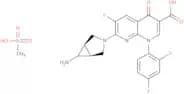
Formule :C14H11Cl3Degré de pureté :Min. 95%Masse moléculaire :285.6 g/molTrovafloxacin mesylate
CAS :Trovafloxacin mesylate is a synthetic antibiotic belonging to the fluoroquinolone class, which is derived from chemical synthesis processes rather than natural sources. The mode of action of trovafloxacin mesylate involves the inhibition of bacterial enzymes DNA gyrase and topoisomerase IV. These enzymes are essential for DNA replication, repair, and transcription within the bacterial cell. By inhibiting these enzymes, trovafloxacin mesylate disrupts bacterial DNA processes, leading to cell death and exerting its antibacterial effects.
Formule :C21H19F3N4O6SDegré de pureté :Min. 95%Masse moléculaire :512.46 g/molENOblock
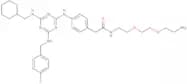
CAS :ENOblock is a biochemical inhibitor, which is synthesized from specific small molecules with the capability to modulate metabolic pathways. This product is derived from a high-throughput screening aimed at identifying novel regulators of enzymatic processes and exhibits unique properties influencing nicotinamide adenine dinucleotide (NAD) metabolism.
Formule :C31H43FN8O3Degré de pureté :Min. 95%Masse moléculaire :594.74 g/molSPR741
CAS :SPR741 is an antimicrobial potentiator, which is derived from polymyxin B, an antibiotic sourced from the bacterium *Bacillus polymyxa*. Its mode of action involves permeabilizing the outer membrane of Gram-negative bacteria, allowing otherwise impermeable antibiotics to enter the bacterial cell. This potentiation effect significantly enhances the efficacy of co-administered antibiotics against resistant strains.
Formule :C44H73N13O13Degré de pureté :Min. 95%Masse moléculaire :992.1 g/molSarecycline
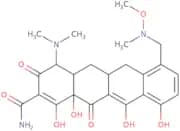
CAS :Sarecycline is a tetracycline-class antibiotic, which is derived from naturally occurring tetracycline antibiotics. Its mode of action involves inhibition of bacterial protein synthesis by binding to the 30S ribosomal subunit, thereby preventing the addition of amino acids to nascent peptide chains. This specific mechanism disrupts bacterial growth, making Sarecycline effective against certain strains of bacteria implicated in dermatological conditions.
Formule :C24H29N3O8Degré de pureté :Min. 95 Area-%Masse moléculaire :487.5 g/molCephalexin hydrochloride
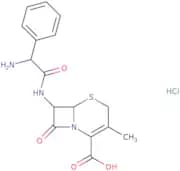
CAS :Cephalexin hydrochloride is a cephalosporin antibiotic, which is a type of beta-lactam antibiotic. It is derived from the fungus Acremonium, previously known as Cephalosporium, with a bactericidal mode of action. This compound works by inhibiting bacterial cell wall synthesis. Specifically, it binds to one or more of the penicillin-binding proteins (PBPs), which in turn disrupts the final stages of bacterial cell wall formation and results in cell lysis mediated through autolytic enzyme action.
Formule :C16H18ClN3O4SDegré de pureté :Min. 95%Masse moléculaire :383.9 g/molRef: 3D-JCA69559
Produit arrêté6-(2-Chlorophenoxy)-5-fluoro-4(3H)-pyrimidinone
CAS :6-(2-Chlorophenoxy)-5-fluoro-4(3H)-pyrimidinone is a heterocyclic compound, which is a synthetic derivative developed for biochemical research. This compound is synthesized through a series of organic reactions, involving halogenation and cyclization techniques, typically conducted in a controlled laboratory setting. Its design incorporates specific structural features, such as the chlorophenoxy and fluoro groups, which are strategically positioned to enhance its binding affinity and specificity.
Formule :C10H6ClFN2O2Degré de pureté :Min. 95%Masse moléculaire :240.62 g/molPantoprazole-d3
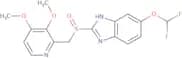
CAS :Pantoprazole-d3 is a stable isotope-labeled version of the proton pump inhibitor pantoprazole, which is derived synthetically for scientific research and analytical applications. Isotope labeling involves substituting hydrogen atoms with deuterium, resulting in Pantoprazole-d3 containing three deuterium atoms. This modification preserves the pharmacological profile of the parent compound while enabling precise tracking in biological studies through advanced spectroscopic techniques.
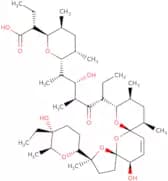
Formule :C16H15F2N3O4SDegré de pureté :Min. 95%Masse moléculaire :386.4 g/molNarasin
CAS :Narasin is an ionophore antibiotic, which is a fermentation product derived from certain strains of the bacterium *Streptomyces aureofaciens*. It functions by disrupting the ion gradients across cell membranes, specifically facilitating the transport of sodium and potassium ions. This action interferes with the energy metabolism of certain pathogenic microorganisms, rendering them unable to proliferate effectively.
Formule :C43H72O11Degré de pureté :Min. 95%Masse moléculaire :765.03 g/molRef: 3D-AN26161
Produit arrêtéSanfetrinem cilexetil
CAS :Sanfetrinem cilexetil is an oral prodrug, which is derived from trinem antibiotics, a subgroup of β-lactams. It is a synthetic compound developed to enhance the pharmacokinetic properties of its active form, sanfetrinem. Upon oral administration, sanfetrinem cilexetil undergoes hydrolysis in the digestive tract to release the active β-lactam antibiotic, sanfetrinem.
Formule :C23H33NO8Degré de pureté :Min. 95%Masse moléculaire :451.50 g/mol



![1-(6-Amino-3,5-difluoropyridin-2-yl)-8-bromo-6-fluoro-7-[3-(methylamino)azetidin-1-yl]-4-oxoquinol…](/_next/image/?url=https%3A%2Fstatic.cymitquimica.com%2Fproducts%2F3D%2Fthumb-webp%2FPHA28013.webp&w=3840&q=75)