Antimicrobiens
Les antimicrobiens sont des agents qui détruisent ou inhibent la croissance des microorganismes, y compris les bactéries, les virus, les champignons et les parasites. Ces composés sont essentiels dans la prévention et le traitement des infections, jouant un rôle crucial en médecine, en agriculture et dans l'industrie alimentaire. Chez CymitQuimica, nous proposons une vaste gamme d'antimicrobiens de haute qualité et pureté, adaptés à diverses applications scientifiques et industrielles. Notre catalogue comprend des antibiotiques, des antifongiques, des antiviraux et des désinfectants, tous conçus pour répondre aux besoins de la recherche et du développement, ainsi qu'aux applications cliniques et de production. Avec nos produits, les professionnels peuvent garantir l'efficacité et la sécurité dans le contrôle des infections et la protection de la santé publique.
Sous-catégories appartenant à la catégorie "Antimicrobiens"
- Antibiotiques(4.128 produits)
- Antifongiques(901 produits)
- Antiparasitaires(701 produits)
- Antiviraux(765 produits)
2423 produits trouvés pour "Antimicrobiens"
Trier par
Degré de pureté (%)
0
100
|
0
|
50
|
90
|
95
|
100
Indinavir monohydrate
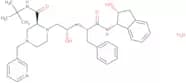
CAS :Indinavir monohydrate is an antiretroviral medication, which is a synthetic pharmaceutical compound, specifically a protease inhibitor, used in the treatment of HIV infection. It is derived from chemical synthesis processes that follow rigorous standards to produce a pharmacologically active compound. Indinavir functions by selectively inhibiting the HIV-1 protease enzyme, which is crucial for the viral replication cycle. By binding to the active site of the enzyme, indinavir prevents the cleavage of viral polypeptides, leading to the production of immature and non-infectious viral particles.Degré de pureté :Min. 95%Ikarugamycin
CAS :<p>Ikarugamycin is a polycyclic nitrogenous antibiotic, which is derived from the fermentation of Streptomyces species, a genus of gram-positive bacteria. It acts primarily by inhibiting clathrin-mediated endocytosis, a cellular process involving the internalization of various macromolecules. This inhibition disrupts cellular uptake mechanisms, which has significant implications for its utility in biological research and therapeutic applications.</p>Formule :C29H38N2O4Degré de pureté :Min. 95%Masse moléculaire :478.62 g/molTromantadine hydrochloride
CAS :Produit contrôlé<p>Tromantadine hydrochloride is a synthetic antiviral compound, which is a derivative of adamantane. It originates from chemical synthesis, tailored specifically to target viral processes. Tromantadine hydrochloride primarily exerts its effects by inhibiting the penetration of virus particles into host cells and impeding the subsequent stages of viral replication. This mode of action effectively reduces the viral load and hinders the progression of the infection.</p>Formule :C16H28N2O2•HClDegré de pureté :Min. 95%Masse moléculaire :316.87 g/molIvermectin
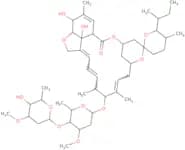
CAS :Naturally produced by the soil bacterium Streptomyces avermitili, it is clinically used in the treatment of parasitosis in both humans and animals. Ivermectin is commercially available as a mixture of 80% 22, 23-dihydroavermectin B1a and 20% 22, 23-dihydroavermectin B1b. In 2020, Ivermectin indicated that it was a good antiviral agent in the treatment of SARS-CoV-2 and a new mechanism of action has been suggested. Ivermectin would act on importin α/β heterodimer and affect nuclear transport and the translocation of viral proteins.Formule :C48H74O14Degré de pureté :85%MinMasse moléculaire :875.1 g/molNorvancomycin trifluoroacetate
CAS :Norvancomycin trifluoroacetate is an antibiotic compound, which is a glycopeptide derived from the bacterium Amycolatopsis orientalis. Its mode of action involves inhibiting bacterial cell wall synthesis. Specifically, Norvancomycin disrupts the cross-linking of peptidoglycan layers in the bacterial cell wall by binding to the D-alanyl-D-alanine terminus of cell wall precursors. This disruption weakens the bacterial cell wall, ultimately leading to cell lysis and death, thereby exerting a bactericidal effect.Formule :C65H73Cl2N9O24•(C2HF3O2)xDegré de pureté :Min. 95%Azaconazole
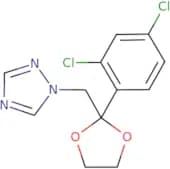
CAS :<p>Azaconazole is a systemic fungicide, which is derived from synthetic chemical processes, specifically within the class of triazoles. This compound functions by interfering with the biosynthesis of ergosterol, a critical component of fungal cell membranes. By inhibiting the cytochrome P450 enzyme 14α-demethylase, azaconazole disrupts the production of ergosterol, thereby compromising membrane integrity and inhibiting fungal growth.</p>Formule :C12H11Cl2N3O2Degré de pureté :Min. 95%Masse moléculaire :300.14 g/molCarbophenothion-methyl-sulfoxide
CAS :Carbophenothion-methyl-sulfoxide is an organophosphate sulfoxide compound, which is synthesized as a sulfoxide derivative from other organophosphate precursors. It acts as an acetylcholinesterase inhibitor, disrupting the normal function of the enzyme acetylcholinesterase, which is critical for nerve signal transmission in insects. This disruption leads to an accumulation of acetylcholine and subsequent insect paralysis and death. Carbophenothion-methyl-sulfoxide is primarily used in agricultural settings to target a broad spectrum of insect pests that affect crops. Its application can significantly reduce pest populations, ensuring crop protection and yield preservation. Being a sulfoxide variant, it may possess distinctive physicochemical properties that confer specific environmental behavior and degradation pathways compared to its non-sulfoxide counterparts. Proper handling and application are essential to minimize potential ecological impacts, including non-target species effects and resistance development.Formule :C9H12ClO3PS3Degré de pureté :Min. 95%Masse moléculaire :330.8 g/molPikromycin
CAS :<p>Pikromycin is an antibiotic, which is derived from the bacterium *Streptomyces venezuelae*. It functions by specifically binding to the 50S ribosomal subunit, thereby inhibiting bacterial protein synthesis. This action effectively blocks peptide chain elongation, leading to the cessation of bacterial growth and proliferation. Pikromycin serves as an important model compound in antibiotic research, particularly in the study of macrolides and polyketides, due to its unique structure and biosynthetic pathway.</p>Formule :C28H47NO8Degré de pureté :Min. 95%Masse moléculaire :525.7 g/molAvermectin b1a aglycone
CAS :Avermectin B1a aglycone is a potent antiparasitic agent, which is a semi-synthetic derivative of avermectins. Avermectins are naturally sourced from the microorganism *Streptomyces avermitilis*, known for producing macrolide compounds. The mode of action of Avermectin B1a aglycone involves binding to glutamate-gated chloride channels in nerve and muscle cells of invertebrates, leading to increased permeability and disruption of neurotransmission. This action ultimately results in paralysis and death of the targeted parasites.Formule :C34H48O8Degré de pureté :Min. 95%Masse moléculaire :584.7 g/mol1H-Indene-2-carboxylic acid
CAS :<p>1H-Indene-2-carboxylic acid is an organic compound, which is primarily utilized in synthetic organic chemistry. This compound is a derivative of indene, a bicyclic hydrocarbon derived from the fusion of benzene and cyclopentene rings. It is most commonly sourced from petrochemical processes involving the polymerization or catalytic conversion of hydrocarbons.</p>Formule :C21H17ClF3N3O7Degré de pureté :Min. 95%Masse moléculaire :515.8 g/molKasugamycin
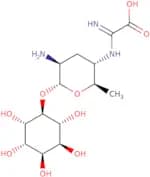
CAS :Kasugamycin is an aminoglycoside antibiotic, which is derived from the actinomycete Streptomyces kasugaensis. Its mode of action involves the inhibition of protein synthesis by interfering with the function of the 30S ribosomal subunit, ultimately preventing the growth and proliferation of sensitive organisms. In agricultural contexts, Kasugamycin is primarily utilized to control bacterial and fungal diseases in a variety of crops, including rice and fruit trees. It is particularly effective against Xanthomonas oryzae, which causes bacterial leaf blight in rice, and other pathogenic organisms detrimental to plant health. The application of Kasugamycin has been an important tool for integrated pest management programs focusing on sustainable agricultural practices. As a compound with a specific mode of activity, it helps to reduce the environmental impact typically associated with broader-spectrum antibiotics, while offering target-specific disease control. Its careful application supports the minimization of resistance development, ensuring continued efficacy in protecting crop yields.Formule :C14H25N3O9Degré de pureté :Min. 95%Masse moléculaire :379.36 g/molN-Demethylclindamycin
CAS :<p>N-Demethylclindamycin is a metabolite of clindamycin, which is a semi-synthetic antibiotic derived from the naturally occurring compound lincomycin. This product is synthesized by enzymatic or chemical processes that remove the N-methyl group from clindamycin's molecular structure, making it an important derivative in the study of antibiotic activity and metabolic pathways.</p>Formule :C17H31ClN2O5SDegré de pureté :Min. 95%Masse moléculaire :411 g/molErythromycin F
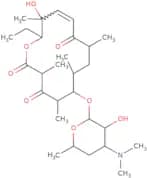
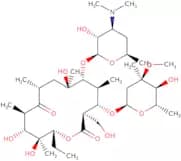
CAS :<p>Erythromycin F is an antibiotic, which is a naturally derived product obtained from the bacterium *Streptomyces erythreus*. It operates by inhibiting bacterial protein synthesis through binding to the 50S ribosomal subunit. This binding effectively blocks the translocation steps in protein elongation, thus preventing the growth and multiplication of susceptible bacteria.</p>Formule :C37H67NO14Degré de pureté :Min. 95%Masse moléculaire :749.93 g/molAqabamycin G
CAS :Aqabamycin G is a macrolactam antibiotic, which is derived from marine bacteria belonging to the genus Streptomyces. This compound is noted for its complex structure, featuring a macrolactam ring that is crucial for its biological activity. Aqabamycin G's mode of action involves inhibiting bacterial protein synthesis by binding to the bacterial ribosomal subunit, thereby disrupting peptide bond formation. This interference with the protein production machinery of bacterial cells results in effective bacteriostatic or bactericidal outcomes, depending on the concentration and specific bacterial target.Formule :C18H11N3O5Degré de pureté :Min. 95%Masse moléculaire :349.3 g/molCeftaroline fosamil acetate
CAS :<p>Cephalosporin antibiotic active against gram-positive bacteria including MRSA</p>Formule :C24H25N8O10PS4Degré de pureté :Min. 98 Area-%Masse moléculaire :744.74 g/molAqabamycin D
CAS :Aqabamycin D is a novel antibiotic compound, which is derived from marine bacteria, particularly from the genus Streptomyces collected from unique marine environments. This compound functions by interfering with bacterial cell wall synthesis, leading to the disruption of essential cellular processes. Aqabamycin D exhibits a broad spectrum of antibacterial activity, particularly against gram-positive bacteria, making it a valuable tool for tackling resistant bacterial strains.Formule :C16H9N3O8Degré de pureté :Min. 95%Masse moléculaire :371.26 g/mol26-Oxofusidic acid
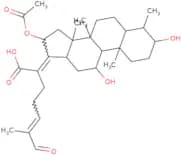
CAS :<p>26-Oxofusidic acid is a derivative of fusidic acid, which is a potent antibacterial compound originally isolated from the fungus Fusidium coccineum. This compound exhibits a unique mode of action by inhibiting bacterial protein synthesis through interference with the elongation factor G (EF-G), a critical component in the translocation step of translation. By targeting this specific aspect of bacterial metabolism, 26-Oxofusidic acid effectively disrupts the growth of gram-positive bacteria, making it an invaluable tool in combating resistant bacterial strains.</p>Formule :C31H46O7Degré de pureté :Min. 95%Masse moléculaire :530.69 g/molChlorhexidine acetate hydrate(1:2:X)
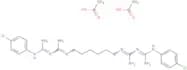
CAS :Produit contrôlé<p>Chlorhexidine acetate hydrate (1:2:X) is a chemical compound used as a disinfectant and antiseptic. It is derived from chlorhexidine, a well-known antimicrobial agent frequently used in both medical and laboratory settings. The compound functions by disrupting microbial cell membranes, resulting in leakage of cellular components and subsequent cell death. This action makes it particularly effective against a wide range of bacteria, fungi, and some viruses.</p>Formule :C26H38Cl2N10O4Degré de pureté :Min. 95%Masse moléculaire :625.5 g/molTaxiphyllin
CAS :<p>Taxiphyllin is a type of cyanogenic glucoside, which is a naturally occurring compound found in certain plants. It is derived primarily from bamboo shoots, among other plant sources. The compound undergoes hydrolysis when the plant tissue is damaged, such as during chewing or processing. This hydrolytic reaction, typically catalyzed by the enzyme β-glucosidase, results in the release of hydrogen cyanide, a potent defense mechanism for the plant against herbivores and pests.</p>Formule :C14H17NO7Degré de pureté :Min. 95%Masse moléculaire :311.29 g/mol(E)-Coniferin
CAS :(E)-Coniferin is a plant-derived glucoside, which is primarily associated with the lignification process in gymnosperms and angiosperms. It is biosynthesized from the phenylpropanoid pathway, specifically from coniferyl alcohol conjugated with glucose. This conjugation serves as a storage form and transport mechanism for coniferyl alcohol in plants.Formule :C16H22O8Degré de pureté :Min. 95%Masse moléculaire :342.34 g/mol